DESTINATIONS · REGION HUB
Europe Travel Guide
Europe can feel overwhelming at first — not because there’s too little to choose from, but because there’s so much packed into such a small space. I’ve watched people fall in love with this continent in wildly different ways, so this page is here to help you narrow it down and choose a first direction that actually fits you.

Pick a starting lens
There’s no single “right” way to experience Europe — most people feel calmer once they narrow it down using one of these three angles.
Explore Europe by region
Most travelers don’t experience “Europe” as one place — they experience it in slices. These regions give you very different rhythms, costs, and vibes.
Western Europe
Polished, familiar, and often where first trips begin — iconic cities, efficient transport, and a comfortable learning curve.
- Higher cost, high convenience
- Fast rail connections
- Museums, cities, classic routes
Southern Europe
Sun, late dinners, coastal wanderings — and a pace that rewards lingering (even if you start with “just one week”).
- Great for slow travel
- Strong food culture
- Beach + village life
Northern Europe
Clean design, crisp air, and strong infrastructure — a very different Europe that feels calm, modern, and outdoorsy.
- Higher prices, smooth systems
- Nature-forward
- Long daylight seasons
Eastern Europe
Culture-rich, often better value, and full of places that feel like discoveries — without needing to “go off-grid.”
- Often more budget-friendly
- Historic cities + local texture
- Big variety, close distances
Explore by travel style
If geography isn’t your starting point, this usually is.
Little truth from the road: Europe rewards clarity more than speed. Once you know your rhythm, choosing places gets a lot easier.
Explore by what you love
History & culture
Old streets, old stories — the kind you feel under your shoes.
Food & wine
Markets, small plates, long lunches, and “just one more” tastes.
Nature & landscapes
Mountains, coastlines, lakes, and air that resets your brain.
Beaches & coastlines
Salt air, quiet coves, and the slow clock that comes with the sea.
Popular countries to start with
If you already have a country in mind, these are some of the most common places people begin.

France
Food, art, villages, and cities — endlessly revisitable.
Explore France
Italy
Big beauty, big history — and daily life that tastes good.
Explore Italy
Spain
Late nights, warm days, and a rhythm that invites you to slow down.
Explore Spain
Germany
Efficient cities, great transport, and an easy base for exploring nearby.
Explore Germany
United Kingdom
Historic layers, lively cities, and day trips that feel like mini-adventures.
Explore the UK
Greece
Islands, history, and coastlines that reset your mood in a hurry.
Explore Greece
Portugal
Coastal ease, great value, and cities that are friendly on day one.
Explore Portugal
Netherlands
Compact, easy to navigate, and ideal for a first Europe “test run.”
Explore the NetherlandsA few things that help to know about Europe
Schengen (high level)
Much of Europe operates under Schengen, which makes moving between many borders feel almost invisible once you’re inside. It simplifies travel — but it can affect how long you can stay, so it’s worth keeping on your radar early.
Trains shape the experience
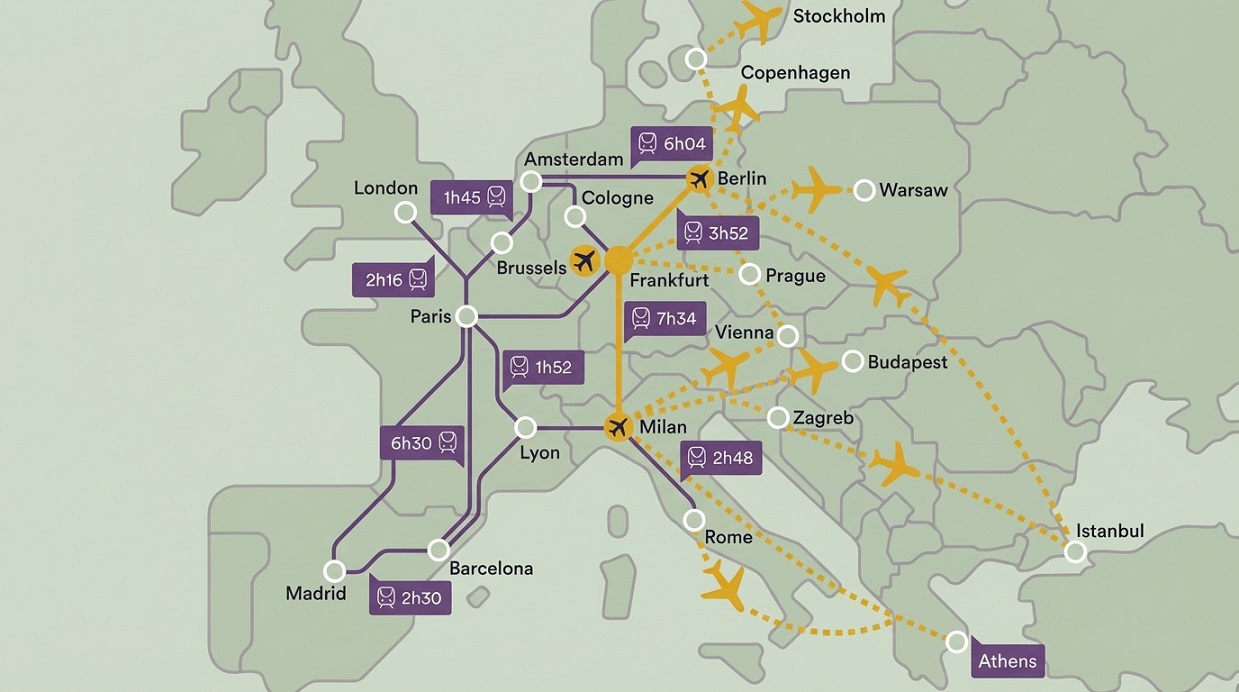
Rail is a big part of how Europe “flows.” Distances that look big on a map often turn into relaxed half-day journeys, which makes slow travel surprisingly doable — even for first-timers.
Costs change fast
Europe isn’t uniformly expensive or cheap — costs can shift quickly between regions. Sometimes a short train ride is a completely different daily budget.
Timing matters more than distance
When you travel often matters more than where. Shoulder seasons can transform crowded cities into places that feel human again.
If this is your first time in Europe

Classic Western Europe
Paris → Amsterdam → Rome
A familiar rhythm with excellent transport, cultural variety, and very few logistical surprises.
Southern Europe slow loop
Spain → Southern France → Italy
Great food, warmer days, and a pace that rewards lingering rather than rushing.
Central & Eastern discovery
Germany → Czech Republic → Austria
Compact distances, often better value, and cities that feel rich without being overwhelming.
Northern Europe sampler
Scandinavia + the Baltics
Strong infrastructure, nature-forward days, and a very different cultural tempo.
You don’t need the perfect plan — you just need a sensible starting point. These are a few first-trip paths that tend to feel straightforward, satisfying, and low-regret.
Not sure where to start yet?
Choose the next step that matches how your brain works today — clarity first, details later.
Join the conversation
Where in Europe are you leaning — and what’s pulling you that way? Share your plans, questions, or “I have no idea yet” thoughts in the comments. If you’ve been, drop a tip to help another traveler choose their starting point.