TRAVEL FIELD NOTES · TRAVEL LIFESTYLE
Find Your Travel Rhythm: A Travel Pace You’ll Enjoy
Your itinerary needs room for the person who has to live it. Here’s how to balance moving, exploring and resting without turning your holiday into a competitive sport.
By Rob Wheatley – Program Director & traveler
Updated 8 October 2026

A travel pace that suits you balances moving between places, exploring them and leaving enough room to rest. I call that balance your travel rhythm. Start with the experiences you actually want, count the time and effort of each transfer, and protect quieter hours before the itinerary fills them for you.
There is a particular kind of holiday photograph nobody takes.
You, sitting on the edge of a hotel bed, staring at a sock and trying to remember whether it is clean, while your phone announces that you should already be at a cathedral.
The cathedral will be magnificent. They usually are. Unfortunately, you have reached the point where you would exchange its entire medieval splendour for a sandwich and forty minutes without instructions.
We are remarkably good at planning where to go. Less good at planning how it will feel to be the person going there.
That is where travel rhythm comes in.
Quick Overview
Travel rhythm is the pattern of movement, exploration, everyday life and rest that makes a trip enjoyable for you. Choose your pace by energy and priorities, account for complete transfer days, and build breathing room into the itinerary. Faster travel can work; constant demands without recovery are the problem.
Travel pace is the speed. Rhythm is the pattern.
Pace tells you how often you move. Rhythm tells you what happens between those moves.
Two people can spend four nights in the same city and have entirely different trips. One books mornings, afternoons and evenings until the calendar resembles an air-traffic-control screen. The other chooses a few highlights and leaves space for neighbourhood walks, meals and the occasional glorious failure to do anything useful.
Neither owes the other an explanation. But they do need different plans.
In my Slow Travel article, we look at what happens when you see fewer places more deeply. Here, the question is more personal: what pattern lets you enjoy the trip you have chosen? You can build a good rhythm into a weekend, a busy touring holiday or six months on the road.
The four parts of a trip we need to balance
01 · MOVE
Pack, check out, transfer, arrive and find your feet.
02 · EXPLORE
Give the sights, walks and experiences you care about your attention.
03 · LIVE
Eat, shop, do laundry, wander and let ordinary life happen.
04 · REST
Sleep, pause and leave room for your energy to catch up.
Move → Explore → Live → Rest → Repeat.
My planning framework, not a scientific formula. These are ingredients to mix, rather than four compulsory days in a fixed order. An easy morning can contain three of them; a demanding journey may deserve a quieter evening.
The part most often missing is live. We allow time for the palace but forget that someone must buy toothpaste. Laundry has no interest in your bucket list. Neither does dinner.
When all those ordinary jobs get squeezed into the gaps, every gap stops being a break.
Find your travel pace before you book
Instead of deciding how many cities will fit, start by asking what sort of days you want to have. It is a surprisingly effective way of avoiding a holiday designed for your imaginary, inexhaustible twin.
1. Notice what gives you energy
Do new places wake you up, or do you enjoy somewhere more once it becomes familiar? Are you happiest with a big day out followed by an easy one, or a steady little-and-often pattern?
Look at a previous trip you enjoyed. What made it work? The answer might be fewer hotel changes. It might be plenty of variety. Borrow the successful pattern rather than somebody else’s city count.
2. Count demands, not just attractions
A museum ten minutes from your hotel and a mountain excursion with a dawn departure are both ‘one activity’. They are not the same demand.
Consider walking, heat, hills, crowds, early starts, driving and social intensity. Mobility needs, travelling with children and carrying luggage can change the calculation again. A manageable plan for one traveller can be an exhausting one for another.
3. Agree a rhythm with your travel companions
One person’s leisurely breakfast is another person’s lost civilisation.
Agree the important shared experiences, how early you want to start and when splitting up is fine. A quiet afternoon alone can rescue everyone’s evening. You do not need identical energy levels to travel well together; you need permission to acknowledge the difference.
4. Choose your non-negotiables
Pick the experiences that would make the trip feel worthwhile. Then organise around them.
If a special concert finishes late, avoid casually adding a dawn tour the following morning. If hiking is the purpose of the trip, protect the preparation and recovery it needs. The supporting cast should not exhaust you before the star attraction appears.
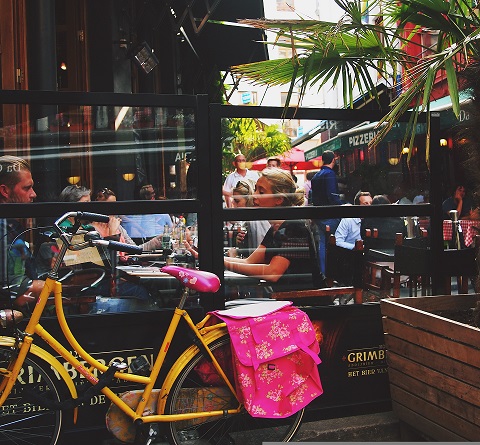
An unbooked hour can become part of the trip, rather than a gap you need to explain.
A transfer day has a hidden timetable
The train takes two hours. Splendid. But the day also includes packing, checking out, reaching the station, waiting, finding your next accommodation and learning a new set of streets.
In the Slow Travel article I call that the Transition Tax: the time, energy and attention you spend changing places.
So estimate door-to-door time, not just the advertised journey. Then ask what sort of evening you will want after it. A gentle walk may be lovely. A prepaid tour with no room for a delay may be less lovely.
For the practical details, use my Travel Logistics & Transit guide.
Three nights does not mean three full days
Arrive Monday afternoon and leave Thursday morning: you have Tuesday and Wednesday as complete days, plus whatever usable time Monday offers.
That is simple calendar arithmetic, yet three nights looks remarkably generous while you are booking. Write arrival and departure times into the plan before deciding what fits.
Seven nights: two ways to spend the same week
Here is an illustrative comparison. It measures nights, bases and hotel changes; it does not predict how tired you will be. Route distances and your own preferences still matter.
More variety · more transitions
Nights 1–2: Base A
Nights 3–4: Base B
Night 5: Base C
Nights 6–7: Base D
4 bases · 3 hotel changes
Three moves between bases, plus your outward and return journeys. A useful choice if variety matters most and the connections are manageable.
More continuity · fewer transitions
Nights 1–4: Base A
Nights 5–7: Base B
2 bases · 1 hotel change
One move between bases, plus your outward and return journeys. More opportunities to mix busy outings with ordinary mornings and easier afternoons.
Notice what has changed: the number of times you start again. The second plan still allows adventure. The first can still be enjoyable. The question is whether you want to spend that much of your week moving between places.
Build rest days without feeling you’ve wasted the trip
Rest does not have to mean drawing the curtains and entering a formal relationship with the minibar.
It can be a later breakfast, an easy neighbourhood stroll, a swim or sitting somewhere pleasant while the world gets on with itself. The useful difference is that you have fewer demands and more choice.
My starting suggestion is one main anchor experience on an ordinary sightseeing day, with optional extras. After a demanding day or journey, plan a lighter block. On longer trips, protect regular days without fixed sightseeing commitments.
Those are planning suggestions, not universal limits. If you enjoy two busy days followed by a quiet one, use that pattern. If your energy varies, keep more of the plan adjustable.
Book the important things. Leave the rest negotiable.
A timed entry for something you care about is sensible. Turning every coffee into a deadline is a different matter.
Keep a shortlist of optional ideas. On the day, choose according to weather, energy and curiosity. ‘We could’ is a much kinder travelling companion than ‘we must’.
Travel fatigue: when the plan needs adjusting
If every outing begins to feel like another obligation, pause before booking a new destination to fix it. You may need an easier day, fewer choices or a little familiarity.
Try staying put if your bookings allow it, cancelling an optional activity, finding a simple meal and protecting sleep. Sometimes the best upgrade is doing less tomorrow.
Travel fatigue and jet lag are not interchangeable. CDC guidance on jet lag explains how crossing time zones can disrupt your normal daily rhythms and affect concentration and mood. That is another reason to give arrival days some flexibility.
‘Travel burnout’ is often used casually to describe feeling worn down by a trip; it should not be treated as a diagnosis. Persistent or unusual exhaustion deserves proper medical advice rather than another itinerary adjustment. The CDC’s travel mental health guidance provides further context.
A five-minute rhythm check before you book
- Write down your real usable days. Include arrival and departure times.
- Mark every change of base. Estimate the whole transfer, including check-in.
- Circle the demanding days. Consider distance, heat, early starts and late nights.
- Add breathing room. Give demanding days an easier neighbour where practical.
- Remove one thing. If nothing can move without the trip falling apart, simplify before paying.
Then ask: would I enjoy living this itinerary, or do I mainly enjoy looking at it?
Questions about travel rhythm
How many days should I spend in each city?
There is no reliable number that suits every city or traveller. Start with your priority experiences, arrival and departure times, and the effort of the next transfer. Two full days and three nights mean different things. Add time if you want day trips, quieter periods or a deeper look.
How often should I plan a rest day?
Use demanding days and your own response as the guide. Plan lighter periods after difficult journeys or intense outings, and keep regular uncommitted days on longer trips. There is no evidence-based universal rule such as one rest day every three days.
Is fast travel always a mistake?
No. A short trip built around highlights can work well, particularly when connections are simple and you enjoy variety. Problems arise when you underestimate transfers or plan repeated demanding days that leave no room to adapt.
Can I find a good rhythm on a short holiday?
Yes. Stay in one base if it suits the trip, choose your priorities and leave a little room around them. Even a weekend feels different when every hour is not spoken for.
What if I get bored travelling slowly?
Add variety without automatically moving hotels: try a new neighbourhood, an activity or a manageable day trip. If you genuinely enjoy changing places, build that into the plan. Your rhythm should suit you, not win somebody else’s approval.
Leave enough of yourself to enjoy being there
The aim is not to come home with the smallest itinerary. It is to come home with memories that feel like yours.
See the cathedral. Catch the train. Take the ambitious day trip if it excites you. Just leave room for the person who will be doing all of it.
A good travel rhythm gives you permission to be curious on Tuesday and quietly useless on Wednesday. Both can belong to a very good holiday.
Choose what you need next
Want to reduce how often you move? Read Slow Travel.
Need help making the journeys work? Start with Travel Logistics & Transit.
Still choosing the kind of traveller you want to be? Explore Travel Lifestyle.
What pace brings out your best travel self?
Are you happiest changing places, settling into one, or mixing the two? Tell me about the moment you realised a trip was moving too fast—or the small change that made it feel right. Share your travel rhythm below ↓
Image credits: terrace photograph by Mihai Vlasceanu; café photograph by Margarita. Both sourced from Pexels under the Pexels License.