VIKING INSIDER · EXPEDITION CRUISING
Viking Expedition Cruises: Is This the Adventure for You?
Antarctica. The Arctic. The Great Lakes. Viking’s expedition ships trade the familiar port-to-port routine for wildlife, science and the freedom to follow conditions rather than a rigid timetable.
By Rob Wheatley · Viking Program Director & former Ocean Cruise Director · Updated October 2026
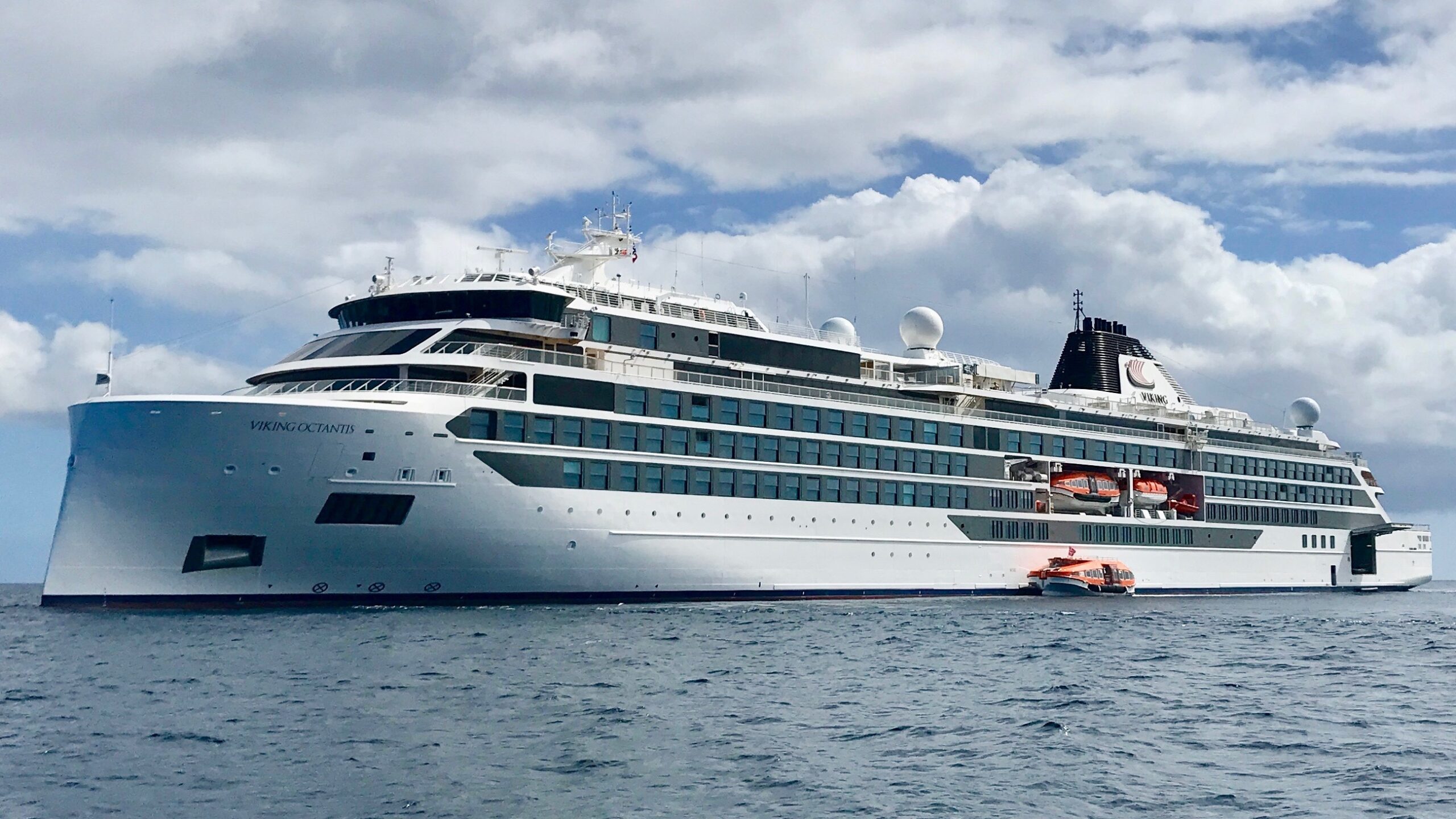
Viking Octantis · Shiphistory62 / Wikimedia Commons, CC BY-SA 4.0 (cropped image).

In 50 seconds: Viking’s two purpose-built expedition ships, Octantis and Polaris, carry 378 guests each. Expect expert-led discovery, Zodiac outings, Scandinavian comfort and destination-focused learning—not guaranteed landings or wildlife sightings. The value is in the combination of expedition capability and a notably comfortable ship; the trade-offs are cost, weather dependence and a larger guest group than some small expedition vessels.
Expedition cruising is a different sort of Viking
There is a wonderful difference between arriving in a city with a carefully timed excursion and arriving somewhere where the weather has the final word. On an expedition voyage, the destination is the star, and the ship is the very comfortable means of getting you close enough to appreciate it.
I know Viking from the working side of the business, particularly its river programme. I have not personally sailed aboard Octantis or Polaris, so this guide separates my professional perspective from Viking’s published details and the experiences reported by expedition guests. You deserve that distinction.
Think of it as Viking’s familiar love of learning and Scandinavian understatement, equipped for places where a normal cruise ship simply cannot deliver the same experience.
Meet Viking Octantis and Viking Polaris
Viking Octantis and Viking Polaris entered service in 2022. Each accommodates up to 378 guests in 189 staterooms, with a Polar Class 6 hull. They are substantial ships by expedition standards, but much smaller than mainstream ocean cruise ships. Both have Nordic Balcony accommodation—large glass windows with an upper section that can be lowered for fresh air rather than a conventional projecting balcony.
Inside, expect the World Café, The Restaurant, Manfredi’s, Mamsen’s, Explorers’ Lounge and the Nordic Spa alongside expedition-specific spaces. The Aula is a panoramic lecture auditorium; the Hangar is an enclosed launch area for expedition craft; and the Laboratory supports scientific work. A drying closet in the cabin is a wonderfully practical detail after a cold, wet outing.
Ship specifications: Viking Octantis and Viking deck plans.
Inside the ship: where expedition meets Scandinavian comfort
It is tempting to imagine an expedition ship as a sturdy vessel with a dining room, a few cabins and a lot of waterproof jackets. Viking has gone rather further. Octantis and Polaris have the atmosphere of an elegant Nordic hotel, with large windows deliberately placing the scenery centre stage. After a morning in a Zodiac, the chance to watch icebergs from a warm lounge with a coffee is not a small luxury.
Below are the facilities that make the difference between a ship that simply takes you somewhere and one that makes the voyage enjoyable in its own right.
The Aula, Finse Terrace and learning spaces
The Aula is the ship’s spectacular panoramic auditorium, designed for talks, briefings and presentations with expansive views outside. Just beyond it, the Finse Terrace offers an open-air observation space with seating and warming fire features. Viking’s Expedition Central, scientific laboratory and onboard specialists reinforce the educational side of the journey. The scenery is extraordinary; understanding what you’re looking at makes it even better.

Photo: Viking Cruises · Official expedition ship image
Explorers’ Lounge, the Living Room and the Library
The Explorers’ Lounge is a favourite kind of cruise-ship space: comfortable seating, a drink if you fancy one, and enormous windows through which the destination does most of the entertaining. The Living Room and Library provide quieter places to read, reflect and discuss the day’s discoveries. Viking’s expedition library draws on specialist polar research as well as general travel writing. This is the ship’s social heart, but not a noisy one.

Photo: Viking Cruises · Official expedition ship image
The Nordic Spa, pools and fitness centre
After a day in a cold wind, the Nordic Spa becomes rather more appealing than another lecture on ice formations. Viking’s expedition ships have an indoor hydrotherapy pool with large windows, Nordic-inspired wellness facilities, treatment options and a fitness centre. The spa area is designed for relaxation rather than a bustling resort atmosphere. Treatments and salon services may carry additional charges; confirm what is included in your fare.

Photo: Viking Cruises · Official expedition ship image
Dining: more than one way to enjoy the evening
There is no need to survive on expedition rations. The Restaurant serves changing menus and regional dishes in an elegant setting. The more informal World Café offers open kitchens, grilled choices and seafood, while Manfredi’s brings Italian favourites. At Mamsen’s, Norwegian waffles and other Scandinavian specialities make a welcome appearance. Aquavit Terrace provides another relaxed setting to watch the world go by, and room service is available around the clock.
The variety is particularly welcome on longer itineraries or days at sea. Viking is not trying to turn an expedition into a floating food festival, but it does understand that an enjoyable meal can be an adventure of its own.

Photo: Viking Cruises · Official expedition ship image
Staterooms and the clever Nordic Balcony
Every stateroom has a Nordic Balcony rather than a traditional projecting balcony: floor-to-ceiling glass with an upper window that can be lowered, creating a sheltered lookout for wildlife and scenery. In polar weather, that is arguably more useful than standing on a conventional balcony in a biting wind.
Rooms feature comfortable beds, heated bathroom floors, binoculars, a large shower and—an excellent practical touch—a heated drying closet for wet outerwear and expedition gear. Suites offer more space and extra benefits, so compare the precise cabin category before assuming every perk is standard.

Photo: Viking Cruises · Official expedition ship image
The Hangar: the working heart of the expedition
One of the most significant differences from an ordinary cruise ship is The Hangar, an enclosed launch area with an approximately 85-foot slipway for certain expedition craft. Boarding from a more sheltered and stable platform can make a real difference when conditions allow. The ship also carries Zodiacs and other specialised craft; their deployment is subject to weather, safety and local regulations.
It is worth remembering that a well-designed boarding system does not remove all mobility challenges. Ask about transfers, steps, sea conditions and landing surfaces before booking. Watch Viking’s official Hangar video.
Interior photographs are credited to Viking Cruises and displayed from Viking’s official media assets. For further photographs and ship layouts, see Viking’s Expedition Image Library and Viking Octantis ship details.
Where do Viking expedition cruises go?
Antarctica: The headline act for many travellers: glaciers, icebergs, penguins and the possibility of whales. A voyage typically includes sea days and time in Antarctic waters, but individual landings and activities depend on weather, sea conditions and operational permissions. The Drake Passage is a genuine consideration, not a decorative line on the itinerary.
The Arctic and Greenland: Ice, fjords, remote settlements, Indigenous cultures and high-latitude landscapes. Wildlife sightings are unpredictable; no ethical operator should promise polar bears, whales or anything else on demand.
North America’s Great Lakes: A very different expedition: freshwater ecosystems, fascinating industrial and cultural history, remote shorelines and more accessible ports. It can be an excellent first step into expedition-style travel, although activities vary considerably by itinerary.
Longer grand journeys: Viking also markets extended north–south expeditions linking regions, including combinations of the Great Lakes, South America and Antarctica. Always compare the specific sailing dates, ports and expedition days rather than assuming every itinerary offers the same activities.
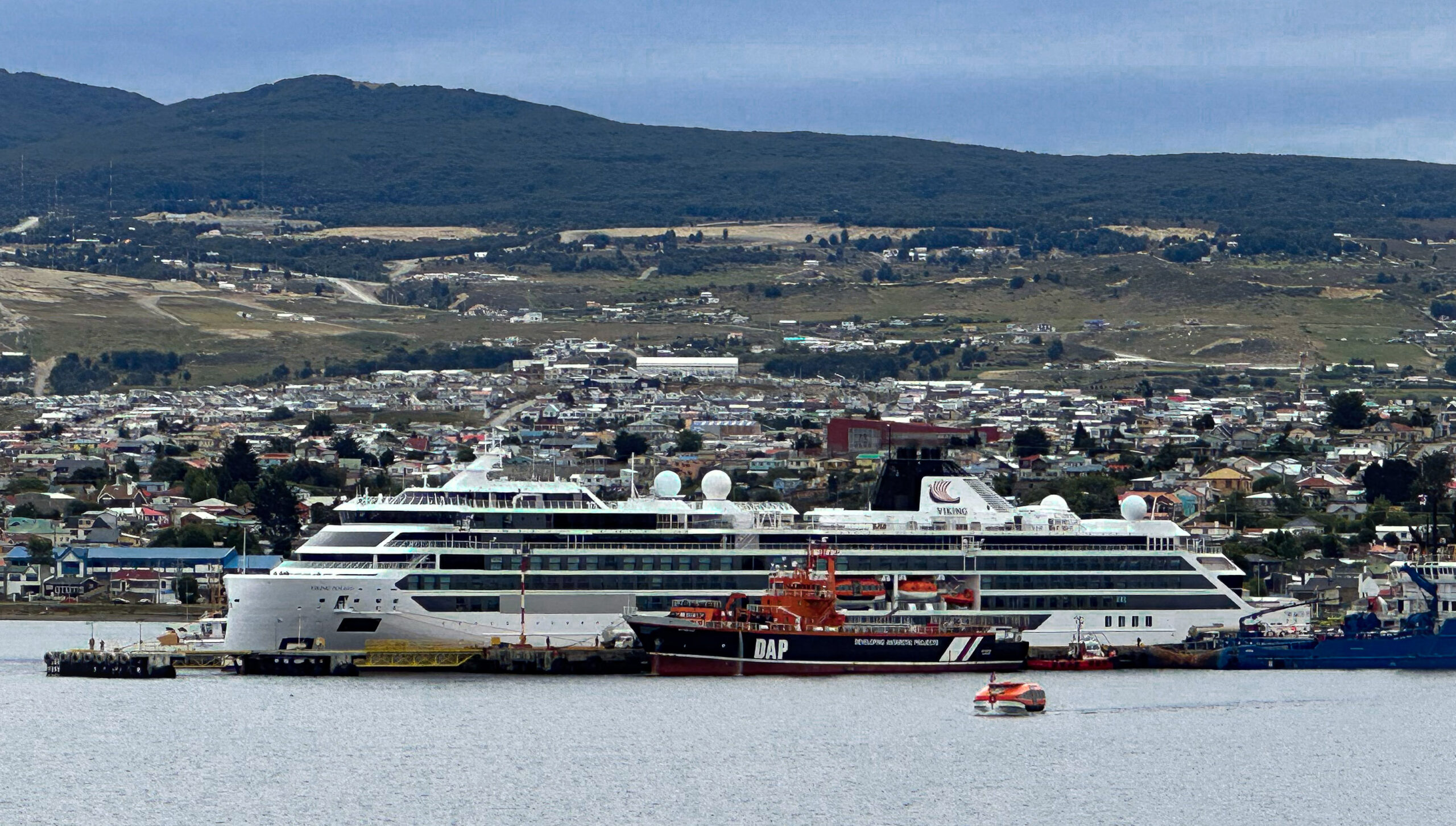
Viking Polaris in Punta Arenas · Nolabob / Wikimedia Commons, CC BY-SA 4.0.

What does a typical expedition day feel like?
Imagine waking to a changed landscape and an announcement about the day’s conditions. You might attend a briefing, dress for a Zodiac ride, explore from a kayak if a place is available, then return for lunch and a lecture that makes sense of what you’ve just seen. On another day, wind or ice may force a change of plan. Flexibility is not a flaw in expedition travel. It is part of the deal.
Viking’s ships carry Zodiacs, kayaks and Special Operations Boats. The latter are more substantial excursion craft, designed to give guests a stable ride in suitable conditions. The Hangar’s sheltered boarding arrangements are a thoughtful feature, but getting into small craft still requires assessing your own balance and mobility.
There is also a strong learning component: expedition leaders, naturalists and visiting experts help explain wildlife, geology, history and conservation. This is where Viking’s enrichment philosophy feels particularly well suited to the destination.
What is included—and what may cost extra?
Viking’s published expedition inclusions typically cover accommodation, onboard meals, beer and wine with lunch and dinner, Wi-Fi subject to satellite limitations, enrichment, the Nordic Spa, expedition gear for relevant outings and at least one complimentary landing or shore excursion on applicable days. Polar itineraries include a keepsake expedition jacket. Confirm the precise terms for your sailing.
Do not assume every adventure is included. Submarine dives are optional, availability is limited, and deployment depends on the destination and conditions. Viking’s current FAQ lists a US$499 per-person submarine dive charge, with a potential late-cancellation fee. That is a published figure as checked in October 2026, not a permanent promise.
Flights, insurance, gratuities, premium beverages, certain activities and pre/post extensions should all be checked against the exact fare and booking conditions. Expedition pricing can look very different once those extras and travel to the embarkation point are included.
| Feature | What to know before booking |
|---|---|
| Landings | Weather and local rules decide whether they happen. |
| Wildlife | Extraordinary possibilities, never guarantees. |
| Small craft | Zodiacs and other boats are central to the experience. |
| Comfort | Private cabins, restaurants, spa and Nordic-style interiors. |
| Submarines | Optional, charged separately, not always deployable. |
| Connectivity | Wi-Fi is included, but satellite service can be slow or interrupted. |
What do independent guest reviews actually say?
There is a useful pattern in independent reviews: guests frequently praise the ship, service, food, expedition staff and opportunities to learn. In Cruise Critic’s 2026 Antarctica reviews, travellers repeatedly mention knowledgeable expedition teams, Zodiac outings and memorable scenery. Great Lakes reviewers likewise highlight service and the chance to engage with scientists.
But read the less glowing accounts too. Some guests report limited wildlife sightings in the Arctic, disappointment when activities cannot operate, or less varied evening entertainment than on conventional cruises. These are important clues about expectations. An expedition is not a theatre programme with penguins attached.
Another consideration is group size. With 378 guests, Viking is not the tiniest ship in polar waters. Landing operations can require rotation and patience, particularly in Antarctica where visitor-management rules restrict numbers ashore at a time. If your priority is the highest possible ratio of time ashore to guests, compare Viking with smaller expedition operators rather than deciding on ship comfort alone.
Guest experience sources: Cruise Critic Viking expedition reviews, Antarctica reviews, and Great Lakes reviews. Reviews are individual experiences, not verified promises for future sailings.
Who is Viking expedition cruising really for?
It may suit you if you enjoy wildlife, science, history and landscapes; prefer thoughtful lectures over big production shows; value a high standard of onboard comfort; and can accept a flexible daily programme. You do not have to be a mountaineer, but you should be realistic about the physical demands of small-boat transfers and wet or uneven landings.
It may not suit you if you need guaranteed shore activities, expect a lively casino-and-showboat atmosphere, dislike cold weather or motion at sea, or want the smallest possible group in a wilderness setting. Viking’s ships are adults-only, and this is a destination-first experience.
For anyone with limited mobility, ask detailed questions before booking. A lift inside the ship is not the same thing as being able to transfer safely into a Zodiac. The itinerary, weather, landing type and assistance rules matter far more than a broad claim that a vessel is accessible.
Rob's View from the River
Working as a Viking Program Director has taught me that the best moments rarely arrive because someone followed a schedule perfectly. They happen when people become curious, ask a better question and notice what is around them.
That is why the expedition idea appeals to me. But I would never suggest booking Antarctica simply because the ship is beautiful. Decide whether the destination, physical demands and uncertainty genuinely excite you. The polished Scandinavian surroundings are a welcome bonus—not the reason to go.
Viking expedition cruises: common questions
Are Viking expedition cruises suitable for first-timers? Yes, for travellers comfortable with a destination-led itinerary and possible schedule changes. The Great Lakes can offer a different introduction from the polar regions.
Do I need to be very fit? Not necessarily, but many expedition outings involve small boats, movement on deck and potentially uneven landings. Check the exact activity requirements and your own mobility.
Will I definitely see penguins or polar bears? No. Wildlife is wild, and sightings vary by place, season and conditions.
Is a submarine ride included? No. Viking lists submarine dives as optional, paid activities, and they may not operate on every itinerary.
Are the expedition ships the same as Viking river ships? No. The shared philosophy is destination-focused travel and enrichment; the vessels, activities, crew roles and itineraries are quite different.
When is the best time to book? Once you know the destination, itinerary and cabin preference, compare available departure dates, inclusions and the full travel cost. Avoid treating a promotional fare as a complete trip price.
Check the details before you travel
Viking updates routes, prices and excursion terms. Use these official resources for the final check: Viking Expeditions, Expedition FAQs, Viking Octantis, and the official ship video.
Research checked October 2026. This is an independent editorial guide informed by published Viking information and third-party guest reviews. It is not an account of a personal sailing aboard these expedition ships.
Plan your expedition
A practical checklist before you choose a sailing.
Viking's official information
Check current routes, activities and conditions directly with Viking.
Would you choose Antarctica—or the Great Lakes?
Tell me what draws you to expedition travel. Is it wildlife, remote landscapes, the science, or simply the chance to go somewhere that feels genuinely different? I’d love to hear which itinerary has caught your imagination.