Europe Region Guide
Western Europe
This Western Europe travel guide helps you compare nine countries, choose connected bases and build a trip at a comfortable pace. Start with the cities or landscapes that interest you, then check the journeys between them. You will find country guides, route ideas and practical next steps for transport, seasons and entry requirements.
An easy place to begin — and a rich place to linger
Region page
Easy logistics
High cultural density
Schengen-friendly
By Rob Wheatley – Program Director & traveler
Reviewed 25 October 2026

Trip dashboard
Best: May–June
Also: Sept
Mostly €
112 emergency
Instead of treating Western Europe like a checklist, choose the places that make you curious. Then give each one enough time for something beyond its headline attraction.
Finding your pace in Western Europe
Western Europe was the first region that showed me travel doesn’t have to feel complicated to be deeply rewarding. However, a comfortable route still needs sensible connections and a little flexibility.
For example, you might spend one day in a historic town and the next exploring a contemporary city neighbourhood. Meanwhile, the everyday differences can be just as memorable as the famous sights. Rather than assuming familiar names mean familiar experiences, leave time to notice what changes.
The Cheat Sheet — Western Europe (60-Second Scan)
If you’re skimming on your phone in a taxi line (been there), this is the quick orienting snapshot.
Fast facts
- Currency: Mostly Euro (€)
- Power: Check the socket type and voltage for your destination and devices before packing an adapter.
- Best time: May–June and September
- Emergency planning: Before departure, save the local emergency and assistance contacts for every country on your route.
- Travel style: Easy logistics, high cultural density
- Train culture: Rail is often faster and easier than flying between major cities — book early for best prices
- Tipping norms: Service usually included; rounding up or 5-10% is standard, not the 15-20% expected in North America
- Public restrooms:: Often cost €0.50-1.00 — keep coins handy or use cafe/museum facilities
Keep in Mind
Even when the connections look easy, leave room for small pauses. For example, a long lunch or dusk walk may become the part you remember.
Map
Western Europe overview
A quick visual anchor for region boundaries and travel logic.

My pacing rule (that saves trips)
For a multi-country trip, compare the cost of each hotel change in time as well as money. Otherwise, an efficient-looking plan can become a procession of check-ins.
Remember: a travel day is rarely just "a travel day" — it's packing, checkout, transit, figuring out a new neighborhood, and unpacking again. That's half a day minimum, often more.
Simple rhythm
- 2 nights minimum per stop
- 3 nights if it’s a big museum city
- 1 reset slot every 4–5 days (laundry, admin, slow morning)
Quick Fact
Rather than measuring the journey by the number of stops, think about the time you will have in each. As a result, the places you choose have a better chance of becoming memories rather than station names.
Money
Currencies in Western Europe
Euro is common, but not universal — plan for the exceptions.
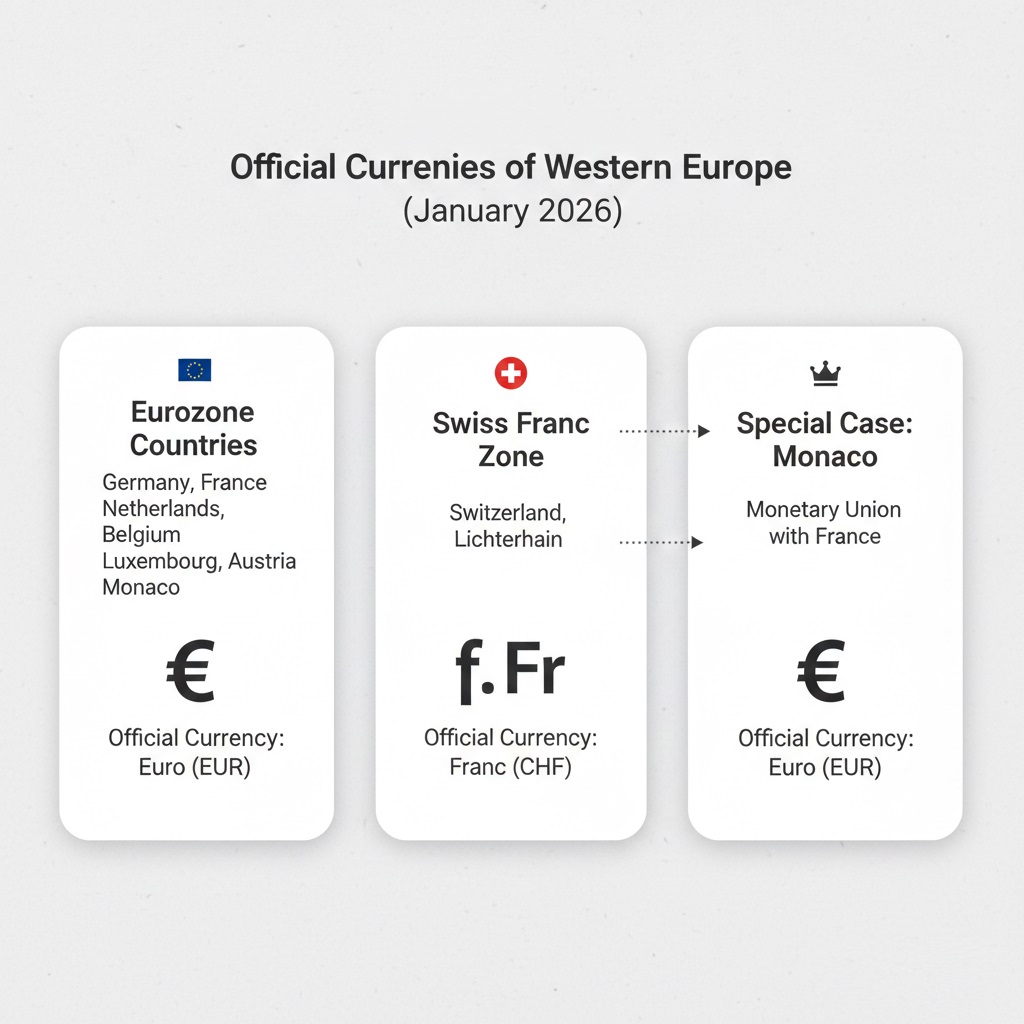
- Euro: Most countries in this set
- Swiss franc (CHF): Switzerland (often also accepted in Liechtenstein depending on context)
Which Countries Make Up Western Europe?
When I talk about Western Europe on this site, I’m using a practical travel grouping: easy movement, shared rhythms, and clear overlap — not a rigid political definition.
Country guides
Although neighbouring countries can fit naturally into one journey, each has its own character. Therefore, compare local habits and practical details before assuming the next stop works exactly like the last.
Reminder
Instead of trying to settle every possible destination at once, choose an anchor base. Then keep the other ideas as options for day trips or a future journey.
Key Point
Trains and systems might feel shared across the region — but the personality shifts fast as soon as you cross a border. This is the quick vibe shorthand I use:
- France — pleasure and ritual
- Germany — order and clarity
- Switzerland — calm and precision
- The Netherlands — open, direct, quietly creative
- Belgium — understated, efficient, quietly friendly
- Austria — elegant tradition, polished service, polite to a fault
- Luxembourg — quietly prosperous and multicultural, blending French elegance with German efficiency
- Liechtenstein — pristine, Alpine charm with discreet wealth, impeccably maintained
- Monaco — gleaming glamour in miniature, Mediterranean sparkle with superyacht energy
The “base city” trick
If your plan feels too busy, consider one base for four to six nights. Then compare day trips and short hops that genuinely fit, rather than changing hotels simply because you can.
- Urban base: trains + museums + easy loops
- Small-town base: calm nights + local mornings
- Nature base: reset days between cities
What this fixes
- Less packing/unpacking
- Less “where’s my ticket?” stress
- More neighborhood familiarity (the good stuff)
Border + money logic (simple version)
Although a route may cross nearby borders, currency and opening hours can still change. Therefore, check the next destination’s everyday details before arriving.
- Carry a small cash buffer for bakeries/markets
- Keep one spare card separate (accommodation or travel wallet)
- Don’t assume Euro everywhere — Switzerland is the classic exception
Before arriving, check how you will pay and whether the places you need will be open. That way, the evening can begin with exploring rather than a search for a working cash machine.
A clean first route (low-stress)
For a calmer structure, start with one anchor that excites you. Then branch outward only when the connections and available nights support it.
- Pick your anchor: one city you’re genuinely excited about
- Add two loops: 1 day trip + 1 short hop
- Protect evenings: keep one “no-plan” night every 3 days
Life on the move
Making it work
Transport, cards, eSIM, water — the basics that keep it smooth.

Western Europe itinerary ideas
Use these as starting points, then check the actual services and divide your nights. For example, two connected bases can give you more time to explore than a list of distant highlights.
| Route idea | Trip shape | Before you choose |
|---|---|---|
| Paris–Brussels–Amsterdam | Three city bases | Use the detailed Europe starter itinerary, then compare actual services. |
| Germany and Austria | Cities with a slower regional stay | Choose specific bases first, then check the rail connection between them. |
| Switzerland and Liechtenstein | Alpine scenery and smaller places | Allow for local transfers and choose outdoor activities for your experience. |
Vibe Check — How Western Europe Feels
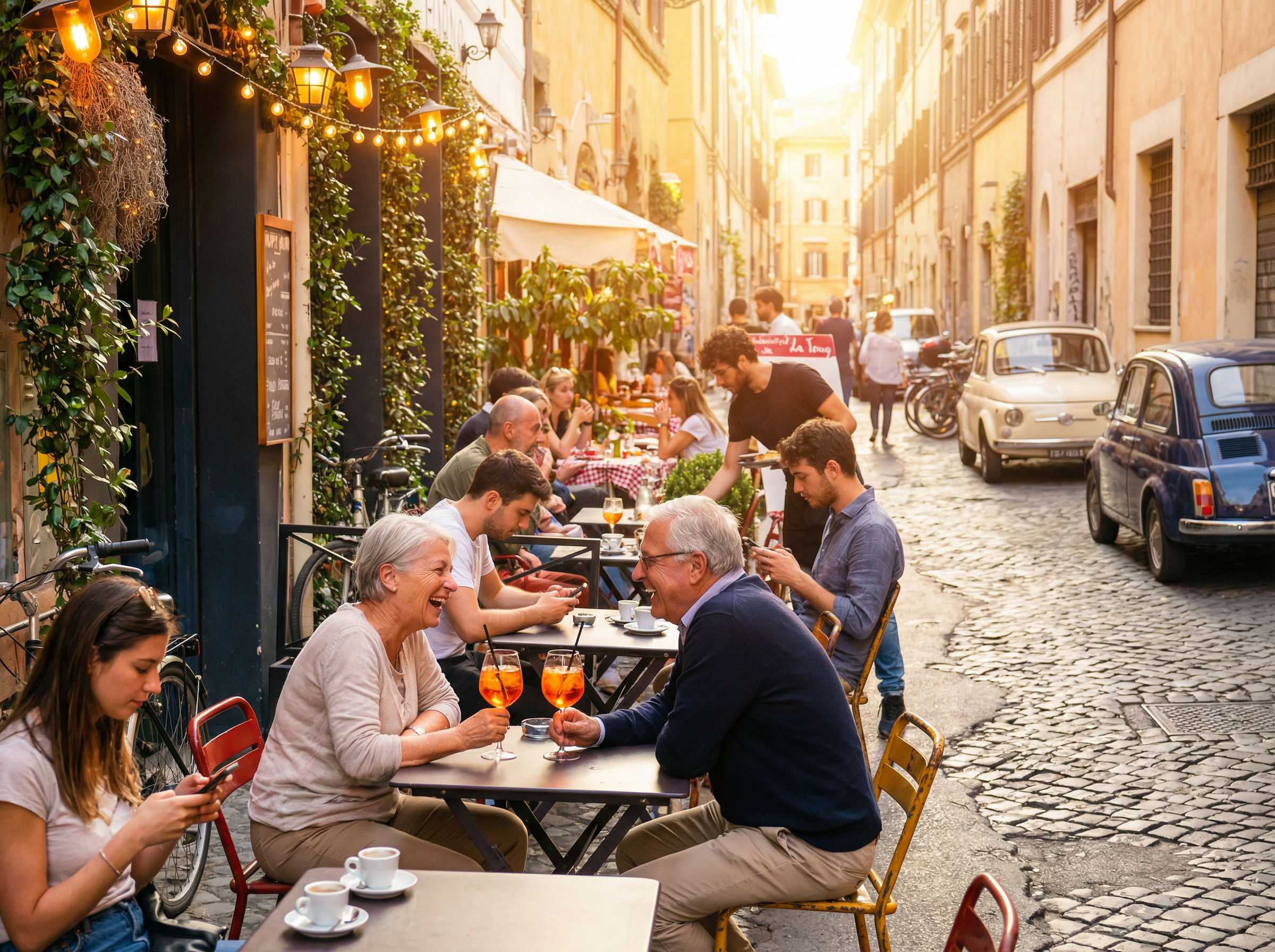
Western Europe isn’t one mood — but it does share a certain composure. Once you catch the rhythm, the whole region feels smoother.
The atmosphere
For me, the pleasure is finding a rhythm beyond the big attractions. A neighbourhood walk can reveal as much as another museum queue. Meanwhile, leave room for busy streets, delays and the everyday life of a working city.
Comfort level
For a city-based trip, public transport can make daily exploring manageable. However, check the actual service, station access and luggage arrangements. Busy stations and tourist areas still deserve attention.
What you’ll notice in the first 48 hours
- Everything feels “signed”: trains, platforms, streets — you’re rarely guessing.
- Meals are an event: even a simple lunch can take time (in a good way).
- Noise levels are lower: especially indoors and on public transport.
Straight Talk
If you push too hard, this region becomes a blur. If you slow down, it becomes a story.
Who it’s best for
First-time international travelers, solo explorers who like structure, food lovers, history fans, and anyone who wants depth without daily logistical friction.
Best travel styles here
- Slow city + day loops (my favorite)
- Rail-based multi-country (when paced well)
- Food + culture with early mornings / soft evenings
Street Smarts — Blend In Without Trying Too Hard
Instead of trying to perform a version of being local, begin with courtesy. For example, a greeting and a little patience can improve an ordinary encounter.
Three moves that actually work
- Open with a local greeting before English.
- Keep your voice down indoors — trains, cafés, museums.
- Step aside to check your phone — don’t block the flow.
Good to Know
Even if your vocabulary is small, try a greeting before asking for help. Then give the other person a moment rather than launching straight into the full travel dilemma.
The social rhythm
Politeness matters. Small courtesies — greeting shopkeepers, waiting your turn, staying calm in queues — go further than big friendliness. Smart-casual is usually a safe default in cities.
Tipping and service
Before tipping, check the bill and the local practice. Customs vary, so avoid applying one percentage across the whole region.
Logistics Lite — The Easy Stuff You’ll Appreciate
This is the part where Western Europe quietly spoils you. It’s not perfect, but it’s consistently workable.
Getting around
For connected city bases, compare rail with the alternatives. Include station access, changes and reservations, because the simplest journey depends on the actual route.
- Short hops: rail beats flying
- Day loops: base + loop is the calm way to see more
- Stations: keep your “arrival routine” tight
Money + basics
- Cards: widely accepted, still carry a little cash
- Water: generally safe to drink
- Power: Type C/E/F plugs, 230V
Low-friction habit
Before finishing the day, check tomorrow’s ticket and departure point. Then put the details aside, so the evening does not become an extended meeting with your itinerary.
The Un-Googleable Stuff — What You Notice After a While
Not landmarks. Levers. The tiny choices that change the feel of a day.
Timing is a free upgrade
- Icons: early morning or near dusk
- Midday: crowds drain the magic fast
- Evenings: neighborhoods soften and feel local
A slow afternoon template
- One neighborhood (not five attractions)
- One snack stop you didn’t plan
- One “sit” — bench, river wall, quiet square
Takeaway
If your day feels flat, change the timing — not the destination.
The Gap — What People Don’t Think to Ask
Not warnings — just avoidable friction.
Luggage reality
Although cobblestones look wonderful in photographs, luggage wheels may have a different opinion. Therefore, check the walk from the station or parking area before deciding what to pack.
Seasonal blind spots
Before an August stay, check the opening dates of the smaller places you hope to visit. Meanwhile, leave alternatives in the plan rather than assuming every business follows the same calendar.
Fix it fast
- Heavy itinerary? Drop one city and add one “no-plan morning.”
- Too many trains? Base longer and loop out.
- Museum overload? Swap one museum for a neighborhood day.
Bottom Line
Although another stop can sound tempting, protect enough time for the places already chosen. Instead of sprinting through the region, leave room for the small discoveries that give the trip its story.
Official checks before you book
First confirm entry requirements for your passport and every country in the route. Then check the operator’s current timetable and any required seat reservations. For a U.S. departure, count long-haul travel days separately from the nights available for exploring.
These links provide the current details behind the planning advice. Meanwhile, the country guides help you decide which places belong in your trip.
Western Europe planning questions
This site groups France, Germany, Switzerland, the Netherlands, Belgium, Austria, Luxembourg, Liechtenstein and Monaco here. These are planning categories, so other sources may draw the regional boundaries differently.
For a connected city trip, consider Paris, Brussels and Amsterdam. Then use the detailed starter itinerary linked on this page to divide your nights and check the actual connections.
Compare individual tickets with a pass for your exact journeys. Also include any required reservations, because a pass alone does not guarantee a seat on every train.
First compare real room prices, transport and the activities you want. Then consider fewer bases, because repeated transfers can add cost without adding much enjoyment.
Join the conversation
Choosing a route through Western Europe? Tell me your travel month, interests and available nights. Then we can focus on the choice that is holding up your plans.