BELGIUM, WHEN YOU WANT “EUROPE IN MINIATURE” — CITIES, CANALS, BEER, ART, AND EASY TRAINS
Belgium Travel Guide: How to Build a Trip That Feels Rich Without Overplanning Every Hour
For a first Belgium trip, choose Brussels or Ghent as your base, then explore nearby cities by train. Allow four to seven days for a mix of canals, museums, food and a slower countryside outing. Before booking, compare the actual connections and leave space for meals, weather and the occasional unplanned discovery.
Belgium is compact, layered and far more interesting than its size suggests. For example, you can follow a canal walk with an art museum, a long lunch or a quieter afternoon outdoors. The challenge is choosing what to leave for tomorrow.
My approach is simple: choose one anchor base, usually Brussels or Ghent, then build day trips around it. That way, you can explore with a lighter bag and return to the same bed. Your suitcase deserves a holiday too.
The mood changes as you move around. For instance, Flanders offers canal cities, while Wallonia brings river towns and greener escapes. Meanwhile, Brussels has its own city energy. Choose the mixture you want rather than assuming every stop will feel alike.
By RobLast updated: February 2026~12–16 min readCurrency: EUR (€)Languages: Dutch / French / German
Start with one useful decision: choose a base before filling the itinerary. Then add a couple of city days and some breathing room.
Best first move: Pick one base (Brussels or Ghent), then do train day-loops.
When it clicks: Stop trying to “collect cities” and build one good day at a time.
Big win:Brussels + Ghent + Bruges + Antwerp is realistic without a car.
Classic mistake: Too many overnight hops.
Quiet flex: Add one Wallonia day (Namur/Dinant/Ardennes edge).
Key Takeaway
Try one base, two city days and one slow day. Afterwards, adjust the balance to your interests. The slower day often becomes the one you remember most.
Food, language and local character vary across Belgium. As a result, a short journey can bring a noticeable change of scene.
The Belgium That Clicks: One Base, Several Different Days
Start with a base that suits your evenings as well as your day trips. For example, Brussels may make sense for the connections you want, while Ghent may better suit the atmosphere you enjoy. Compare both before booking the room.
Next, choose two city outings from Ghent, Bruges and Antwerp. Give each day a different purpose: canals and wandering, perhaps, followed by art or architecture on another day. However, leave enough time to enjoy each place without constantly watching the departure board.
Before buying tickets, check the current SNCB/NMBS journey planner and fare options using the official link below. Then check the last useful return service, your arrival station and any conditions attached to a discounted ticket. A familiar ticket name in an old guide may no longer be available.
My preference: I would choose Ghent if I only had time for one canal city. However, Bruges may suit you better. The useful question is which place deserves more of your time, rather than how quickly you can fit both into the day.
What I’d do
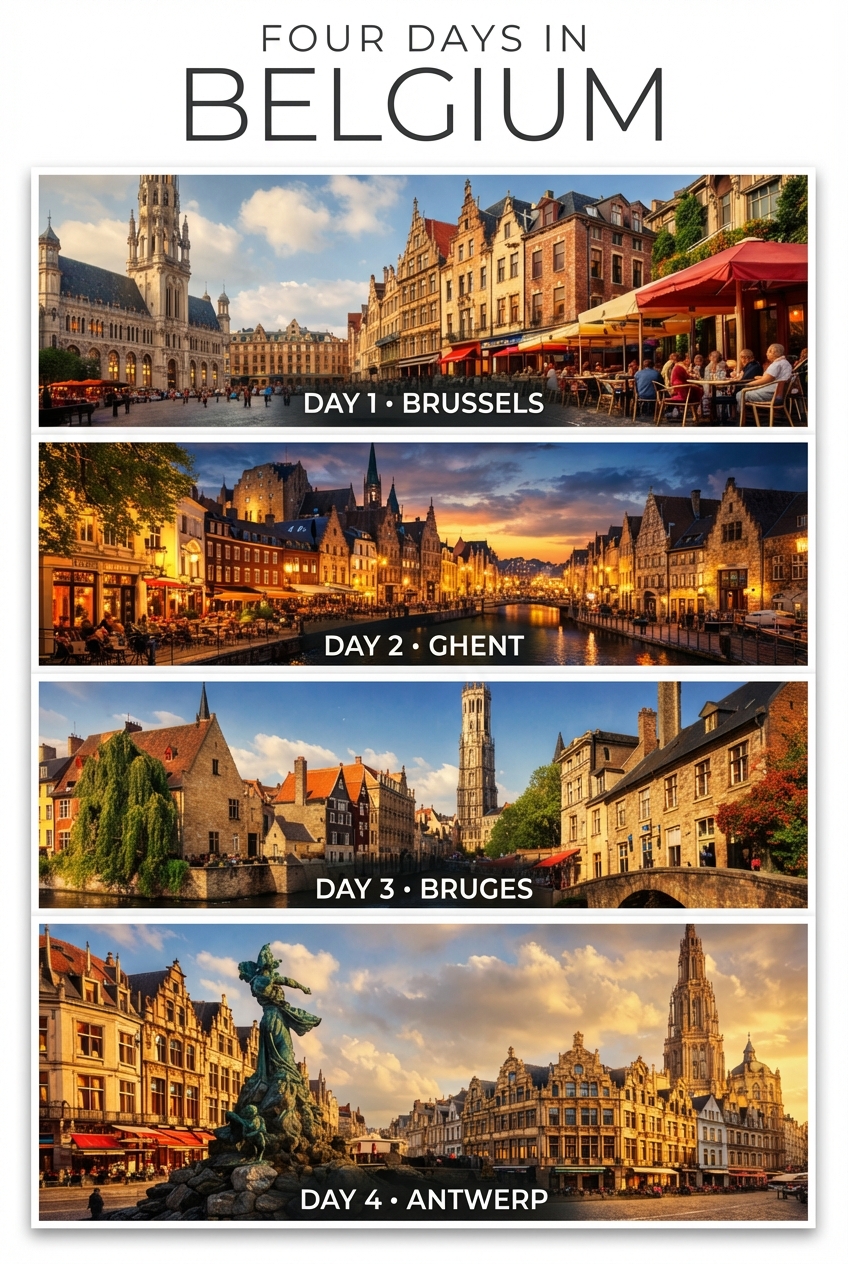
Begin in Brussels on day one, then take a manageable neighbourhood walk.
Next, explore Ghent on day two; afterwards, stay for dinner if your return journey allows.
For day three, visit Bruges while leaving enough time for a break.
Finally, choose Antwerp or a quieter Wallonia outing for your fourth day.
Vibe Check: What Kind of Belgium Are You Here For?
First decide how you want the days to feel, then match the places to that mood.
Canals + Candlelight
Choose a neighbourhood walk and a long meal, then return to the water at dusk. Rather than adding another attraction, enjoy seeing the same streets in different light.
Art + Design + City Brain
Build a day around one museum or gallery. Afterwards, leave time for architecture, design shops or a district you want to explore on foot.
Green Reset
Consider a Wallonia river town or a countryside walk. In particular, give yourself a change of pace if the rest of the trip is full of city sightseeing.
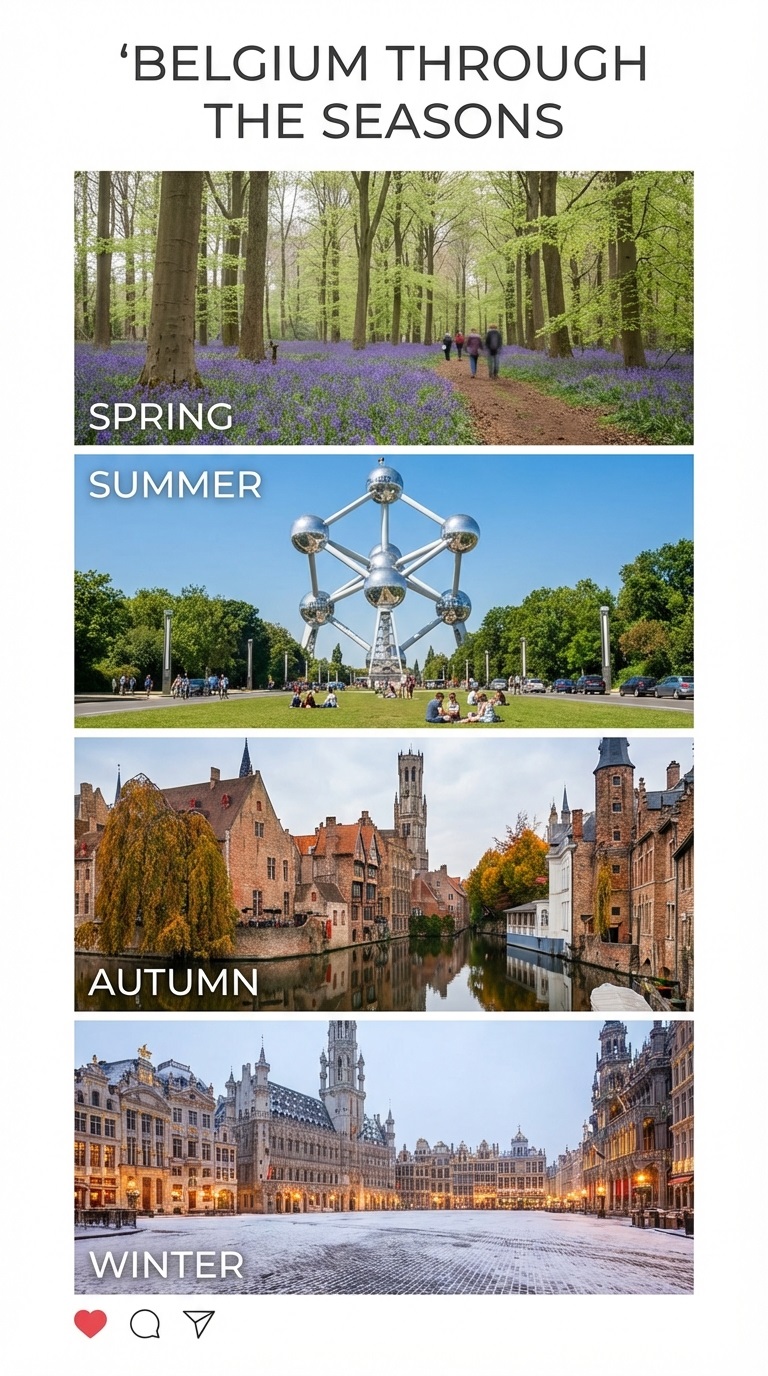
Belgium in Four Seasons: Same Country, Different Personality
Choose dates around the experiences you want. However, keep an indoor alternative available rather than expecting the weather to follow the itinerary.
🌷
Spring
Consider: city walks and market visits. However, check the forecast before committing to a long outdoor day.
☀️
Summer
Consider: longer evenings and events that interest you. For example, plan a Bruges walk early or late if you want to avoid the busiest part of the day.
🍂
Autumn
Consider: museums, cafés and shorter outdoor walks. Then switch the order of the day if rain arrives.
❄️
Winter
Consider: indoor culture and seasonal events. Before booking, check the dates of any Christmas market you particularly want to see.
Weather can change during a day's sightseeing, so pack layers rather than relying on one bulky item.
Keep in Mind
A rain shell is useful, but match the rest of your clothing to the season. In particular, keep warmth and comfortable walking shoes in mind.
First, check the forecast for your dates rather than packing for a generic idea of Belgium.
Then choose layers you can add or remove as the day changes.
For example, a packable waterproof layer can be useful for an afternoon of sightseeing.
Finally, check your walking shoes before departure; cobblestones are a poor place to discover a blister.
Belgium works year-round — the trick is matching season to your travel style.
Rob’s Choices: The Food + Activity Combo I’d Actually Prioritize
If I had to choose one food experience and one active outing, I would start here. However, both should suit your appetite and energy.
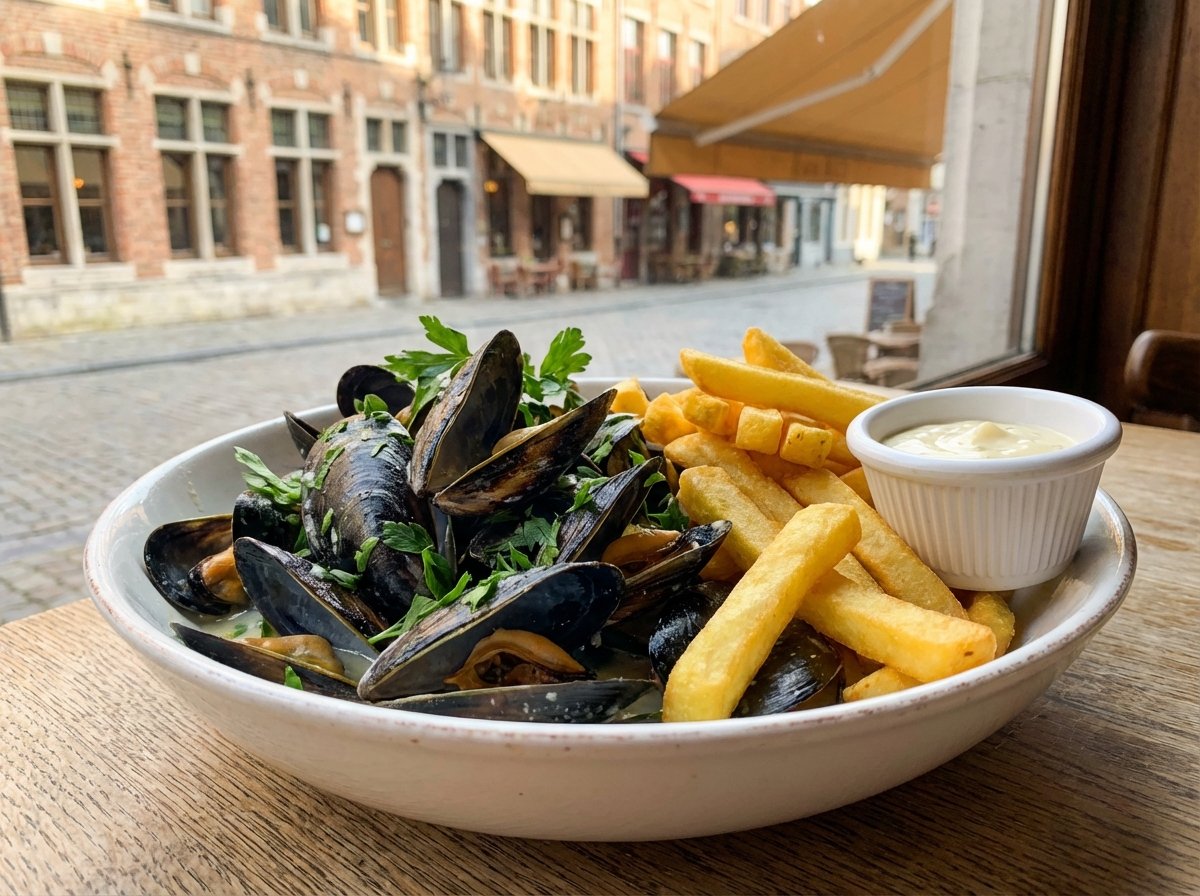
Moules-frites is still one of the most satisfying Belgian classics done right.
1) Food choice: Moules-frites + one proper beer pairing
I would make time for a proper sit-down meal of moules-frites, or mussels and fries. Then ask about a local pairing if that appeals to you. A memorable meal needs time at the table, rather than a gap between two appointments.
2) Activity choice: Flanders city cycling day
For an active outing, I would consider an urban or canal-side cycle route in Flanders. Before hiring a bike, check the route, traffic and distance. Alternatively, enjoy the same sort of slower exploration on foot.
My Practical Rule
Choose one food experience and one outing that gets you moving. That way, the trip has variety without becoming an endurance event.
A few practical checks make the days easier. For example, look at language, local transport and attraction calendars before arrival.
Language reality
Brussels: bilingual vibe (French/Dutch), strong English in visitor areas.
Flanders: Dutch/Flemish dominant.
Wallonia: French dominant.
Best move: greet politely, then ask if English is okay.
City-life basics
Watch pockets in busy stations/squares.
Mind tram tracks and bike lanes.
Double-check museum closing days.
Some Sundays feel quieter — plan cafés/parks/walks.
Reality Check
A packed timetable creates its own problems. Instead, remove a stop when the day already looks full.
Logistics Lite
Handle the essentials before departure, then keep the details somewhere easy to find.
Entry rules: Schengen 90/180
Belgium is in Schengen, so consider the short-stay allowance across your wider European route. Before booking, verify the rules for your passport and travel history.
For border procedures and any travel authorisation applying on your dates, check the official EU EES and ETIAS website. Then verify the requirements for your passport before departure.
For many city-based trips, rail and local transport are worth comparing before a rental car. For example, check the intercity journey and the final connection to your hotel. A short train ride can still involve a longer walk at the other end.
Belgium uses the euro (€), and cards are widely accepted. However, carry a backup payment option. For electrical equipment, check compatibility with 230V / 50Hz and bring the appropriate adapter.
Un-Googleable Belgium: Tiny Choices That Change the Whole Trip
Do one city twice (day + night)
Return to a city after an earlier daytime visit. For example, a familiar street can feel quite different over dinner or an evening walk.
Let one café stop become the plan
Leave one café stop open-ended. Afterwards, decide whether you still want the next attraction or would rather stay where you are.
Treat Bruges like a dose, not a marathon
Visit the lanes that interest you, then take a break before adding more. However, do not feel obliged to leave early if Bruges is the place you most enjoy.
Add one Wallonia day
Add a greener day if the trip feels too urban. Alternatively, stay in the city and find a park or a shorter walk.
Gap Analysis: Is Belgium Right for Your Trip Style?
You’ll love it if…
Compact places with several different moods appeal to you.
In particular, you enjoy exploring on foot and taking time over a café stop.
A well-chosen base matters more to you than changing hotels every night.
Above all, you prefer fewer outings with time to enjoy them.
Plan around it if…
Guaranteed hot weather is the main reason for your trip.
Long city walks do not suit you; instead, plan shorter outings and useful transport.
Five cities in four days sounds tempting, although the transfers may leave little time to explore.
Straight Talk
There is plenty to notice in Belgium. However, you need enough room in the day to notice it.
Explore Belgium with Rob
For a closer look, choose one of these guides and stories before building the rest of your trip.
Use these answers as a starting point, then follow the official links for details that affect your booking.
Do I need a car in Belgium?+
Usually, a car is unnecessary for a trip built around the main cities. However, compare the actual connections if your plans include countryside stays or smaller places.
What language should I use?+
Start with a polite greeting, then ask whether English is okay. Language use varies by region, so avoid assuming that the same greeting suits every stop.
How many days do I need?+
I suggest four to seven days for a first visit with one base and a few day trips. However, allow more time if you prefer longer museum visits or countryside stays.
Is Belgium expensive?+
Your dates, accommodation and daily choices will shape the total. For example, compare the complete cost of a room near useful transport with a cheaper room that adds daily transfers.
Are you leaning towards Brussels, Ghent or a city-and-countryside combination? Share what you are planning, along with the part you cannot quite settle. If you have already been, add one practical tip so the next traveller can learn from it.

Join the conversation
Are you leaning towards Brussels, Ghent or a city-and-countryside combination? Share what you are planning, along with the part you cannot quite settle. If you have already been, add one practical tip so the next traveller can learn from it.