Europe Region Guide
Western Europe
An easy place to begin — and a rich place to linger
Western Europe was the first region that showed me travel doesn’t have to feel complicated to be deeply rewarding. Everything works — trains, streets, systems — yet nothing feels sterile.
One day you’re wandering through a medieval old town that hasn’t changed much in 500 years, and the next you’re sipping coffee in a city so modern it feels like tomorrow arrived early. It’s familiar, yes. But it’s also layered. And the longer you stay, the more you notice the quiet differences hiding beneath the postcard surface.
The Cheat Sheet — Western Europe (60-Second Scan)
If you’re skimming on your phone in a taxi line (been there), this is the quick orienting snapshot.
Fast facts
- Currency: Mostly Euro (€)
- Plugs: Type C / E / F (230V)
- Best time: May–June and September
- Emergency: 112
- Travel style: Easy logistics, high cultural density
- Train culture: Rail is often faster and easier than flying between major cities — book early for best prices
- Tipping norms: Service usually included; rounding up or 5-10% is standard, not the 15-20% expected in North America
- Public restrooms:: Often cost €0.50-1.00 — keep coins handy or use cafe/museum facilities
“Easy” doesn’t mean “fast.” Western Europe rewards small pauses — lingering lunches, neighborhood walks, dusk strolls.
Map
Western Europe overview
A quick visual anchor for region boundaries and travel logic.
My pacing rule (that saves trips)
If you’re doing multi-country travel, avoid the “one-night hop.” It looks efficient on paper and feels exhausting in real life.
Remember: a travel day is rarely just "a travel day" — it's packing, checkout, transit, figuring out a new neighborhood, and unpacking again. That's half a day minimum, often more.- 2 nights minimum per stop
- 3 nights if it’s a big museum city
- 1 reset slot every 4–5 days (laundry, admin, slow morning)
Your trip doesn’t feel “richer” when you add more places — it feels richer when you remember the places you actually went.
Money
Currencies in Western Europe
Euro is common, but not universal — plan for the exceptions.
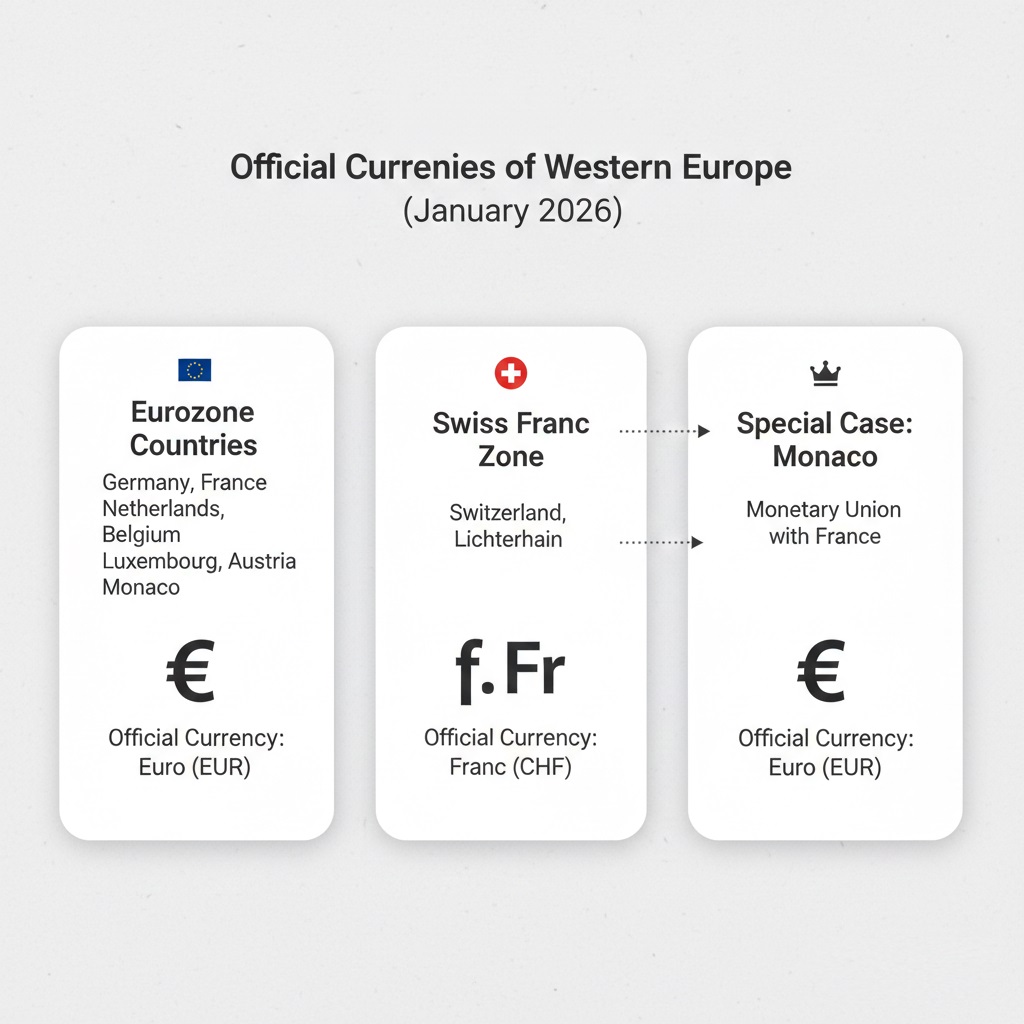
- Euro: Most countries in this set
- Swiss franc (CHF): Switzerland (often also accepted in Liechtenstein depending on context)
Which Countries Make Up Western Europe?
When I talk about Western Europe on this site, I’m using a practical travel grouping: easy movement, shared rhythms, and clear overlap — not a rigid political definition.
Regions include
The win here: borders feel close, but each country still has its own texture. You can feel the differences without constantly re-learning the basics.
If you’re overwhelmed, don’t delete countries. Change the structure: base longer, loop out, and keep the admin low.
Trains and systems might feel shared across the region — but the personality shifts fast as soon as you cross a border. This is the quick vibe shorthand I use:
- France — pleasure and ritual
- Germany — order and clarity
- Switzerland — calm and precision
- The Netherlands — open, direct, quietly creative
- Belgium — understated, efficient, quietly friendly
See the full vibe list
- Austria — elegant tradition, polished service, polite to a fault
- Luxembourg — quietly prosperous and multicultural, blending French elegance with German efficiency
- Liechtenstein — pristine, Alpine charm with discreet wealth, impeccably maintained
- Monaco — gleaming glamour in miniature, Mediterranean sparkle with superyacht energy
The “base city” trick
If your plan feels too busy, don’t chase 10 stops. Pick one base for 4–6 nights, then do day-loops and short hops.
- Urban base: trains + museums + easy loops
- Small-town base: calm nights + local mornings
- Nature base: reset days between cities
- Less packing/unpacking
- Less “where’s my ticket?” stress
- More neighborhood familiarity (the good stuff)
Border + money logic (simple version)
Movement is easy, but “little rules” still change: currency, shopping hours, Sunday closures, and small local etiquette. If you plan for those, you stop getting surprised.
- Carry a small cash buffer for bakeries/markets
- Keep one spare card separate (accommodation or travel wallet)
- Don’t assume Euro everywhere — Switzerland is the classic exception
The goal isn’t to micromanage. It’s to avoid the two dumb problems: “I can’t pay” and “everything’s closed.”
A clean first route (low-stress)
If you want a calm structure, start with one anchor, then branch outward — not the other way around.
- Pick your anchor: one city you’re genuinely excited about
- Add two loops: 1 day trip + 1 short hop
- Protect evenings: keep one “no-plan” night every 3 days
Life on the move
Making it work
Transport, cards, eSIM, water — the basics that keep it smooth.
Vibe Check — How Western Europe Feels
Western Europe isn’t one mood — but it does share a certain composure. Once you catch the rhythm, the whole region feels smoother.
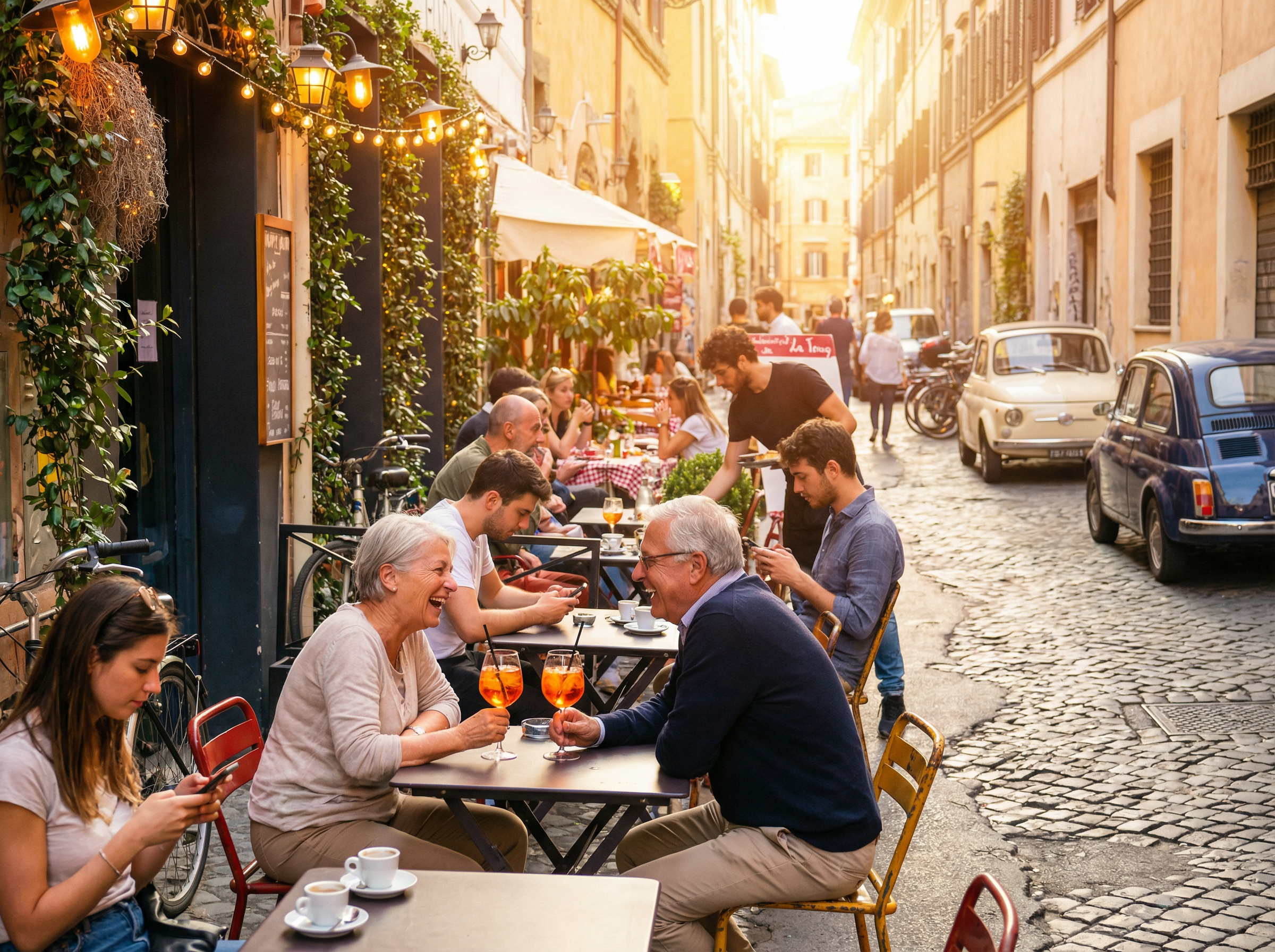
The atmosphere
Western Europe feels composed. Cities are busy but rarely chaotic. Even in capital hubs, there’s a sense that life isn’t rushed — just structured. Once you sync with that, travel here feels smooth.
Comfort level
This is one of the most comfortable regions in the world to move through. Public transport is reliable, signage is clear, and help is usually close by. Still, comfort isn’t a forcefield — busy stations and tourist zones still require awareness.
What you’ll notice in the first 48 hours
- Everything feels “signed”: trains, platforms, streets — you’re rarely guessing.
- Meals are an event: even a simple lunch can take time (in a good way).
- Noise levels are lower: especially indoors and on public transport.
If you push too hard, this region becomes a blur. If you slow down, it becomes a story.
Who it’s best for
First-time international travelers, solo explorers who like structure, food lovers, history fans, and anyone who wants depth without daily logistical friction.
- Slow city + day loops (my favorite)
- Rail-based multi-country (when paced well)
- Food + culture with early mornings / soft evenings
Street Smarts — Blend In Without Trying Too Hard
You don’t need to “perform local.” However, a few small habits change how people meet you.
Three moves that actually work
- Open with a local greeting before English.
- Keep your voice down indoors — trains, cafés, museums.
- Step aside to check your phone — don’t block the flow.
Effort counts more than fluency. A greeting is often the difference between “transaction” and “welcome.”
The social rhythm
Politeness matters. Small courtesies — greeting shopkeepers, waiting your turn, staying calm in queues — go further than big friendliness. Smart-casual is usually a safe default in cities.
Tipping and service
Service is often included; tipping is usually a modest round-up or 5–10% for excellent service.
Logistics Lite — The Easy Stuff You’ll Appreciate
This is the part where Western Europe quietly spoils you. It’s not perfect, but it’s consistently workable.
Getting around
Trains are the backbone here. For most city-to-city hops, rail wins for simplicity and time-saved stress.
- Short hops: rail beats flying
- Day loops: base + loop is the calm way to see more
- Stations: keep your “arrival routine” tight
Money + basics
- Cards: widely accepted, still carry a little cash
- Water: generally safe to drink
- Power: Type C/E/F plugs, 230V
Do one “reset ritual” in the evening: tickets, tomorrow’s route, laundry check. It keeps your brain quiet.
The Un-Googleable Stuff — What You Notice After a While
Not landmarks. Levers. The tiny choices that change the feel of a day.
Timing is a free upgrade
- Icons: early morning or near dusk
- Midday: crowds drain the magic fast
- Evenings: neighborhoods soften and feel local
A slow afternoon template
- One neighborhood (not five attractions)
- One snack stop you didn’t plan
- One “sit” — bench, river wall, quiet square
If your day feels flat, change the timing — not the destination.
The Gap — What People Don’t Think to Ask
Not warnings — just avoidable friction.
Luggage reality
Cobblestones are beautiful and brutal. If you can go lighter, your whole trip gets easier.
Seasonal blind spots
August can feel oddly quiet in some places — locals travel, family spots close, cities shift rhythm.
Fix it fast
- Heavy itinerary? Drop one city and add one “no-plan morning.”
- Too many trains? Base longer and loop out.
- Museum overload? Swap one museum for a neighborhood day.
If you treat this region like a sprint, it turns into a blur. If you treat it like a slow walk, it turns into a story.
Join the conversation
Have you done Western Europe slowly — or are you planning your first swing through? Share what you’re excited about (or stuck on), and drop your best small-town finds so the next traveler gets the good stuff too.