Travel field notes · The longer journey
Long-Term Travel: Benefits, Challenges & Your Planning Roadmap
Six months abroad sounds wonderfully liberating. Until you realize your laundry is coming too.
Long-term travel gives you time to settle into places, develop routines and discover more than the route between the hotel and the main attraction. It also asks you to manage money, paperwork, health and relationships over a longer stretch. This overview helps you weigh both sides and start planning.
By Rob Wheatley – Program Director & traveler
Updated 16 October 2026
Benefits & challenges · Routes, money & documents · Packing, work & people
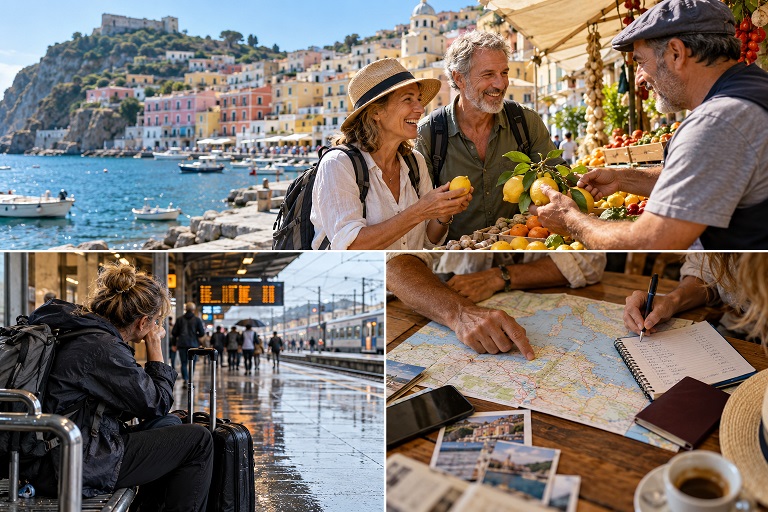
Long-term travel: the rewards and the reality
A longer trip gives you permission to stop treating every afternoon like a competitive event. You can return to a market, learn a little of the language and discover a neighborhood beyond its most photographed corner.
However, the length of a trip does not guarantee a transformation. Some days you will feel adventurous. Other days you will want reliable Wi-Fi, clean socks and nobody asking where you are going next.
What you can gain
- Deeper familiarity: time for routines, conversations and repeat visits.
- More flexibility: room to stay longer when a place suits you.
- Practical confidence: experience solving everyday problems away from home.
- Potential daily savings: fewer moves and longer stays can help, depending on the destination and booking.
What needs a plan
- Money: travel costs plus commitments that continue at home.
- Energy: rest days and a pace you can sustain.
- Paperwork: entry permissions, healthcare, work and other obligations.
- Relationships: staying connected, handling loneliness and returning home.
For a deeper look at pace, read Slow Travel. If the bigger adjustment worries you, start with dealing with culture shock and coming home changed.
Your world travel planning board
Open a question. Get the short answer. Follow the guide if you need more.
No need to read every subject in one sitting. Start with the decision currently standing between you and a sensible next step.
01 · Route & pace
Round-the-world travel links several countries or regions into one journey. Long-term travel can also mean staying in one region; you do not have to circle the globe to make it count.
Choose your purpose, available time and spending limit. Sketch a route, then test it against entry rules, seasons and transport. The first draft is allowed to contain fewer countries than your imagination.
Six months or a year can work, but there is no compulsory lap time. Fit the trip to your budget, responsibilities and entry permissions. Leave enough breathing room to enjoy somewhere before packing again.
Match places to your interests, budget, seasons and comfort level. Group nearby destinations together to reduce backtracking. Your route should suit you—not someone else’s impressive map.
Compare the same route both ways, including baggage, date changes and travel between airports. A round-the-world ticket comes with routing and fare rules; separate bookings have their own trade-offs.
Arrange time-sensitive documents, essential transport and the first few nights. Leave flexible space around them. Spontaneity is more enjoyable when your arrival does not depend on a miracle.
02 · Money & entry
There is no useful universal price for six months abroad. Add daily living costs, intercity travel, insurance, documents, home commitments and an emergency reserve. Compare realistic routes in USD before choosing a departure date.
Separate setup costs, daily spending and your emergency reserve. Track spending early and adjust the route before the money runs thin. Include bills that continue at home.
Sometimes—but a package fare is not automatically a bargain. Compare actual quotes, included flights, change conditions and surface travel. The cheapest useful ticket is one that fits your route.
Set a departure target and a monthly savings amount. On the road, fewer moves, kitchens and longer stays may help. Work exchanges still require checks on legal permission, conditions and suitability.
Check each destination’s official rules for your passport, trip purpose and onward journey. Track permitted stays and application deadlines. Permission to visit is not automatically permission to work.
Consult a healthcare professional before departure about your route, activities, medicines and vaccination needs. The CDC advises a pre-travel appointment at least 4–6 weeks ahead when possible.
03 · Protection & logistics
Check the maximum trip length, medical and evacuation cover, activities, exclusions and rules for extending the policy. Confirm what your existing U.S. health plan covers abroad rather than assuming it travels with you.
Compare flights, trains, buses and ferries by total time and cost—not just the ticket. Include baggage, transfers, border crossings and overnight stops. Overland is an option, not a guarantee of savings.
Check passport validity and blank-page requirements for every destination and transit point. Carry the required visas, insurance details and useful backups. Six months of passport validity is not a universal rule.
Build rest, sleep and sensible routines into the trip. Research local food and water precautions, carry your prescribed medicines appropriately and know where to seek care. A full itinerary is no substitute for feeling well.
Research the area, plan your arrival and transport home, and keep a trusted person updated privately. Protect documents and money, and leave situations that feel wrong. Confidence includes changing your mind.
Save local emergency numbers, your insurer’s assistance details and consular contacts offline. Keep backup funds accessible. U.S. citizens and nationals can enroll in STEP for State Department messages.
Life on the road: the everyday questions
Once the route begins to look possible, think about how you will actually live it. The smaller decisions—what to carry, how to work and who to call—often make the biggest difference to a long trip.
04 · Packing & preparation
Check current U.S. State Department advisories alongside local information and insurance exclusions. Conditions vary within countries and can change. Decide with current evidence, rather than an old reputation.
Start with the activities, climate, laundry access and baggage limits on your route. Pack what you can comfortably manage yourself. Six months away does not require six months of clothing.
Use adaptable layers and check seasonal conditions. Plan how to handle specialist equipment instead of carrying it through every climate. Leave room for practical purchases along the way.
Take devices that solve a real problem: communication, charging, navigation or work. Check plug types and voltage compatibility. Back up important information; your phone should not be the only copy of your plan.
05 · Work & connection
Check immigration permission, employer approval, tax obligations, time zones and reliable internet before relying on income abroad. Tourism status does not automatically authorize remote or local work.
Compare a roaming plan, local SIM and travel eSIM for your route. Check device compatibility, unlocking, coverage and data allowances. Save offline essentials before you need them.
Choose a small set for maps, transport, accommodation, translation and money. Download offline information where available and check permissions. An app can suggest a connection; the operator confirms it.
Check the host, actual duties, costs, safeguarding and who benefits. Confirm immigration permission even when no wage is paid. A meaningful placement needs more investigation than an appealing photograph.
06 · People & perspective
Add regular contact with people you trust and activities you genuinely enjoy. Shared accommodation, classes or group outings can help. If loneliness persists or affects your well-being, seek appropriate support.
Try walking tours, classes, shared activities or language exchanges. Familiar places and repeat visits can make conversations easier. You do not need to become a different personality to make a friend.
Agree a realistic rhythm for calls and updates, allowing for time zones. Give close relationships individual attention. A postcard can still achieve things a broadcast message cannot.
Respect local customs and consent around photographs, support businesses thoughtfully and follow environmental guidance. Ask questions before assuming an activity helps a community or protects wildlife.
Build a trip you can live with
My advice is to plan the essentials and leave some space around them. A slower month can be a better choice than another country. A call home can matter more than another photograph. And changing the plan is not the same as failing.
Before booking, choose a realistic route, price it, check the entry requirements and decide how you will protect your health and money. Then give yourself permission to enjoy the journey you actually have.
If the pace starts to feel wrong, adjust your travel rhythm. You are allowed to enjoy a place without exhausting its entire list of attractions.
Want the step-by-step version?
The World Travel Course brings the planning subjects together in sequence. Use this board for quick answers, then turn to the course when you want to build the whole plan.
What would need to be sorted before you could go? Money, time, work or the thought of leaving home? Share the part you are working through.