TRAVEL FIELD NOTES • LONG-TERM TRAVEL
Packing for 6 Months: Less Gear, More Living
A long-term travel packing list for real life: clean clothes, changing weather, manageable luggage and a small piece of home.
By Rob Wheatley – Program Director & traveler
Published 25 April 2025 · Updated 11 October 2026
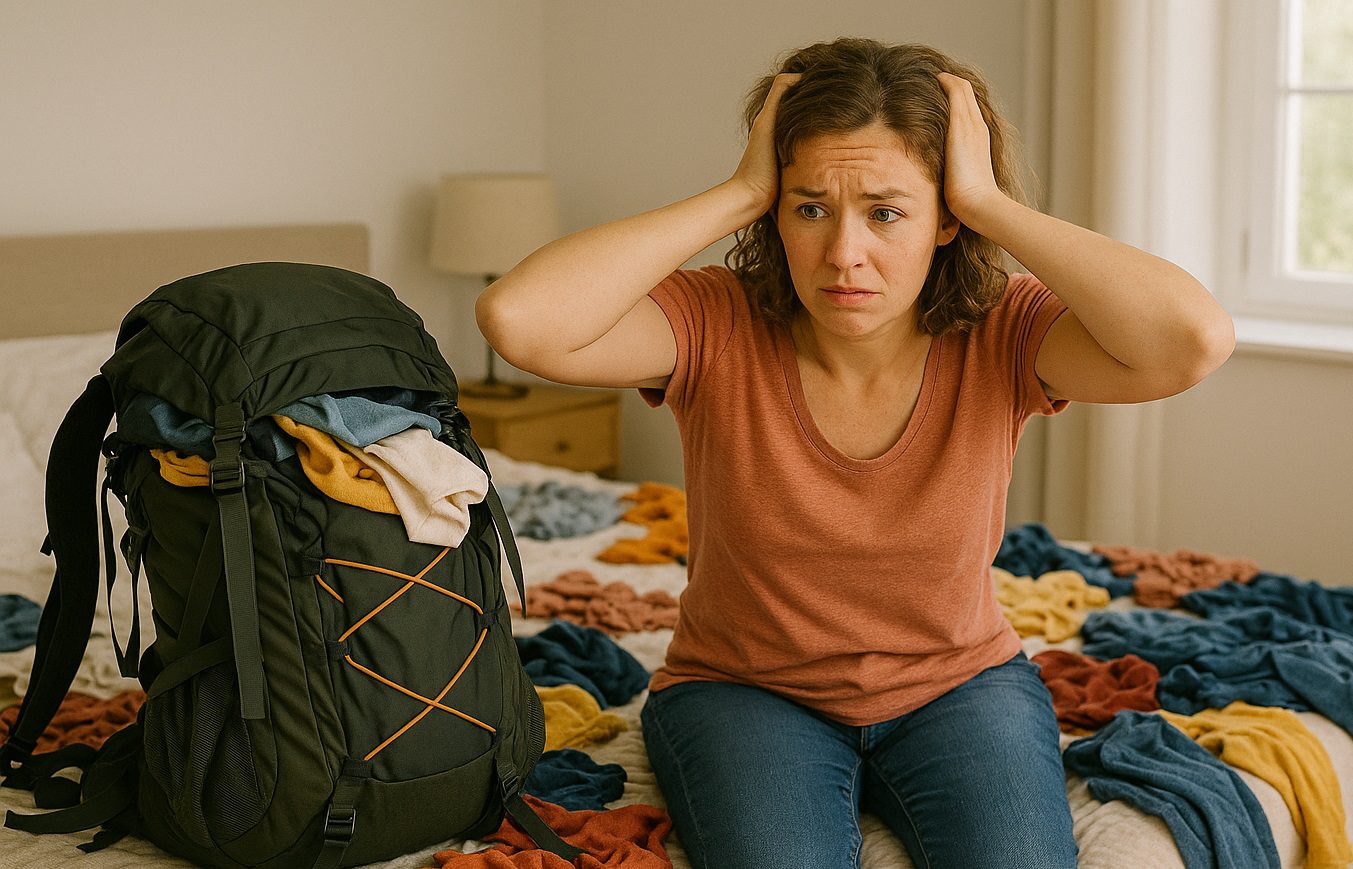
Six months is a wonderfully large amount of travel. It is also long enough for your imagination to invent six months of things you might possibly need.
There could be a mountain. A wedding. A sudden invitation to something requiring the shoes you haven’t worn since 2017. Before you know it, you are relocating a small department store.
I’d pack for the life I expect to live on the road, with sensible provision for what would be difficult to replace. The aim is a bag you can manage on an ordinary travel day—not a heroic photograph of you carrying it for twelve seconds.
Pack for the next wash, not the next six months
The useful question is: how many days will pass between reliable opportunities to wash and dry clothes? A weekly laundry routine lets a modest wardrobe serve a long trip. It does not mean seven months of underwear squeezed into a compression sack.
However, “I’ll wash it in the sink” is a plan only if you have somewhere to wash it, permission where relevant, and enough drying time. Humid weather, cold rooms and an early departure can turn yesterday’s clean shirt into today’s damp travelling companion.
Before choosing quantities, check these four things:
- Your route: seasons, elevations, dress expectations and actual activities.
- Your wash cycle: laundry access, price, turnaround and drying conditions.
- Your baggage rules: dimensions, weight, number of pieces and any combined personal-item limit.
- Your non-negotiables: health needs, accessibility equipment, work tools and comfort.
This guide covers ordinary independent travel with regular accommodation and laundry. A remote trek, expedition or specialist outdoor trip needs its own equipment and safety plan.
A long-term travel packing list you can adapt
Start with a week’s clothing, then adjust for your own washing routine. These counts include what you wear on departure. They are a starting point for mild or warm conditions, not an “all seasons” promise.
| Category | Starting point | How to make it work |
|---|---|---|
| Tops | 4–5 | Mix everyday tops with a layer or smarter option you will actually wear. |
| Bottoms | 2–3 | Choose trousers, shorts, skirts or dresses for your route; make several outfits from the same pieces. |
| Underwear and socks | About 7 changes | Allow for clean changes between washes. Add a small buffer if laundry is unreliable. |
| Weather layers | 1 warm layer; rain protection where needed | Build for the weather you will face. Cold or exposed routes need more. |
| Footwear | 1 comfortable walking pair; 1 additional pair if useful | Break them in. Add specialist footwear only for activities that require it. |
| Personal extras | Sleepwear, swimwear or an activity outfit as needed | Count these honestly. They are clothing even when the packing list calls them “extras.” |
A capsule wardrobe simply means the pieces work together. It need not consist entirely of expensive technical clothing in shades of airport carpet. Pick colours, fabrics and shapes you enjoy wearing.
Likewise, merino wool and quick-drying fabrics can be useful, but consider price, care instructions, drying time and how they feel on your skin. Try your chosen clothes through several wear-and-wash cycles before departure.
Toiletries and everyday care
Take modest supplies of products you can reliably replace along the route. Include sun protection, dental care, period products, contact-lens supplies and other personal requirements. A small towel is useful only if your accommodation or activities call for one.
Solid toiletries may reduce the amount of liquid you carry. Still, follow the rules at every airport where you will pass through security. UK government guidance explains that liquid limits vary by airport: many use 100 ml container limits, while some allow larger containers. Check the connection and return journey too.
Documents, medicines and equipment you depend on
Keep your passport, entry permissions, insurance details, emergency contacts and payment backups accessible. Store essential document copies securely, with an offline option. A cloud account is less helpful when you cannot sign into it.
For a long trip, discuss medicine supply, storage and any necessary documentation with your clinician or pharmacist before leaving. Check destination and transit-country restrictions. CDC guidance recommends keeping medicines in hand luggage and their original labelled containers. Do not replace a supply plan with “I’ll buy something similar when I arrive.”
Glasses, hearing aids, medical or accessibility equipment and their chargers belong on the essential list. Allocate space for them first. You are packing for yourself, not entering a competition judged by someone with entirely different needs.
Technology: give each device a job
A phone and its charger may cover your ordinary needs. Add a laptop if you work on it, a camera if photography matters, or an e-reader if it earns its place. You do not automatically need all three plus a tablet.
Weigh the whole setup, including cables, charger, case and power bank. Check plug types and your devices’ voltage ratings; a plug adapter does not necessarily convert voltage.
Keep power banks and spare lithium batteries in cabin baggage, protected against damage and short circuits. If your bag is taken for gate checking, remove them first. IATA’s battery guidance also advises checking airline policies. Capacity, quantity, storage and onboard-use restrictions need checking for your own flights.
Build a weight budget before buying a bigger bag
There is no universal “right” weight for six months away. Start with the tightest applicable allowance on your booked route and what you can comfortably handle. Check dimensions and piece limits as well as kilograms.
For example, consult the operating airline’s published policy, such as Emirates’ cabin baggage rules, and the conditions attached to your fare. A label saying “carry-on size” is an opinion from a luggage manufacturer.
| Packed category | Example allocation | What to measure |
|---|---|---|
| Bag and organising pouches | 1.2 kg | The empty bag is part of the load. |
| Packed clothing | 2.0 kg | Everything inside, including warm layers and underwear. |
| Additional footwear | 0.5 kg | The pair in the bag; try your actual shoes on the scale. |
| Toiletries and towel | 0.6 kg | Containers, contents and the pouch. |
| Technology | 1.2 kg | Devices, cables, chargers and power bank. |
| Documents and personal health supplies | 0.4 kg | Replace this example with your actual needs. |
| Other packed items | 0.3 kg | Day bag, accessories and the small things that add up. |
| Example packed load | 6.2 kg | Leaves 0.8 kg before a hypothetical 7 kg limit. |
These are invented allocations to demonstrate the arithmetic, not tested product weights. They exclude your normally worn outfit. Any separate personal item must comply with its own allowance or a combined limit. Include purchases, filled bottles where carried, and everything added on travel day.
Your medicines or work setup may exceed those example allocations on their own. In that case, change the luggage plan. A manageable checked bag with essentials kept in the cabin can be the sensible answer.
Reduce weight where it actually comes from
- Weigh the largest categories first. An extra pair of shoes or an unnecessary device may matter more than trimming tiny accessories.
- Remove duplicates. Count chargers, jackets, bags and spare versions of things already doing the job.
- Use a realistic wardrobe. Each piece should suit your actual routine, not a hypothetical event.
- Compare the empty bags. Features are useful only if they justify their weight and suit how you travel.
- Leave a measured margin. Spare space alone is not spare weight.
It can make a bag easier to organise, but the contents weigh the same and the sack adds a little. An airline scale is impressively uninterested in how neatly you have arranged your trousers.
Handle changing climates in stages
Six months may take you from tropical heat to winter. That needs planning, but not necessarily every coat you own carried from day one.
| Route situation | A practical approach | Check before relying on it |
|---|---|---|
| Mostly warm places | Light clothing, appropriate sun protection and a layer for cooler conditions. | Rainfall, dress expectations and air-conditioned transport. |
| Warm places followed by cold cities | Plan when and where to obtain, collect or carry the additional layers. | Availability in your size, price and the weather on arrival. |
| Repeated hot and cold stops | Carry a suitable layering system and accept the extra space it needs. | The coldest conditions, not only the average forecast. |
| Remote or demanding outdoor travel | Use a specialist equipment list and suitable luggage plan. | Operator requirements, exposure, safety and access to replacements. |
Buying locally is an option, not a guarantee that things will be cheaper or easy to find. This matters for footwear sizes, specialist equipment and personal products. If you need something immediately on arrival, bring it or arrange it in advance.
Similarly, shipping items home can involve postage, customs and delays. Compare that cost with keeping, storing or responsibly donating them. Review the bag at a change of season rather than carrying unused gear out of loyalty.
The sentimental-item rule: bring comfort, protect the irreplaceable
Minimalism should not turn you into a person who has removed every trace of themselves from their luggage. A small photograph, notebook or familiar object can be worth carrying.
I would give sentimental items a small, deliberate allowance. One or two is a useful starting point, not a moral limit. Ask whether the comfort it brings justifies the space—and how you would feel if it were lost.
| Item | A useful decision |
|---|---|
| Pocket photograph or small keepsake | Bring it if it helps you feel connected and the risk is acceptable. |
| Notebook or journal | Useful and personal. Choose a size you will enjoy carrying. |
| Irreplaceable heirloom | Consider leaving it safely at home and taking a photograph or substitute. |
| Souvenirs collected along the way | Review space, weight and any export or import restrictions before buying. |
An item does not have to be functional to matter. Equally, being wearable does not make jewellery safe from loss or theft. A wedding ring, a gifted bracelet and a family heirloom deserve individual judgement.
Leave room for the life you will build on the road. You need not bring a souvenir home from every stop to prove you were there.
Test the system before departure
Use the proposed wardrobe for a week at home. Follow the laundry routine, see what dries, and note what you repeatedly reach for. That tells you more than another evening watching someone else unpack a beautifully sponsored backpack.
Next, pack everything and take a realistic walk with the bag. Try the stairs, the lift into a luggage rack where safe, and the distance you expect between transport and accommodation. Choose wheeled luggage, a backpack or a combination according to your route and physical comfort.
- Can you reach documents, medicine and arrival essentials quickly?
- Does the bag meet the actual size, weight and piece limits?
- Can you handle it without pain or unsafe lifting?
- Is the next laundry opportunity real rather than hopeful?
- Have you planned for the next climate and any specialist needs?
For the full departure checklist and download, use our travel packing checklist. Then put laundry and replacement costs into your world travel budget.
Questions about packing for six months
How much clothing do I need for six months?
Pack for the time between washes, plus a sensible buffer. With dependable weekly laundry, a week’s clothing can serve a long journey. Adjust for sweat, drying time, climate, work and personal needs.
Can I travel for six months with carry-on luggage?
Some travellers can, especially with regular laundry and a simple route. Others need more for medicines, work or changing climates. Check every flight’s limits and choose a plan that accommodates your essentials.
Do compression bags make luggage lighter?
No. They reduce volume, while adding their own small weight. Remove items or choose lighter suitable alternatives to reduce the load. Weigh the packed bag after organising it.
Do I need expensive ultralight gear?
Usually not for ordinary travel. Removing unnecessary items may help more than replacing everything you own. Pay for equipment where it serves a real need, and test it before relying on it.
What should I never cut just to meet a weight target?
Essential medicines, necessary equipment, required documents and clothing or protection suited to the conditions. Adjust the baggage plan instead. A lighter bag is useful only if it still carries what you need.
Plan the journey the bag is meant to support
Packing gets easier when your route, pace and priorities are clearer. My World Travel Course helps connect those decisions with the practicalities of a longer trip.
You are taking your life on the road. Fortunately, you can leave quite a lot of the cupboard behind.
About Rob: Rob Wheatley is a Viking Program Director, former Cruise Director and world traveller who studied Hotel Management in Torquay. His travel advice combines practical preparation with room to enjoy the journey.
What would you make room for?
Tell me in the comments: what did you stop carrying after your first long trip, and what small piece of home still earns its place?
Sources and update notes
Reviewed 11 October 2026. Safety and policy references: GOV.UK liquids guidance, IATA battery guidance, CDC medicine guidance and Emirates cabin baggage rules. Wardrobe quantities and weight allocations are suggested planning examples. Confirm current rules for your own route.