Travel field notes • Solo travel
Solo Female Travel: A Practical Guide to Going Alone
Tell people you’re travelling alone and someone will immediately appoint themselves head of international security. Usually an uncle who hasn’t left his postcode since 2009.
By Rob Wheatley – Program Director & traveler
Updated 12 October 2026
Solo female travel can give you freedom over your time, choices and company. It also calls for destination-specific preparation, rather than blanket reassurance or a catalogue of disasters. Start with a trip you can manage, check the details that matter and leave yourself room to change your mind.
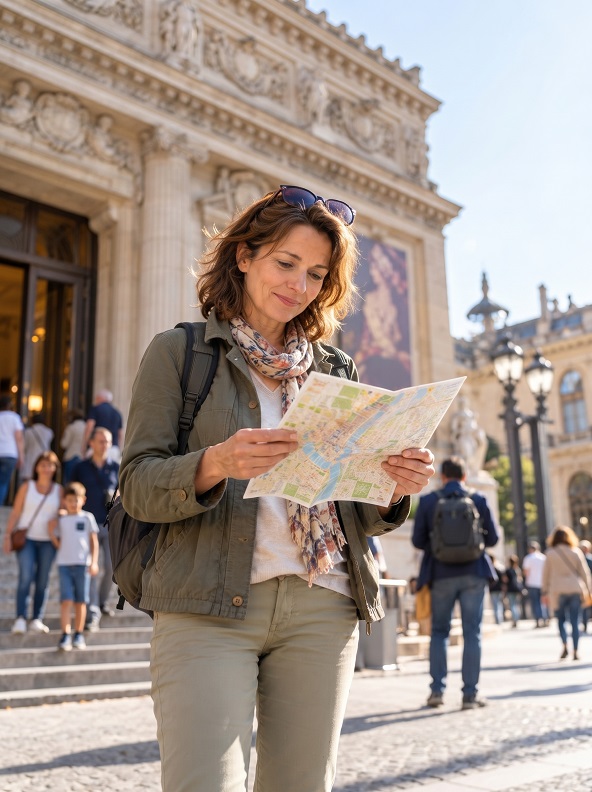
Illustrative AI-generated image.
The useful version: choose a manageable first trip, research current local conditions and book a straightforward arrival. Pick accommodation carefully, keep your own transport options and agree check-ins with someone you trust. Meet people in ways that suit you, protect your privacy and give yourself permission to leave, rest or change plans.
The “someday” conversation I still remember
Years ago, I spoke with a young woman named Samantha who wanted to travel but could not quite imagine doing it alone. She had come out of a difficult relationship and was considering a change of direction.
She told me how fortunate I was to see the world. I heard the desire in her voice and asked what was stopping her.
“It’s way too dangerous,” she said. “I would be lonely and probably terrified most of the time.”
Her questions deserved practical answers: where to go, how to arrive, where to stay and how to find company without giving up her independence.
My female friends’ travel stories had shown me the pleasure and possibility of going alone. Their experiences also highlighted the value of thoughtful planning and advice from women who know the destination.
More than a year after our conversation, Samantha emailed from Queensland, having spent five months travelling through Europe and parts of Southeast Asia. She described adventures, mishaps, new friends and a remarkable sense of freedom.
“Rob, I truly feel like an accomplished woman now. The sense of freedom and choice and total power I feel is incredible.”
I was delighted. But she had done the travelling, the planning and the learning. The achievement was hers.
Her story shows what became possible for one woman. It is not a promise that every trip will feel the same, or that anyone has to book five months abroad to prove a point.
Your first solo trip can be a small one
You do not have to begin with a one-way ticket, three continents and a backpack large enough to require its own boarding pass.
My suggestion is to try a weekend or a few days somewhere with transport and accommodation you can understand. Choose a place you actually want to visit, with activities you would enjoy whether or not you meet anyone.
Give the trip one or two anchors: a museum booking, a food tour, a performance or a walk in a suitable area. Keep the rest flexible. A little structure can make the first morning easier without turning your holiday into a school timetable.
You can travel independently and still join a guided activity. You can also book a private room, stay near reception or arrange a transfer. Independence is the ability to choose what works, not a ban on accepting help.
If you are deciding how much company you want, start with Solo Travel vs Group Travel. In fact, a mixture may suit you better than either extreme.
Choose a destination using details, not a “safest” badge
No country-wide ranking can tell you whether a particular neighbourhood, late arrival or overnight journey suits your plans. Conditions can change, and women’s experiences differ with age, race, disability, sexual orientation, gender identity and other circumstances.
Read your own government’s current travel advice, including the safety, local laws, entry and health sections. Check the places on your actual route, rather than treating a country as one uniform experience.
Then look for recent, detailed accounts from women who travelled there independently. Ask what the accommodation area was like, how they got home at night and what they would arrange differently. After all, specific descriptions are more useful than either “perfectly safe” or “never go there”.
The Canadian government’s advice for women travellers recommends researching local laws, gender norms and women’s safety, including information from women who know the destination. Use that as a starting point, alongside advice relevant to your nationality.
| Question | What to investigate | A useful first-trip preference |
|---|---|---|
| Can I arrive comfortably? | Arrival time, transfer options and check-in arrangements. | A route with fewer unfamiliar steps. |
| Can I get around? | Transport coverage, payment methods and the routes you will use. | Clear, workable journeys between your main activities. |
| Where will I stay? | Recent reviews, access, location and support outside office hours. | A well-reviewed place in an area that fits your plans. |
| Will I enjoy being there? | Activities, food, interests and opportunities for company. | Enough things you want to do on your own. |
| Can I change the plan? | Cancellation terms, alternative stays and transport costs. | Some time and money available for an adjustment. |
The best choice is a place that fits your interests and circumstances, with current information and a workable plan for the areas you will actually visit.
Make arrival day the easy day
The first evening should ideally involve finding your room and something to eat. It does not need to include solving a transport mystery while dragging a suitcase with a wheel that has developed political opinions.
Where practical, choose a daytime arrival and arrange the transfer before departure. If a late flight is the workable option, confirm licensed transport, the check-in procedure and a contact who will actually answer.
Save your accommodation address and booking offline. Check how you will obtain mobile data and how to contact the property if your flight is delayed. Ask the accommodation which pickup arrangements they recommend, then verify the details with the provider.
For an app-booked ride, compare the vehicle and driver details with the booking before entering. For other transfers, confirm who is collecting you and how you will identify them. However, a confident stranger saying your hotel’s name is not the same thing as a verified reservation.
Choose the room as carefully as the view
Read recent reviews from women travelling alone. Look for practical comments about the location, reception, locks, noise and how the property responds when something goes wrong.
Confirm late check-in and access arrangements. On arrival, check that the room locks work. If something essential is wrong, ask for it to be resolved or consider another stay. Keep your room number and accommodation details private from people you do not know.
A women-only dorm may be your preference, but it does not guarantee security or a good night’s sleep. Instead, a private room may suit you better. Above all, choose the accommodation you can comfortably use, rather than the one somebody else says counts as “proper” solo travel.
Be friendly without giving away control of the evening
Meeting people is one of travel’s pleasures. You can be open to a conversation while keeping your own plan for leaving.
For a first meeting, choose a public place and retain your own transport option. Keep enough money and battery to get back independently. You do not need to disclose your room, exact itinerary or that nobody nearby knows you.
A useful answer to an intrusive question can be brief: “I’m meeting someone later,” or “I don’t share where I’m staying.” After all, you do not owe a stranger an accurate census of your travelling companions.
If someone keeps ignoring a boundary, end the interaction if you can do so safely. Move towards staff or a busy place and ask for help. Remember, you are allowed to abandon a conversation without arranging a polite closing ceremony.
Smartraveller’s advice for women overseas includes keeping control of transport arrangements when socialising. That is a useful principle: do not let your only way home depend on someone you have just met.
Short phrases worth practising: “No, thank you.” “Please leave me alone.” “I need help.” “Please call a licensed taxi.” Have essential translations checked rather than relying on an app for a sensitive exchange.
Harassment is not an inevitable price you must cheerfully pay for travelling. Nor does someone else’s misconduct become your fault because of your clothing, a drink or a decision to go out.
Related field notes
Make the trip work for you
- Solo or Group?Choose the right mix of independence and company.
- Travel Safety & HealthThe broader safety preparations.
- Mental Health During TravelWhen loneliness or overload needs attention.
- Accessible TravelPlan around your own access requirements.
Plan the journey home before the evening starts
Look at the return journey when making the outing plan. Check whether public transport will still be running, where you can arrange a licensed ride and whether the route requires a long isolated walk.
Ask accommodation staff for current local advice. If the return route is uncertain, changing the venue or paying for suitable transport may be a sensible use of your budget.
Keep drinks in sight and avoid leaving them unattended. If you feel unexpectedly unwell, confused or much more affected than expected, seek help promptly from trusted companions, venue staff or emergency services. Do not leave with an unknown person offering to “take care of you”.
The FCDO’s guidance for women abroad notes that spiking can affect non-alcoholic drinks too. There is no reliable visual check that makes a drink safe.
This is risk reduction, not a promise of prevention. The responsibility for spiking, harassment or assault belongs to the person who does it.
Solo does not have to mean lonely—or constantly sociable
You may meet people quickly. You may not. In fact, both can happen on the same trip, sometimes before lunch.
Choose a few activities with an easy reason to talk: a small-group tour, a class, a hosted walk or a communal meal. Check the operator and meeting arrangements, and retain a way to leave.
Ask a modest question: “Have you tried this before?” or “What did you enjoy yesterday?” You do not have to introduce yourself with the energy of a cruise director welcoming two thousand people. Speaking from experience, that would exhaust the room.
| If you want… | Try… | Leave room for… |
|---|---|---|
| A brief conversation | A guided visit or small-group activity. | Enjoying the activity even if no friendship follows. |
| Regular company | A well-reviewed social stay or several organised outings. | A private room or quieter time when needed. |
| A quieter day | An independent visit, a book or a familiar local routine. | One planned check-in with someone you trust. |
| Support with the first outing | A reputable guide or a day tour. | Continuing independently when you feel ready. |
Being an introvert is not a fault for travel to repair. You can enjoy a destination quietly, meet one person rather than twelve and still have a worthwhile trip.
If loneliness or anxiety starts making the trip difficult, reduce the pressure. A call home, a rest day or a change of accommodation may help. For a fuller discussion, read Mental Health During Travel. Ending a trip early is also an option.
Stay connected without broadcasting your location
Agree check-ins with someone you trust before you leave. Decide how often, which channel to use and what they should do if you miss one. Include a sensible allowance for time zones and lost connectivity.
Share your itinerary and accommodation privately. If you choose live location sharing, restrict it to trusted people and understand its limits. After all, it relies on devices and connectivity; it is not an emergency response service.
Post photographs after leaving a location rather than revealing your exact whereabouts in real time. Avoid displaying your room number, tickets, passport details or travel plans publicly.
Carry offline copies of useful bookings and contacts. Keep a backup payment method separately from your main wallet where practical, and check how to block a lost card or recover access to important accounts.
For the wider preparations, use Travel Safety & Health. You need a few tools you can use, not a phone full of supposedly indispensable apps.
You do not have to be young, single or endlessly energetic
Solo travel describes how you are travelling on this trip. It is not a relationship status or an age bracket.
If you have a partner, discuss the plans and expectations together. Going alone is not guaranteed to improve or end a relationship, and I would not pretend a flight booking can diagnose one.
If you are travelling later in life, plan around your own interests, health, comfort and energy. You can choose a slower pace, more comfortable accommodation or guided excursions. After all, there is no official solo-travel committee checking whether you slept in a dorm.
Disability or reduced mobility does not automatically rule out travelling independently. Confirm the support and access you need. Our Accessible Travel guide helps you ask specific questions about the room, transport and assistance.
For medication, pregnancy, contraception or other individual health needs, consult a qualified healthcare professional before travel and check destination rules. Advice that suits one woman may not suit another.
If something goes wrong, you deserve support
Before departure, save the local emergency number, your insurer’s assistance contact and your own country’s consular contact for the destination. In addition, keep these available offline.
If you are in immediate danger, move to a safer public or staffed place if possible and contact local emergency services. Seek urgent medical help when needed.
After assault, medical care and specialist support can be time-sensitive. Contact a qualified local service or your insurer for care arrangements, and your own embassy or consulate for country-specific guidance and available support.
Reporting procedures and legal risks differ. The FCDO’s guidance for British nationals after rape or sexual assault abroad discusses these differences and support options. For other nationalities, use your own consular service’s guidance.
You do not have to solve everything at once, and harm is not proof that you failed to travel correctly. Start with your safety, care and the support available to you.
For a practical contact-and-document plan, read Emergency Preparedness Abroad.
A manageable first-trip plan
- Choose a place you want to experience. Check current advice and the particular neighbourhoods and routes.
- Book the arrival and first stay. Confirm transport, check-in and who to contact after a delay.
- Give the first day a little structure. One enjoyable activity is enough.
- Arrange check-ins and a backup. Share details privately and keep useful contacts offline.
- Protect room in the budget. Allow for a suitable ride, a different stay or a changed plan.
- Review how it feels. Keep what works. Adjust what does not. You are travelling, not sitting an exam.
Solo female travel: common questions
Is solo female travel safe?
There is no universal guarantee. Risk depends on the destination, local conditions, itinerary and personal circumstances. Read current official advice, learn from recent detailed accounts and make specific plans for accommodation, transport and getting help.
Where should I go for my first solo trip?
Choose somewhere you want to visit with manageable transport, suitable accommodation and activities you can enjoy independently. A short trip with fewer unfamiliar steps can be a useful start. Check current conditions rather than relying on a “safest” list.
Will I be lonely if I travel alone?
You might have lonely moments. Arrange a few optional social activities and contact with people at home, while keeping time for yourself. Meeting people is possible, but instant friendships are not guaranteed.
Can I travel solo if I am shy?
Yes. Choose activities that give conversation a natural starting point, or enjoy quieter independent visits. You do not need to become extroverted to enjoy travel.
Am I too old to travel alone?
Age alone does not decide the answer. Plan around your own health, access requirements, energy, interests and support needs. A comfortable room and a slower itinerary are perfectly valid choices.
Should I tell people I am travelling alone?
Share your plans with trusted contacts. With strangers, you can keep companionship, accommodation and itinerary details private. Choose public places for first meetings and retain your own way to leave.
What if I want to change or end the trip?
You can. Check the booking terms, make a practical alternative and seek help if you need it. Adjusting a trip to your circumstances is a decision, not a failure.
The wider planning picture
Turn the idea into a workable trip
The World Travel Course introduces the decisions around time, money, transport and expectations. Use it to build the wider plan, alongside destination-specific guidance relevant to you.
Your trip does not need unanimous approval
Samantha’s story still makes me smile. Not because she proved everyone wrong, but because she found out what she wanted and made her own choices.
You can begin smaller. Sometimes, company may be exactly what you want. And the itinerary can change. The freedom is in having a say in your own experience—including which museum gets the entire afternoon.
What helped you on your first solo trip? Share a practical detail or something you wish you had known. Keep current accommodation and private contact details out of public comments.
About Rob
Rob Wheatley is a Program Director with Viking Cruises, a former ocean Cruise Director and an extensively travelled explorer. He writes here from a travel professional’s perspective and conversations with women who travel independently, rather than firsthand experience as a solo female traveller.
The illustrative hero does not depict Samantha.