Travel field notes • Access & inclusion
Accessible Travel: Plan a Trip That Works for You
“Fully accessible,” says the hotel. Lovely. Now could we discuss the three steps between the pavement and that rather confident sentence?
By Rob Wheatley – Program Director & traveler
Updated 17 October 2026
Accessible travel starts with details that match your needs: a room you can use, transport you can board, information you can understand and a day you can enjoy. The aim is to spend less of the holiday negotiating access and more of it deciding whether another coffee is strictly necessary.
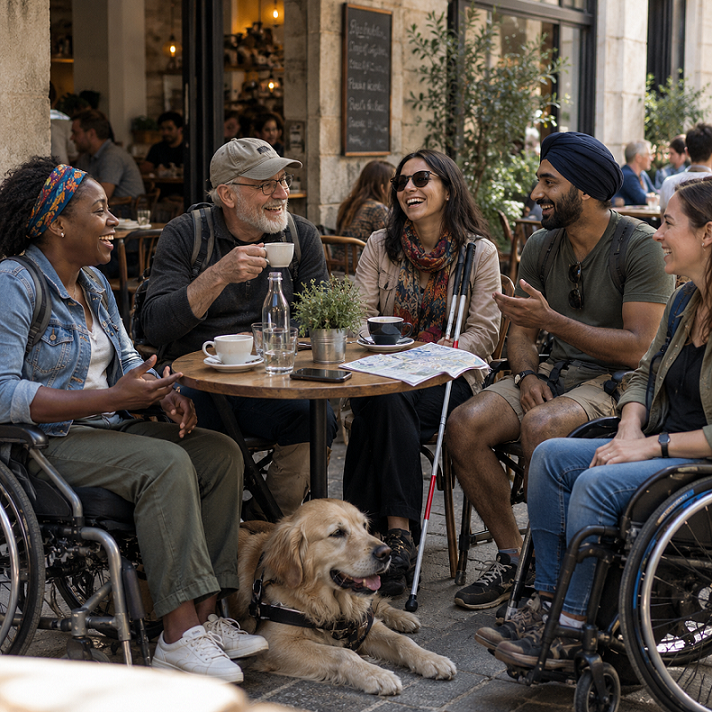
The useful version: start with your own access requirements, then verify the entire journey. Ask for specific room details, book the assistance you need, check equipment and medication arrangements, and allow time to rest. Keep confirmations and realistic alternatives. An accessibility label is a starting point; the details tell you whether the trip will work.
Start with your needs, rather than the brochure
“Accessible” can mean different things to different people. Step-free entry may be essential for one traveller. Another may need clear written instructions, a quieter environment, an accessible toilet, somewhere to sit or help finding their way.
Disability and access needs are not always visible. Nor does using a wheelchair tell anyone whether you can stand, transfer independently or walk a short distance. The person travelling is the expert on what works for them.
Make a short access brief you can reuse when contacting providers. Describe the practical requirements you want them to confirm, without feeling obliged to share your entire medical history.
- Essential: what must be available for you to use the service safely and comfortably?
- Helpful: what would make the trip easier, though you have an acceptable alternative?
- Support: what do you do independently, and what assistance do you need?
- Limits: what would make a room, journey or activity unsuitable?
Separate “I need a step-free route to the bathroom” from “I would prefer a sea view.” Both matter. Only one is a sensible basis for deciding whether to book.
Choose a workable destination, then check the neighbourhood
A country’s reputation for accessibility tells you very little about a particular hotel, station or street. Start with the places and experiences you want, then investigate the route between them.
Look for recent, detailed accounts from people whose access requirements resemble yours. A review that describes a threshold, a gradient or the nearest usable toilet is more valuable than a five-star verdict saying “everyone was lovely”. Lovely is welcome. Measurements remain useful.
Ask local disability organisations or tourism offices where they publish current access information. Use photographs and maps to identify questions, then ask the actual provider. A street image cannot confirm that today’s lift works.
Consider weather, hills, pavement surfaces, crowd levels and how far you will need to travel for food or supplies. A quieter hotel can still be a poor fit if every meal requires an unverified transfer.
For a first trip with unfamiliar access arrangements, my suggestion is to reduce the number of moving parts. One comfortable base with a few good outings can provide more freedom than five hotels and a luggage relay.
The Travel Styles hub can help you choose the pace, company and comfort level you want before you commit to an itinerary.
Book the exact room, not an encouraging adjective
Contact the property directly, even if you are booking through a platform or agent. Ask staff to confirm the features of the room you will actually receive, and keep their response with your reservation.
The FCDO’s disability travel guidance recommends being specific about accommodation requirements and getting written confirmation. Use the questions below to decide what information is relevant to you.
| What matters to you | Ask for this | Why the label is not enough |
|---|---|---|
| Arrival | A photo or video of the route from drop-off to reception and your room. | A step at the entrance can interrupt everything that follows. |
| Wheelchair space | Clear door widths, turning space and lift dimensions. | Compare these with your own equipment and requirements. |
| Bed and bathroom | Bed height, transfer-side space, shower layout and toilet position. | A grab rail alone does not make the layout suitable. |
| Equipment | Confirm the exact hoist, shower chair or other equipment and availability for your dates. | Compatibility and a reserved item matter more than “we can arrange it”. |
| Hearing or vision | Ask about visual alerts, lighting, signage and available communication formats. | A mobility-accessible room may not meet sensory requirements. |
| Emergency exit | Ask how guests who cannot use stairs or hear an alarm are supported. | A working lift during the day is not an evacuation plan. |
Ask whether the suitable room is reserved or merely requested. Find out what happens if it becomes unavailable, and read cancellation terms before paying.
A brief video can answer questions that a wide-angle photograph politely avoids. Ask for the route into the room and around the bathroom, rather than another flattering view of the cushions.
If a provider cannot answer an essential question, treat that as unresolved. You do not have to book first and hope the answer improves on arrival.
Accessible travel depends on the entire transport chain
A usable plane or train is only part of the journey. You also need to reach it, board it, leave it and get to your accommodation. Check each connection with the operator responsible for that stage.
| Journey stage | Confirm before paying | Keep a fallback |
|---|---|---|
| Flight | Assistance at each airport, boarding and transfer arrangements, equipment approval. | More connection time or a simpler route. |
| Train | Specific station and service, boarding gap, ramp or lift and assistance booking. | An alternative station or confirmed accessible transfer. |
| Taxi or transfer | Vehicle dimensions, ramp or lift, securement and whether you must transfer seats. | A second suitable operator with contact details. |
| Cruise or boat | Gangway, cabin, bathroom, deck access and individual shore excursions. | A shore plan that does not rely on a tender or steep gangway. |
| Attraction | Usable entrance, toilets, route, seating and requested sensory or communication support. | Another activity nearby that you would actually enjoy. |
For flights, explain the assistance you need in plain language: help over long distances, support with stairs, assistance transferring to a seat, guided assistance or another requirement. Ask where to meet staff, what time to arrive and how assistance carries through a connection.
Confirm requests with every operating airline on the itinerary. A reservation note is useful, but on arrival you still need to identify yourself to staff as the person who requested assistance.
Discuss seating and toilet access for the actual aircraft. A bulkhead seat is not automatically the right solution for everyone. Ask what transfer arrangements and onboard support are available before selecting a seat.
Notice periods depend on where and how you travel
The EU passenger assistance guidance advises air travellers to contact the airline, ticket seller or tour operator at least 48 hours before travel. Rail assistance has different arrangements: check the current notice period with the operator for your particular service. These are EU provisions, not a worldwide booking rule; request support early and confirm the details for your route.
EU guidance also makes clear that airlines do not have to help with eating or taking medication. Establish who will provide any personal assistance you need during the journey.
For flights covered by US disability rules, the US Department of Transportation’s assistance guide explains airport support and how to ask for a Complaints Resolution Official if an access problem arises. Other jurisdictions have their own procedures.
A ship is not automatically a solution to every access problem
My work as a former Cruise Director and current Program Director makes me especially wary of treating a ship as one simple accessibility label. Ask about the specific vessel, cabin, bathroom, gangways, decks and excursions. Port arrangements can matter as much as the onboard lift.
If an activity relies on a small tender boat, steep gangway or coach steps, get a clear answer about your requirements before paying. Confirm what happens if river levels, weather or the berth change. You want a holiday, not an audition for an obstacle course.
Related field notes
Build the rest of your trip
- Travel Plan BBuild alternatives before you need them.
- Travel RhythmLeave room for rest and a pace that suits you.
- Emergency PreparednessKeep the important contacts close.
- Travel Safety & HealthThe broader preparations for a safer trip.
Access also includes hearing, vision and sensory comfort
A ramp solves one kind of barrier. It does not make an audio-only announcement useful to a Deaf traveller, a crowded queue manageable for everyone or a poorly lit corridor easy to navigate.
Ask for the support that helps you: written updates, captioned material, guided assistance, audio description, clear signs, a quieter waiting space or a more predictable sequence of events. Confirm which services are available and whether they need booking.
For a tour, ask whether the guide can provide information in a usable format and where breaks are possible. If sign-language interpretation is needed, confirm the language and interpreter arrangements rather than assuming a generic “sign-language tour” will suit.
For sensory needs, an outline of the airport or attraction visit can help you plan. Ask about quieter times, waiting arrangements and whether you can step out and return. Availability varies, so keep the answer specific to your booking.
Some airports participate in the Hidden Disabilities Sunflower scheme. Participation and support differ; check your airports and request assistance separately. As avianca’s guidance explains for its service, the lanyard does not replace an advance assistance request.
A useful communication card: “Please give me one instruction at a time and write down any gate change.” Or: “Please ask before moving my wheelchair.” Choose wording that describes your needs and have important translations checked by a competent speaker.
Make a plan for equipment, medication and support
If you travel with a mobility aid, collect its dimensions, weight, battery details and manufacturer’s handling instructions. Ask the operating carrier to confirm acceptance and how it will be loaded, returned and handled during connections.
Keep a short handling sheet with the equipment. Photograph its condition before handing it over, and ask how to report damage promptly. If appropriate, take detachable items with you according to the carrier’s instructions.
For powered equipment, confirm the manufacturer’s voltage and charging requirements. A plug adaptor changes the plug shape; it does not change the electrical supply. Get advice from the manufacturer about suitable equipment rather than experimenting with a charger abroad.
Where you need hired equipment, confirm its specification, compatibility, delivery, collection and support if it fails. A promised hoist is only useful if it suits the person, sling and room. Arrange any personal care separately; hotel or transport staff should not be assumed to provide it.
For health preparation, the CDC’s disability travel guidance recommends discussing the itinerary with a healthcare professional before travel. Ask about your own care needs, destination conditions and what to do if a problem develops.
The CDC’s advice on travelling with medicines includes checking restrictions, keeping medicines in labelled containers and packing them in hand luggage. Ask your clinician or pharmacist about storage and time-zone changes. A prescription or doctor’s letter does not automatically authorise a medicine in another country.
For an assistance dog, check carrier acceptance and destination and transit-country entry requirements early. Confirm necessary documents and arrangements with accommodation. Do not assume recognition or entry rules are the same everywhere.
Leave room for the holiday itself
Access planning can become a second job if every day introduces a new transport system, hotel and tour company. Give yourself some settled time between the logistics.
Build a day around what suits you: perhaps one booked activity, a nearby lunch and an open afternoon. Know where you can sit, use a suitable toilet or return to your accommodation. Rest belongs in the plan whenever you need it.
If you travel with friends, discuss pace, assistance and time apart before departure. Ask before helping, speak directly to the person travelling, and respect their answer. Moving someone’s chair without permission is not a charming display of initiative.
It is also fine for the group to split briefly when people want different activities, provided support needs are agreed and met. The reunion over dinner can be part of the pleasure.
My Travel Rhythm guide explores how to build a pace you enjoy. A trip should fit the people taking it, rather than requiring everyone to fit the timetable.
Prepare for a lift failure without planning a disaster film
Ask which part of your trip has no acceptable substitute. That may be the room, an accessible vehicle or a piece of equipment. Put your planning effort there first.
Keep a local contact, an alternative provider and the booking confirmations accessible offline. If something essential fails, you need a specific next step rather than fourteen browser tabs and a rapidly cooling coffee.
Read insurance terms for your circumstances and ask the insurer to clarify anything uncertain. In particular, ask about declared medical conditions, mobility equipment, essential support and changes to the trip. Do not assume an unusable room or broken lift triggers reimbursement.
Use the travel insurance guide to compare cover and exclusions alongside these access arrangements.
My Travel Plan B guide covers disruption more broadly. For local emergency contacts and important documents, continue with Emergency Preparedness Abroad.
Your accessible travel checklist before paying
- Write your access brief. Separate essentials from preferences and identify any personal support needed.
- Verify the room. Get relevant measurements, current images and confirmation for your dates.
- Trace every transfer. Include stations, airports, drop-off points and the final route to the room.
- Book assistance. Confirm the meeting place, timing and support at each stage.
- Check equipment and health arrangements. Resolve carrier acceptance, charging, medication rules and care needs.
- Read the terms. Understand cancellation, insurance and what happens if an essential service is unavailable.
- Keep a workable alternative. Save contacts and leave enough time and budget to use it.
Before departure, reconfirm the essentials, especially arrangements made months earlier. This cannot remove every barrier, but it can expose a mismatch while you still have choices.
Accessible travel: common questions
How do I know whether a hotel is accessible for me?
Describe your requirements and ask for details of the exact room and route into it. Request relevant measurements and current photographs, then obtain written confirmation. The accessibility label alone cannot establish suitability.
How far in advance should I request airport assistance?
Ask when you book and confirm the operating airline’s requirements. EU air passenger guidance recommends at least 48 hours’ notice. Rules and arrangements elsewhere can differ, particularly for equipment or specialist support.
Can I fly with my own wheelchair?
Contact the operating airline with its dimensions, weight and battery information. Confirm acceptance, transfers, handling and where it will be returned. Aircraft and safety restrictions can affect arrangements; do not assume every flight can carry every device.
What if my disability or access need is not visible?
Explain the practical support you need when contacting the provider. You might request written information, guided assistance, more processing time or quieter arrangements. Ask what is available and book relevant assistance rather than relying on staff to recognise your needs.
Are cruises a good accessible travel option?
They can suit some travellers, but suitability depends on the vessel, cabin, onboard routes, port access and excursions. Check each against your requirements, including tenders, gangways and transfers ashore.
Can I travel independently with a disability?
Some people do; others choose or need support. Decide using your own requirements and the confirmed arrangements for the trip. Transport assistance is not a substitute for any personal care you need.
Which destination is best for accessible travel?
There is no single answer for every access need. Compare the particular accommodation, transport and activities you want. Recent detailed accounts and direct provider confirmation are more useful than a country-wide promise.
The bigger planning picture
Build a trip around your life
The World Travel Course introduces the wider planning decisions: time, money, movement and expectations. Use this guide alongside those ideas to ask the access questions relevant to you.
The world is worth asking better questions about
Good planning cannot magically repair an inaccessible pavement. It can help you choose a room, route and experience that work for you, and give you a better response when something changes.
Then, with luck, the day’s most demanding negotiation can be about who ordered the extra cake.
Which access detail made a real difference to your trip? Share the place, approximate date and practical feature that helped. Please leave private medical information out of public comments.
About Rob
Rob Wheatley is a Program Director with Viking Cruises, a former ocean Cruise Director and an extensively travelled explorer. This guide brings a travel professional’s planning perspective; the person travelling determines their access needs, with individual health advice from their own care team.