



Staying Safe & Healthy: Avoiding Scams, Managing Medications, and Trusting Your Gut in 2025
Physical safety, health management, and cultural sensitivity.
The exhilaration of unfamiliar streets can quickly transform into vulnerability when you’re far from the comfort of home. Yet with wisdom as your compass and vigilance as your shield, even the most daunting destinations become playgrounds for the prepared traveler.
Introduction
The symphony of travel—a cacophony of unfamiliar tongues, exotic spices wafting through crowded markets, and the gentle hum of anticipation as you step into the unknown.
While these experiences nourish our souls and expand our worldview, they also place us in situations where our usual safety nets are absent.
This guide serves as your companion as you navigate the delicate balance of embracing adventure while maintaining your physical well-being, managing health needs, and navigating cultural differences with respect and awareness.
Recognizing and Avoiding Scams
The practiced hand of a scammer is gentle—you rarely feel it in your pocket until it’s too late. Learning to recognize the subtle signs can save you both dignity and dirhams.
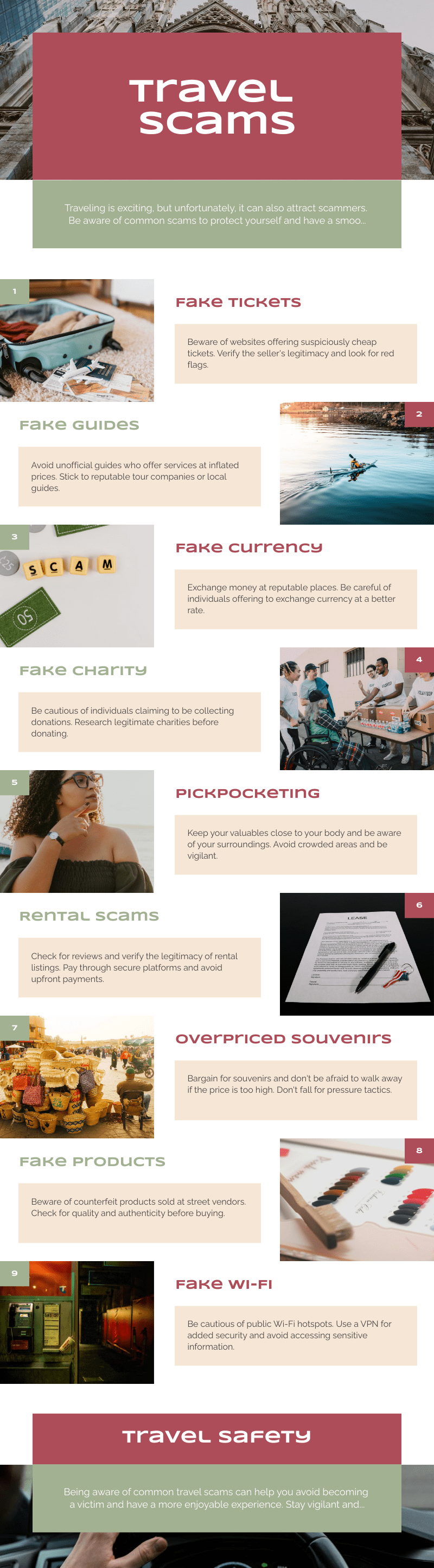
Common Travel Scams to Watch For:
The Friendly “Local Guide” – Unsolicited offers to show you around, often leading to commission shops or worse
The “Broken” Taxi Meter – Always agree on prices beforehand or insist on meter use
The “Free” Bracelet/Rose – Nothing is free; they’ll demand payment after forcefully giving you something
The Spill Trick – Someone “accidentally” spills something on you, then another person offers to help while pickpocketing you
The Fake Police Officer – Always ask for proper identification and suggest going to the nearest police station
Fake Photo Helper
Someone offers to take your photo, then either runs off with your camera/phone or demands a tip to return it
ATM Skimmer Trap
Fraudsters install skimming devices on ATMs to steal your card data or PIN, leading to unauthorized withdrawals.
Use ATMs inside banks and cover your PIN when entering it.
Fake Booking Websites
Scammers create convincing fake hotel or airline sites, taking your money for reservations that don’t exist.
Double-check URLs and book through official or well-known travel platforms.
QR Code Trap
Fraudulent QR codes in public places or menus lead to phishing sites or install malware on your device.
Type in web addresses manually or use QR verification apps before scanning.
Rental Car Con
Rental agencies or scammers claim you damaged a vehicle and demand large payments, sometimes using fake or old photos as evidence.
Document the car’s condition with photos before and after rental, and use reputable companies.
Housing/Accommodation Fraud
Scammers advertise fake rentals or hotel deals online, take your money, and disappear, or the property doesn’t exist.
Book only through reputable platforms and confirm bookings directly with the property.
Don’t worry, the world’s not out to get you.
I get it—looking over a list of common travel scams might make you want to cancel your trip and barricade the door. But hey, it’s not Doom 2.0 out there.
These are just things to be aware of, not afraid of. Think of it like installing a mental antivirus: once you’ve read through and internalized this info, your brain will naturally start flagging sketchy situations before they escalate.
Honestly, if I rattled off all the things that could go wrong just from getting in your car today, you’d probably consider bubble-wrapping yourself and calling it a day.
Life comes with risks—but that’s part of the adventure. When you’re equipped with a bit of awareness and some solid street smarts, you’re not just protected—you’re empowered.
So take a breath, keep your curiosity intact, and don’t let this list dampen your wanderlust.
You’ve got this.
Personal Safety Precautions
In unfamiliar territories, your intuition speaks volumes—a whisper that something isn’t quite right, a flutter of unease in crowded spaces. Listen to that ancient wisdom; it rarely misleads.
Before You Travel:
- Research destination-specific safety concerns
- Register with your country’s travel advisory service
- Share your itinerary with trusted contacts
- Photocopy important documents and store digitally
- Purchase comprehensive travel insurance
While Traveling:
- Use hotel safes for valuables
- Carry minimal cash and split it between locations
- Walk confidently and appear purposeful
- Avoid displaying expensive items
- Stay in well-lit, populated areas at night
Managing Medications Abroad
The rhythm of your daily medications doesn’t pause for jet lag or border crossings. Planning ahead transforms this potential disruption into merely another part of your travel routine.
Medication Checklist:
- Bring double your needed supply in original packaging
- Carry a doctor’s letter for prescription medications
- Research medication legality at your destination
- Know generic names of your medications
- Pack medications in carry-on luggage
- Consider time zone changes for dosing schedules
Finding Medical Help Abroad:
- Save emergency numbers for your destination
- Locate nearby medical facilities before you need them
- Learn how to say key medical terms in local language
- Understand how local healthcare systems work
- Consider medical evacuation insurance for remote travel
Cultural Sensitivity and Awareness
Each border crossing is an unspoken contract—you agree to respect the tapestry of customs woven over centuries in exchange for the privilege of witnessing them firsthand.
Respecting Local Customs:
- Research appropriate dress codes
- Learn basic greetings in local language
- Understand religious practices and holy days
- Know local gestures that might be offensive
- Respect photography restrictions
Building Trust Across Cultures:
- Practice patience in all interactions
- Show appreciation for assistance
- Observe before participating
- Ask permission rather than assuming
- Remember that a smile translates in any language
Trusting Your Instincts
That prickling sensation on the back of your neck is evolution’s gift—millions of years of survival instinct compressed into a moment of awareness. Honor it.
When to Trust Your Gut:

- If something feels “too good to be true”
- When pressure tactics are being used
- If you feel physically uncomfortable
- When someone is rushing your decision
- If locals seem to avoid certain areas
Creating Safety Nets:
- Establish check-in systems with people back home
- Have emergency exit plans for uncomfortable situations
- Use code words with travel companions for distress
- Know diplomatic resources in your destination
- Build relationships with trusted local contacts
Conclusion
The true magic of travel lies not just in the exotic landscapes or architectural wonders, but in returning home transformed yet unharmed.
Every street navigated safely, every cultural faux pas avoided, and every medication taken on schedule weaves into the invisible tapestry of a journey well-traveled.
By balancing caution with curiosity, preparation with spontaneity, you unlock the fullest potential of your adventures—collecting stories rather than regrets, and growing wiser with every passport stamp.
Have you ever had to rely on your instincts during your travels? Share your story in the comments below—your experience might help another traveler recognize warning signs or navigate a difficult situation. What safety tip has saved you on your journeys?
The World Travel Series
This article is part of our comprehensive world travel series, learning how to get on your adventure fom A to Z. See the full curriculum here