TRAVEL FIELD NOTES · COLOGNE, ROTTERDAM & BRUGES
Three Western Europe Cities Worth Making Time For
A cathedral, some improbable houses and a medieval tower that tested my relationship with confined spaces.
By Rob Wheatley – Program Director & traveler.
Practical information checked October 21, 2026.
Cologne, Rotterdam and Bruges offer three contrasting city breaks beyond Europe’s capital-city circuit. This personal guide compares their appeal, shares my memory of Bruges’ Belfry and covers food, rail planning and practical drawbacks. Follow the linked country guides for deeper research, then choose the pace and places that suit you.
Europe does not keep all its best bits in the capital
Somewhere along the way, we decided a European holiday needed a collection of capital cities. Preferably with enough photographs to prove we had briefly stopped moving.
I would like to nominate three places for a little more of your attention: Cologne, Rotterdam and Bruges.
They offer very different versions of a city break. Cologne brings a great cathedral, the Rhine and a strong sense of local identity. Rotterdam looks forward through its architecture. Bruges encourages my long-standing wish to wander into another century, although the other tourists usually arrive in this one.
These Western Europe cities are personal choices, rather than a claim to have found the definitive top three. You can visit one, pair two or give them a longer rail journey. The point is to choose places for what you enjoy, rather than for the importance of the name on the map.
Start with this comparison, then follow my Western Europe hub and the country guides for deeper planning.
Three cities, three different moods
| City | What draws me | The trade-off |
|---|---|---|
| Cologne, Germany | The cathedral, riverside and brewery culture | A busy working city with a mixed streetscape; expect more than picture-book lanes. |
| Rotterdam, Netherlands | Inventive architecture, waterfronts and a contemporary outlook | Its open urban scale may disappoint if you want a compact historic centre. |
| Bruges, Belgium | Historic streets, canals and art | The famous centre can be crowded, while cobbles and towers bring access challenges. |
For a first visit, I would generally allow a couple of nights rather than rely entirely on a rushed day trip. That is a pacing preference, not a minimum admission requirement. If your time is limited, one city enjoyed properly can be enough.
Cologne: begin with the cathedral, then look around
Germany is one of my favourite countries to explore because its cities and regions have such distinct personalities. Cologne is a good example: its attraction is not explained by one monument, even when that monument is difficult to ignore.
The cathedral makes a powerful first impression. Yet it remains a working place of worship, so check visitor access around services and events. The official cathedral website provides current arrangements for the church, treasury and tower.
If you are considering the tower, know what you are agreeing to. The viewing platform requires 533 steps. It is a physical outing, rather than a sightseeing lift with a view at the end.
Afterwards, give the Rhine, a museum or a neighbourhood meal some time. Cologne was heavily damaged during the Second World War and rebuilt; surviving and reconstructed heritage sits within a modern city. That mixed appearance is part of its story.
I would avoid promising a uniformly pretty cityscape. Come for the cathedral, certainly, but also for a place with ordinary life continuing around it.
A small glass and a useful coaster
Kölsch is a good introduction to Cologne’s brewery tradition if you drink beer. It is served in a slender 0.2-litre glass, usually by a waiter known as a Köbes, as Cologne’s tourism board explains.
The small glass is not necessarily the end of the order. In traditional service, another may appear when yours is empty. Put your coaster over the glass when you have finished, or make your wishes clear to the server.
You can enjoy the atmosphere without treating beer as a compulsory cultural exam. Order food, choose another drink and take the time to notice the place.
Continue planning: my Germany destination guide places Cologne within a much wider choice of journeys.
Rotterdam: the city that enjoys a different shape
I like Rotterdam’s willingness to look different. Its architecture can be playful, striking and occasionally the sort of thing that makes you wonder what the first planning meeting sounded like.
The Cube Houses are a good place to begin. Designed by Piet Blom, they make domestic life look like a geometry problem. The Kijk-Kubus museum house lets visitors see how one works inside.
Nearby, the Markthal offers another architectural stop and a place to browse food options. Compare menus and prices rather than assuming a market setting automatically means a bargain.
Then look beyond the obvious buildings. A waterfront walk, a museum or a little time in a different neighbourhood will give the visit more substance than a succession of unusual façades.
However, Rotterdam may not be your choice if you want narrow historic streets at every turn. Its modern scale is part of what I enjoy, but taste matters. You do not have to prefer it to Amsterdam to find it worth visiting.
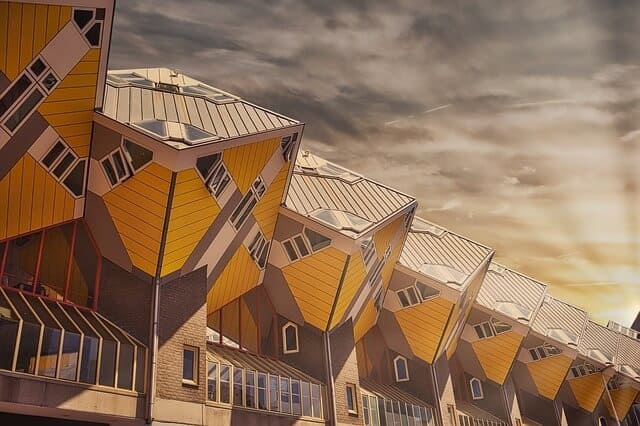
Worth a second look
Rotterdam’s Cube Houses make a persuasive case for choosing a city because it surprises you.
For the wider country, continue to my Netherlands destination guide. If you want to compare the experience, explore my Amsterdam article too.
Bruges: my time machine came with a staircase
As a child, I was fascinated by the idea of travelling back in time. Later, Europe’s castles and old buildings gave that imagination something to work with. Bruges gave it a feast.
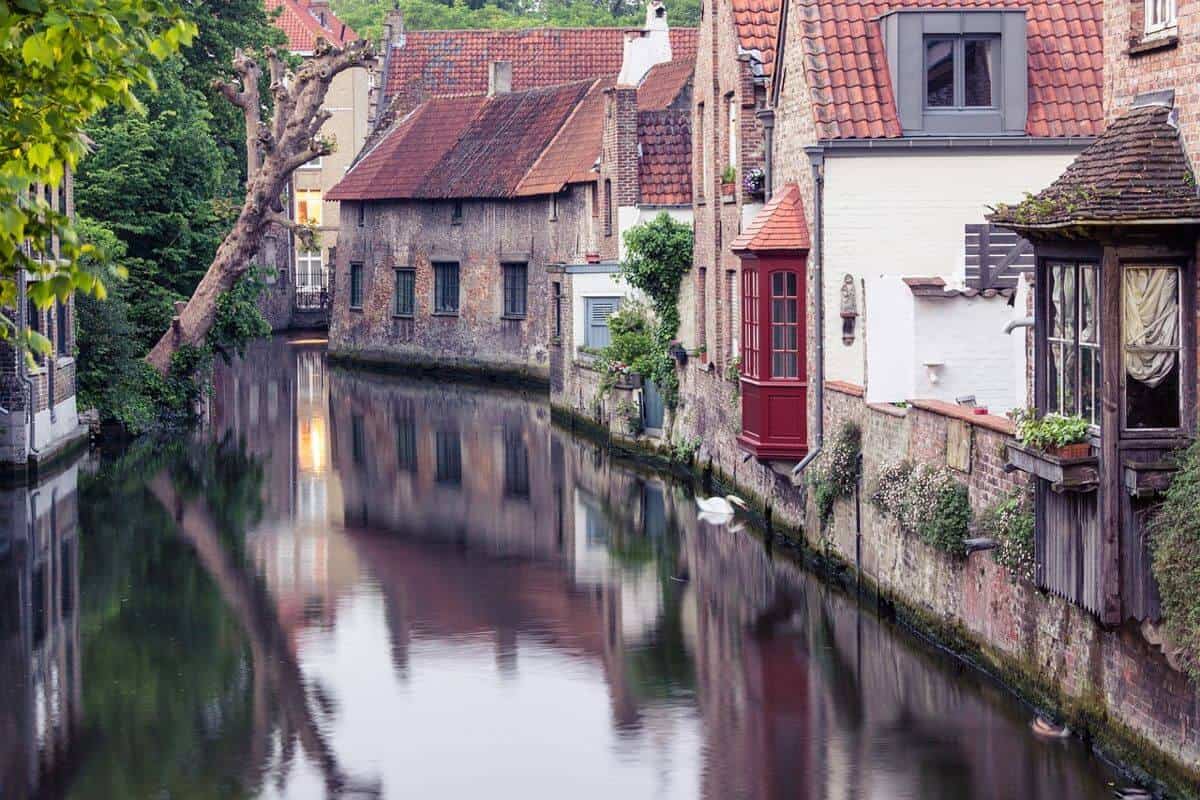
Canals, historic houses and cobbled streets create a strong sense of another age. However, this is a living city with centuries of change and restoration, rather than an untouched scene held still for visitors. UNESCO recognises its preserved medieval fabric and original Gothic buildings.
Then there is the Belfry. I did the climb, and I do not plan to repeat it in a hurry.
The steps were only part of the issue. For me, the close confines, with people ahead and behind, brought an uncomfortable touch of claustrophobia. The view was worth the effort, but I was very aware of the space I was occupying.
The official visitor information confirms 366 steps, with stairs that become narrower and steeper, and no lift. If that does not suit your mobility or comfort level, enjoy the city from below. You have still visited Bruges.
Let Bruges be more than the busiest photograph
The Markt and Burg make useful starting points, but do not spend the entire day circulating around the most crowded corners. Choose an art collection, follow a quieter street or sit down for a meal away from the first obvious square.
I would consider an overnight stay if the budget allows. It gives you time at the edges of the day, although neither early morning nor evening comes with a guarantee of solitude.
Winter can be appealing, but it is not automatically quiet: weekends and major seasonal events can draw visitors too. Likewise, spring and autumn offer possibilities rather than a promise of empty streets and sunshine.
Cobbles, bridges and historic interiors deserve an access check. A short distance on a map may still be tiring, particularly with luggage. Ask your accommodation about the actual arrival route.
Continue planning: my Belgium destination guide helps you place Bruges within the wider country.
Could you combine all three by train?
Yes, a rail journey can connect these cities, but they are not three neighbouring stops on one simple line. Plan the actual connections before deciding the order.
For example, NS International provides Cologne–Rotterdam planning, while SNCB/NMBS is a starting point for Belgian journeys. Check the full international route to Bruges rather than assuming there is a direct train from Rotterdam.
For roughly a week, I would compare two nights in each city and protect the transfer days. That is a starting idea, not a tested timetable. With less time, choose two cities—or stay in one and enjoy the breathing room.
Allow for the journey between hotel and station, luggage and connections. Also check engineering work and disruption before departure. A fast advertised journey does not describe every departure on every date.
Costs, crowds and safety belong in the plan
None of these cities is an automatic budget escape simply because it is not the capital. Hotels can rise sharply around events, weekends and busy travel periods. Price your dates before settling the itinerary.
Compare the complete stay: accommodation taxes, local transport, food, museums and any station transfers. A cheaper room far from what you want to do may buy extra commuting rather than value.
Take care of belongings in busy places and on transport. The UK’s Belgium advice highlights theft and robbery risks around major stations and public transport; those connections may form part of your Bruges journey even when the historic centre feels calm.
Keep bags attended, protect phone access and choose your late-night route deliberately. For current entry and security requirements, check official advice for Germany, the Netherlands and Belgium. Familiar European infrastructure does not eliminate disruption or crime.
For tower climbs and older buildings, ask specific access questions. A city can be easy to reach and still have individual attractions that are unsuitable for you.
Use these cities as a beginning
For me, the pleasure is the contrast: Cologne’s cathedral and local life, Rotterdam’s inventive skyline, and Bruges’ historical layers. There is no need to crown one the winner.
Follow the Western Europe hub to explore more, or go directly to Germany, the Netherlands and Belgium. Choose the route around your interests and available time.
If you need help trimming an overambitious plan, my slow travel article makes the case for giving fewer places more attention.
Three Western Europe cities: common questions
Which of the three should I choose?
Choose Cologne for the cathedral, Rhine and brewery tradition; Rotterdam for modern architecture and waterfronts; Bruges for historic streets, canals and art. Your taste matters more than a ranking.
Can I visit all three in a week?
A focused week can work if current rail connections suit your dates and you allow for transfers. Compare a few nights in each, then shorten the route if the travel days dominate.
Are these quieter alternatives to the capitals?
Not necessarily. Bruges in particular attracts substantial tourism, and events can make any of the three busy. Choose dates and accommodation carefully.
Do I have to climb the towers?
No. Cologne’s cathedral tower and Bruges’ Belfry involve substantial stair climbs. Check official access information and choose what suits your health and comfort.
Do I need a car?
For city-focused stays, compare rail and local transport before hiring one. A car can add parking costs and inconvenience without helping your sightseeing.
Give another city a chance
Capital cities earn their attention. However, they do not have a monopoly on the good bits.
Cologne, Rotterdam and Bruges each gave me a reason to look beyond the usual list. One of them also reminded me that a fine view and a narrow staircase can produce rather mixed feelings.