NETHERLANDS · CITY FIELD NOTES
Things to Do in Amsterdam: Beyond the Bicycle Bell
Canals, culture and a bicycle bell with very little patience.
By Rob Wheatley – Program Director & traveler.
Updated 22 October 2026
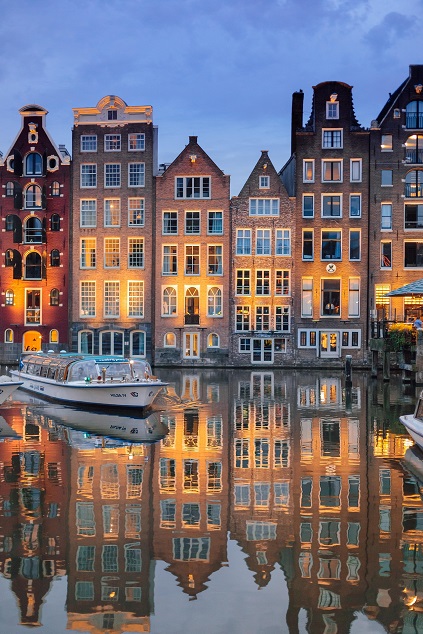
The short version: The best things to do in Amsterdam combine canals, major museums, neighbourhood walks and time to enjoy the city’s sociable side. This guide offers 22 starting points, tulip-season advice, King’s Day planning and Viking cruise options, with practical cautions about crowds, cycling, booking ahead and access.
Things to do in Amsterdam: start with the bell
If you hear the ringing of the bicycle bell, it’s too late.
By then, a local on a rattling black bike has already passed within a hair’s breadth of your elbow, without slowing down, without looking, and with the calm of someone who has done this ten thousand times. You stand there clutching your map, wondering which of you just had the near-miss.
Welcome to Amsterdam. Learn the rules of the bike lane first. Everything else gets easier.
Because once you’re out of the way, this is one of the most beautiful and romantic cities in Europe. Canals, historic sights, world-famous museums and a laid-back charm that is hard to put into words. The best things to do in Amsterdam leave room for that atmosphere, rather than turning the city into a checklist with stroopwafels.
Walk through the Old Centre and I catch a whiff of the sixties. They say if you remember the sixties, you weren’t there, and in my case that’s perfectly true. But everything I’ve learned about the decade—the artistic expression, the experiments and the living on the edge—seems to hang in the air.
Amsterdam cool: more than forbidden fruit
Maybe I’ve watched too many movies, but Amsterdam has a Euro coolness that more buttoned-up societies can only admire from a distance.
It can feel like the land of forbidden fruit. However, judging the city by its coffeeshops and Red Light District is a gross oversimplification. Amsterdam is slicker than it once was, and a good deal cleverer than its reputation.
To me, it has the air of a rebellious teenager who found a balance between responsible adulthood and youthful hedonism, then kept the interesting clothes. That is an impression, of course. For the people cycling to work, it is also an ordinary Tuesday.
The canals soften the cityscape, while independent shops, cafés and galleries give you plenty of reasons to interrupt a walk. Nevertheless, the centre can be busy, and neither the trams nor the cyclists are moving at holiday speed.
A little gezellig
Amsterdam can feel intimate and casual, and the Dutch word gezellig captures something of it: cosy, companionable and warmly sociable. If I were choosing somewhere to write, wander and let an afternoon escape, I would understand the appeal.
For wider routes and practical country planning, continue to my Netherlands destination guide.
Before the sightseeing: respect the bike lane
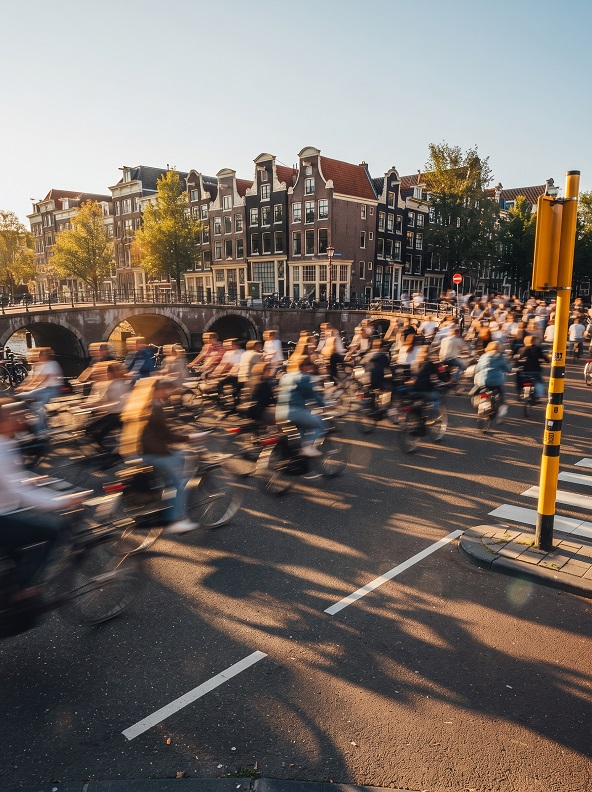
My opening is affectionate exaggeration. The practical point, however, is serious: a cycle lane is a transport route, not spare pavement for studying your map.
Look before crossing, step aside before stopping and keep your group together somewhere that does not block the flow. Similarly, watch for trams and crossings rather than assuming a pedestrian’s holiday mood takes precedence.
Renting a bike can be enjoyable if you are confident riding in traffic. It is not an initiation ceremony every visitor has to survive. Walking and public transport are perfectly respectable ways to experience Amsterdam.
If you do cycle, read I amsterdam’s cycling guidance first, then choose a route suited to your ability. A quieter ride or guided introduction may be more enjoyable than launching into the busiest junction you can find.
Things to do in Amsterdam: art, history and quiet corners
A quick day trip cannot cover everything. Therefore, choose the places that interest you most and book those that need a time slot. My twenty-plus starting points follow, grouped so you can build a day rather than collect an exhausting string of tickets.
- Rijksmuseum. Dutch art and history, with much more than paintings. Pick a few priorities so the collection does not become a test of endurance. Check the official museum website for tickets and exhibitions.
- Van Gogh Museum. A major collection of his work and an absorbing choice for anyone interested in the artist. All visitors need a pre-booked timed ticket; use the official ticket guidance.
- Anne Frank House. The hiding place and Anne’s story deserve time and attention. Book through the official Anne Frank House site. Tickets are released on Tuesdays for visits six weeks later; check the current release instructions rather than trusting a reseller’s promise.
- Our Lord in the Attic. A concealed Catholic church inside a historic canal house offers a different perspective on the city’s religious history. Check access arrangements at the museum before visiting.
Canals, neighbourhoods and somewhere to sit
- The Jordaan. Small shops, galleries and canals make this a rewarding area to explore without a rigid route. However, people live here; doorsteps are not public picnic furniture.
- The Grachtengordel. The seventeenth-century canal ring supplies the elegant bends and handsome houses that many visitors came to see. Give it time on foot, not only through a camera window.
- A canal cruise. Seeing the city from the water changes the perspective. Compare boarding points, duration, commentary and accessibility. Boats with steps or low entrances may not suit everyone.
- Vondelpark. A welcome pause among paths, ponds and people getting on with their day. Look up and you may spot the park’s parakeets.
- The Begijnhof. A historic courtyard that calls for a quieter manner. Follow visitor hours and signs, and remember that this is a place with residents.
- The Eastern Docklands. Contemporary architecture and a different waterfront mood make a useful contrast with the older centre.
For another Dutch city with a very different feel, see my Cologne, Rotterdam and Bruges article. Meanwhile, the Western Europe hub helps connect your next stop.
Food, music and the pleasures of staying a while
- Brown cafés. Traditional, cosy and a fine excuse to sit down. Choose the atmosphere you enjoy, order something and let the afternoon become sociable.
- Indonesian food. An important part of Amsterdam’s dining landscape, shaped by the Netherlands’ colonial history and later communities. A rijsttafel can be a generous introduction; check portions, dietary needs and price before ordering.
- Proeflokalen. Traditional tasting houses introduce jenever, the Dutch spirit associated with gin’s history. Ask for guidance rather than treating the visit as a speed event.
- The Concertgebouw. Look at the programme for an orchestral, chamber or other concert that appeals. A famous hall becomes more memorable when you hear it in use.
- Leidseplein. Restaurants, theatres, bars and nightlife provide plenty of possibilities. On a warm evening, a pavement table can be the whole plan. Check menus and keep an eye on the time if you have theatre tickets.
- The Heineken Experience. A branded visitor experience in a former brewery, rather than an ordinary working-brewery visit. Compare the current ticket types, age restrictions and inclusions.
My food tourism guide has more ideas for making meals part of discovering a place. After all, Amsterdam should not be experienced entirely between bookings.
The famous, the unexpected and the adult-only
- Koninklijk Paleis. The Royal Palace on Dam Square began as the city hall. Check public opening dates because royal use can affect visits.
- Oude Kerk. A historic church in the middle of an area more often associated with nightlife. Check what is on rather than assuming a conventional church visit.
- Bloemenmarkt. A flower-and-bulb-market stop can be enjoyable, but it is not the same experience as walking through spring gardens. Before buying bulbs, check whether you may bring them into your home country.
- A quieter cycle ride. If cycling suits you, choose space and confidence over performing “local” in traffic. Alternatively, stay on foot and enjoy watching the passing parade.
- Coffeeshops. These are part of the city’s reputation, but tolerance is not blanket legality. The Dutch government explains the conditional policy. Check current local rules; a relaxed image is not permission to ignore them.
- The Sex Museum. Explicit exhibits make this a matter of personal interest, not a compulsory cultural achievement. Check admission rules, and choose another attraction if it is not your thing.
Tulip season: give spring its own day
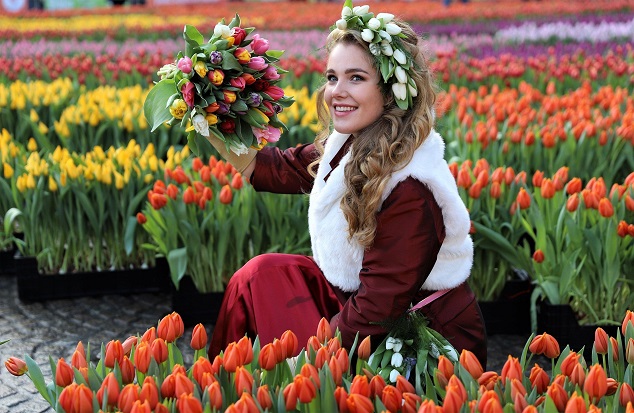
Spring gives Amsterdam another excuse to show off. For tulips, April is a useful starting point: I amsterdam highlights the city’s April tulip displays. However, the big garden visit is outside the city, at Keukenhof in Lisse. Its published 2027 season runs from 18 March to 9 May; check the official Keukenhof website before booking. Garden opening dates do not guarantee that every variety or surrounding commercial field will be in bloom on your chosen day. Weather decides much of that. Allow time for the journey and the visit, buy the right transport-and-entry combination, and enjoy the flowers without stepping into growers’ fields. The tulips are the spectacle; trampling them for a photograph is a rather poor review of the audience.
Viking from Amsterdam: tulips or the Rhine?
Amsterdam can be a city break of its own or the beginning of a longer river journey. These Viking options serve different interests.
Tulips & Windmills
Viking’s 10-day roundtrip Amsterdam itinerary explores the Netherlands and Belgium, with spring flowers, Dutch waterways and Belgian cities among its attractions. If tulips are the reason for travelling, check the exact departure and garden excursion arrangements. Opening seasons and flowering conditions matter; a cruise name cannot guarantee peak bloom.
Rhine Getaway
Viking’s 8-day Rhine Getaway connects Amsterdam and Basel, in either direction, through the Netherlands, Germany, France and Switzerland. It suits a wider river journey rather than a flower-focused holiday. Do not assume Keukenhof is included; check your sailing and any extra Amsterdam days separately.
Official Viking Rhine Getaway itinerary →
For more options, browse Viking’s Rhine cruises. Compare the itinerary, excursion demands, dock location, transfers and inclusions. River conditions can affect arrangements.
Rob’s perspective: I work as a Viking Program Director. Choose the journey for what you want to see, then allow enough city time to enjoy Amsterdam. Continue with my first-time Viking guide and Viking hub.
King’s Day: orange, joyful and very busy
If you enjoy a city-wide celebration, consider King’s Day, or Koningsdag. It is normally on 27 April, moving to 26 April when the 27th falls on a Sunday. In 2027, 27 April is a Tuesday.
The city erupts in orange, with festivities, music and the famous street markets. It is a glorious knees-up if that is what you came for. However, crowds, transport changes and busy accommodation are part of the same package.
Check the official King’s Day information and event-year rules. The markets are not an unrestricted invitation to sell anything anywhere, and I would not build a quiet museum weekend around the assumption that the city will behave normally.
If your idea of a holiday involves peaceful canals and spontaneous restaurant tables, choose another date. That is taste, not a failure to appreciate orange.
The bits that do not fit on the postcard
Amsterdam is beautiful, but the central sightseeing areas can be crowded, accommodation can be costly and popular attractions reward advance planning. Compare the full room price and recent reviews, including noise and stairs. A charming canal-house address does not guarantee a lift.
Meanwhile, protect belongings in crowds, keep your phone and wallet secure, and pay attention near canal edges, especially at night. Choose a sensible route home rather than letting the last drink make the transport decisions.
The Red Light District is also a neighbourhood and a workplace. Respect residents and workers, follow local signs and do not treat people as photographic attractions.
For the basics: Amsterdam is in the Netherlands; Holland refers to two provinces, not the whole country. It uses the euro, with CET in winter and CEST in summer. The international city dialling format is +31 20. Confirm your transport stop and accommodation check-in before departure.
Finally, group your sightseeing by area and give each day one or two priorities. Then leave time for a café, a canal-side pause and whatever catches your attention. Just step out of the cycle lane before you stop to admire it.
Questions about things to do in Amsterdam
How many days should I allow in Amsterdam?
For a first visit, I would aim for three full days if possible. A shorter trip can work if you choose fewer priorities.
When is tulip season around Amsterdam?
Spring is the season, with April a useful starting point for city displays. Keukenhof lists 18 March–9 May for its 2027 opening. Bloom timing depends on weather.
Do I need to rent a bicycle?
No. Walking and public transport are good choices. Rent a bike only if you are comfortable with the traffic and understand the rules.
Which attractions should I book ahead?
Prioritise those you would regret missing. The Anne Frank House and Van Gogh Museum have specific online booking arrangements; follow their official instructions.
Can I combine Amsterdam with Viking?
Yes. Compare Tulips & Windmills, a spring roundtrip Amsterdam itinerary, with Rhine Getaway between Amsterdam and Basel. Check dates and excursions rather than assuming all cruises include tulip gardens.
What belongs on your Amsterdam list?
Art, canals, tulips, a concert or a brown café you never quite managed to leave? Share your favourite experience or planning question below.
About Rob: Rob Wheatley is a Viking Program Director, former ocean Cruise Director and extensively travelled explorer. This article combines his observations with visitor information checked against official museum, tourism, garden and Viking sources on 22 October 2026.