VIKING INSIDER · GERMANY · RHINE RIVER
Speyer, Germany: Emperors, Extraordinary Ambition and a Very Big Cathedral
By Rob Wheatley — Viking Program Director & traveller
Speyer, Germany, is a Rhine city with a remarkable talent for making you underestimate it. Its enormous Romanesque cathedral, medieval Jewish heritage and inviting old-town streets tell stories of imperial ambition, faith, commerce and ordinary life. Come along: this is a place where a short walk can cover a thousand years.
A small city with rather large ideas
There are places that announce their importance with skyscrapers, traffic and a great deal of noise. Speyer takes a different approach. It allows you to wander along a pleasant street, perhaps thinking about coffee, and then places an enormous imperial cathedral directly in your path. Subtle it is not.
And that is precisely what I enjoy about these Rhine towns. From a ship, the landscape can look almost impossibly gentle: trees, rooftops, church spires, the river moving along as it has for centuries. Step ashore, however, and you discover that beneath the attractive surface are arguments about power, religion, money and who was entitled to tell everyone else what to do. Europe has always been rather good at those.
For a Viking guest, Speyer deserves more than a photograph of its cathedral followed by a hurried return to the coach. Even if your time is limited, it rewards the traveller who looks twice.
The cathedral: an emperor's very expensive statement
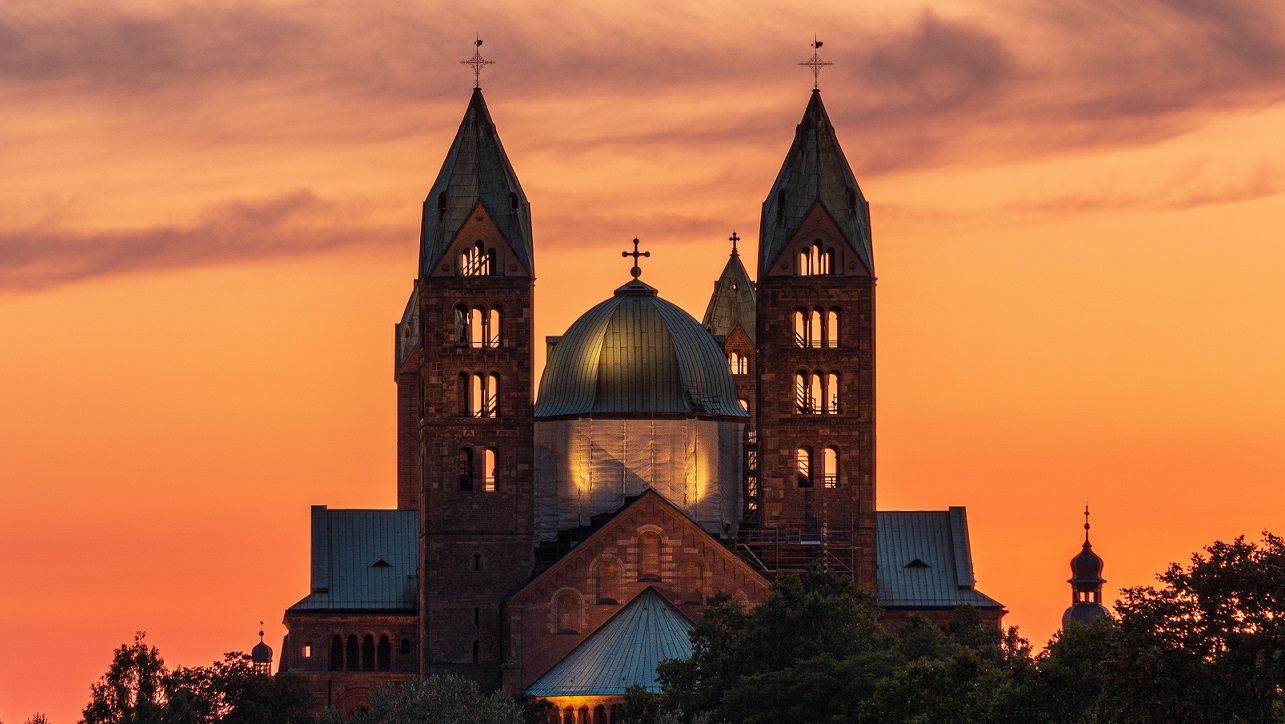
Imagine the year 1030. No modern cranes, no computer drawings, no convenient delivery lorries. Yet Emperor Conrad II set in motion a building project intended to demonstrate the might of his dynasty. The result was Speyer Cathedral, today the largest surviving Romanesque church in the world.
It is difficult to overstate the ambition. This was not simply a place to worship. It was architecture as a political announcement: look at what we can build; look at who we are. The message has survived rather better than most political slogans.
The cathedral’s four towers, two domes and great sandstone bulk are impressive outside. Inside, I find the proportions more persuasive than any decoration. The arches seem to march into the distance with the confidence of an army that has been told it cannot lose. Later rebuilding and restoration have altered parts of the structure, but its medieval scale remains extraordinary.
Conrad’s successors also made the cathedral an imperial burial place. Eight medieval kings and emperors were laid to rest here. If you visit the crypt, remember that these were people whose decisions shaped the lives of thousands—yet, in the end, they came downstairs like everyone else.
For the architectural history, see UNESCO’s account of Speyer Cathedral.
Down in the crypt, where history lowers its voice
Some historic buildings impress through sheer height. The crypt at Speyer works in the opposite direction. Its low, rhythmic arches and cool stone draw your attention inward. Consecrated in 1041, it is among the cathedral’s oldest surviving spaces and one of the great Romanesque crypts.
I always think places like this ask a useful question of the modern traveller: how much of what we consider urgent today will matter in a thousand years? The emperors upstairs were once the most powerful people in their world. Down here, the stone has the last word.
Check access arrangements and opening hours before visiting, especially when services or special events are taking place. A cathedral is a living place of worship, not simply a museum with particularly ambitious ceilings.
Speyer's other UNESCO story: the Jewish courtyard
Now for a part of Speyer that deserves at least as much attention as the famous cathedral.
In the Middle Ages, Speyer was one of three important Jewish centres along the Rhine, together with Worms and Mainz. Their collective name, ShUM, comes from the Hebrew initials of those cities. Scholars and communities here helped shape the religious and intellectual traditions of Ashkenazi Judaism.
In Speyer’s Jewish courtyard, the surviving remains of the synagogue and the medieval mikveh—a ritual bath reached by descending below ground—tell a story of scholarship, community, belief and craftsmanship. The ShUM sites received UNESCO World Heritage recognition in 2021.
But this history is not a tidy tale of peaceful coexistence. Jewish communities also faced persecution, violence and expulsion. We owe it to the people who lived here not to reduce their experience to an attractive medieval ruin.
That is what makes Speyer so thought-provoking. A short distance separates the monumental ambition of Christian emperors from the enduring legacy of Jewish scholars. Both are essential to understanding the city. Read more in UNESCO’s ShUM heritage account.
Maximilianstraße: the pleasure of simply being here
After all that history, I suggest a thoroughly modern activity: have a wander.
Speyer’s broad Maximilianstraße links the cathedral area with the Altpörtel, the city’s striking medieval western gate. It is a place to slow your pace, admire the buildings and decide whether you deserve a coffee. You almost certainly do.
Look beyond the shopfronts. Think of the merchants, church officials, travellers and townspeople who used these streets long before tourism invented the souvenir magnet. Their concerns were not so different from ours: work, family, food, shelter and the occasional argument about the price of something.
The Altpörtel makes a fine visual counterpoint to the cathedral. One end of the street speaks of imperial and religious authority; the other reminds you that medieval towns also needed walls, gates and practical defences. History, like travel, has always involved both ideals and logistics.
Planning beyond this visit? Then use my Germany travel guide to choose your next stops and build a journey that fits your time.
Beyond the medieval streets: my other Speyer obsession
I’ll be honest. I love Speyer. I love its history, the cathedral’s extraordinary ambition and the deeper religious stories that give this city so much of its character. But there is another side to me that has absolutely nothing to do with Romanesque arches or medieval theology.
I love aviation.
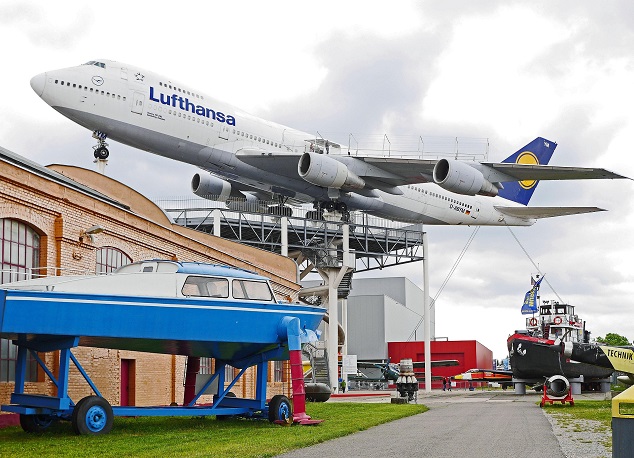
During my first few visits to Speyer with Viking guests, I kept noticing something quite extraordinary on the skyline: a Lufthansa Boeing 747 perched high above the Technik Museum Speyer. There it was, a jumbo jet apparently parked on top of a building, as if somebody had taken a wrong turn at Frankfurt Airport.
Every time we passed, I looked. Every time, I wanted to go. And every time, the day’s programme had other ideas. There are only so many times a man can admire an aeroplane from a distance before it becomes personal.
The day the schedule gave me a gift
Then, on one cruise, our schedule changed. Suddenly, we had considerably more time in Speyer than originally planned. Now, as a Program Director, I appreciate that an unexpected change can create all sorts of logistical puzzles. But I confess that my private reaction to this particular adjustment was rather less professional.
The 747!
I had been salivating over a visit for ages. At last, here was my chance. I took the gap and headed for the museum. History would have to share me with aviation for an afternoon.
The Technik Museum Speyer, opened in 1991 near the Rhine, is a gloriously extravagant collection of things human beings have invented to move themselves—and occasionally very heavy objects—from one place to another. Some of those inventions are elegant. Others appear to have been designed by engineers who regarded the word impossible as a personal insult.
The Boeing 747: the aircraft that started it all
Let’s begin with the obvious star. The former Lufthansa Boeing 747 is mounted high above the museum grounds and visitors can go aboard. A jumbo jet is impressive enough at an airport, but seeing one displayed at roof height is a different experience entirely. This was the machine I had been staring at from afar, and suddenly I was looking at it from the inside.
It is a marvellous reminder of the age when the 747 made long-distance flying feel almost impossibly glamorous. A great aircraft, a wonderful piece of engineering—and, for me, the fulfilment of a small Speyer obsession.
Buran: the spacecraft that did not go to space
Then comes the astonishing OK-GLI, a Buran-class test vehicle built for the Soviet space programme. One distinction is important: this is not the Buran orbiter that flew into space. OK-GLI was used for atmospheric flight tests, helping engineers understand how the vehicle handled during approach and landing.
That makes it no less fascinating. Standing near a machine built to explore the limits of flight, you are looking at the extraordinary ambition—and expense—of the space race. The surrounding space exhibition adds capsules and related exhibits, turning the visit into a journey far beyond the Rhine.
A submarine, a giant Antonov and a few more temptations
And just when you think the museum has played its best cards, there is the German Navy’s U9 submarine, which visitors can enter. Submarines fascinate me, though I must admit the thought of living in one makes even the smallest river-cruise cabin seem positively palatial.
The enormous Antonov An-22 is another highlight: a Soviet heavy-lift transport aircraft and one of the largest propeller-driven aircraft ever built. It is displayed on supports, giving you a close appreciation of just how ambitious cargo aviation became.
Elsewhere, the collection seems determined to test how many different forms of transport one visitor can admire in a day: aircraft, steam and diesel locomotives, classic cars, motorcycles, fire engines and military vehicles. There is also an IMAX Dome cinema for those who fancy a change of pace between exhibits.
In other words, this is not a quick diversion for someone who happens to like aeroplanes. It is a destination in its own right. Check the museum’s current opening hours, admission arrangements and cinema schedule before visiting.
What Speyer taught me that afternoon
I went to Speyer expecting to enjoy its cathedral and the remarkable history that surrounds it. I did, and I still do. But that unexpected afternoon reminded me of something I often tell guests: leave a little room in your travels for the thing that excites you.
For one person it may be an ancient crypt. For another, a quiet street or a local bakery. For me, on that particular day, it was a Boeing 747 that had been teasing me from a rooftop for far too long.
And that is why I love Speyer. It can take you from medieval emperors to the space race without ever losing its sense of wonder.
Speyer with Viking: a Program Director's advice
On a Viking Rhine journey, the exact excursion programme, docking point and time available depend on your itinerary. Some sailings may feature Speyer itself, while others use the region as a gateway to a wider excursion. Always follow the programme for your particular departure rather than assuming that every ship offers the same visit.
If Speyer is on your day, here is my advice: resist the temptation to treat the cathedral as the entire story. Enjoy the scale of it, certainly. But if the schedule allows, explore the old town and consider the Jewish heritage sites. Together they reveal a much more interesting city.
Wear comfortable shoes. Allow for cobbled surfaces and the walking involved in reaching the sights. Check whether crypt visits, towers or museum admissions are part of your excursion or require separate arrangements. And leave a little space for the unexpected. The best moments are not always highlighted in bold on the daily programme.
For more Rhine inspiration, continue to my Koblenz and the Middle Rhine guide, or explore the Viking Cruises section.
Speyer at a glance
Big history — Speyer Cathedral and its imperial crypt
Thoughtful heritage — The Jewish courtyard and medieval mikveh
Relaxed wandering — Maximilianstraße and the Altpörtel
Technology and engineering — Technik Museum Speyer, with enough time to explore
A slower travel moment — A café stop and a second look at the cathedral façade
Thoughtful heritage — The Jewish courtyard and medieval mikveh
Relaxed wandering — Maximilianstraße and the Altpörtel
Technology and engineering — Technik Museum Speyer, with enough time to explore
A slower travel moment — A café stop and a second look at the cathedral façade
Questions travellers ask about Speyer
Is Speyer worth visiting on a Rhine cruise?
Yes, particularly if you enjoy history. The cathedral is exceptional, and the Jewish heritage and compact old-town centre give the city more depth than a quick photo stop suggests.
What is Speyer Cathedral famous for?
It is the world’s largest surviving Romanesque church, a UNESCO World Heritage Site and the burial place of medieval rulers of the Holy Roman Empire.
Can I see Speyer independently?
That depends on your ship’s docking arrangements, excursion timetable and mobility needs. Check the current Viking programme and the distance from your actual berth before making plans.
How much time should I allow?
A short visit can cover the cathedral and central street, but several hours are better if you want to explore the crypt, Jewish courtyard or museums at a comfortable pace.
One last thought from the river
Speyer reminds me that history is not only about the people who ordered the great buildings. It is also about the people who cut the stone, kept the accounts, taught the children, traded in the markets and tried to make ordinary lives amid extraordinary events.
One emperor wanted to be remembered for a thousand years. He succeeded. Yet I suspect many visitors leave remembering something smaller: a quiet archway, a cool crypt, the view along a street, or the moment a place they had barely heard of became unexpectedly interesting.
That, to me, is the joy of travel. We arrive looking for a landmark and depart with a story. — Rob
Share your Speyer story
Have you visited Speyer with Viking or independently? Did the cathedral astonish you, or did another corner of the city steal the show? Tell me in the comments. I would love to hear what stayed with you.
Routes differ by direction. Rüdesheim features on Prague → Paris; consult your own programme.