VIKING INSIDER · MAINZ · RHINE RIVER
Mainz, Germany: Gutenberg, the Cathedral and a World-Changing Idea
“Every page you’ve ever read started here, in a town that spent years forgetting its own hero.”
By Rob Wheatley — Viking Program Director & traveller
In a nutshell: Mainz is a friendly Rhine city where the Gutenberg Museum, a mighty Romanesque cathedral and an inviting old town tell a much bigger story than you might expect. For Viking guests, it is a chance to meet the man who transformed European printing—and still have time for a very good coffee.
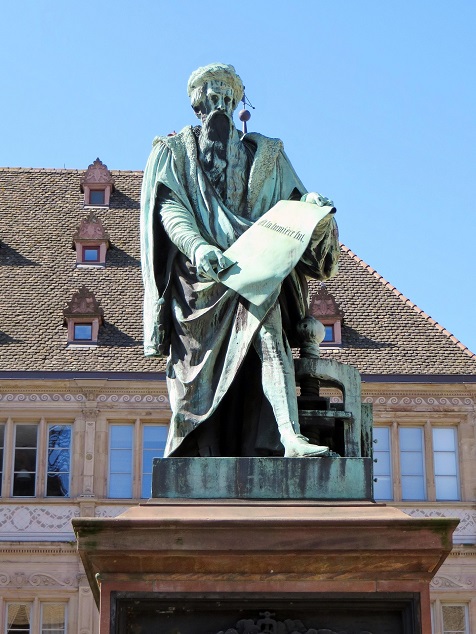
A man with a handful of metal letters
Let me start with a question. Who changed the world more: a king, a general, or a man with a handful of tiny metal letters?
I know which one I’m betting on. And he’s buried in the story of Mainz.
There is a wonderful irony to this place. Kings and archbishops spent fortunes trying to be remembered. By contrast, Gutenberg found a way to multiply ideas. Five centuries later, we still argue about the kings, but we read about them thanks to men like him.
The man who forgot to sign his name
I’m standing in the shadow of a thousand-year-old cathedral, in the town where Johannes Gutenberg worked out how to print with movable metal type. This was around 1450, in a workshop not far from where I’m sipping my coffee. Within a few decades, ideas were travelling faster than any horse could carry them.
Here’s the part that gets me every time. The famous Gutenberg Bible doesn’t carry his name anywhere. And he didn’t even hang on to the Bible-printing business.
He became entangled in a financial dispute with the man who had financed him, Johann Fust, and probably lost much of the equipment and work associated with the project. The surviving records do not tell us every detail, but the bitter irony is unmistakable: the inventor helped set the information age in motion while others carried the business forward.
He wasn’t entirely forgotten in his own lifetime—Mainz’s archbishop later granted him a position and benefits—and the popular image of a lonely, destitute genius is too simple. Nevertheless, I still find the unsigned Bible strangely moving. It makes you want to walk the old streets a little more slowly.
And a small but important distinction: Gutenberg did not invent printing everywhere in the world. Printing and movable type had earlier histories in East Asia. His extraordinary achievement was developing a practical system of metal-type printing in Europe that helped books and ideas spread on a new scale.
Planning beyond this visit? Then use my Germany travel guide to choose your next stops and build a journey that fits your time.
Gutenberg Museum Mainz: what to see and where to go
If you do one thing in Mainz, do this. Go to the Gutenberg Museum and see the Bibles for yourself. Then watch a demonstration of the printing process if one is available, with rows of tiny metal letters inked and pressed into paper. It’s one thing to be told it was revolutionary. It’s another to stand there and realise how fiddly, clever, and physical the whole process was.
Take your time here. After all, every book you’ve ever loved, every newspaper, every ticket stub and every travel guide (yes, including this one) owes something to the revolution in printing that Mainz helped unleash. I’ll admit it gave me a little shiver.
Important visitor update for 2026: the Gutenberg Museum’s original Liebfrauenplatz building is being redeveloped. Its temporary exhibition, Gutenberg-Museum MOVED, is housed within the Natural History Museum at Reichklarastraße 1, Mainz. Don’t simply head for the old museum entrance beside the cathedral. Check current opening arrangements and printing demonstrations on the official Gutenberg Museum website before setting out.
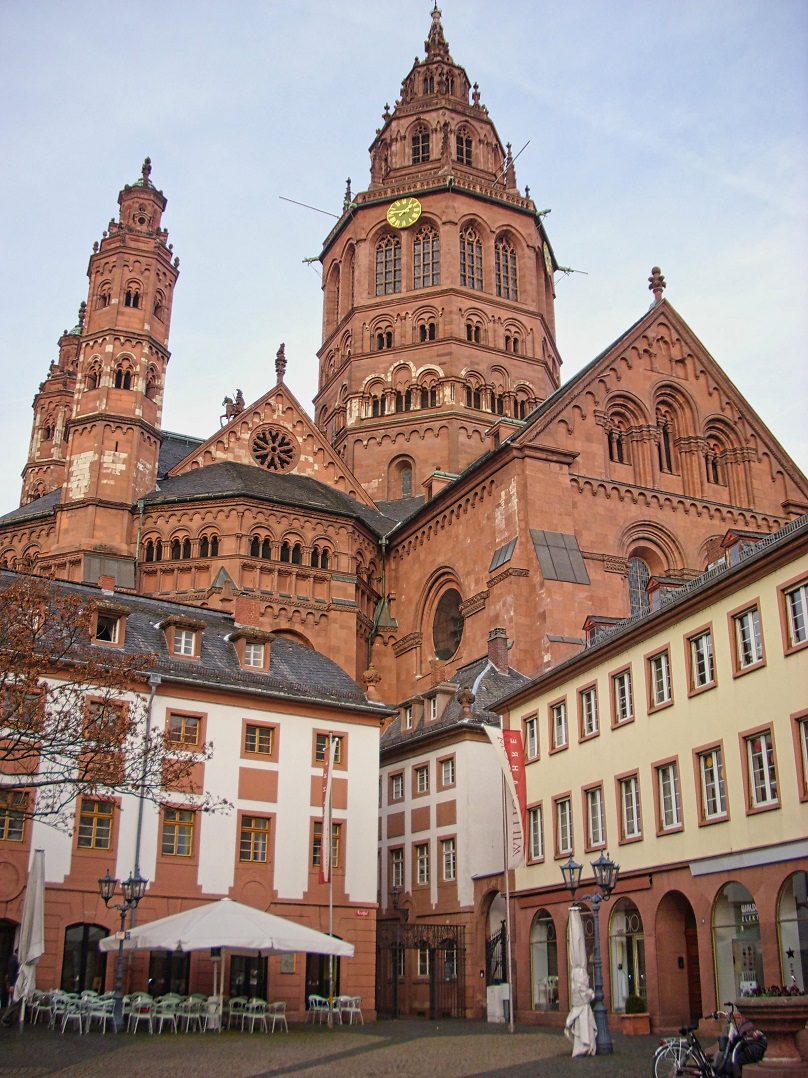
Mainz Cathedral: a thousand years looking down
Then step outside and look up. Mainz Cathedral is a monument to patience: centuries of stone, craft, and labour, rising over the old town. Now think about that contrast. On one side, a mighty building that took generations. On the other, an invention that fit inside a workshop and reshaped the world.
Both belong to the same town. I love that.
The cathedral’s history stretches back to the late tenth century, although what we see today reflects centuries of rebuilding, fire, repair and architectural change. That is the thing about European cathedrals: they are rarely a single moment frozen in stone. They are more like enormous family albums, except the family kept adding towers.
Give yourself a moment inside if it is open to visitors. Let the scale do the talking. Then remember that Gutenberg’s little metal letters eventually allowed ordinary people to read, debate and challenge ideas that once travelled chiefly through institutions like this one.
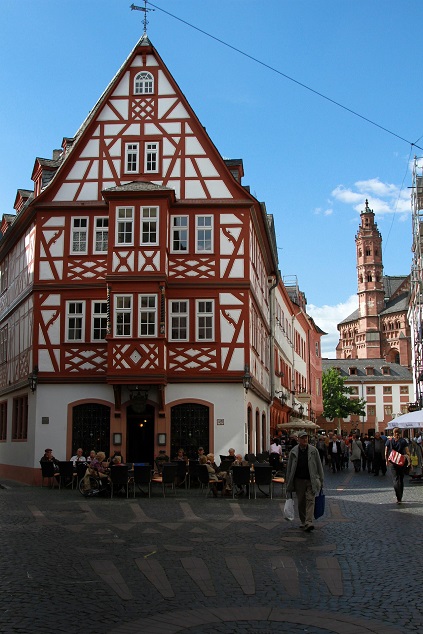
Things to do in Mainz Old Town
Rather than rushing off, give Mainz time. After all, it rewards the slow wanderer. Drift through the old town squares, stop for a coffee or a glass of local wine, and find the Gutenberg statue. Take a moment there and wonder what it’s like for a town to watch its greatest son fade from the immediate story of his invention, then become a legend long after he was gone.
Pull up a chair at a café, watch the town go by, and ask yourself what you’d change the world with, if you only had a workshop and an idea.
I rather like the area around the cathedral and the old market streets. Mainz has enough history to occupy a serious scholar, but it never insists you behave like one. Fortunately, there is usually a café nearby to bring you back to earth.
Visiting Mainz on a Viking Rhine cruise
As with any Rhine itinerary, your actual time in Mainz depends on the cruise, direction of travel, excursion programme and docking arrangements. However, do not assume that every Viking sailing includes the same amount of free time—or even the same way of visiting the city. Therefore, check your daily programme and ask the onboard team about transport and return arrangements.
If time is limited, my order of priorities is simple: Gutenberg Museum first if its exhibits interest you, the cathedral second, and then a gentle wander with coffee. If you have more time, explore the old town properly rather than trying to win a race against the clock. And remember that the museum is currently at its temporary address, not the old cathedral-side location.
For more of my river-cruise notes, browse the Viking Cruises hub, or start with my First-Time Viking Cruise guide. You may also enjoy Speyer and Koblenz and the Middle Rhine.
What to see in Mainz if you have only a few hours
With limited time in Mainz, I would resist turning a lovely city into a competitive sport. Start with the Gutenberg Museum if printing history is your priority, then visit Mainz Cathedral and explore the old-town streets around Marktplatz and Kirschgarten. If time permits, enjoy the Rhine promenade.
Mainz Tourism also recommends St Stephen’s Church for its Chagall stained-glass windows, though that deserves extra time rather than a breathless dash across town. See the official Mainz highlights.
A useful time guide: Mainz Tourism describes its Gutenberg Museum, Cathedral and Old Town tour as a 2½–3-hour experience. That’s a planning reference, not a guarantee for your Viking visit. Read the official tour description.
Gutenberg Museum Mainz: 2026 visitor update
The temporary museum is at Reichklarastraße 1. Regular hours are listed as 9 a.m. to 6 p.m., with Thursday until 8 p.m., subject to changes. Special closures are announced for 19 October (9–11 a.m.) and 23–27 November 2026. Check current museum visitor information before you go.
Mainz Germany at a glance: plan your visit
The history of printing: Gutenberg-Museum MOVED, Reichklarastraße 1
Architecture and history: Mainz Cathedral
Local atmosphere: Old town, market streets and cafés
A reflective moment: Gutenberg statue and the story behind it
A relaxed finish: A glass of regional wine or a riverside stroll
Questions guests ask me about Mainz
Is the Gutenberg Museum still beside the cathedral?
No. During redevelopment of its original building, the museum is operating at the Natural History Museum, Reichklarastraße 1. Check its official website for current arrangements.
Did Gutenberg invent printing?
Not printing worldwide. Earlier printing traditions existed in Asia. Gutenberg developed a highly influential European system of metal movable type and printing that transformed the spread of books and information.
Did Gutenberg lose his printing business?
He became embroiled in a dispute with financier Johann Fust in 1455 and probably lost much of the Bible-printing operation. The surviving documentation is incomplete, and he continued to be active afterwards.
Can I see Mainz independently from my Viking ship?
That depends on your sailing, berth, excursion arrangements and available time. Check the daily programme and return-to-ship instructions before setting off.
Why go?
Mainz isn’t flashy. It doesn’t need to be. It’s a place where you can touch the moment the modern European world began to read at a different speed, then enjoy a lovely afternoon in a friendly, walkable, very liveable German town. History with a good coffee break built in.
Go for the Bibles. Stay for the cathedral. And while you’re there, raise a glass to the man who never signed his name.
Share your Mainz story
Have you stood in front of a Gutenberg Bible or discovered a favourite corner of Mainz? Tell me in the comments. I would love to know what stayed with you.
Routes differ by direction. Rüdesheim features on Prague → Paris; consult your own programme.