Koblenz and the Middle Rhine: A Journey Through 2,000 Years of History
Two rivers meet at Koblenz, bringing 2,000 years of Roman history, medieval intrigue, castles and legends. Come along and imagine the centuries as we explore the city and sail the mighty Middle Rhine.
Where the Romans Once Stood
Stand at the meeting of the Rhine and Moselle and imagine the promenade disappearing. Roman soldiers, merchants and fortifications take its place. The Romans called their settlement Confluentes—the meeting of rivers. This was no accidental choice: waterways meant commerce, communication and control. The empire has vanished, but the rivers continue their ancient conversation, entirely indifferent to whoever happens to be in charge.
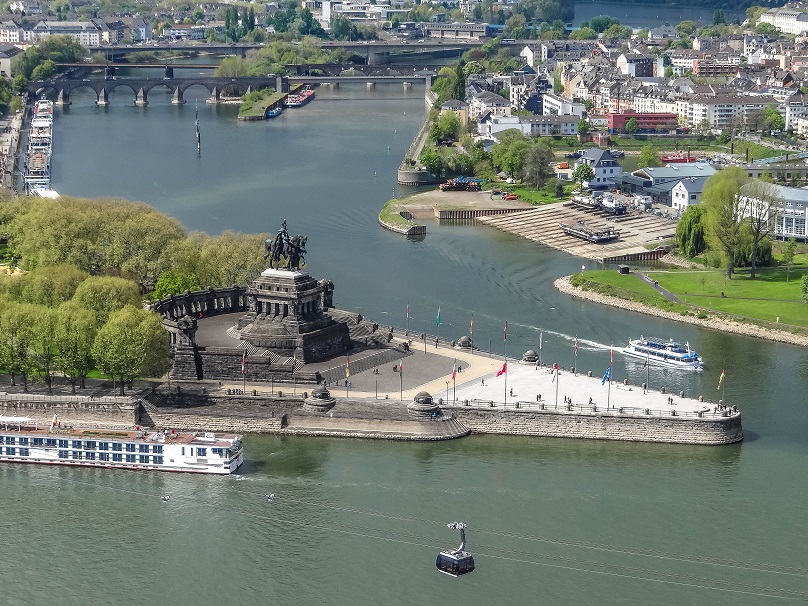
Deutsches Eck: The German Corner
Wilhelm I surveys the confluence from a monument inaugurated in 1897. But the name Deutsches Eck reaches back to the Teutonic Order in the thirteenth century. The monument was damaged in the Second World War and reconstructed in 1993. Few places wear Germany’s history quite so visibly.
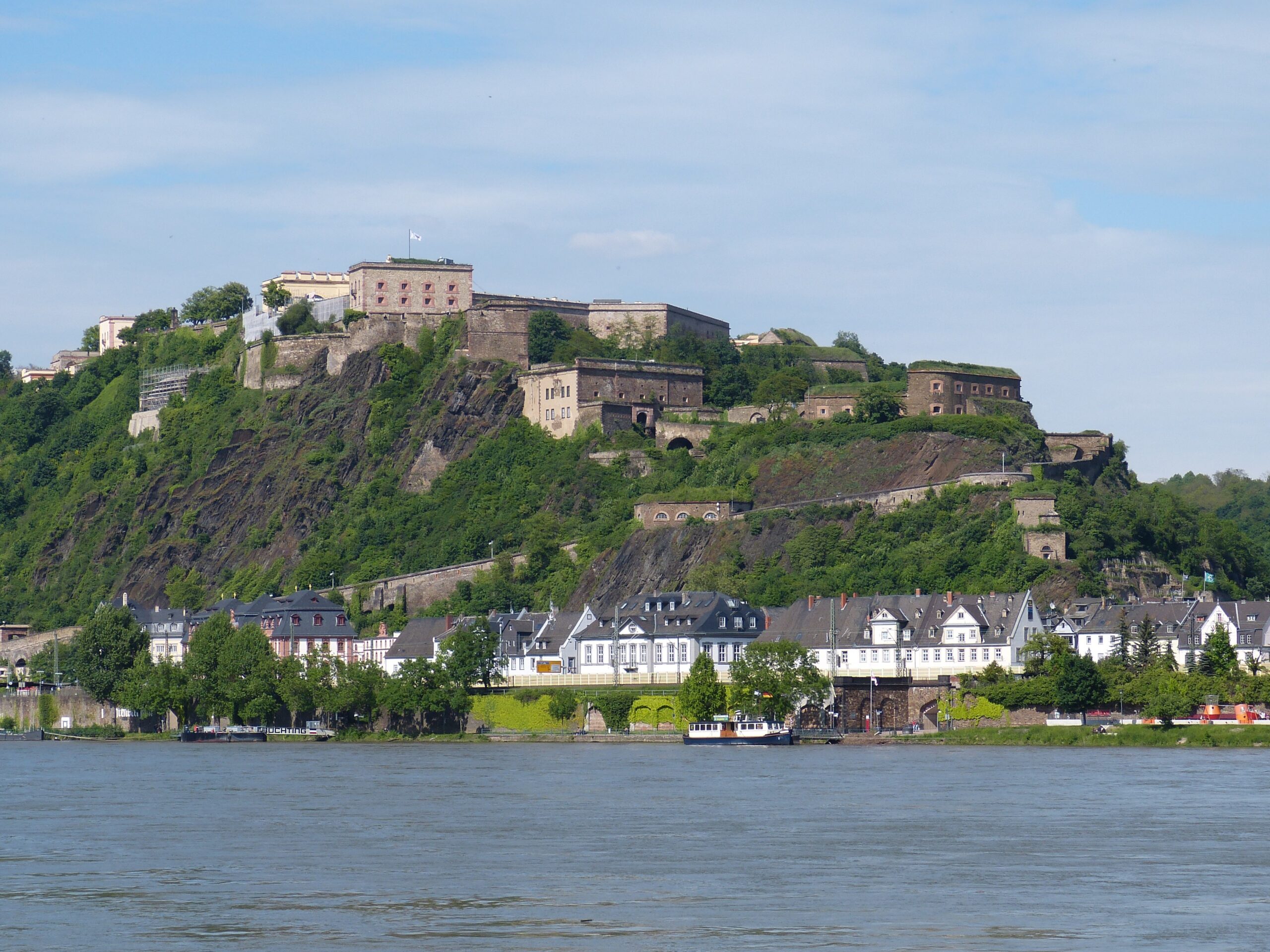
Ehrenbreitstein Fortress
Across the Rhine the immense fortress dominates the skyline. Its position has been fortified for centuries; the fortress we see today was largely constructed by Prussia between 1817 and 1828. Take the cable car, if your time and itinerary allow, and look back across the rivers. Suddenly, every ruler’s interest in Koblenz makes perfect sense.
The Old Town: Centuries Beneath Our Feet
The old town is where Koblenz becomes wonderfully human. Grand monuments tell us about emperors; narrow streets tell us about everyone else. Imagine merchants bargaining, carts rattling over uneven stones, church bells marking the hours and a rather less romantic collection of medieval smells. The Basilica of St Castor traces its origins to a church consecrated in 836. Look for the Four Towers and the mischievous Schängel Fountain, whose spitting boy occasionally surprises visitors. Even a city with two millennia of history need not take itself too seriously.
Planning beyond this visit? Then use my Germany travel guide to choose your next stops and build a journey that fits your time.
The Mighty Middle Rhine
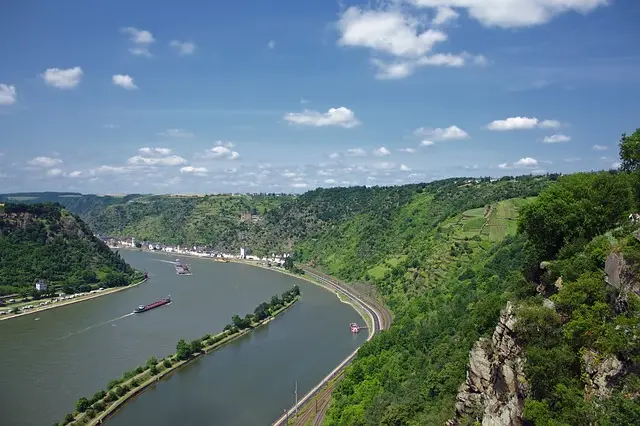
The Rhine is one of Europe’s great historical arteries. Soldiers, merchants, pilgrims and princes travelled its waters. Beyond Koblenz the hills rise, vineyards cling to terraces and castles emerge above the river bends. Then another castle appears. And another. Before long you wonder whether medieval Europe required a fortress on every available hill. The roughly 65-kilometre UNESCO-listed Upper Middle Rhine Valley is an extraordinary cultural landscape of castles, historic towns and vineyards.
Why So Many Castles?
Money, in a word. The Rhine was a major trade highway. Castles defended territories, demonstrated authority and sometimes helped their owners collect tolls from passing merchants. Today they look romantic. To a boatman facing yet another toll demand, perhaps rather less so.
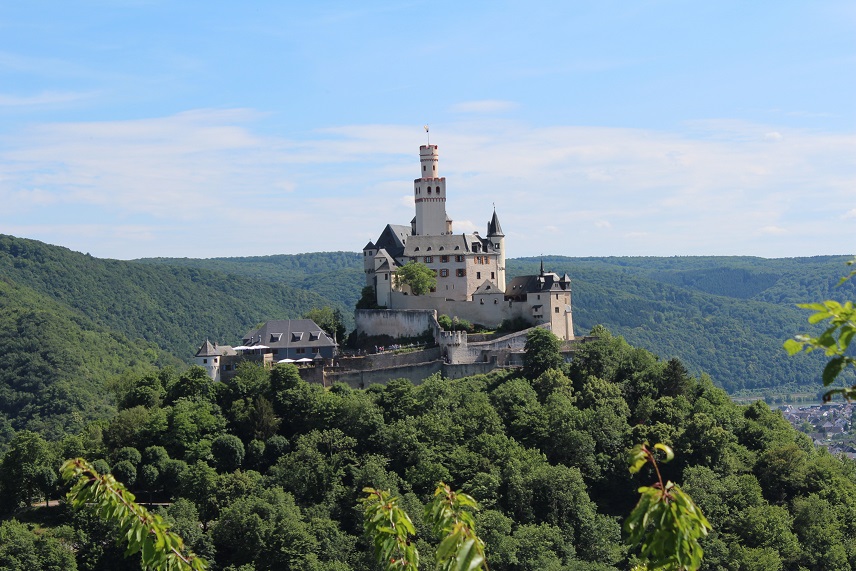
Marksburg, Rheinfels and the Castle in the River
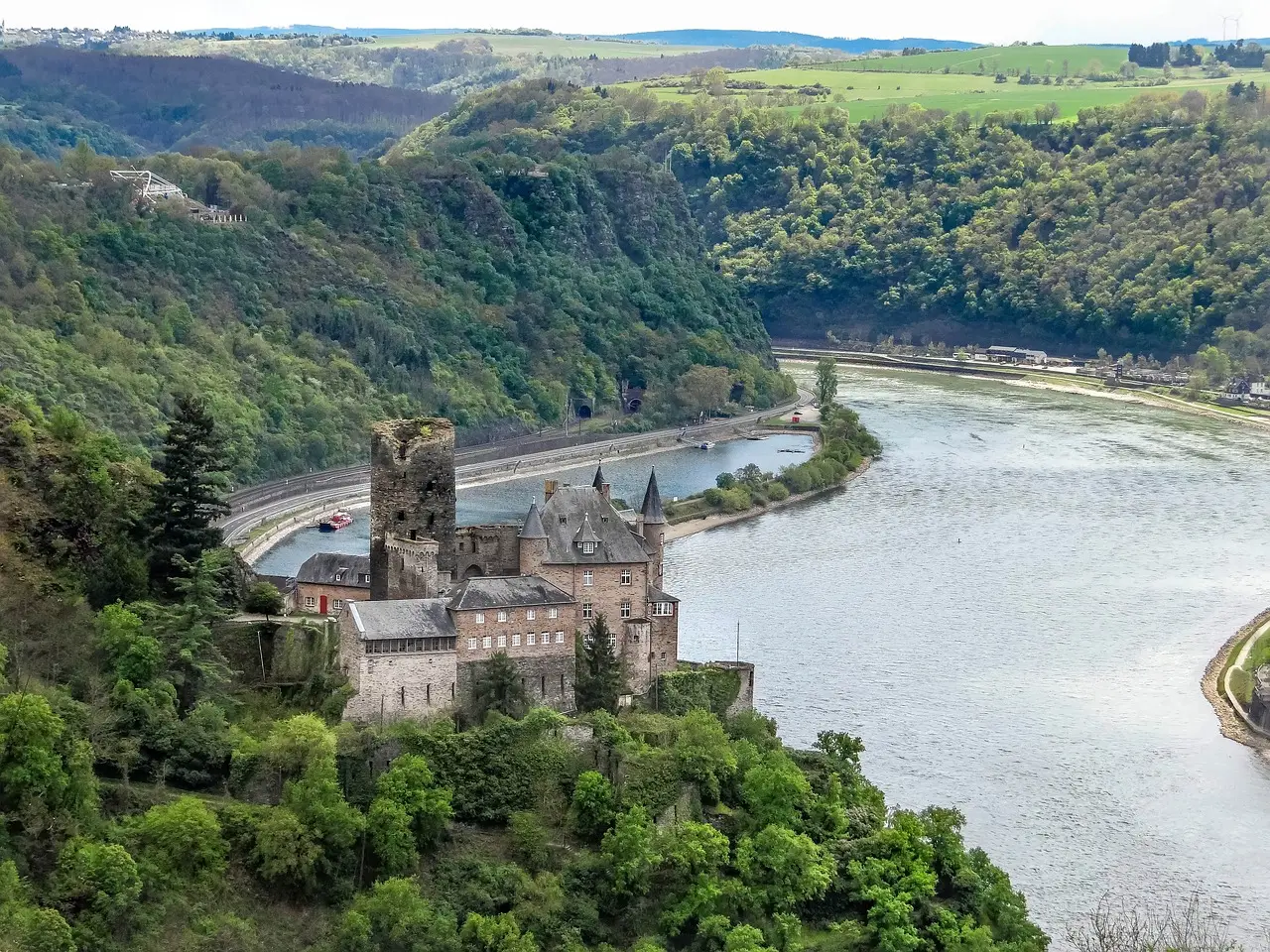
Marksburg above Braubach is the only hilltop castle on the Middle Rhine never destroyed. Its walls preserve a remarkable connection to medieval life, though I suspect the draughts and sanitation were less appealing than the view. Rheinfels and Katz Castle recall the region’s military power. Pfalzgrafenstein near Kaub sits on an island like a stone ship and once served a medieval toll system. Not exactly a warm welcome for passing merchants, but a memorable sight for us today.
Loreley: A Beautiful and Dangerous Legend
Near St Goarshausen the river bends around the Loreley cliff. Strong currents and rocks once made navigation treacherous. Romantic poets transformed that danger into the tale of a beautiful woman whose singing distracted sailors to their doom. Clemens Brentano and Heinrich Heine helped shape the familiar legend. The navigation hazards were real; the enchantress belongs to literature. Looking up at the great rock today, it is easy to understand why the story endured.
When the Rhine Became Romantic
In the nineteenth century, writers and artists—including J. M. W. Turner—saw beauty and mystery in the ruins and river bends. Fortresses that once signified power became the subjects of paintings and poetry. The Rhine was rediscovered as a place of romance, and travellers have been falling under its spell ever since.
Experiencing the Journey with Viking
Depending on the itinerary, Viking may offer a guided walk through Koblenz and optional visits to nearby historic sites. The castle-lined scenic sailing is a highlight in its own right. Find a viewing position, bring a light jacket and a camera, and listen to the commentary. But don’t spend the entire journey looking through a screen. Give the landscape the attention it deserves.
A Final Thought from the River
Koblenz is one of those places where past and present occupy the same space. Roman soldiers, medieval merchants, emperors and ordinary townspeople have all passed through. Along the Middle Rhine, castles cling to the hills and legends drift above the water. Kingdoms have risen and empires disappeared. Through it all, the river simply continues flowing. Perhaps that is the greatest story of all. — Rob Wheatley
Share Your Rhine Story
Have you stood at Deutsches Eck, explored Koblenz or sailed past the castles of the Middle Rhine? Which moment stayed with you? I would love to hear your story in the comments below.
Routes differ by direction. Rüdesheim features on Prague → Paris; consult your own programme.