VIKING DESTINATIONS • FRANCE • ALSACE
Strasbourg: One City, Two Flags
Walking Strasbourg, I see two architectural personalities — French charm and German imperial ambition. But beneath the beautiful façades lies a harder question: what happened to the families when the flags changed and the people stayed?
By Rob Wheatley – Program Director & traveler | Updated October 2026
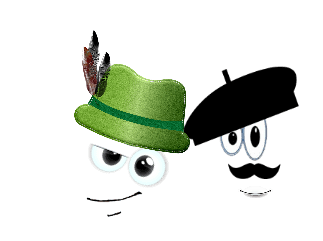
A city with two flags — and one uneasy heart
Strasbourg is one of those places where I find myself slowing down, not because I am tired but because my imagination has wandered off without me. One moment I am admiring an elegant French façade; the next, a vast German imperial building is staring back at me. And I wonder: what must it have felt like to live here when the border moved but your front door did not?
My first description of Strasbourg was a tale of two cities in one: French flair and German imperial ambition, an architectural split personality. I still feel that. But the more I walk, the more I realise that the buildings are merely the visible part of a far more human story.
My first description of Strasbourg was a tale of two cities in one: French flair and German imperial ambition, an architectural split personality. I still feel that. But the more I walk, the more I realise that the buildings are merely the visible part of a far more human story.
Four changes of nationality. Imagine the family conversations.
Strasbourg was long a German-speaking city of the Holy Roman Empire. In 1681, Louis XIV brought it under French rule. After the Franco-Prussian War, it became part of the German Empire in 1871; it returned to France in 1918; Nazi Germany took control in 1940; and the city was liberated in 1944, with French sovereignty restored. That is four changes between 1870 and 1945 alone.
We recite dates so easily. But imagine a family gathered around a table. Grandfather remembers a different country. Father has served under one flag; his son may be expected to serve under another. The house, the garden, the family photographs remain exactly where they were. Only the authorities, the language of official life and the definition of loyalty keep changing. It is difficult not to feel the absurdity — and the heartbreak — of it.
We recite dates so easily. But imagine a family gathered around a table. Grandfather remembers a different country. Father has served under one flag; his son may be expected to serve under another. The house, the garden, the family photographs remain exactly where they were. Only the authorities, the language of official life and the definition of loyalty keep changing. It is difficult not to feel the absurdity — and the heartbreak — of it.
Place de la République: the mother and her two sons
For me, Place de la République is where Strasbourg stops being an architectural curiosity and becomes something much more affecting. Stand among the monumental buildings of the German-era Neustadt and find the war memorial. Sculpted by Léon-Ernest Drivier in 1936, it shows a mother holding two dying sons, one associated with France, the other with Germany. In death, their hands meet.
There it is: the entire tragedy of this borderland carved in stone. I picture mothers watching sons march away, families wondering which uniform would come home, and relatives on opposite sides of a conflict neither had chosen. I cannot claim every imagined brother faced his brother across a battlefield. I can say the memorial makes that terrible possibility impossible to ignore. Strasbourg Tourism explains the memorial and square.
There it is: the entire tragedy of this borderland carved in stone. I picture mothers watching sons march away, families wondering which uniform would come home, and relatives on opposite sides of a conflict neither had chosen. I cannot claim every imagined brother faced his brother across a battlefield. I can say the memorial makes that terrible possibility impossible to ignore. Strasbourg Tourism explains the memorial and square.
The Kaiser built a statement in stone
After the 1870 siege and the city’s transfer to Germany, the new rulers set about making Strasbourg look unmistakably imperial. The Neustadt brought broad avenues, handsome apartment buildings, the Palais du Rhin and the imposing National and University Library. I imagine the architects unrolling their drawings with the confidence of men designing for eternity. They were making a statement: this city belongs here now.
Then history changed its mind. Walk back towards the Grande Île and the contrast is extraordinary: intimate lanes, timber-framed houses, waterside corners and a cathedral older than the empires that claimed it. UNESCO recognises both the historic centre and the Neustadt. I love that the two architectural languages now share the same city instead of arguing across a frontier. UNESCO’s description of the Grande Île and Neustadt is worth reading.
Then history changed its mind. Walk back towards the Grande Île and the contrast is extraordinary: intimate lanes, timber-framed houses, waterside corners and a cathedral older than the empires that claimed it. UNESCO recognises both the historic centre and the Neustadt. I love that the two architectural languages now share the same city instead of arguing across a frontier. UNESCO’s description of the Grande Île and Neustadt is worth reading.
Petite France: the softer face of a complicated past
And then there is Petite France, with half-timbered houses leaning towards the canals like old neighbours sharing gossip. It is ridiculously picturesque. I have to remind myself that these were working streets, not a stage set prepared for our photographs. The tanners, millers and fishermen of an earlier Strasbourg were getting on with life while rulers made their grand pronouncements elsewhere.
I find that contrast irresistible. A city can be fought over by kings and generals, yet still need bread baked, children raised and laundry washed. Perhaps the true continuity of Strasbourg is not a flag at all. Perhaps it is ordinary people stubbornly getting on with being Alsatian.
I find that contrast irresistible. A city can be fought over by kings and generals, yet still need bread baked, children raised and laundry washed. Perhaps the true continuity of Strasbourg is not a flag at all. Perhaps it is ordinary people stubbornly getting on with being Alsatian.
The cathedral that refused to choose sides
The Cathédrale Notre-Dame rises in warm rose sandstone, its single spire a glorious act of medieval ambition. Its building history spans centuries; for a long period its height was unrivalled. Goethe admired it as a great expression of German art. French voices embraced it as a masterpiece of Gothic architecture. After Louis XIV took Strasbourg in 1681, the cathedral returned to Catholic worship.
I stand before it and smile at the human determination to claim magnificent things as our own. The stone, of course, has no passport. At dusk it catches the light and glows, utterly indifferent to the arguments of nations. I think it has the better attitude.
I stand before it and smile at the human determination to claim magnificent things as our own. The stone, of course, has no passport. At dusk it catches the light and glows, utterly indifferent to the arguments of nations. I think it has the better attitude.
A marching song that became France's anthem
One of Strasbourg’s loveliest historical ironies is musical. In April 1792, Claude Joseph Rouget de Lisle composed a war song for the Army of the Rhine here. It later became La Marseillaise, after volunteers from Marseille carried it south-to-north into the national story. France’s anthem was born in a city where German-speaking Alsatian culture was part of everyday life. Strasbourg has always been more complicated — and more interesting — than the labels on a map.
The cartoonist who drew the argument
The Alsatian illustrator Jean-Jacques Waltz, better known as Hansi, portrayed charming Alsatian villages and mocked German officialdom with a sharp pencil. German authorities prosecuted him for his pro-French work in 1914. His pictures may look quaint on a postcard today, but they were once part of a fierce argument over identity. I think of how even a cheerful drawing can become political when people are being told who they ought to be.
The years when choice became a cruelty
The Second World War brings the most painful chapter. Nazi Germany effectively annexed Alsace in 1940 and later imposed military conscription. Men from Alsace and Moselle forced into German service became known as the malgré-nous — ‘against our will’. Around 130,000 were conscripted. Many were sent to the Eastern Front; some endured Soviet captivity, including the notorious Tambov camp. Refusal or desertion could endanger families at home.
I try to imagine a young man leaving Strasbourg in a uniform he never wanted, while his mother watches from the doorway. War has a dreadful talent for turning impossible choices into accusations. The story is complicated, including painful post-war debates about responsibility and the massacre at Oradour-sur-Glane. It deserves care, not easy verdicts. For visitors who want to understand more, the Mémorial Alsace-Moselle at Schirmeck tells this history in depth.
I try to imagine a young man leaving Strasbourg in a uniform he never wanted, while his mother watches from the doorway. War has a dreadful talent for turning impossible choices into accusations. The story is complicated, including painful post-war debates about responsibility and the massacre at Oradour-sur-Glane. It deserves care, not easy verdicts. For visitors who want to understand more, the Mémorial Alsace-Moselle at Schirmeck tells this history in depth.
Planning beyond this visit? Then use my France travel guide to choose your next stops and build a journey that fits your time.
Across the Rhine: a border that now feels wonderfully ordinary
For another perspective, cross towards Kehl on the German side of the Rhine. Today you can travel between the two by tram, or walk across the pedestrian bridge. I find something quietly moving about that. For generations, this river marked a frontier invested with fear, pride and suspicion. Now people cross it to shop, work, meet friends or have lunch. No dramatic trumpet. No emperor announcing a new order. Just everyday life doing what everyday life does best.
Why Strasbourg became a European meeting place
Strasbourg is home to the European Parliament and the Council of Europe, institutions with distinct roles. In a city repeatedly caught between France and Germany, their presence has a symbolism that is difficult to miss. I do not imagine institutions can erase the past. But I like the thought that a place once fought over can become a place where countries sit down and talk. After all the uniforms and proclamations, conversation seems a rather civilised improvement.
My favourite way to discover the two Strasbourgs
Start at Place de la République. Look at the Palais du Rhin, the library and, most importantly, the memorial of the mother and her sons. Walk through the Neustadt and notice the scale of the streets. Then head towards the cathedral and the Grande Île, allowing the city to change character around you. Finish in Petite France beside the canals, perhaps with a tarte flambée and a glass of Alsatian Riesling.
If you have longer, visit the Alsatian Museum, consider a boat trip, or take the tram towards Kehl. For a deeper understanding of the wartime story, plan a separate visit to the memorial museum in Schirmeck. Do not try to fit every chapter into one frantic afternoon. Strasbourg deserves more than a checklist.
If you have longer, visit the Alsatian Museum, consider a boat trip, or take the tram towards Kehl. For a deeper understanding of the wartime story, plan a separate visit to the memorial museum in Schirmeck. Do not try to fit every chapter into one frantic afternoon. Strasbourg deserves more than a checklist.
A note for Viking river cruise guests
Strasbourg is a wonderful stop on Rhine itineraries, though the precise berth, included excursion and free time vary by sailing. The historic centre rewards walking, but cobblestones and the distance between sights matter. Check your excursion meeting time before wandering off to photograph another beautiful façade — there are enough of them here to make a person dangerously late. If your tour concentrates on the Old Town, keep the Neustadt and Place de la République in mind for independent time, if logistics allow.
Questions I often hear
Did Strasbourg really change nationality four times? Yes, between 1870 and 1945: to Germany in 1871, to France in 1918, under Nazi German control in 1940, and back to France with liberation in 1944.
What is the difference between Grande Île and Neustadt? Grande Île is the historic island centre; Neustadt is the grand expansion developed under German administration after 1871. Both are UNESCO-listed.
Where is the memorial with the two sons? In Place de la République, in the Neustadt.
Can I visit Germany from Strasbourg? Yes. Kehl lies just across the Rhine and is connected by tram and a pedestrian bridge.
Is Strasbourg manageable in a day? You can see its highlights in a day, but two days give the history and neighbourhoods far more breathing room.
One city, two flags — and the people beneath them
What lingers with me is not which nation won a particular argument. It is the thought of the families who had to live with the answer. I look at the imperial façades, the medieval timber frames and the cathedral’s patient stone, and I see not two competing cities but one extraordinary place shaped by both.
Strasbourg makes me wonder how many ordinary lives were quietly broken by decisions made in distant rooms. And then, happily, it shows me something else: French and German influences sharing streets, tables, recipes and conversations. A city that once had to choose between flags has found a way to carry both histories. That, to me, is the real beauty of Strasbourg.
Strasbourg makes me wonder how many ordinary lives were quietly broken by decisions made in distant rooms. And then, happily, it shows me something else: French and German influences sharing streets, tables, recipes and conversations. A city that once had to choose between flags has found a way to carry both histories. That, to me, is the real beauty of Strasbourg.
Routes differ by direction. Rüdesheim features on Prague → Paris; consult your own programme.
One Response
We’re a group of volunteers and starting a new scheme in our community.
Your web site provided us with valuable info to work on. You’ve done an impressive
job and our whole community will be grateful to you.