VIKING INSIDER · CITIES OF LIGHT
Best Towns on Viking’s Cities of Light: Rob’s Picks
“Which is the best town?” It’s a question I get asked on the cruise. Usually by someone who would quite like a straight answer.
The trouble is, one person wants a castle, another wants a wine cellar, and a third is quietly wondering whether either of those comes with somewhere to sit.
Fortunately, this journey has a rather good answer for all three.
By Rob Wheatley – Program Director & traveler.
With Viking since 2014 · Originally published May 2019 · Updated 16 October 2026
For Viking Cities of Light towns, I’d start with Bernkastel for Moselle atmosphere, Cochem for a castle above the river, Bamberg for old-town character and beer, and Würzburg for grand architecture and wine. Your favourite depends on your interests—and the stops on your particular sailing.
First, know which journey you’re taking
Viking’s Cities of Light links Paris and Prague with a river cruise through Germany. Those two capitals are hotel stays at either end of the journey; you do not sail a river ship between them.
The two directions are not simply the same daily programme read backwards. Viking’s published 2027 itineraries differ around the Rhine: Paris to Prague lists Koblenz, while Prague to Paris lists Mainz and includes Rüdesheim in that day’s details. Other towns may appear within a day rather than as its headline.
Use this article to find your kind of place, then check your dated itinerary and My Viking Journey for actual visits, timings and excursion choices. My Cities of Light itinerary guide explains the wider journey. You can also compare Viking’s Paris-to-Prague and Prague-to-Paris listings.
Viking Cities of Light towns at a glance
| If you enjoy… | Look towards… | My suggestion |
|---|---|---|
| Small-town atmosphere | Bernkastel | Leave time for the lanes and market square. |
| A castle above the river | Cochem | Enjoy the riverfront as well as the hilltop view. |
| Roman history | Trier | Let the guide put the ancient remains into context. |
| Old-town character and beer | Bamberg | Try a small smoked beer if you’re curious. |
| Palaces and wine | Würzburg | Balance the Residence with time around the Main. |
| Layered German history | Nuremberg | Give its imperial and twentieth-century stories space. |
| Castle scenery | Middle Rhine; Cochem; Heidelberg | Check whether the visit involves sailing, a coach or a climb. |
| An evening ashore | Rüdesheim, when scheduled | Check the all-aboard time before making an evening of it. |
The Moselle: where I still feel like a child in wonder
The Moselle is a beautiful river. It winds its way through Germany like a Sunday stroll, with steep vineyards, gorgeous towns and riverbanks close enough to make the scenery feel wonderfully personal.
Even the locks have their own fascination. There is something deeply satisfying about watching a large ship negotiate a space you would hesitate to reverse a rental car into.
Castles and vineyards draw your eye, while the guides bring the stories alive. I still feel like a child in wonder as I listen and take in the architecture and history around me. That, to my mind, is a perfectly respectable state for an adult to be in.
Bernkastel: for the pleasure of being somewhere lovely
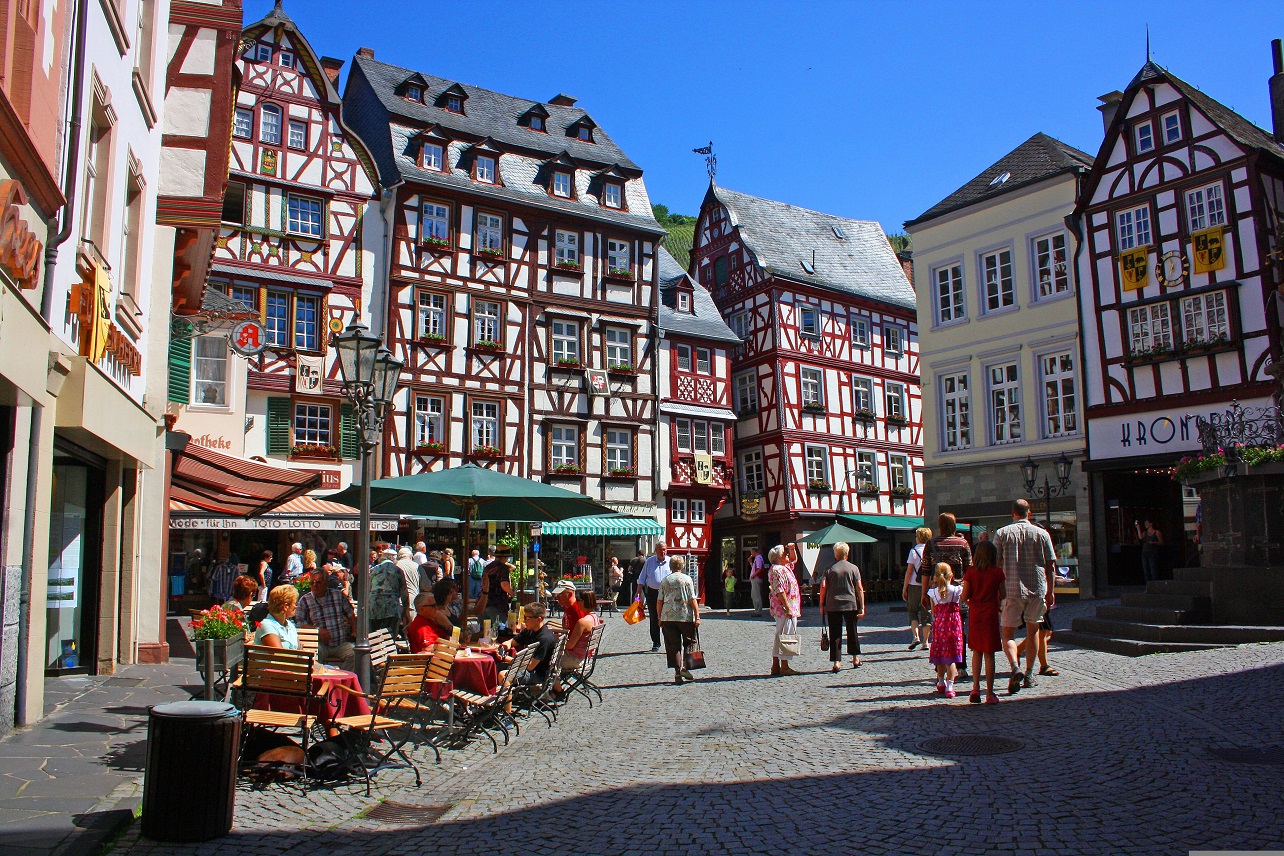
Bernkastel is my suggestion if you want that small Moselle-town feeling: half-timbered houses, inviting lanes, wine country rising above you and very little need to invent a complicated mission.
Join the visit, hear the stories, then allow yourself some unhurried looking. A square is not merely a place to cross on the way to the next attraction.
Rob’s suggestion: if there is time for a local wine or a coffee, sit down and let Bernkastel come to you. Explore Bernkastel →
Cochem: for the castle you hoped Germany would have
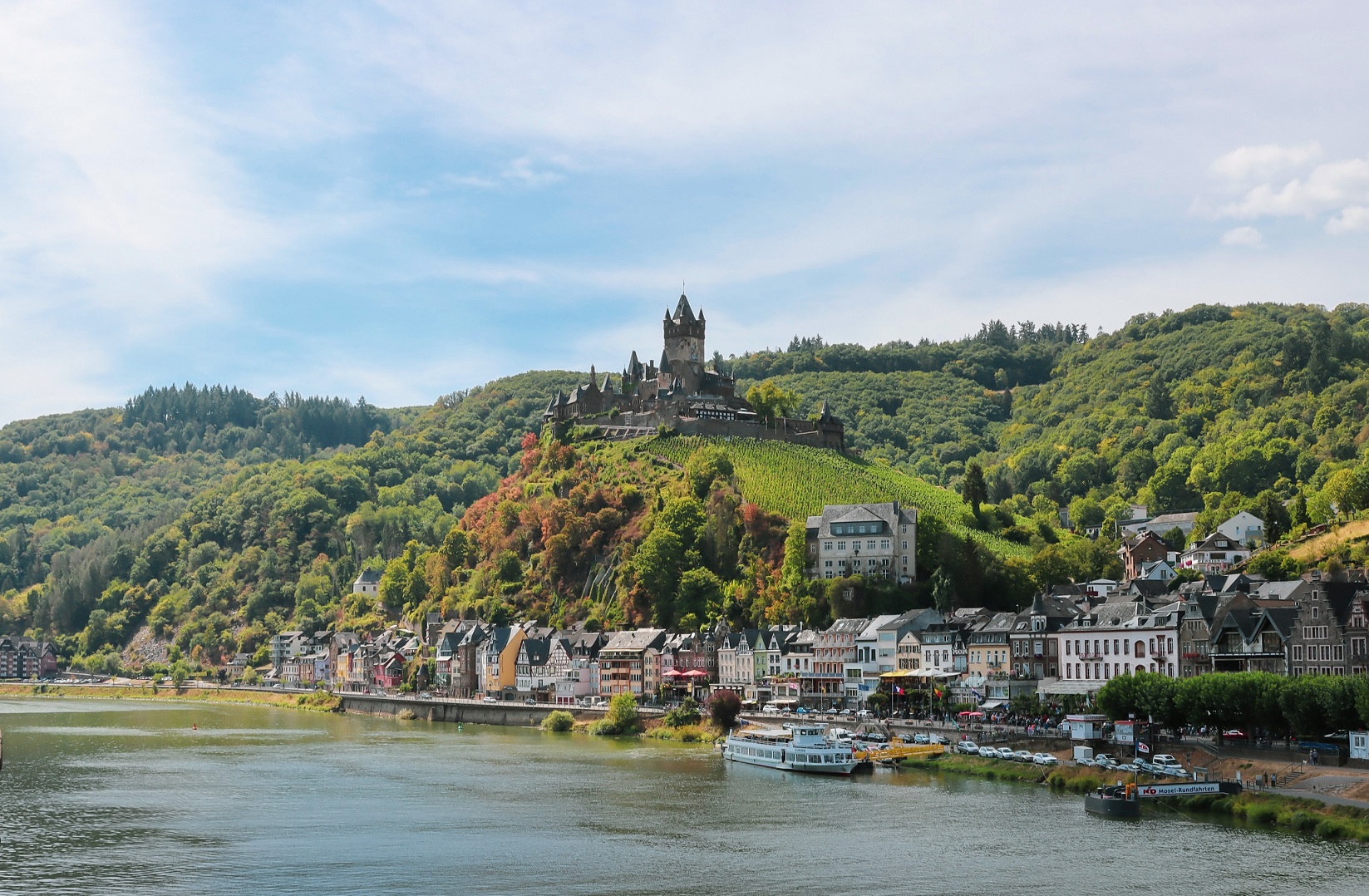
Cochem has the sort of setting that makes you lift your camera before you have properly decided what you are photographing. The river, the town and Reichsburg Castle above it do much of the work for you.
However, don’t spend the whole visit looking uphill. There is pleasure at street level too, among the lanes and along the waterfront.
Rob’s suggestion: enjoy both perspectives. Check the walking demands of your castle excursion, and save a little time for the town itself. Read my Cochem guide →
Trier: for history with proper depth
Trier changes the mood. Here, the Roman story becomes part of the city around you, with the Porta Nigra giving you a substantial introduction.
This is where I would encourage a little patience with the historical explanation. A very old structure becomes much more interesting when someone tells you what you are actually looking at.
Rob’s suggestion: take in the context first, then use any free time for the present-day city. Trier has shops and cafés as well as antiquity. The Romans do not need your entire afternoon. Discover Trier →
The Main River towns: three quite different personalities
Bamberg: for character, with an optional smoky aftertaste
Bamberg would be high on my list for someone who enjoys old-town atmosphere. Its UNESCO-listed centre rewards looking up, looking across the water and occasionally remembering to look where you are walking.
Then there is the smoked beer. Bamberg’s Rauchbier gets its distinctive character from smoked malt. Whether that sounds delicious or faintly alarming, it is a local speciality worth knowing about.
Rob’s suggestion: try a small serving if it appeals. You do not have to commit your afternoon to proving you like it. Beer is optional; the town has plenty to offer without it. Read about Bamberg →
Würzburg: for grandeur followed by something more relaxed
Würzburg offers a satisfying change of scale. The Residence supplies the architectural grandeur; the Main River and Old Main Bridge offer a different way to enjoy the city afterwards.
This is Franconian wine country, so wine enthusiasts have good reason to pay attention here as well as on the Moselle. The pleasure is in noticing the differences.
Rob’s suggestion: balance the major sight with some breathing space. Check how much free time remains before adding another excursion. Explore Würzburg →
Nuremberg: for a city that deserves more than one label
Nuremberg carries both imperial history and the weight of the twentieth century. The Nazi Party Rally Grounds and the story of the Nuremberg Trials deserve serious attention, but they are not the city’s whole identity.
Its old town brings a different perspective. So do its local food traditions, including the small Nuremberg sausages and Lebkuchen.
Rob’s suggestion: allow the serious history its place, then make room for the living city. Check your transfer-day schedule before assuming there will be a long afternoon to explore. Read my Nuremberg guide →
Rhine highlights: castles, city stories and an evening out
Koblenz and the Middle Rhine: look up from the coffee
For castle enthusiasts, the Middle Rhine sailing is part of the attraction in its own right. The scenery keeps changing, and the castles do have a habit of appearing just as you have become deeply involved in a conversation.
Koblenz belongs in this part of the story, where the Rhine and Moselle meet. Depending on your direction and programme, your day may combine an excursion with scenic sailing.
Rob’s suggestion: check the day’s commentary and sailing times. Give the river your attention, and ask about steps and uneven surfaces before choosing a castle visit. Explore Koblenz and the Middle Rhine →
Mainz and Rüdesheim: different pleasures on the same stretch
Mainz brings the cathedral city and the story of Gutenberg and printing into the journey. Rüdesheim offers a smaller-town wine-country mood, with the Drosselgasse among its best-known attractions.
If your sailing gives you an evening in Rüdesheim, it can be a lovely opportunity to experience somewhere after the daytime rush. Nevertheless, an evening ashore needs one very practical ingredient: knowing when to be back.
Rob’s suggestion: read the actual programme rather than borrowing someone else’s schedule from a different departure. Meet Mainz → · Rüdesheim after dark →
Heidelberg: understand the excursion before you choose
Heidelberg adds its castle and old town to the choice, but it helps to understand the logistics. The city is on the Neckar, and on Cities of Light it is reached by an excursion from the ship, rather than being a simple step ashore into town.
Rob’s suggestion: check the coach journey, walking requirements and total excursion length. A wonderful destination is more enjoyable when you have chosen a day that suits your energy. Read about Heidelberg →
And the places beyond the river?
Paris and Prague deserve their own time. They bring the grand architecture, museums, neighbourhoods and café life that a short visit can only begin to reveal. If either is a particular interest, consider extra days before or after the main journey.
Reims and the Luxembourg American Cemetery belong to the land-transfer part of the itinerary. The cemetery is a visit for remembrance and reflection; I would give it its own space rather than include it in a cheerful ranking of favourite towns.
Rothenburg ob der Tauber is a separate excursion possibility to check against your departure’s optional programme, not a river port or a guaranteed visit. Choosing it also means considering the time you will spend away from Würzburg.
Read more: Paris · Prague · Reims · Luxembourg American Cemetery.
Eat and drink according to where you are
There is no need to arrive with a glossary of every German sausage. Start with something connected to the place in front of you.
- On the Moselle: consider a local Riesling if you enjoy wine.
- In Bamberg: smoked beer is a distinctive option, alongside other choices.
- In Würzburg: ask about a local Franconian wine.
- In Nuremberg: look for the city’s small grilled sausages or Lebkuchen.
The official tourism sites explain Bamberg’s smoked-beer tradition and Nuremberg’s specialities.
Try what interests you. A cruise is not an examination in regional eating, and there are no extra marks for finishing something you dislike.
Practical questions about the towns
I would start with Bernkastel for Moselle atmosphere, Cochem for its castle setting, Bamberg for old-town character, and Würzburg for architecture and wine. Trier and Nuremberg offer different periods of history. Check which visits feature on your departure.
They are part of the overall Cities of Light journey, with hotel stays and land transfers. You do not sail a river ship directly between Paris and Prague.
Do not assume so. Viking’s published itineraries differ in some details between Paris to Prague and Prague to Paris. Check your dated itinerary and My Viking Journey for actual visits and excursions.
That depends on docking locations, transfers, time and your mobility. Cobblestones, slopes and castle steps can affect a visit. Ask your onboard team about the day’s arrangements and confirm the all-aboard time before setting off.
My real answer to “which is best?”
I would not swap the variety for a journey made entirely of my favourite kind of town. Part of the pleasure is finding that a place you had barely considered becomes the one you keep talking about.
Take the history seriously, enjoy the scenery, try something local and leave a little room for sitting and watching the world go by. That is a perfectly good use of travel time too.
For the practical route, head to my Cities of Light itinerary guide. The destination links beside this article will take you further into each place.
Routes differ by direction. Rüdesheim features on Prague → Paris; consult your own programme.
Which town would win you over?
A castle above the river, a Roman gateway, a wine cellar or a comfortable café chair? Tell me which kind of place appeals to you—or which stop became your unexpected favourite—in the comments below.