Traveling to Africa: Why This Continent Gets Under Your Skin
Some places you visit, enjoy, photograph and leave behind. Africa is not one of them. This is the continent I call home—and after all these years, it can still stop me in my tracks.
Traveling to Africa gets under your skin. I live here, and even after all these years the mystique has never completely worn off. There is a smell to the bush, a vastness to the sky and a sense of raw space that is very difficult to explain to somebody who has never stood in it.
Africa can be sophisticated, infuriating, elegant, noisy, peaceful, chaotic, funny and breathtakingly beautiful—sometimes before lunch.
And that is precisely why I love it.
It isn't simply where I live. It is part of who I am.
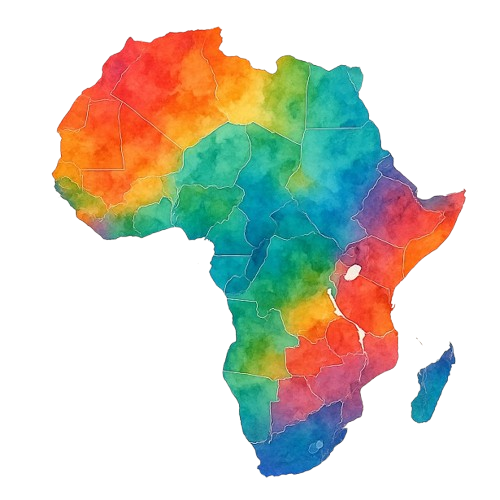
Africa is not a destination. It is a continent of worlds.
This is the first thing I wish more visitors understood.
People say, “I've always wanted to go to Africa,” in much the same way they might say they want to visit Italy.
Africa doesn't work like that.
Move from Cape Town to Kigali, Marrakesh to Maun or Johannesburg to Zanzibar and you haven't simply changed scenery. The rhythm changes. The food changes. Languages change. Religion changes. Architecture changes. Climate changes. Even your idea of what an “African experience” is begins to wobble.
And that is a good thing.
There are enormous desert landscapes where seemingly nothing exists for miles. There are tropical forests so alive you can almost hear the vegetation growing. Savannahs roll beneath immense skies. Great modern cities pulse with traffic, fashion, restaurants and nightlife.
Then there are ancient trading towns, vineyards, surf beaches, mountain ranges, wetlands, fishing villages and coastlines washed by two great oceans.
Africa is not just lions and bush camps.
Yes, the safaris can be spectacular. Watching a herd of elephants lumber across a track in front of you has a way of making whatever seemed terribly important on your phone five minutes earlier look rather silly.
But wildlife is only one chapter.
Come expecting a continent. Not a theme park.
Africa does not try to charm you with perfection. Its beauty has teeth.
The beauty—and the bite
I don't want to sell you a sanitized version of Africa because I don't particularly like sanitized travel.
Africa can be hot. Dusty. Humid. Loud.
A journey can be wonderfully smooth one day and require a healthy dose of patience the next. Distances can be enormous. Roads vary. Borders have their own personalities. A timetable occasionally seems to be more of a philosophical suggestion than an actual commitment.
Yet that is often where the experience begins.
Travel shouldn't always feel as though somebody has bubble-wrapped the world before you arrived.
Africa makes you pay attention. It asks you to look around. It reminds you that the planet is bigger, stranger and more magnificent than the little bubble in which most of us conduct our everyday lives.
That, for me, remains its greatest attraction.
My Africa begins at home: South Africa
Naturally, my starting point is South Africa.
This is dangerous territory for me because I can wax lyrical about my home country for a very long time. I shall attempt some restraint.
South Africa manages to squeeze an extraordinary number of different worlds inside one border.
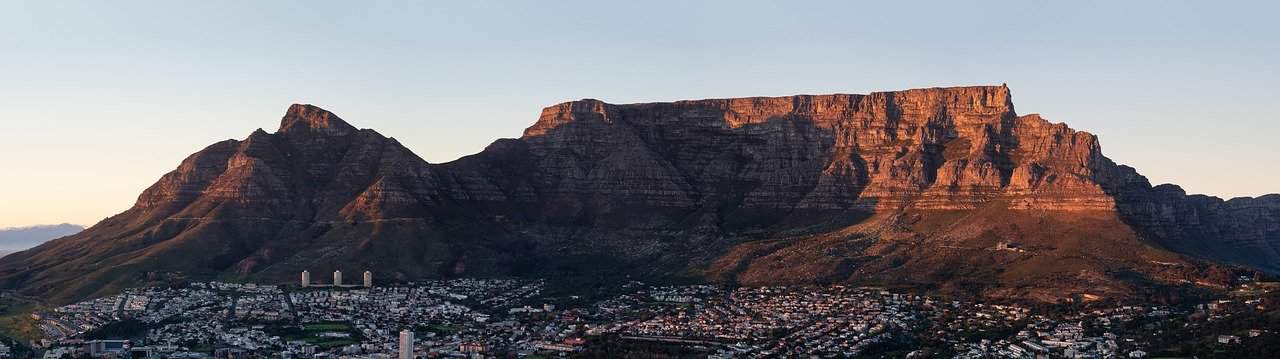
Cape Town sits dramatically between mountain and sea. A short drive away, the Winelands roll through Stellenbosch and Franschhoek. Head east and the Garden Route softens into forest, coastline and small towns. Go inland and the Karoo opens up into huge skies and semi-desert silence.
Then, of course, there is the bush.
Kruger National Park and the private reserves around it can deliver the Africa many first-time visitors have imagined since childhood: elephants, lions, giraffes, antelope, dusty tracks and that extraordinary moment at sunset when daylight retreats and the bush begins making entirely different noises.
Yet some of my favourite moments here have nothing whatsoever to do with ticking off famous sights.
A long lunch in the Cape. A road disappearing across the Karoo. The smell of a braai. The Indian Ocean on a hot summer afternoon. That great theatrical Cape Town moment when Table Mountain finally emerges from behind its tablecloth of cloud.
This is the South Africa I wish visitors could take home with them.
Is South Africa safe?
This is one of the first questions I am asked, and I am not going to dance around it.
South Africa has a serious crime problem. That is true.
But the useful question isn't simply, “Is South Africa safe?” It is: Where am I going, how am I travelling, and what precautions should I take?
Use reputable transport. Ask your hotel or host about local areas. Don't wander into unfamiliar city districts at night simply because Google Maps says it is a twelve-minute walk. Leave the conspicuous jewellery at home.
Be aware. Don't be terrified. Those are very different things.
How long would I give South Africa?
If you have crossed half the planet to get here, please don't give South Africa five days.
My recommendation remains at least two weeks, and three weeks is better if you have the time. Cape Town, the Winelands, Garden Route and a safari can already consume a fortnight without you seeing most of the country.
Africa rewards travellers who stop rushing.
I know this because I have spent a large chunk of my life doing precisely the opposite.
Yes, you should go on safari
I can tell you that Africa is more than wildlife until I am blue in the face.
You should still go on safari.

There is something fundamentally different about seeing an elephant in the wild.
No railing. No enclosure. No helpful documentary soundtrack.
Just you, the elephant and the sudden realization that the elephant has absolutely no interest in appearing on your schedule.
Then there is the silence.
People who have never been into the bush sometimes imagine safari as one continuous parade of lions, leopards and photogenic giraffes.
It isn't.
Sometimes you wait. Sometimes you drive for an hour and see very little.
And then something happens.
A leopard appears from the grass. A herd crosses the road. A lion calls after dark and the sound seems to vibrate inside your chest.
That waiting is part of the magic.
The Great Migration
If you want nature operating on a completely different scale, East Africa delivers it.
Across the Serengeti ecosystem, over a million wildebeest plus hundreds of thousands of other animals take part in the great annual migration. UNESCO describes it as the world's largest remaining unaltered animal migration.
It is one of those spectacles that makes the human ego look appropriately small.
And frankly, we could use a little more of that.
Read UNESCO's Serengeti National Park overview.
But wildlife tourism carries responsibility
Here I want to correct something from my original article.
You may have seen the figure that global wildlife has “declined by 73%.” That does not mean 73% of all wild animals have disappeared.
WWF's 2024 Living Planet Report found a 73% average decline in the size of monitored vertebrate wildlife populations between 1970 and 2020. That is still an alarming figure, but accuracy matters.
So choose wildlife operators carefully. Avoid experiences that treat wild animals as props. Ask about conservation. Respect distance. Don't push a guide to crowd an animal because you desperately need a better photograph for Instagram.
The privilege is being there.
The animal owes you nothing.
Then leave the safari vehicle
This is where Africa becomes interesting.
Because once you stop thinking of the continent purely in terms of wildlife, an entirely different collection of journeys opens up.
Zanzibar: slow down and breathe
After the early starts and dusty tracks of safari country, Zanzibar feels like somebody has turned down the volume.
There are warm seas, white beaches and traditional dhows slipping across the horizon.
But don't fly in, lie on a resort beach and assume you have “done Zanzibar.”
Go to Stone Town. Walk. Get a little lost. Then find somewhere to sit, order something cold and watch life go by.
Travel occasionally needs an agenda.
Zanzibar occasionally needs you to throw the agenda away.
Zimbabwe: where Africa becomes very personal for me
Zimbabwe is my birthplace, so this isn't merely another pin on my travel map.
I have family memories tied to this country. I also carry memories of how people spoke about it while I was growing up.
Zimbabwe has been through enormous political and economic difficulty. There is no point pretending otherwise.
Yet its natural beauty remains magnificent.
And then there is Victoria Falls.
There are some places where the adjective “spectacular” has been so overused that it has become meaningless.
Victoria Falls earns it back.
The Zambezi reaches the edge and simply disappears into a roaring gulf of water and mist. UNESCO calls Mosi-oa-Tunya/Victoria Falls the world's greatest sheet of falling water.
Stand there when the water is powerful and conversation becomes almost pointless.
Nature has the microphone.
Beyond the Falls, Zimbabwe offers places such as Hwange and Mana Pools where the country's wildlife and landscapes take centre stage.
For me, Zimbabwe has another dimension as well.
It reminds me that travel is not always about discovering somewhere new.
Sometimes it is about understanding where you came from.
Rwanda: green hills, red earth and a country that makes you think
My memories of Rwanda are intensely visual.
Green hills. Rich red soil. Tea and coffee country. Kigali.
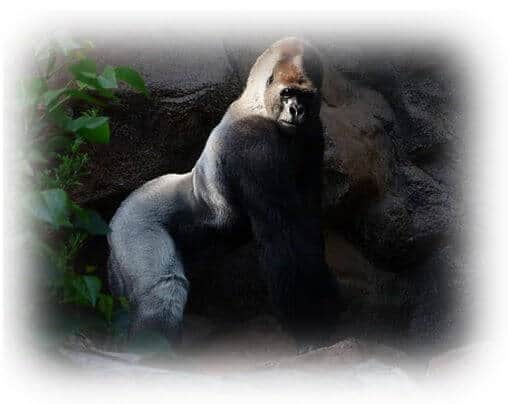
And, of course, the mountain gorillas.
There are wildlife experiences that are thrilling and others that feel almost uncomfortably intimate.
Meeting a gorilla in its own environment belongs in the second category.
You become very aware of the similarities. You watch the hands. The eyes. The family interactions.
And for a moment the great human habit of considering ourselves separate from everything else looks rather ridiculous.
Rwanda also demands historical awareness. The 1994 genocide cannot simply be treated as a paragraph of “dark history” before moving on to the sightseeing.
Understand it. Visit respectfully. Listen.
This is precisely why I no longer write permanent statements such as “Country X is safe.”
Travel doesn't stay still.
Neither should travel advice.
Malawi: an Africa that doesn't shout
Malawi has long been called the Warm Heart of Africa, and it is one of those descriptions I can understand.
Some of the nicest people I have known have been Malawian.
Lake Malawi dominates the country's character: an enormous body of freshwater surrounded by beaches, fishing communities and mountain landscapes.
It is easy to become obsessed with the headline African experiences—the gorilla, the lion, Victoria Falls, the great migration.
Malawi offers something quieter.
And quieter can be very good indeed.
There are times when the best travel experience is not the one that leaves you breathless.
It is the one that lets you breathe.
Botswana: when the water arrives in the desert
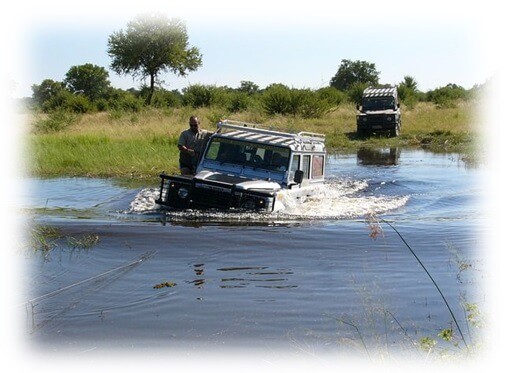
The Okavango Delta makes very little sense until you see it.
Water flows into an otherwise dry landscape and creates an immense wetland of channels, islands, floodplains and wildlife.
UNESCO describes the Okavango as one of the world's few major interior delta systems that does not empty into a sea or ocean.
The result is extraordinary.
This is safari country, certainly, but it feels different.
There is a stillness to Botswana that I love.
You may travel by 4×4, light aircraft or mokoro depending on where you go. Distances and conditions mean independent travel deserves proper preparation, particularly if you are attempting remote routes yourself.
This isn't the place to discover that owning a four-wheel-drive vehicle and knowing how to drive one properly are two entirely different things.
I speak as a man who has made enough travel mistakes to respect the distinction.
Namibia: the beauty of nothing and everything
Namibia remains one of the easiest African destinations to describe badly.
“So there's lots of sand?”
Yes.
And no.
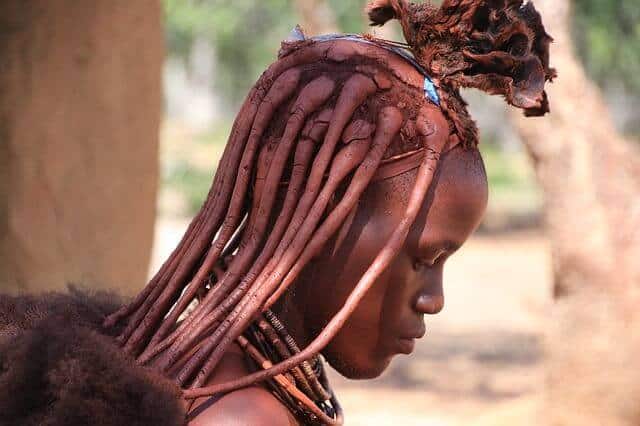
The Namib has landscapes that seem almost extraterrestrial. There are immense dunes, salt pans, gravel plains and horizons so empty they become the attraction.
Then the desert runs into the Atlantic.
The Skeleton Coast earns its name from a long history of shipwrecks along a remote shoreline frequently wrapped in fog.
It should feel bleak.
Somehow it is beautiful.
I once described Namibia as the beauty of nothing and everything, and I still can't improve on that.
There are destinations packed with attractions demanding your attention.
Namibia achieves the opposite.
It removes things.
Noise. Clutter. Crowds. Buildings.
Eventually you are left with landscape.
And yourself.
That can be rather wonderful.
Uganda: for the traveller who still wants an adventure
I think Uganda deserves more attention than it receives.
This is lush East Africa: lakes, forests, mountains, rivers and wildlife.
For many visitors, gorilla and chimpanzee trekking will be the headline experience. Others come for rafting, hiking, birding and safari.
What the old version of this article did, however, was spend too much time retelling Uganda's political history as though it were the present.
That is not helpful travel writing.
History matters, certainly.
But a traveller needs to understand the Uganda of now, while also checking current regional conditions before departure.
Travel writing has a responsibility to tell you things like that.
Beautiful photographs are not enough.
Marrakesh: when travel becomes an assault on the senses
Marrakesh was one of those places I had constructed in my imagination long before I arrived.
Camels. Spices. Desert. Markets. Ancient trade.
I had read about it and wanted the full exotic picture.
Well, Marrakesh gave it to me.
Along with several things I hadn't ordered.
It is noisy, colourful, confusing, theatrical and wonderfully exhausting.
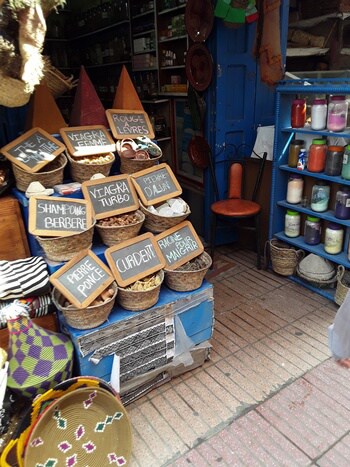
The Medina is a maze of alleyways, shops, food, motorbikes, conversations, smells, cats, traders and humanity.
And getting to our accommodation taught me a useful lesson about the nonsense we sometimes bring travelling with us.
My girlfriend and I had booked a place inside the Medina. Some local kids offered to show us the way through the alleys.
As they led me farther into this labyrinth, my overactive Western imagination took control.
This is it, Rob. You are about to be mugged.
I even left my girlfriend outside a shop while I followed the children because, in my suddenly very dramatic mind, this seemed like sensible international security strategy.
Nothing happened.
The kids showed me where I needed to go.
My paranoia had told me far more about my preconceptions than it had told me about Marrakesh.
That is one reason travel matters.
It occasionally introduces us to ourselves.
My advice for Marrakesh?
Don't sanitize it.
Yes, you can retreat into a luxurious hotel away from the Medina. There is nothing wrong with that.
But spend time inside the old city as well. Stay in a traditional riad if it suits you. Wander the souks. See Jemaa el-Fnaa change character as evening arrives. Visit Bahia Palace and the Saadian Tombs.
Allow Marrakesh to be Marrakesh.
Four or five days is enough for me.
After that, I am generally ready to go somewhere quieter and lie down.
Before traveling to Africa: five things I would check
Africa rewards spontaneity.
Border officials are less impressed by it.
Before you go, check five things.
- Your passport and visa position. Entry requirements depend on your nationality, destination, transit points and length of stay. Don't trust a five-year-old blog article—including one of mine.
- Health requirements. Malaria risk, yellow-fever rules and recommended vaccinations vary by region. What applies to Cape Town may be irrelevant somewhere else.
- Current safety advice. Look at the exact region you're visiting, not merely the country name. Conditions can differ considerably inside one country.
- Distances. Africa is large. Very large. What looks reasonably close on a map can consume a day of travel.
- Your travel rhythm. Build breathing room into the itinerary. A safari followed immediately by an airport, another flight and a six-hour transfer is not adventure. It is punishment with luggage.
For travel documents, IATA's Travel Centre provides personalised passport, visa and health-requirement information using a database relied on by airlines and compiled from official sources.
For the mechanics, start with my Plan for Travel guide and then verify the latest official requirements for your specific journey.
Come curious, not careless
I began the original version of this article trying to persuade people that Africa was worth visiting.
I don't think that is quite what this article should do anymore.
Africa doesn't need me to sell it.
What I can do is help you approach it properly.
Come curious.
Come informed.
Come prepared to have a few assumptions demolished.
Don't expect every road to be smooth, every plan to behave itself or every experience to fit neatly into the story you constructed before arriving.
And please don't arrive searching only for the Africa you have seen on television.
There is far more here than that.
There are wild places, certainly.
But there are also cities, chefs, artists, families, vineyards, fishermen, entrepreneurs, ancient communities, beach towns, mountain villages and ordinary people getting on with ordinary lives.
That is Africa too.
Perhaps the biggest gift of traveling to Africa is not that it shows you something exotic.
Perhaps it reminds you just how enormous and varied the world still is.
After all the travelling I have done, Africa can still stop me in my tracks.
I hope it never stops doing that.
And if you come here?
I suspect it may do exactly the same to you.
Frequently Asked Questions
Is Africa good for a first-time international traveller?
It can be, but choose the destination carefully. Established tourist routes can be relatively straightforward with good planning, while more remote journeys demand additional preparation. “Africa” is far too broad for a single difficulty rating.
How long should my first trip to Africa be?
For a long-haul journey, I would aim for around two weeks if possible. Trying to combine too many countries usually means spending a depressing amount of the trip inside airports and vehicles.
Is traveling to Africa expensive?
It can be either. High-end safari lodges can be extremely expensive, while other styles of travel can offer good value. Budget by destination and travel style rather than assuming the entire continent is cheap—or expensive.
Do I need vaccinations to travel to Africa?
Requirements and recommendations depend on your destination, itinerary and personal medical circumstances. Some routes may require proof of yellow-fever vaccination. Check authoritative health and entry information before departure.
Is Africa safe for tourists?
There is no useful continent-wide answer. Risks vary enormously between countries and even between regions of the same country. Check current government travel advice, use reputable local guidance and assess the actual places on your itinerary.
What is the biggest mistake first-time visitors make?
Trying to do too much. Africa rewards time. Give the place enough of yours.
What surprised you about Africa?
Have you travelled here? I would genuinely like to hear what surprised you most—the good, the difficult and the completely unexpected. And if you're planning your first trip, leave your question below.
I'm not a travel agent, and I won't pretend to know every corner of this enormous continent. But Africa is home, I have travelled a fair portion of it, and I am always happy to point a fellow traveller in the right direction.
Join the conversation
Rob, Africa is definitely a place Tom and I want to go. Wish you could lead a group there. You know you need Tom-Cat on your adventure to drive you crazy! Ha! This blog is amazing and the work you put into it is so informative. Thanks, hope you are well. I’m ready to explore, before I get too old to travel! Take care. Tom-Cat Crossley
Yes. We definitely need some Tom-Cat this side! Thanks so much for the nice words. Now, get to Africa!