The Art of Travel · TRAVEL FIELD NOTES
Car, Train or Tour? Choosing the Best Day-Trip Transport
Choose the journey that gives you the best day.
By Rob Wheatley – Program Director & traveler
Updated 7 October 2026
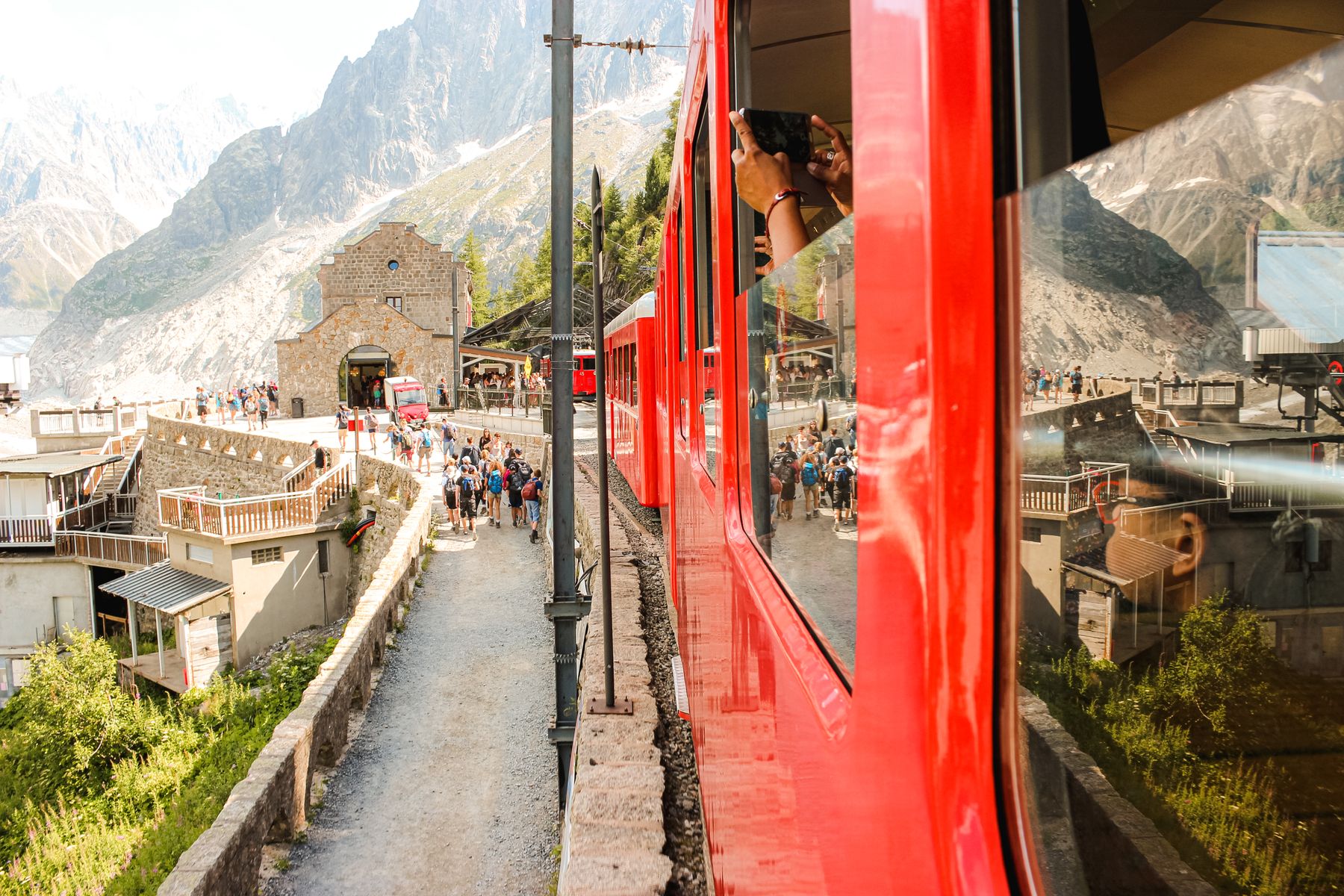
The journey can be part of the pleasure. A mountain train in Chamonix. Photograph: Mathias Reding / Pexels.
Quick Overview
The best transport for day trips depends on the whole journey. Choose a train for a well-connected, walkable destination; a car for scattered rural stops; or a tour when access, guiding and convenience earn the price. Compare door-to-door time, total cost, flexibility and the return before booking.
Compare the options · Train · Car · Tour · Your transport score · FAQs
There is a peculiar moment in day-trip planning when the lovely medieval village you discovered online turns out to be a straightforward drive, an expedition involving three buses, or available on a tour that leaves before breakfast with the words “panoramic photo stop” in the itinerary.
Suddenly, choosing transport becomes a personality test.
Do you want freedom? A window seat? Somebody else to explain the ruins? Or simply a day in which you are not personally responsible for reversing a rental car out of a lane apparently designed for a donkey?
In my work helping travellers explore, the useful question is rarely just “How do we get there?” It is “What sort of day will this journey give us?”
The cheapest-looking option can swallow the afternoon. The fastest-looking one can leave you circling a car park. And a tour you initially dismissed can turn out to be the reason you understand what you came to see.
So let’s choose the day first—and the vehicle second.
Car, train or tour: the useful comparison
These are starting points, not promises. A brilliant rail network and an awkward station produce a different answer from an hourly bus and a town-centre stop.
| Option | Strongest fit | What can spoil it |
|---|---|---|
| Train | One destination; convenient stations; a walkable centre; enjoying the journey | Transfers, station-to-attraction distance, restrictive tickets, an awkward return |
| Car | Several rural stops; bulky equipment; control over departure and detours | Traffic, parking, rental formalities, driving fatigue and the total bill |
| Organised tour | Difficult access; useful guiding; included arrangements; less planning | Early departures, rushed stops, group pace, exclusions and inconvenient meeting points |
My rule: an option only wins when it works at both ends. Getting to the town is not the same as getting to the attraction.
When a day trip by train wins
A train makes a lovely bargain with you: somebody else handles the movement, and you get to look out of the window.
That bargain works especially well when the station is close to the place you actually want to explore. One direct journey, a short walk, a town you can enjoy on foot and several sensible trains home: very attractive.
But check the final stretch. A station named after a famous attraction may still leave you needing a bus, a taxi or a walk your knees were not consulted about.
Compare the service for your actual date, not a weekday journey found while researching a Sunday outing. Check engineering work, connections, ticket restrictions and whether a seat reservation is required or worthwhile on that service.
For Britain, National Rail’s timetable guidance and journey planner provide an official starting point. Elsewhere, use the relevant operator or transport authority. Recheck before you leave.
The train is a strong choice when it removes effort without replacing it with a more complicated onward journey.
When a car earns its place
A car becomes useful when the good bits are scattered: a village, a viewpoint, a farm shop, a trailhead—and no sensible public transport joining them.
Here, flexibility has practical value. You can change the order, carry equipment and leave when the place has given you what you came for.
However, freedom comes with admin. Someone must drive, navigate, park and stay alert on the way home. In a place with narrow roads or unfamiliar driving conditions, that may be a substantial part of the day.
If you already have a car, compare the extra trip costs. If you need a rental, add collection, inspection, paperwork and return time. A one-day hire is not one uninterrupted day of sightseeing.
Check parking at the destination before committing. Also confirm the rental company’s document requirements, cover, excess, deposit, mileage and fuel or charging terms. Your Europe’s car-rental guidance is a useful official reference for EU rentals; use local guidance and the actual contract elsewhere.
For a tasting-focused outing, arrange a driver who will not drink, or choose a suitable tour or public transport route. Independence loses some charm when the person at the wheel spends the day watching everyone else enjoy it.

Scattered rural stops can make a car the practical choice. Photograph: icon0 com / Pexels.
When I would choose organised day trip tours
A good tour buys more than a seat. It can buy access, context and the wonderful luxury of having somebody else worry about where the bus is.
I work in organised travel, so I am hardly going to pretend every guided excursion is an assault on the spirit of adventure. A thoughtful guide can make a place come alive in ways a signboard never will.
However, “guided” and “good” are separate words. Read the itinerary like someone who intends to spend their own day inside it.
How much time is actually spent at the main attraction? Is the famous village a proper visit or a brief opportunity to photograph other people photographing it? How large is the group? Are admission, meals and hotel transfers included? Is the meeting point convenient?
Then check the walking demands, pace, language, cancellation terms and arrangements for delays. A coach seat does not automatically make an excursion accessible.
Choose the tour when its organisation or knowledge improves the experience enough to justify its price and timetable. You are allowed to enjoy being looked after. It does not invalidate your traveller credentials.
Which transport should I choose?
Work through these questions from top to bottom. They give you a shortlist, then the real timings and quotes make the final decision.
- Would driving be uncomfortable—or does everyone want to enjoy a tasting?
Start with a tour or a workable public transport route.
- One main destination, a convenient station and useful trains home?
Start with the train. Check the onward walk or transfer.
- Several scattered stops or poor public transport?
Compare a car with a tour that genuinely covers the stops you want.
- Would guiding, access or organised arrangements add real value?
Give the tour serious consideration, even if independent travel is possible.
- None of the options produces an enjoyable day?
Choose somewhere nearer or consider an overnight stay. The destination has to earn the effort.
The hidden costs that change the answer
Compare the same basket. A tour including transport and entry cannot fairly be compared with a train fare that leaves both a taxi and admission unpaid.
| Option | Add to the headline price |
|---|---|
| Train | Return fare, any required reservations, station transfers, destination buses or taxis, attraction entry |
| Car | Rental if needed, fuel or charging, tolls, parking, relevant extras, attraction entry |
| Tour | Travel to the meeting point, excluded admissions or meals, optional extras, any expected gratuities |
A refundable rental deposit is a cash-flow requirement, rather than an ordinary trip cost if it is returned. Keep it separate in your comparison, but make sure the available funds and accepted payment method work for you.
Also price the effort honestly. The cheaper option may still be your best choice. Just know whether you are saving money by spending more of your day organising it.
Solo, couple or group? Do the sums again
Group size can change the result because some costs are shared while others rise per person.
A solo traveller carries the whole rental bill. Four people can share that bill, fuel and parking. However, rail discounts or a group ticket may change the comparison again, and four tour places need comparing with the same inclusions.
Use this simple calculation: shared transport costs ÷ travellers + each person’s separate costs. Then check whether the vehicle, tickets and tour places suit the group you actually have.
Finally, count the driver as a person having a day out. Their effort is not a free public service simply because they possess a driving licence.
Rob’s Day-Trip Transport Score
If two choices still look plausible, score each from 1 (poor fit) to 5 (excellent fit) against these six questions. This is a personal planning aid, not a scientific rating or a guarantee.
| Factor | Question |
|---|---|
| Usable time | How much enjoyable time remains after the complete outward and return journeys? |
| Access | How conveniently does it reach the main attraction and any other important stops? |
| True cost | Does the total work for this group and budget? |
| Flexibility | Can you linger, change plans or leave when you want? |
| Effort | How much driving, navigation, booking or coordination does it ask of you? |
| Journey pleasure | Does getting there add to the experience? |
Add the scores for a first comparison. If one factor matters much more, give it extra weight and say why. A comfortable journey or an affordable total may matter more to you than spontaneity.
Rule out an unsuitable option before scoring. Missing the attraction’s opening hours, inaccessible transport or an unaffordable bill cannot be rescued by excellent scenery.
The last-train-home test
Before celebrating a transport choice, imagine the day running late.
For rail, buses and ferries, check the last useful journey all the way back—not merely the last departure from your destination. A late train is little comfort if its connecting service has already gone home.
Where possible, plan an earlier return and keep a later service as breathing space. Know the fallback if the planned service is cancelled, and whether you could actually afford it.
For a car, ask who will drive after the walk, the sightseeing and the long day. For a tour, allow time to reach the departure point and check whether the advertised return fits any later commitments.
The return is part of the experience. It should not be a surprise examination.
Three days, three different answers
These are illustrative scenarios, rather than recommendations for particular routes.
| Your plan | Start by comparing | Why |
|---|---|---|
| One historic town; direct rail; central station; plenty to see on foot | Train | It can remove parking and driving while keeping the day independent. |
| Two villages and a rural trailhead; little public transport | Car | It can join the stops without consuming the day in connections. |
| A remote site where guiding and organised access matter | Tour | Its arrangements and local knowledge may deliver more than transport alone. |
A direct bus or well-timed ferry can win too. Apply the same full-journey test, including the final stretch and the return. The title gives us three useful categories; the world is permitted more than three vehicles.
Before booking: the five-minute decision
- Map the whole journey. Home or hotel to the attraction, then all the way back.
- Check your date. Timetables, disruption, opening hours and the transport you need at the far end.
- Compare equivalent totals. Include the same activities and all essential transfers.
- Check the human fit. Walking, accessibility, driving confidence, group pace and fatigue.
- Protect the return. Know your practical departure time and fallback.
- Choose what leaves you a good day. If the journey takes over, change the plan.
Need to rearrange the day around your choice? Return to How to Plan the Perfect Day Trip. If you have realised the destination itself is too awkward, use How to Find Great Day Trips Near You to find a better fit.
Day-trip transport: your questions answered
Is a car or train better for a day trip?
A train is often a strong choice for one walkable destination with a convenient station and useful return services. A car can suit scattered stops or places poorly served by public transport. Compare the complete route, parking, onward travel and total cost for your group.
Are organised day trip tours worth it?
They can be worth it when transport, admission arrangements, local knowledge or reduced planning effort matter to you. Check actual time at the main attraction, group size, inclusions, meeting point, walking demands and cancellation terms before comparing the price with an independent visit.
What is the cheapest transport for day trips?
There is no universal cheapest option. Add fares or rental charges, fuel, parking, tolls and local transfers, then divide shared costs among travellers. Compare tour inclusions on the same basis. A low headline price can become expensive once the missing parts are added.
Should I rent a car for just one day?
Consider it when a car makes your intended stops substantially easier and you are comfortable driving locally. Include collection and return time, fuel or charging, parking, required documents, the deposit and the rental terms in the decision.
How do I plan a day trip by train without missing the last train?
Check the official timetable for your exact travel date, including connections and planned disruption. Aim for a practical return earlier than the final service where possible, allow time to reach the platform, and know what you would do if the service were cancelled.
What about buses and ferries?
Apply the same test: the full door-to-door journey, useful arrival and return times, onward access and disruption risk. A direct bus can suit a place without rail. For ferries, check the operator’s current timetable, check-in requirements and weather-related service updates.
The vehicle is only the beginning
Once you are weighing connections, transfers, rental terms and the journey home, you have wandered into the wider art of travel logistics.
That is where this day-trip sequence takes us next: Travel Logistics & Transit →. Use it to think through the practical movement that makes a bigger trip work.
And if all this sounds rather grand for what was supposed to be Tuesday afternoon, go smaller. A microadventure can begin with a nearby footpath. No rental agreement required.
Which journey gave you the better day?
Have you taken a train that saved the outing, found a tour worth every penny—or spent an impressive portion of your “relaxing day” looking for parking? Tell me your transport triumph or confession below ↓
About Rob: Rob Wheatley is a Viking Program Director and former ocean Cruise Director. His writing draws on a career helping travellers explore, alongside his own journeys around the world.
Photos: Mathias Reding and icon0 com, via Pexels, used under the Pexels License. Transport comparisons and the scoring framework reflect Rob’s practical judgement; verify services, prices and terms for your own trip.