TRAVEL FIELD NOTES · VENICE, ITALY
Venice Travel Tips: Romance, Wrong Turns & Real Life
Venice is wonderfully romantic. At 4am, with a 6am all-aboard deadline, it becomes a performance review.
By Rob Wheatley – Program Director & traveler.
Personal memories from an earlier visit; practical information checked October 21, 2026.
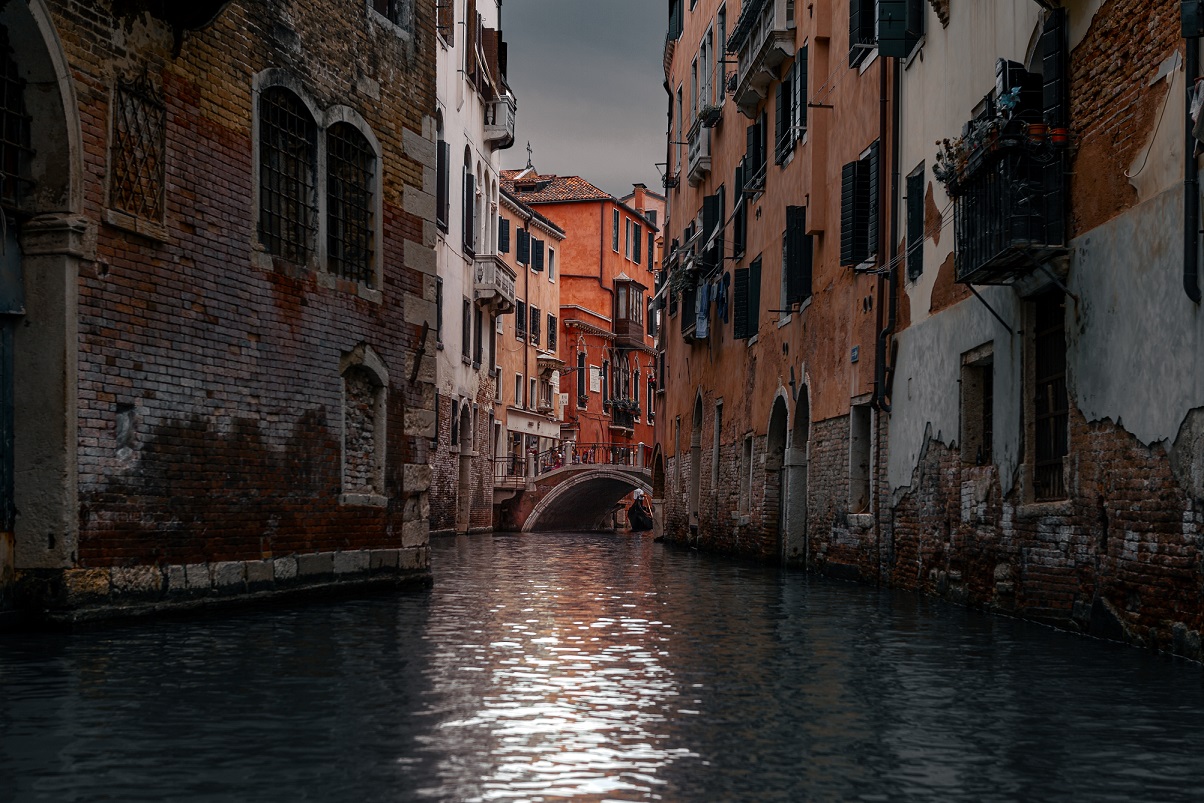
Venice is worth visiting for its canals, art and atmosphere, but a little planning makes it far easier to enjoy. These Venice travel tips cover sights, transport, gondolas, costs and cruise logistics—alongside the night I got spectacularly lost and reached my ship with five minutes to spare.
Planning beyond this visit? Then use my Italy travel guide to choose your next stops and build a journey that fits your time.
Is Venice worth visiting? My honest answer
Yes, in my opinion. Venice is worth visiting for the way its art, architecture and everyday life fit around the water. However, it rewards a little patience and punishes an itinerary built entirely around queues.
The romantic image is not invented. There are moments when the light on a canal does all the work. Then a delivery boat arrives, somebody needs to get past your suitcase, and you remember this is a working city.
My advice is to see the famous places, then leave time for an ordinary walk. Romance is more likely to appear when you are not checking how many attractions remain before lunch.
You do not need a partner, an expensive gondola or a hotel with a private jetty to enjoy it. What helps is curiosity, comfortable shoes and a realistic sense of how long it takes to get anywhere.
Lost in Venice (or, How Two Drunk Irish Girls Saved My Job)
My first visit to Venice was a masterclass in misadventure.
It started innocently enough. It was a rare night off, my Assistant Cruise Director was handling things on the ship, and five crew members and I headed ashore for the afternoon and evening.
We did all the things you’re supposed to do. We wandered into St. Mark’s Square and pretended we weren’t tourists while taking the same photo as everyone else. We shuffled across the Rialto Bridge, peered at the Bridge of Sighs, and browsed the glass shops of Murano, where I was careful to touch absolutely nothing. A gondola ride was considered, priced, and politely laughed off.
By evening we’d settled into a proper Italian dinner, and that’s where the sensible part of the day ended. The drinks flowed, the good times followed, and the party started.
The 6am deadline
The ship was berthed overnight. This was years ago, before today’s restrictions on large cruise ships. There was no rush.
Then I glanced at my watch. It was 4am. All aboard for crew was 6am.
Mild panic set in. My fellow crew members were seriously loaded, and I wasn’t far behind. I began rounding them up like a sheepdog with a hangover, and we left the nightclub we had somehow found in the alleys of Venice. Don’t ask me how we found it. I couldn’t find it again if you paid me.
Finding our way back to the ship was a disaster. Blind alleys, dead ends, a bridge we crossed three times, and confusion in every direction. Venice is a maze at the best of times, and it’s worse when you can’t walk in a straight line.
We sobered up fast, as adrenaline did what coffee never could. We all knew what we believed was waiting if we missed the ship: dismissal, delivered whenever and wherever we finally caught up with it in another port.
The clock crept toward 6am, and we walked what felt like miles with no sign of the water. Silently, one by one, we began resigning ourselves to our fate.
Our unlikely rescue
Then a miracle happened.
We bumped into two very drunk Irish Steiner girls, crew who worked in the salon on board. We explained that we were lost. They laughed in chorus and told us they were lost too.
We followed them anyway. What choice did we have?
And it was amazing. They threaded through those alleys with total aplomb, without a map, a plan or, as far as I could tell, a single working brain cell between them. Half an hour later, there was the ship.
So here’s my travel tip: if you’re lost in Venice, follow a drunk Irish girl home.
I checked my watch. It was 5:55am.
Security looked us over with deep suspicion. Then they spotted me, the Cruise Director, and rolled their eyes. They let us all aboard with strict instructions to go directly to our cabins and sober up.
Five minutes to spare. I’ve never been so grateful, or so hungover.
Getting lost is charming—until you have a deadline
That is my story. My actual navigation advice is considerably less dependent on Irish salon staff.
Venice’s lanes, bridges and canal edges can turn a short distance on a map into a surprisingly indirect walk. A visible building is not necessarily reachable by continuing straight towards it. Sometimes the canal gets the final vote.
- Save your destination before leaving. Keep the exact hotel entrance, meeting point or terminal address, plus an offline map or screenshots.
- Identify a useful landmark. A nearby vaporetto stop or major square is more helpful than a vague memory of a pretty bridge.
- Check the route back while you still have time. Include boat schedules if your accommodation or meeting point requires a water crossing.
- Allow a buffer. Queues, luggage, wrong turns and busy bridges can all slow you down.
- Stop and reassess. If the route stops making sense, ask for help rather than turning a small mistake into a long march.
Above all, wandering works best when it is a choice. A train, flight or all-aboard time changes the calculation. My travel logistics guide covers that less glamorous but rather useful side of a trip.

Venice has a talent for making the next turn irresistible. Enjoy that when you have time. Save the route back before your evening begins, and keep your deadline somewhere more reliable than the back of your mind.
What to see in Venice without racing through it
Start with the places you genuinely want to experience. You can admire the city without entering every famous building, but a little background makes the ones you choose more rewarding.
St. Mark’s Square, the Basilica and the Doge’s Palace
Piazza San Marco deserves time simply to look around. For the Basilica, check the official St. Mark’s ticket office: different ticket options cover different parts of the complex.
The Doge’s Palace is a separate visit. Use its official museum website for tickets, visitor rules and any special itineraries. Do not assume a Basilica ticket includes the palace, or that every palace tour includes the same access.
Rialto and the Bridge of Sighs
Rialto gives you the Grand Canal view you probably recognize before you arrive. Cross the bridge, enjoy it, then keep moving when others need to pass.
The Bridge of Sighs is another familiar sight, but seeing it from outside and following a palace visitor route are different experiences. Decide what interests you before buying a tour.
A neighborhood walk with nothing to prove
After the headline sights, try a walk in Cannaregio, Dorsoduro or a less busy part of Castello. None is a guaranteed crowd-free discovery. Nevertheless, stepping away from the busiest corridors can change the feel of your day.
Historic Venice has six sestieri: Cannaregio, Castello, Dorsoduro, San Marco, San Polo and Santa Croce. Murano, Burano, Torcello and the Lido belong in your lagoon planning; they are not additional sestieri.
Getting around: water bus, water taxi or gondola?
The boats are part of Venice’s appeal, but they perform different jobs. Knowing which one you need is more useful than discovering the distinction when the bill arrives.
| Transport | Useful for | Check first |
|---|---|---|
| Vaporetto | Public transport along canals and across the lagoon | Route, destination, ticket coverage and validation |
| Water taxi | A separate transfer to an agreed destination | Total fare, luggage, group size and access to your hotel |
| Gondola | A sightseeing experience | Duration, route, standard tariff and any extras |
The official ACTV fares page currently lists a standard 75-minute ticket at €9.50 and a 24-hour Venezia Daily Pass at €25. Those examples are useful for comparison, not a promise for your travel date.
Validate your ticket as required when boarding and changing services. Read the coverage carefully: ordinary tickets and passes do not automatically include every airport connection or every boat operator.
Is a gondola ride worth the money?
It depends on what you want from it. If a private glide through the canals is something you have looked forward to for years, it may be worth making room in the budget. If you mainly want to experience Venice from the water, a public water-bus journey can suit that purpose.
For a concrete comparison, the City of Venice’s published gondola tariff currently lists €90 for a 30-minute daytime tour, 9am–7pm, and €110 for a 35-minute evening/night tour, 7pm–4am. Recheck before your visit.
These are standard gondola tour tariffs. A package sold with extras may have a different price. Confirm the route, duration, full charge and anything additional before boarding.
On my first visit, we considered a gondola, reviewed the price and moved on. Venice survived our decision. More importantly, so did the evening’s dinner budget.
Murano, Burano and the Lido: choose your extra journey
My first visit included Murano’s glass shops, where I adopted the excellent financial strategy of keeping my hands to myself.
Murano makes sense if glassmaking interests you. Burano appeals for its colorful streets and lace heritage. The Lido is a different proposition again: think beach time and a change of pace rather than another version of central Venice.
However, these are journeys across the lagoon, not quick detours around the next corner. Check connections, journey times and the return service before deciding how much to fit in. In a short stay, choose an island because you want to spend time there.
If a glass demonstration or boat transfer is offered as “free,” ask what the arrangement involves and whether there is a sales stop. That is sensible shopping, not a reason to avoid local craft.
A Venice itinerary that leaves room for Venice
My preference for a first visit is two or three nights if time and budget allow. That gives you a chance to experience an evening and a morning without treating the whole city as a gap between transport connections.
| Time available | My suggested focus | What I would leave out |
|---|---|---|
| One day | St. Mark’s area, one chosen interior, Rialto and time for a walk | Trying to fit Murano, Burano and the Lido into the same day |
| Two days | The main sights on day one; another neighborhood or one island on day two | A second day filled entirely with queues |
| Three days | Add a museum, a lagoon journey or a slower neighborhood day | An itinerary with no margin for weather or changing your mind |
Group your visits geographically, then work backwards from any fixed departure. The freedom to change your mind is part of the attraction. My destination guides can help you connect Venice with the rest of your trip.
Where to stay—and what the map does not tell you
A hotel in historic Venice can make early walks and relaxed evenings easier. Mainland accommodation may offer a better price for your dates, but compare that saving with travel time, fares and the last connection back.
Before booking, ask how you will reach the actual entrance with luggage. A property close to a stop on the map may still involve bridges and steps. Also, confirm lift access and room location if stairs are a concern.
Venice requires specific mobility planning. Bridges, uneven surfaces and boarding arrangements can affect a route. Ask your accommodation and attraction operators about the journey you intend to make, rather than relying on a general “accessible” label.
For food, look for a menu you understand, check prices before sitting down, and ask about cover charges or extras. A drink in a famous square may be worth paying for as an experience; it should still be a deliberate decision. My food tourism guide has more on making meals part of the journey.
When to visit Venice
I would start by comparing spring and autumn dates, then check events and accommodation prices. Those seasons can offer a comfortable balance for walking, but they are not a promise of empty streets or bargain rooms.
Summer can be hot and busy. In winter, expect colder conditions and plan for shorter days. High water and bad weather can affect plans, so check local forecasts and transport updates close to your visit.
Carnival is a reason to go, not a fixed February rule. Its dates change with the calendar, and the event can affect prices and crowds. Check the official program for your chosen year before booking a costume and expecting the city to have arranged a party around your flights.
Venice costs and the access fee: what to check
The old daily budget in this article has retired. Venice costs depend heavily on your dates, accommodation, transfers and paid visits, so I would rather give you a useful calculation than an optimistic total.
- Room: price your actual dates and include any accommodation tax.
- Transport: add airport or rail transfers, then compare individual water-bus journeys with a timed pass.
- Sightseeing: choose the interiors that matter to you and check official ticket prices.
- Food: allow for the kind of meals you actually enjoy, plus any listed extras.
- Optional experiences: put a gondola, guided tour or island trip in the budget before calling it “just a small extra.”
The access fee is date-specific. As checked on October 21, 2026, the official Venice access-fee portal says the 2026 trial has ended and lists selected dates for 2027, with further arrangements to be announced. Check the portal for your visit date, applicable fee, exclusions, exemptions and any registration requirement.
Do not confuse the day-visitor access scheme with the accommodation tourist tax. If you are staying overnight, ask your accommodation what applies to your booking. For the bigger picture, use my travel budget planning guide.
Visiting Venice on a cruise: check the actual port
My 5:55am return belongs to an earlier chapter of cruising. It is not a model for present-day port logistics.
Cruise operations serving Venice continue, but large-ship arrangements have changed. The Venice port authority describes the development of cruise facilities in Marghera. Your booking documents, rather than an old memory of walking back to a ship, should determine your plan.
Confirm the check-in location, actual berth, transfer arrangements and all-aboard time directly with your cruise line. A destination marketed as Venice does not by itself tell you where to meet a coach or board a ship.
Also, treat the consequence we feared that night as part of my story, not a universal employment rule. Procedures and contracts vary. What remains dependable is this: five minutes is an excellent dramatic ending and an appalling travel buffer.
Enjoy the city without getting in its way
Venice is somebody’s home and workplace. Let people pass on bridges, keep doorways clear and step aside when checking a map. The photograph will wait; the person carrying a delivery may not be able to.
Use proper places to eat and dispose of rubbish, follow posted local rules and respect restrictions at churches and museums. Buying thoughtfully and spending time in a place can be more satisfying than collecting another hurried stop.
That is also how I would approach a return visit: a few things booked, a few hours unclaimed, and considerably better navigation after dinner. You will find the same principle in my guide to slow travel.
Questions about visiting Venice
Is Venice worth visiting?
Yes, in my view, especially if you enjoy art, architecture and exploring on foot. Allow time beyond the busiest sights and plan transport, accommodation and paid visits around your own interests.
How long should I spend in Venice?
I suggest two or three nights for a first visit if possible. With one day, concentrate on a small area and a few priorities rather than trying to add several lagoon islands.
Do I have to pay to enter Venice?
The access-fee scheme applies on specified dates and has exclusions and exemptions. Check the official city portal for your visit date and circumstances. Accommodation tourist tax is a separate matter to check with your host.
What is the difference between a vaporetto and a water taxi?
A vaporetto is a public water bus operating on routes with stops. A water taxi is a separate service whose fare and boarding arrangements you should confirm before booking.
Can I walk back to my cruise ship from central Venice?
Do not assume that you can. Confirm the actual berth, check-in point and transfers with your cruise line. Historic cruise stories do not describe every current sailing.
Do I need to book Venice attractions ahead?
Check availability for the attractions you care about before arriving, especially when your time is limited. Buy through the official institution or a clearly identified tour provider, and compare what the ticket includes.
Your turn: where did Venice lead you?
Did you find a favorite corner, take a wrong turn or pay for a gondola and decide it was worth every cent? Tell me in the comments. Bonus points if your navigation story ended with more than five minutes to spare.
Find your way
Keep exploring
Plan your world travel
Turn the places on your list into a trip that suits your time, budget and travel style.
One Response
Hi, very nice website, cheers!