Free Spirit Travel
Free Spirit Travel Architecture
Around The World With Rob
Free Spirit Travel

What will travel be like after the Coronavirus pandemic is controlled or over? 

How will travel after the Coronavirus affect what we know to be tourism? This is a question that remains to be answered.


Experts have trouble agreeing on just how things will look but they all agree on one thing: Travel will be different…Many say that social distancing will become the new norm. If that is the case, that would have a massive impact on travel and how we do it.

However. there are others that say that we will revert to our old normal once the pandemic is passed/controlled or has a vaccination.

Others argue that the psychological entrenchment of these new social distancing regulations will make germophobes out of most of us by the time we revert to normality. I would argue that.

While we probably will be sensitized to the risk of infections, there is a precedent that contradicts this ‘germophobe’ argument. And, given our natural instincts, we, as a species, do not manage well without social and tactile interaction.

The Spanish Flu of 1918
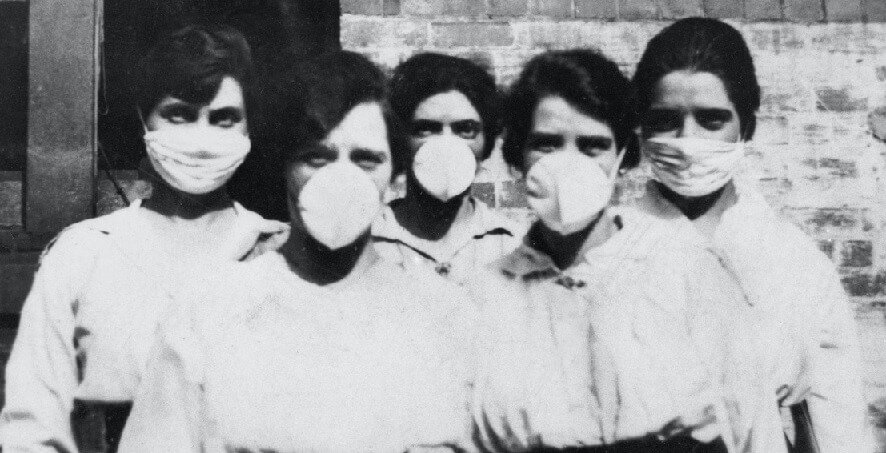
spanish flu epidemicHere was a devastating pandemic with an obscene loss of 50-100 million lives worldwide. Also, this was a time that saw the wearing of masks and social distancing.

It was a not  long after all this carnage that people reverted to the social ways of old.

Congregations and social groups reunited. Normality returned. However, World War 1 bridged that transition and so regular life was slower to return.

The ‘bounce-back’

Today, some people speak of a V shaped economy where the bounce back of trade and commerce would almost be immediate.

That seems unrealistic. And equally unrealistic, the idea that this pandemic will simply be here and gone tomorrow.

Both the economies of the world and the threat of the disease will most likely be a U shape recovery. It will take time. Vaccine or not.

So to assume travel will simply bounce back like it was before is an unlikely prospect.

What if we find medication that can be taken to recover from the coronavirus before it becomes serious or deadly?

What if we have that vaccine so we can consider the disease as something annoying,  just like the other corona strain viruses of the flu?
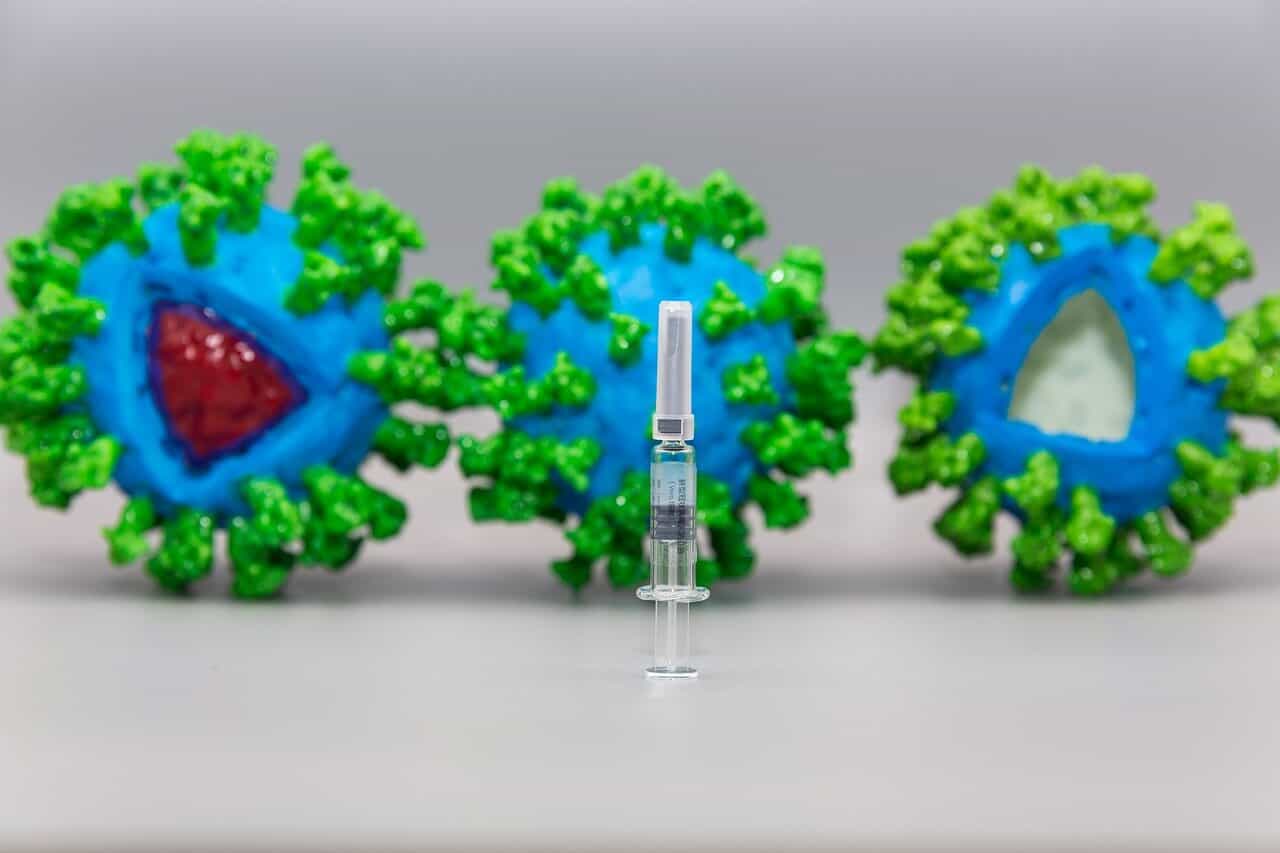
covid 19 vaccination

Well, firstly, that has to happen. In a perfect world, no matter how rushed a vaccine may be, it is improbable to see an effective global immunity in 6 months. Most likely a year or even two.

Consider the foreboding hypothesis that the coronavirus will still be with us for a good while longer and that a second wave may be more devastating in the Fall of 2020 compared to the first wave.

We could also face a mutated strain of this very baffling virus. Therefore, regardless of touted cures or vaccines, the travel industry needs to adapt to the new normal. So where does that leave travel after the coronavirus? 

Working on the assumption, from the preceding discussion, let us suppose that we need to invoke face masks, social distancing and the general precautions that we practice now and implement it into travel.

The outlook for travel after the coronavirus is seemingly bleak. However,  before the pandemic, things were not so great..

I think the best way to look at things is to see how things were before the coronavirus pandemic brought our travel pursuits to a screeching halt.  How was tourism just a few months ago (which already seems in the distant past).Well, tourism was booming. In fact, tourism was getting ugly. Masses of people invading destinations and landmarks.


Overtourism pre Covid

It was like a feeding frenzy and quality of experience was diminished by the hordes of tourists, vendors and operators.

The term ‘overtourism’ began to be a buzzword from 2015 onwards. With the advent of cheap airlines and budget deals where travel companies and airlines would look at volume and turnover for slim margins as a profit, so came the crowds.

Overtourism is the perceived congestion or overcrowding from an excess of tourists, resulting in conflicts with locals. The term has only been used frequently since 2015, but is now the most commonly used expression to describe the negative impacts ascribed to tourism.

What does this have to do with travel after the coronavirus?

I would suggest it has a great deal to do with a post coronavirus travel world. Tourism, the way it was before, was not really working. Sure, it was profitable for the operators but the true value experience of travel was bankrupt.

The pandemic may act as a natural filter, guiding the way we gather, travel and take our vacations. It may send us on another path, away from what once was.

new normal travel after coronavirus
travel after oronavirus

Sadly, the economies of the world are suffering and the disposable incomes that we enjoyed pre-COVID will be restricted. Less people will be able to take spontaneous international trips. Air travel cannot be as cheap as it once was if airlines have to surrender their models of cramped seating and full flights in order to turn a profit. The same will apply to busses,  trains and hotels

If social distancing does take a hold, the loss of the middle seats (which is arguably ineffective anyway as the virus travels two seats back and two seats forward) would cripple most airline revenues.

The challenges 

  • People may want more control over their own environment and the industry would have to adjust.
  • Simply the opening of nations borders will not guarantee you a destination. If you come from what they call a corona corridor country; a place where the pandemic has  been effectively dealt with, you can travel to that agreed destination on the other end of the corridor. Other tourists would be banned if corona efforts of protection have been poor or failed- The US would be one such banned country so forget about travel to places like Europe for awhile..New restictions by the EU could see a blacklist for  citizens of a country with high contagion levels, banning travel to any early reopening of Europe.
  • Testing and tracking will have to become pervasive and that opens up a whole can of civil liberties and privacy worms. 
  • Countries may not be keen to open their borders as they calculate their risk with their economy GDP versus the percentage of value that tourism may yield
  • Xenophobia or strong protectorate nationalism may play into future Geo-politics and nations may resist having welcoming border controls
  • Containment in a hotel, resort or cruise ship is not a guarantee of safety if tourists leave the Covid Free zone to venture out and explore – which is what tourists do.
  • Older folk, the very demographic that have the time and financial security to travel are the very people at highest risk of infection
  • Taking temperature checks is pretty useless if someone is asymptomatic.
  • The sheer hassle of air travel with the added medical security factored into an already arduous process of boarding an aircraft will have many thinking twice about frequent regional or international vacations. 

This is like a dark game of strategy. Move in this direction…check. Move in this direction..check. Move in this direction…checkmate! There are no definitive answers right now. We simply just do not know how to handle this disease. 

But here’s what the landscape for travel after the coronavirus may look like:

Expect an initial offer of cheap flights, cheap hotels and cheap packages. But this will not last. This will be the method with which airlines and operators will try to win back customer loyalty and market share. The goal to recover and rebuild with injections of cash-flow. This honeymoon with low prices will not last.

Initially, the tourism industry may try and entice the tourists back with unbeatable deals, just to oil the engines again. But this would be unsustainable as accrued debts of non-operation would need to be addressed.

And the problem facing all operators and service providers is the consequent cost of doing business once travel starts again. Business models will have to change. Implementation of precautionary measures will be expensive.

Analogue paperwork systems will have to be replaced with digital means. Diminished retailing space through social distancing will hit hard. This, with the prospect of a possible trickle and not a surge back to tourism will mean downsizing to fit the demand. 

So these may be just some of the measures. There has also been talk of the immunity passport – a document that gives you a clear bill of health. Not really practical given that you can be Coronavirus free today but not tomorrow.

The fact remains that no matter what efforts are placed into safeguarding tourists, it remains that there really is no defense outside of the accommodations or transport.

You can have your clients in a bubble but the moment they step outside, you, as an operator, lose control.

So where does that leave travel after the coronavirus?

In the short term (1-3 years) it does not paint a pretty picture in an industry that employs 1 in 10 people of the global population.
 
Certainly areas of the travel industry will have to downsize initially. Other areas will boom. It need not be all doom and gloom. You will travel again. But probably not in the near future.
 
However, this is a wonderful opportunity to plan for travel and get ready for the moment we can be free. There is always positive spin to be found . With reference to travel after the Coronavirus, how about a fresh start and a better way of doing things?


Taking the potential positives from a bad situation

Expect a huge trend towards local and regional travel. Tourists will start exploring their own homeland. National Parks, local beach resorts, ski resorts and hiking areas will most likely see a boom in the summer months of 2020 once lock-downs are lifted. This would most likely extend through the Fall and summer of 2021.
 
Road trips will be common. Family vacations may be about camping or glamping. A smart local tour operator or hotelier would be wise to start preparing with COVID 19 precautions, for the new wave of local travel.
 

What about international travel? Will it end? No, of course not. It will continue but it could most possibly, be on a smaller and more select scale.

The mass tourist aspect will probably become less intense, making way for a retro form of boutique vacations where smaller hotels, select destinations and genteel exploration may take place.


So, will there be travel after the coronavirus pandemic?

The tourist may become a traveler again. Back in the 19th century, travel was exactly that. Travel.

Young men and some women, would venture out on a grand adventure and visit places for education and self discovery. 

The days of boastful gratification with Instagram pics to impress friends back home and the actual history of the scenery or landmark in the background lost by the self-importance of your face, hopefully will dwindle.

Those who choose to travel will do so with a cultural and educational aspiration, perhaps.


Retro travel makes a comeback?

the traveler
travel after the coronavirus

Perhaps all this sounds elitist and maybe it is. However, the reality is that travel after the Coronavirus may prove to be more expensive and less appealing with the risks involved. Think about it.

  • Do you want to pay good money to be served by a waiter wearing plastic gloves and a mask?
  • Would you be okay with lining up outside tourist facilities, spaced out by 2 metres?
  • Can you endure the slow access to pretty much everything while people are taken in installments and sprayed by doorway devices?

The list goes on. Travel in the form we have known it cannot remain the same. The experience would be sub-par. But the opportunity exists now for operators to secure exclusive small group VIP opening times to landmarks and facilities. The exclusivity, caused by virus, would make traveling costly, specialist and definitely elitist.

Travel after the Coronavirus could see a natural filtering result that sees those who have a real passion for learning and seeing new things partake.

These would be those who may be prepared to accept the risks that inevitably will be there while the virus remains a threat.

But, of course, the risk is not just yours. You present a risk to others. Therein lies the dilemma facing countries in need of tourism income.

Lessons learned?

In conclusion and with hope, perhaps all this lock-down and sad time can provide some light.  Could this wake us up to the true value of home, family and the environment.

The planet has managed to breathe again, animals, fauna and flora, along with our air have had a respite from the dirty assault of mankind’s gluttony and pollution.

Maybe we can arise from this moment in history enlightened, keeping our learned appreciation of others and for the freedom and beauty that this blue planet we call home gives us. Maybe we can travel with ethics and responsibility in the future.

Maybe we can be the humans that we should be and respect all and everything. Maybe we can become travelers again – in awe and appreciative of the many splendid things we have been gifted. This is my, somewhat fanciful wish for travel after the Coronavirus

 
Facebook
Twitter
LinkedIn

One Response

  1. The more I read, the less I know. I do get the feeling things are going to be messed up with travel for a long time. I def will not be wearing a mask for a flight to London which would be 7+ hours. Nah, I’ll vacation in the States.

Leave a Reply

Your email address will not be published. Required fields are marked *