TRAVEL FIELD NOTES · INSPIRATION
Why Do We Travel?
Curiosity. Breathing space. A day that won’t unfold quite like yesterday.
It seems a banal question. I never thought to ask it… until I did.
I can’t say exactly when. Probably somewhere in the fourth hour of a layover, slumped beside a gate with a lukewarm coffee and a phone at 4%, surrounded by strangers who all looked as defeated as I felt.
The departure board had just flickered delayed for the third time, and a thought crept in, uninvited:
Why on earth do we put ourselves through this?
Because we do. Willingly.
We pay for it, plan for it, and count down the days. We endure cramped seats, lost luggage, unfamiliar beds, queues, security checks and airport sandwiches that appear to have been assembled during a period of national emergency.
And then, a few months later, we’re scrolling flights again.
So why do we travel?
By Rob Wheatley – Program Director & traveler
Updated 8 October 2026
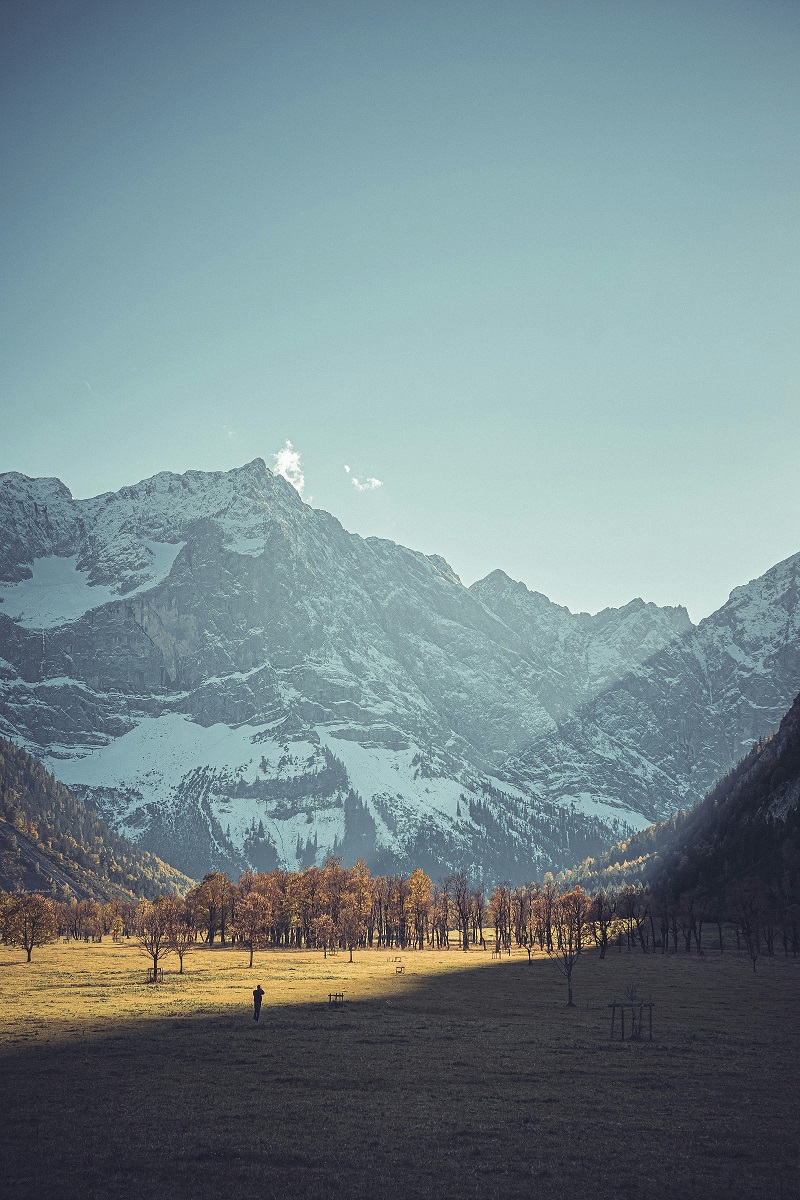
Why Do People Travel? The Short Version
People travel to satisfy curiosity, escape routine, rest, reconnect, learn and experience something unfamiliar. The reasons often overlap: we may want adventure and comfort, freedom and company. Understanding what you need from a particular journey helps you choose a destination, pace and experience that fit.
The reasons aren’t always grand. Sometimes we need sunshine. Sometimes we need to see someone we love. And sometimes we don’t really know what we’re looking for until we get there.
Very often, we’re hoping a change of scene will change something in us. That may explain why we’re prepared to tolerate the less glamorous business of travelling to get it.
Curiosity: What’s Over There?
I suspect this is where travel begins for many of us. Not with an itinerary. With curiosity.
What’s around that corner? What does Istanbul actually feel like when the call to prayer rolls across the city? Does a croissant taste better in Paris? What happens if I get on that train instead of this one?
We want to see what we haven’t seen. And photographs don’t quite do it.
You can look at a thousand pictures of Rome, but none tells you what it feels like to step into a little side street and suddenly find yourself somewhere beautiful that wasn’t on your list.

Travel turns abstract places into memories. A dot on a map becomes a café you remember. A country becomes people you’ve met. A famous building becomes the place where it started raining and you discovered your expensive “waterproof” jacket had a rather optimistic interpretation of the word.
There is some research behind the appeal of novelty. A 2025 outdoor-tourism study found an association between novelty and pleasure-related wellbeing. It used self-reported survey data, so it doesn’t prove that unfamiliar places make everyone happier.
Still, I recognise the attraction. Ordinary things become interesting again. Even breakfast can require a modest investigation.
If curiosity is pulling you, leave room for it. Book what needs booking, then give yourself an afternoon to follow an interest. Discovery needs a little space in the diary.
Sometimes We Travel to Get Away
There is another answer to why people travel, and it’s not quite as romantic. Sometimes we want to escape.
Not necessarily from a terrible life. Often from a perfectly decent one.
Same alarm. Same traffic. Same supermarket. Same conversations. Same view from the kitchen window.
There is comfort in routine, of course. But too much familiarity can make the weeks blur together. Sometimes the great appeal of Paris isn’t Paris. It’s simply that Paris isn’t Tuesday afternoon at home.
Travel interrupts that familiarity. Suddenly, you have to pay attention again.
Where is the station? What does that sign mean? Why has everyone else apparently understood the ticket machine except me?
The everyday worries don’t necessarily disappear, but they have to compete with more immediate matters, like finding your hotel. You’re temporarily away from the version of yourself that knows exactly what happens next.
Escape isn’t the same as running away
Travel cannot fix everything. A beach doesn’t resolve a relationship problem. A mountain won’t make a bad job disappear. Flying halfway around the world doesn’t automatically leave your worries behind. Annoyingly, most of them know your flight number.
But distance can create perspective. We notice what we miss. We notice what we don’t.
So ask what you actually need a break from. Noise? Decisions? Being available? If you’re exhausted by organising everyone, a holiday full of transfers may keep you in exactly the same job. One comfortable base might be the real luxury.
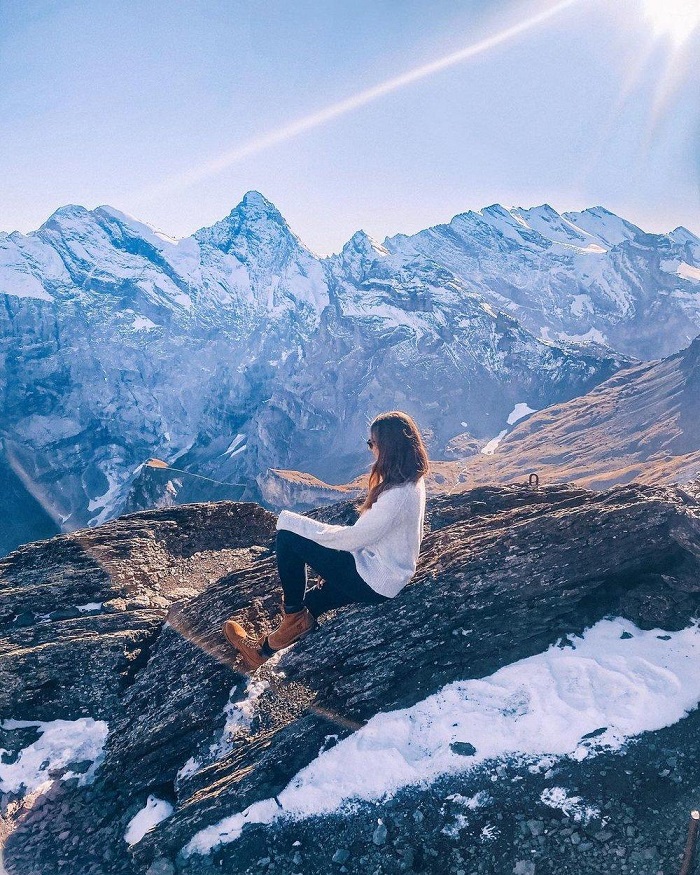
We Travel for Freedom
Freedom is one of those words that gets thrown around in travel writing until it begins to sound suspiciously like an advertisement for a convertible.
But there is a lovely freedom in a day you get to choose.
You can eat breakfast at eleven. Spend an afternoon doing very little. Walk without a particular destination. Change your mind.
And that last one matters more than it sounds. At home, responsibilities, appointments and habits quietly decide how most of our days will unfold. Travel gives us permission to redraw the day.
Perhaps that’s why a morning coffee overlooking an unfamiliar square can feel so luxurious. It’s the feeling that, for the next few hours at least, your time belongs to you.
Yet it’s remarkably easy to book that freedom away. First comes the early tour, then the timed entry, then lunch across town, followed by something described online as “unmissable”. By mid-afternoon, your holiday has acquired a line manager.
A few reservations can protect the experiences you care about. Space between them lets you enjoy being there.
Equally, freedom can mean letting someone else handle the arrangements. The useful question is: Which decisions do you enjoy making, and which would you happily hand over?
Beauty: You Are Allowed to Go Just to Look
A coastline. An old garden. Evening light catching the upper windows of a city. Sometimes something is beautiful enough that you want to stand in front of it.
I’m happy to accept that as a complete reason for going. You don’t owe every holiday an ambitious personal-development objective.
Nature can be part of that pull: the scale of a mountain, a path through trees, a stretch of sea with nothing urgent happening on it. For someone who spends the week looking at screens, that may be quite enough.
However, leave room for beauty that hasn’t made the brochure. The famous view may be wonderful, but so might the walk back: washing above a narrow street, a quiet courtyard, music through an open window.
Take the photograph, certainly. Then put the phone away for a few minutes. Notice the sounds, the temperature and the scale of the place.
And if the celebrated sunset disappears behind a bank of cloud, let the evening become something else. Dinner is still a promising development.
We Travel to Connect
Here’s one of travel’s lovely contradictions. We leave familiar places and often end up feeling more connected.
Sometimes the reason is obvious. We travel to see family, visit old friends and celebrate weddings or anniversaries. Couples get time together. Parents take children somewhere they hope they’ll remember.
Shared travel creates shared stories. Not always dignified ones.
Families who have travelled together tend to accumulate a private archive of wrong turns, dreadful hotels, missed trains and incidents involving luggage that become funnier with every passing year. At the time, nobody is laughing. Five years later, it’s the story everyone tells.
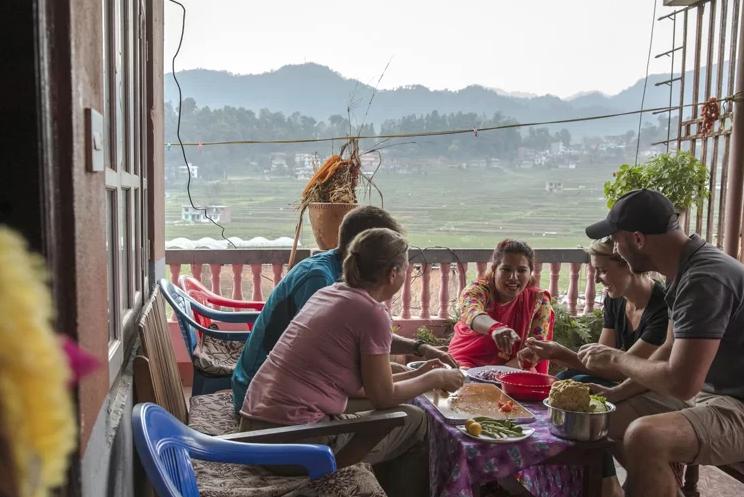
But travel also brings encounters with strangers. Someone helps when you’re hopelessly lost. A waiter explains what you’ve ordered, ideally before you eat it. A fellow passenger starts a conversation that outlasts the journey.
These moments can give a place its meaning. They also challenge the comfortable assumption that everybody sees life the way we do.
If connection is what you’re seeking, make time for it. Choose a small class, a shared interest or a return visit to the same café. Learn a greeting and listen to the answer.
And talk with your travelling companions before booking. Two people can want the same city and imagine entirely different days there. One wants museums until closing time; the other would like to sit down occasionally.
We Travel to Experience Another Way of Living
A destination isn’t just a collection of things to see. It’s a place where people live.
Daily routines, meals, celebrations and ideas about a good life can differ from what we’re used to. So can opinions about what constitutes an acceptable cup of coffee.
The more we pay attention, the more we discover that “normal” is a surprisingly local concept.
That is one reason why travel is important to me. It gives me opportunities to question assumptions I didn’t realise I had. Another way of living can show us that our own habits are choices, even when we’ve stopped noticing them.
Of course, a brief visit doesn’t make us experts. One conversation cannot stand for a whole country. People are living their lives, and we owe them more curiosity than certainty.
Ask questions. Listen. Allow yourself to misunderstand something and learn.
You might begin by noticing architecture and food. Then you notice routines and attitudes. Eventually, if you stay curious enough, you start noticing yourself.
We Travel for Adventure — Even Small Ones
Adventure doesn’t have to involve dangling from a mountain. Thank goodness.
For some people, adventure is trekking through Patagonia or diving on a reef. For someone else, it is ordering lunch in a language they barely speak and hoping the waiter understood the pointing.
Both count. Adventure is relative.
At its heart, it is stepping beyond what feels completely predictable. Travel provides plenty of opportunities for that.
Catch a ferry. Try something you’ve never eaten. Walk into a market where you don’t recognise half the produce. Get off the metro one stop early and explore, if the area and circumstances suit.
These moments can stretch us just enough. Every now and then, we discover that the boundary of our comfort zone wasn’t a wall at all. It was more like a line drawn in pencil.
Choose a challenge that interests you and fits your abilities, budget and circumstances. You don’t need somebody else’s idea of bravery to have a satisfying trip.
The Pleasure Begins Before We Leave
There’s another reason to travel that can get overlooked: having something to look forward to.
A trip often begins with a thought: What if we went there?
Then come the searches, maps, photographs, hotel comparisons and the mildly alarming moment when you see the price of the flights.
Slowly, something distant becomes real. You have dates. Then tickets. Then somewhere to stay. Then a countdown.
The journey has already started in your imagination.
For me, that anticipation is part of the pleasure. An ordinary Tuesday feels a little different when somewhere ahead lies a terrace, a mountain, a city or a few days when nobody expects an immediate answer to an email.
Perhaps that’s part of the reason we start thinking about the next trip remarkably soon after returning from the last one.
Still, anticipation works best when it leaves room for reality. The hotel might be lovely without looking exactly like the photographs. The weather may have plans of its own.
Look forward to the trip. Just allow the actual place to surprise you.
We Travel to Rest — Although We're Not Always Very Good at It
Sometimes the purpose of travel is beautifully straightforward. We’re tired. We want to stop.
Unfortunately, travellers have developed a remarkable ability to turn relaxation into another form of project management.
Three cities in six days. Four museums before lunch. Sunrise viewpoint at 5:30. Walking tour at nine. Cathedral at eleven. “Free afternoon” between 2:15 and 3:05.
Then we return home needing a holiday.
There is nothing wrong with wanting to see things. I do. But one of the lessons travel can teach is that more isn’t always more.
Sometimes the best part is the hour that wasn’t planned. The second coffee. The bench beside the river. The afternoon when you abandoned the itinerary because the place you were in turned out to be more interesting than the place you were rushing towards.
If rest is the point, protect it when you plan. Fewer hotel changes, gentler mornings and a little less ground to cover can help.
Rest isn’t wasted travel. Sometimes it’s the reason you needed to go in the first place.
We Travel Because Experiences Become Stories
There are things we buy that give us pleasure. Then there are things we do that become part of our story.
You don’t simply remember “Italy”. You remember the tiny restaurant where nobody seemed to share a language and somehow the evening worked out. The view when you opened the curtains. Someone being kind when you were having a difficult day.
Even the inconveniences acquire a different shape with time. Missing a train is much more entertaining once you are no longer standing on the platform.
The itinerary can fade while the feeling remains.
Perhaps that’s part of the purpose of travel: gathering experiences that become chapters in our own lives. They don’t all need to be dramatic.
A life is largely made from small moments we happened to notice. Travel gives us fresh reasons to notice them.
And a story doesn’t require a long-haul flight. A nearby town can surprise you. A short break with someone you miss can matter far more than a grand expedition.
Does Travel Change You?
This is where travel writing can become a little overexcited.
One weekend in Barcelona does not automatically transform you into a wiser, more enlightened human being. You may simply return with photographs, a slight sunburn and an unexpectedly large credit-card bill.
But travel can change us. Usually more quietly.
Finding your way, asking for help or trying something unfamiliar can give you a small, satisfying piece of evidence: I can do this.
Among the possible benefits of traveling are opportunities to build confidence, practise flexibility and reconsider assumptions. Those things require our participation. A passport doesn’t do the learning for us.
We might discover that getting lost is manageable. That communication doesn’t require perfect language. That our way of doing things is one way among others.
We can also learn when to stop. Admitting you’re tired and need an easier day is a useful form of self-knowledge.
Perhaps travel’s most practical lesson is becoming a little more comfortable with uncertainty. Life, inconveniently, doesn’t come with a confirmed itinerary either.
The Purpose of Travel Isn’t Always Obvious.
Not every journey begins with a clear reason. Sometimes there is a restlessness. A desire for space, colour, noise or silence.
We may call it a holiday, but underneath we’re looking for perspective, connection, inspiration or simply a break.
Travel doesn’t guarantee we’ll find any of those things. But a change of surroundings can give us room to look.
Researchers have spent decades examining vacation motives. A 2024 review by John Crompton and James Petrick revisits and critiques established explanations of why people take pleasure trips. The question is more complicated than a neat list of reasons might suggest.
Which sounds about right to me. You might choose somewhere because you’re curious about its history, your partner loves its food and the flights happen to fit your budget. Several reasons can travel together.
They can also change. Perhaps you once loved moving every other day and now want a week in one place. Perhaps you’ve always booked familiar holidays and suddenly want something new.
Plan for the person you are now. I don’t think we owe our younger selves a repeat performance.
So, Why Do People Travel?
After years of travelling, I don’t think there is one answer.
We travel because we’re curious. We travel to escape and to return. We travel for freedom, rest and adventure, to see people we love and meet people we’ve never known.
Sometimes we go for food, weather, landscapes, history, celebration or sheer pleasure. And yes, sometimes there was a cheap flight on Tuesday and it seemed like a good idea at the time.
People also travel for work, study, faith, family responsibilities and necessity. Here, I’ve been exploring the personal pull of the journeys we have some choice in taking.
Beneath those reasons, I keep coming back to this: travel reminds us that life is larger than our normal field of view.
There are other streets. Other languages. Other ways to live. Possibilities we hadn’t considered.
Perhaps that’s why, despite the queues, delays, expense and occasional sandwich of uncertain origin, we keep going. Somewhere beyond the familiar is the possibility of discovery, including what we notice about ourselves when we get there.
What do you need from this trip?
A practical guide, rather than a personality test. Pick what matters most to you on this journey; the answer can change next time.
Rest
Make room for
Fewer bases. Slower mornings. Room to do nothing.
Watch out for
A holiday that needs a recovery holiday.
Curiosity
Make room for
Time to wander, learn and follow an unexpected turn.
Watch out for
A checklist so tight there is no room to notice.
Connection
Make room for
Shared meals, unhurried conversations and time together.
Watch out for
Assuming everybody wants the same trip.
Freedom
Make room for
Flexible days and a few decisions left open.
Watch out for
Booking every hour before you leave.
Adventure
Make room for
A manageable stretch beyond your usual comfort zone.
Watch out for
Choosing a challenge to impress someone else.
Growth
Make room for
Space to reflect, learn and bring something home.
Watch out for
Expecting a plane ticket to fix everything.
Before You Book the Next Trip
Maybe the more useful question isn’t simply Where should I go next? Try asking: What do I need from this journey?
Rest? Connection? Adventure? Time with someone you love? Time by yourself?
There is no correct answer. But knowing why you want to travel can change how you travel.
- Name your main reason. Finish this sentence: “I’d come home glad I went if…” Try answering without naming a country or landmark.
- Imagine an ordinary day there. Would the mornings, transport, activities and company give you what you’re seeking?
- Check the practical fit. Consider your time, budget, energy and access needs. A trip works best when you can enjoy carrying it out.
- Leave something out. Remove an activity or transfer that crowds out what you came for. You don’t have to use every available hour.
If you’re travelling with someone, compare your answers. It’s easier to discover different expectations over a cup of tea than halfway through a holiday.
If you need rest, a seven-city itinerary probably isn’t your friend. If curiosity is pulling you, allow time to wander. If you need freedom, perhaps don’t schedule every hour before leaving home.
The best trip isn’t necessarily the biggest, furthest or most impressive. It’s the one that gives you what you actually needed.

One Last Thought
Eventually, every journey ends. The suitcase gets unpacked. The washing machine goes on. Normal life quietly reassembles itself around us.
And yet something often remains. A smell that takes you back. A dish you try to recreate. A friendship. A new interest. A story you’ve told far too many times.
Or simply the knowledge that somewhere you had never been is no longer unknown to you.
So, would I still book the trip, knowing about the delay, the lukewarm coffee and the phone clinging to its last few per cent?
Yes. Although I’d prefer a socket within reach.
We leave home to see more of the world. And if we’re lucky, we come back seeing our own world, and ourselves, a little differently.
If you’re still exploring what is pulling you towards your next journey, spend a little time with Travel Inspiration. When you’re ready to give the idea a practical shape, Start World Travel will help you begin planning.
What are you hoping your next trip will give you? Tell me in the comments. I’d love to hear the reason behind the destination.
Where to go next
Mindful Travel: make more of being there →
Once you know why you want to go, the next question is how to be present enough to enjoy it.
About Rob
Rob Wheatley is a Program Director and former ocean Cruise Director who has travelled extensively for work and pleasure. He writes Around the World with Rob to help readers make thoughtful, practical travel choices, with room for curiosity and a sense of humour.
Sources and further reading
The reflections and planning suggestions above are my editorial perspective. These research sources support the discussion of novelty and vacation motives. They do not establish that every journey brings the same benefits:
- Xu, P. (2025). Exploring the influence of situational interest on outdoor tourists’ hedonic and eudaimonic well-being. Frontiers in Psychology. A survey study in an outdoor-tourism context; its findings should not be treated as a guarantee for every traveller or type of trip.
- Crompton, J. L. and Petrick, J. F. (2024). A half-century reflection on pleasure vacation motives. Annals of Tourism Research. Reviews and critiques established approaches to understanding vacation motivation.