TRAVEL FIELD NOTES · TRAVEL LIFESTYLE
Mindful Travel: How to Stop Rushing and Actually Enjoy the Journey
Mindful travel isn’t meditation with a suitcase. It’s learning to notice the trip you’re already having.
By Rob Wheatley – Program Director & traveler
Updated 8 October 2026
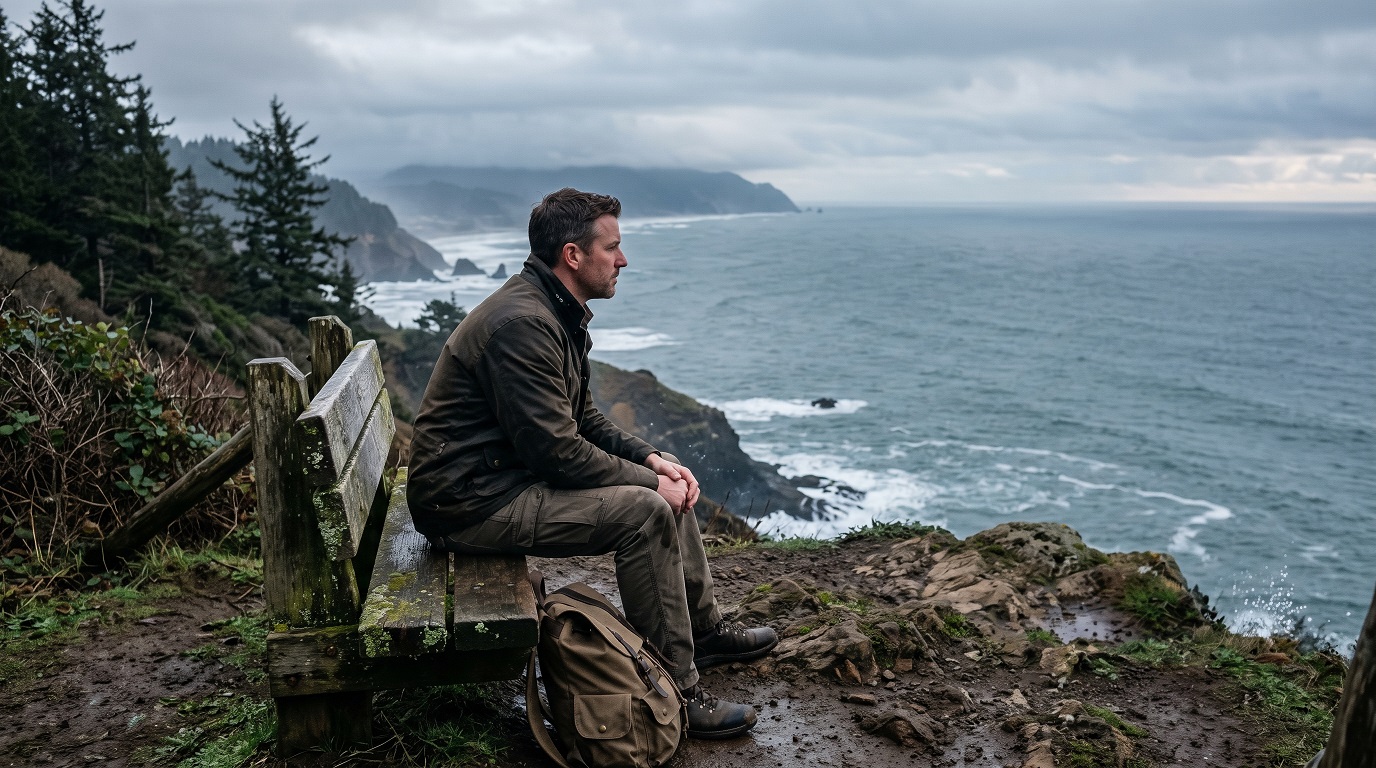
The short version
Mindful travel means paying attention to the journey you are having: noticing your surroundings, connecting with people and culture, and making conscious choices rather than racing through a checklist. You can practise it on a busy city break or a longer trip by leaving breathing room and experiencing moments before recording them.
We do something rather peculiar when we travel.
We spend months looking forward to getting away from schedules, deadlines and the relentless tyranny of the clock. Then we arrive somewhere beautiful and immediately create another schedule.
Breakfast at eight. Museum at nine. Cathedral at eleven. Lunch at twelve-thirty. Walking tour at two. Sunset viewpoint at six-fifteen.
And heaven help the cathedral if it takes longer than allocated.
I’ve watched people stand in front of extraordinary views and barely look at them. Out comes the phone. Photograph. Another photograph. One with themselves in it. Perhaps a quick video. Then a glance at Google Maps because apparently we need to be somewhere else now.
I’ve done versions of it myself.
That’s the strange thing about travel: you can be thousands of miles from home and still not quite be where you are.
And that, more than incense, meditation retreats or sitting cross-legged on a mountain, is what mindful travel is really about.
It’s about being present enough to notice the place you’ve worked, saved and travelled all that way to see.
What is mindful travel?
Mindful travel means travelling with greater awareness and intention.
You pay attention to where you are instead of simply moving through a list of attractions. You notice the people, food, sounds, smells, landscape and little moments around you. You leave enough room in the itinerary for a place to surprise you.
And, occasionally, you stop trying to turn every moment into evidence that you had a good time.
None of this means you need to become a different sort of person when you travel. You don’t need linen trousers. You don’t need a retreat. And nobody is confiscating your camera.
The point is much simpler: Experience first. Record second.
Why are we so bad at being present when we travel?
Because modern travel encourages us to do the opposite.
Before we’ve even arrived, we’ve seen photographs of what we’re supposed to see, read lists of what we’re supposed to do and possibly watched somebody on YouTube eat the thing we’re supposed to eat.
Then comes the itinerary.
If you’re visiting Rome for three days, it is remarkably easy to decide that you must see the Colosseum, Vatican Museums, Pantheon, Trevi Fountain, Spanish Steps, Roman Forum and seventeen other things because the internet has informed you that your life will apparently remain incomplete without them.
So we race.
And the more expensive or difficult the trip was to arrange, the greater the temptation to squeeze every drop of “value” from it.
Except experiences don’t work particularly well when squeezed.
Sometimes the best afternoon of a trip begins when you have absolutely nothing planned.
Mindful travel and intentional travel: a useful distinction
The two ideas overlap, but I think there’s a useful distinction. These aren’t rigid definitions; they’re a practical way to think about your trip.
Intentional travel asks: Why am I taking this trip?
Mindful travel asks: Am I actually here while I’m taking it?
You might intentionally choose a week in Tuscany because you want good food, countryside and time with your partner. Mindful travel begins once you arrive.
Are you tasting the food or photographing it? Are you talking to your partner or both answering messages from home? Are you enjoying the village you’ve discovered or wondering whether the village 20 kilometres away might be even better?
Intent gives a trip direction. Mindfulness helps you experience it. You needn’t choose between them.
If you’re still working out what you want from a journey, start with Why Do We Travel?
Start being mindful before you leave home
A mindful trip doesn’t begin when the aircraft doors open. It starts with the way you plan.
Before booking twenty-seven activities, ask yourself a better question: What do I actually want to feel and experience on this trip?
Maybe you want adventure. Maybe rest. Maybe food, history, nature or time with somebody you love. Perhaps you simply want to wander around somewhere you’ve never been before and see what happens.
That’s allowed too.
Once you know what matters, planning becomes easier. Instead of asking, “How much can we fit in?”, try: “What would make this trip feel worthwhile?”
Those are very different questions.
Stop treating your holiday like a military operation
I’m not against itineraries. Quite the opposite. Good planning can save enormous amounts of stress, money and wasted time.
But an itinerary should support a journey, not become its commanding officer.
One of the simplest mindful travel habits is to deliberately leave gaps. Don’t schedule every meal. Don’t fill every afternoon. Don’t assume that an empty two hours means you’ve failed to optimise Paris.
Leave somewhere for curiosity to go.
You may discover a market, sit beside a river, hear music coming from somewhere, find a tiny restaurant or simply have a long conversation over coffee.
These experiences are difficult to book because you don’t yet know they exist.
That’s rather the point.
Keep the bookings that matter—timed entry, transport and anything you would regret missing. Leave breathing room around them.
Give a place longer than five minutes to impress you
Travel has become extraordinarily good at producing highlights. The problem is that life isn’t a highlights reel.
Some places reveal themselves immediately. Others take a little longer.
Sit in a square for twenty minutes instead of walking through it. Have another coffee. Watch people coming home from work. Listen to the language around you.
Notice how people greet one another. Look at what’s actually being ordered rather than automatically choosing the dish somebody online told you was “unmissable.”
You begin to see the destination as somewhere people live rather than a backdrop created for visitors.
That change is small. But it can completely alter the way a place feels.
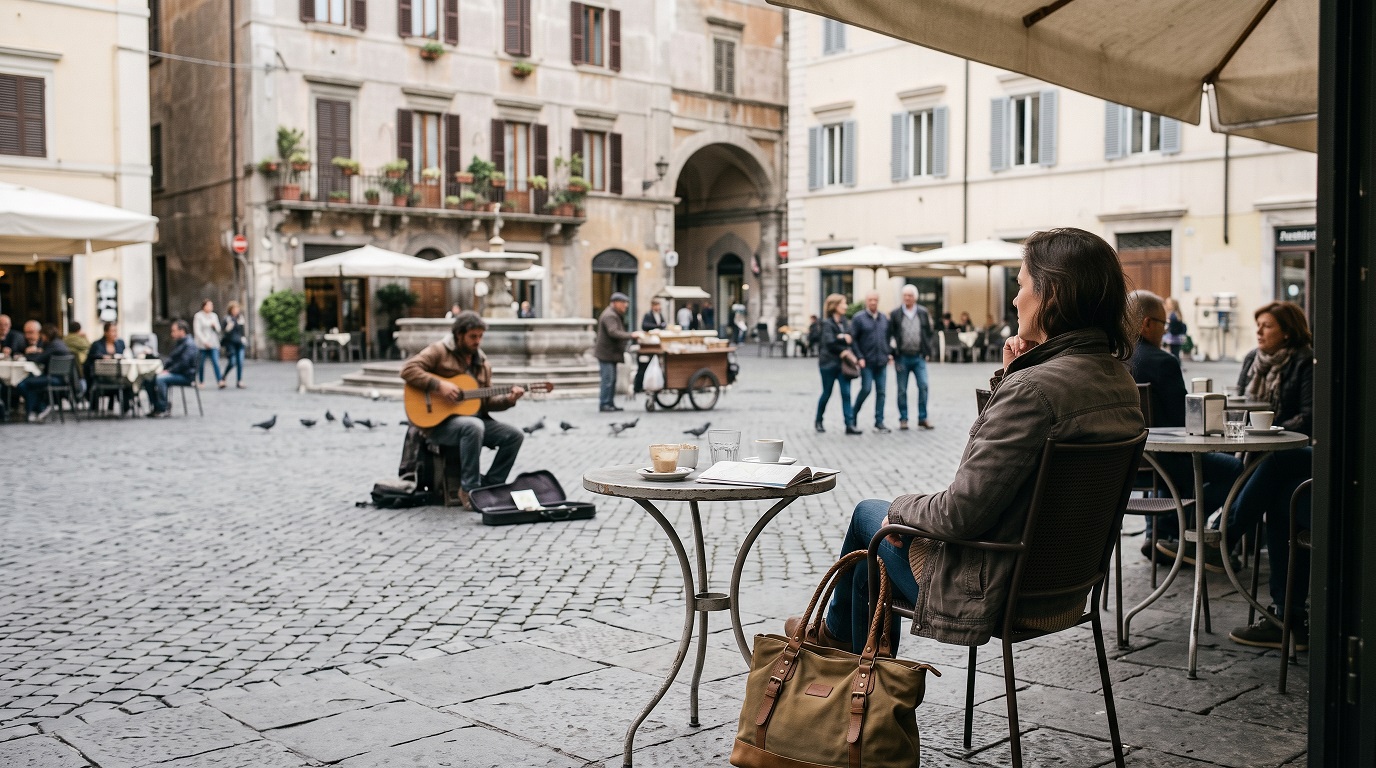
Curiosity needs a little room in the itinerary.
Put the phone away—but don't become ridiculous about it
Phones are fantastic travel tools.
Mine can translate a menu, navigate an unfamiliar city, store tickets, find a train, identify a building and tell me why the restaurant I’ve walked three kilometres to is closed on Tuesdays.
I’m not suggesting we throw them into the Mediterranean.
But there’s a difference between using a phone while travelling and experiencing a trip through one.
Try something simple. When you reach somewhere remarkable, don’t photograph it immediately.
Look first. Give it a minute.
Notice something you hadn’t expected: the sound, the scale, the weather, the smell, the people, the tiny details that don’t make it into postcards.
Then take the photograph.
The camera isn’t the enemy. Missing the experience while documenting it is.
In a 2024 exploratory study of mindfulness-trained tourism practitioners, participants described greater present-moment acceptance and more thoughtful travel decisions. Their accounts also explored how planning the next step and taking photographs could distract from the current experience. This was a qualitative study of a particular group, rather than proof that a phone-free minute improves everyone’s holiday.
Still, it gives those of us with 4,000 holiday photographs we haven’t looked at since 2017 something to consider.
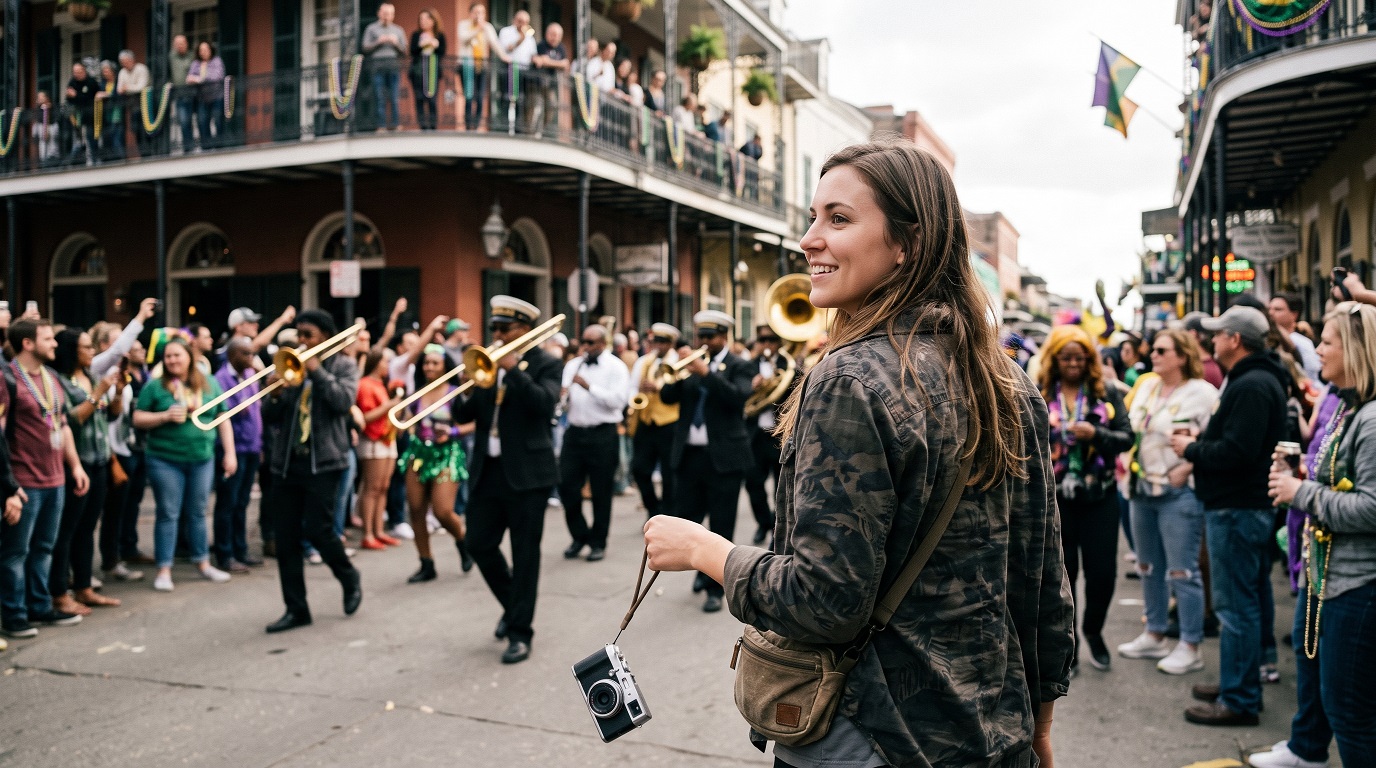
Take the photograph. But take the moment as well.
Small swaps that change the experience
You don’t need to redesign your whole holiday. Choose one change that would make today feel less rushed.
| When you catch yourself… | Try this instead | Make room for… |
|---|---|---|
| Filling every gap in the itinerary | Keep one hour free between fixed bookings. | An unexpected discovery. |
| Reaching for the camera immediately | Look and listen for a minute, then take the photograph. | The scene beyond the frame. |
| Choosing lunch while scrolling | Put the phone down for the first few mouthfuls. | Flavour, texture and company. |
| Racing through a square | Sit for ten minutes and watch everyday life. | Details you would walk past. |
| Arguing with a disrupted plan | Handle the practical problem, then choose what still works. | A different version of the day. |
| Counting attractions at bedtime | Ask: “What did I notice today?” | A memory worth keeping. |
Pick one—not all six. We’re improving the holiday, not introducing another performance review.
Travel with your senses
This may be the easiest mindful travel technique of all.
Every so often, pause and notice what is available to you: What can I see, hear, smell, taste or feel?
You don’t need to work through all five senses. Use whichever are accessible and comfortable for you.
Travel is extraordinarily sensory. The smell of bread in a European street early in the morning. The heat that hits you when you leave an airport in Southeast Asia. Church bells. Market spices. Cold sea air. Train announcements you don’t understand. That first mouthful of something you ordered largely by pointing.
Those details can become the memories that survive.
So occasionally stop collecting sights. And start noticing sensations.
Eat like you're somewhere
Food is one of the easiest ways to travel more mindfully because eating gives us a reason to stop moving.
Don’t make every meal another logistical exercise. Look around.
What are local people eating? When do they eat? How is the meal served? Is it meant to be shared? What ingredients keep appearing?
Food can tell you about climate, history, migration, religion, agriculture, family life and economics without delivering a single lecture.
And occasionally the thing you order won’t be very nice. That’s fine. You have learned something. Not every travel experience needs five stars to be worthwhile.
Curiosity still leaves room for your dietary needs and food safety. Ask about ingredients when it matters.
For more on following your appetite into a destination, read Food Tourism: How to Taste Your Way Through a Destination.
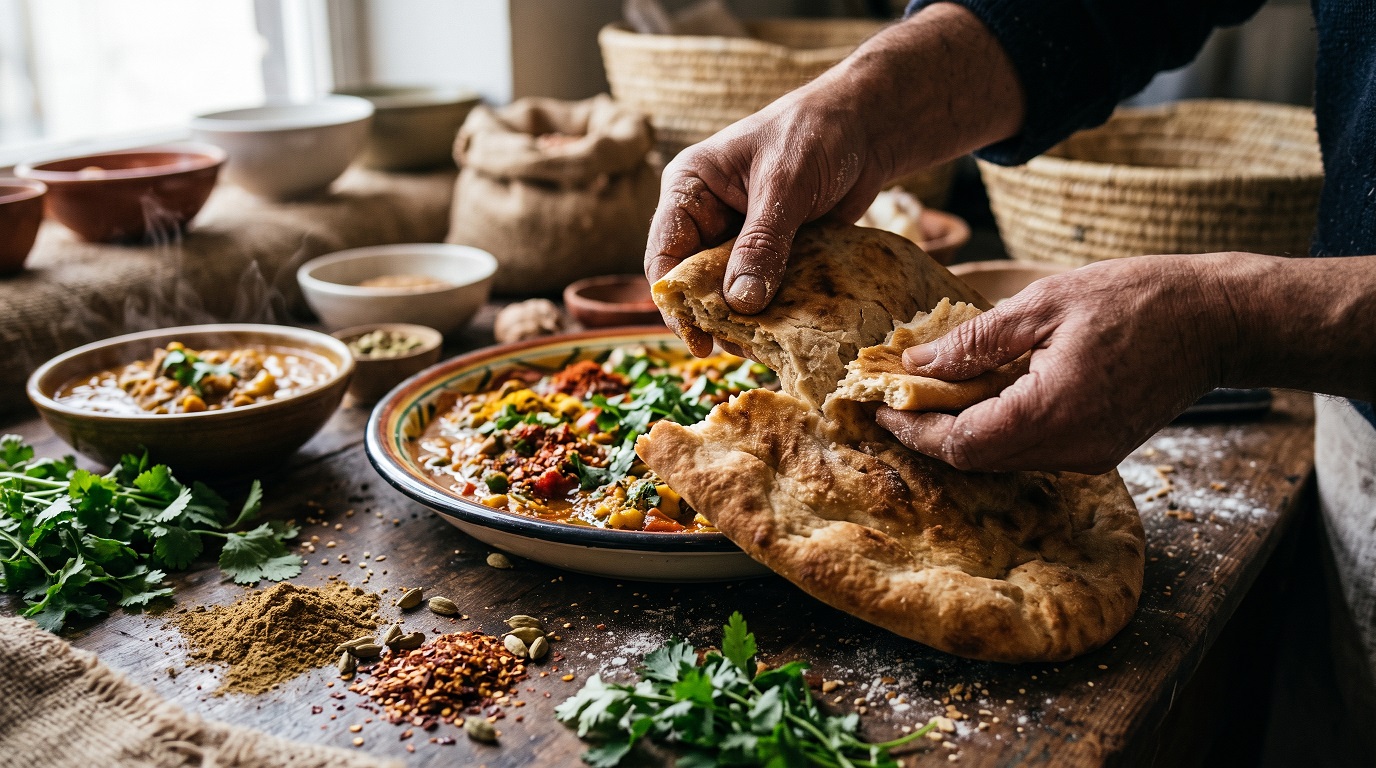
Pause long enough to notice the people behind the meal.
Talk to people without trying to “experience the locals”
There’s a phrase that has always made me slightly uncomfortable: live like a local.
You’re probably not going to.
If you’ve arrived in Lisbon for four days and somebody else has lived there for 46 years, the two of you are having rather different Tuesdays.
But you can be curious.
Talk to people when the opportunity arises. Ask questions. Listen. Learn a few words. Notice customs before assuming yours are universal.
And remember that the people living in a destination aren’t part of the scenery. A friendly conversation is an invitation, not something a visitor is owed.
Mindful travel should make us more aware not only of what a place gives us, but of how our presence affects the place.
That’s where mindful travel naturally meets responsible travel.
Mindful travel doesn't mean everything has to be slow
Mindful travel and slow travel make excellent companions, but they aren’t identical.
You can travel slowly and spend the entire month distracted. You can also have three days in New York and be wonderfully present for them.
Mindfulness isn’t measured by the number of nights you stay. It’s about attention.
If you enjoy busy days, have busy days. If you love museums, visit museums. If you have waited thirty years to see the Eiffel Tower, go and see the Eiffel Tower.
Mindful travel isn’t about deliberately doing less just so you can feel virtuous about it. It’s about knowing why you’re doing something and actually experiencing it while you do it.
Slow travel concerns pace and time in a place. Responsible travel concerns your impact. Wellness travel usually puts health or wellbeing activities at the centre of the trip. Mindful travel can be part of any of them—or a perfectly ordinary weekend away.
Let things go wrong
This may be where mindful travel becomes most useful.
Travel does not care about your spreadsheet.
Flights are delayed. It rains. Restaurants close. Trains disappear from departure boards. Hotels lose reservations. Somebody gets tired. Somebody else gets grumpy.
Sometimes that somebody is you.
Our instinct is to compare what is happening with what should be happening. The sun should be shining. The room should be ready. The train should have arrived. The famous viewpoint should not be covered in fog.
And yet the trip we’re actually having continues while we argue mentally with the trip we were supposed to have.
Mindfulness can’t make a cancelled flight enjoyable. But pausing can give you room to distinguish between a genuine problem that needs solving and a disappointing change that needs accepting.
Deal with the practical problem first: rebook, contact the hotel, find shelter or ask for help. Acceptance doesn’t mean abandoning your rights or ignoring a safety concern.
Some of my favourite travel stories have begun with something going wrong.
Admittedly, they weren’t always my favourite stories at the time.
Notice your impact
Being present also means noticing what happens around us because we’re there.
Where does our money go? Are we respecting local customs? Are we treating somebody’s neighbourhood as though it were a theme park? Are we creating unnecessary waste?
Could we use a locally owned café, guide, shop or restaurant? Do we understand the rules around wildlife, sacred sites or photography?
Mindful travel and responsible travel aren’t exactly the same thing, but awareness gives us a chance to make more thoughtful choices.
Ask before photographing people. Follow site rules. Keep wildlife encounters at a respectful distance. Notice whether your enjoyment is making somebody else’s day harder.
That doesn’t require perfection. It requires attention.
Stop hunting for the “authentic” experience
There is another peculiar thing we travellers do.
We arrive somewhere as tourists and immediately begin searching for places with no tourists.
Then we’re disappointed when we find ourselves there.
“It’s become very touristy,” we announce, apparently unaware of our contribution to the situation.
Mindful travel offers a healthier approach. Stop trying to manufacture authenticity. Instead, pay attention to what’s actually happening.
A busy market can be real. A famous attraction can be meaningful. A restaurant full of visitors can serve wonderful food. And an obscure village nobody on Instagram has discovered can still be thoroughly boring.
Travel doesn’t become meaningful simply because you’ve wandered off the tourist map.
Meaning comes from engagement.
Try the one-hour rule
Here’s a practical experiment for your next trip.
Choose one hour. No itinerary. No attraction to reach. No restaurant reservation waiting at the end.
Walk. Sit. Look. Follow something that interests you.
Turn down a street because it looks interesting. Go into a shop because you don’t understand what it sells. Sit on a bench because the view is good. Have coffee because the café smells wonderful.
Choose a setting that feels safe and comfortable, and keep your transport or meeting arrangements in mind. You can do this sitting in a square, café or garden; walking isn’t compulsory.
You aren’t wasting an hour of your holiday.
That hour is the holiday.
At the end of the day, ask one question
Don’t ask: “How much did we see?”
Ask: “What did I notice today?”
Perhaps it was something enormous. Perhaps it was the light on a building. A conversation. A meal. A smell. Something funny you saw on a train. A piece of music. The expression on someone’s face.
The moment everyone else walked away from the viewpoint and, for thirty glorious seconds, you had it almost to yourself.
You don’t have to manufacture profound experiences. Give ordinary experiences enough attention to become memorable.
After you get home, choose one photograph and write down what was happening beyond the frame. The sound, the conversation, the reason you stopped. Keep a little of the experience alongside the evidence.
A simple mindful travel checklist
You don’t need a programme or a retreat. Try these on your next trip:
- Decide what you actually want from the journey before filling the itinerary.
- Leave deliberate gaps in your plans.
- Look at important places before photographing them.
- Put your phone away for parts of the day.
- Use the senses available to you when exploring.
- Sit somewhere without needing to “do” anything.
- Eat with curiosity.
- Talk less and listen more when encountering another culture.
- Notice where your money goes and how your behaviour affects the destination.
- Allow plans to change without assuming the day is ruined.
- Ask what you noticed, rather than how many attractions you completed.
You don’t need to do all eleven.
That would rather defeat the purpose.
The trip you're already having
I think this is why mindful travel matters.
We spend an extraordinary amount of our lives anticipating travel. We save for it. Research it. Book it. Talk about it. Count the weeks. Count the days. Pack. Repack. Check the passports three times. Get to the airport absurdly early because somebody in the household doesn’t trust traffic.
And then, finally, we’re there.
The temptation is to start racing towards the next thing. Perhaps the better response is occasionally to stop.
Look around. Listen. Taste the food while it’s still hot. Have the conversation. Watch the sunset without immediately turning your back on it for a selfie.
Take the photograph, certainly. But take the moment as well.
Because mindful travel isn’t really about learning some new way to travel.
It’s about noticing the journey you’re already having before it becomes the trip you used to have.
Mindful travel FAQs
What does mindful travel mean?
Mindful travel means paying attention to the trip you are having: noticing your surroundings, engaging with people and culture, and choosing your activities consciously instead of following an itinerary on autopilot.
How can I travel more mindfully?
Start with one small habit: look before taking a photograph, leave a gap in your itinerary, or spend ten minutes noticing your surroundings. At the end of the day, ask what you noticed rather than how much you saw.
Is mindful travel the same as slow travel?
They overlap, but they focus on different things. Slow travel concerns pace and time in a destination; mindful travel concerns attention. You can practise mindful travel on a short, busy trip.
Do I need to meditate to travel mindfully?
No. Meditation is one possible practice, but you can also pay attention while eating, exploring, listening to a guide or sitting in a café. A retreat is optional.
Can I practise mindful travel on a guided tour?
Yes. Listen to the guide, notice details beyond the headline sights, and use breaks to experience your surroundings. Keep the tour’s meeting times and arrangements; being present works within a structured itinerary.
Where to go next
Give your next itinerary some breathing room. Read Travel Rhythm to choose a pace that suits your time, energy and interests.
You can also explore the wider Travel Lifestyle guide.
What’s a small travel moment you still remember more clearly than the famous sights? Tell me in the comments—perhaps a conversation, an unexpected café or something you almost walked past.
About Rob
Rob Wheatley is a Program Director and former ocean Cruise Director who has travelled extensively for work and pleasure. He writes Around the World with Rob to help readers make thoughtful, practical travel choices, with room for curiosity and a sense of humour.
Sources and further reading
The practical experiments and observations are my editorial advice. The research below adds context; it does not establish that every traveller will experience the same benefits.
- Kaya, S. C., Sezerel, H. and Filimonau, V. (2024). How mindfulness training changes tourist experience: An exploratory study. Journal of Hospitality and Tourism Management, 59, 166–179. Qualitative research involving mindfulness-trained practitioners in tourism.
- Boyce, B. (2017). How to Be a Mindful Traveler. Mindful. Practical editorial guidance on attention and unplanned wandering.