TRAVEL FIELD NOTES · AFRICA, FROM HOME
Travelling Africa: What It Costs and How to Stay Safe
I’m African, born and bred. I want you to see my continent—and I want you to arrive with more than a safari brochure and somebody else’s fears.
By Rob Wheatley – Program Director & traveler.
Based in South Africa · Practical information checked October 21, 2026.
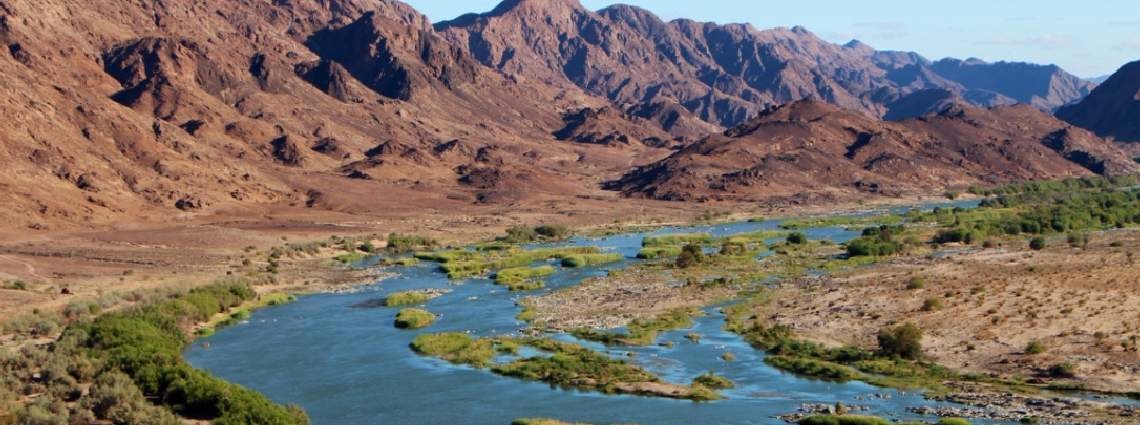
Travelling Africa works best with a country-specific plan for money, transport and safety. Budget separately for everyday spending and major experiences, confirm local payment rules, and assess the exact route. Drawing on my perspective as an African, this guide combines a warm invitation with honest advice about the risks and practical demands.
Africa is home. That does not make me casual about it.
Africa can persuade you that you’ve found the travel bargain of your life, then present you with a safari quote that requires a quiet sit-down. Sometimes both happen before lunch.
I’m African, born and bred, and I live in South Africa. This is my continent, not an abstract collection of warnings on a foreign-office website. I talk about it with guests on my river cruises in Europe and with foreign friends, and my message is consistent: Africa is beautiful. See it. Then plan carefully.
However, travelling Africa asks you to rethink assumptions you may have brought from Europe or Southeast Asia. Distances, payment methods, transport networks and access to help can change substantially between destinations—and within the same country.
Africa will mesmerise you with its dusty charm. Yet there are also cities, coastlines, forests and mountain landscapes that have little to do with that image. To miss it would be a loss. To treat it as one simple, predictable trip would be a mistake.
The warning my father took with him
Before my father left England for what was then Rhodesia, now Zimbabwe, his friends and co-workers gathered round to tell him he was making a mistake.
“In Africa, life is cheap,” they warned.
That is a grim sentence to pack beside your shirts. It tells you something about the fear he encountered before he had even left.
My experience of this continent gives me a much fuller picture. Poverty, corruption, violent crime and conflict are real. So are ordinary working lives, creativity, hospitality, ambition and joy. Neither a television disaster report nor a beautiful safari brochure can explain all of that.
The phrase “dark continent” belongs to that inherited view, not to a useful travel assessment. Equally, affection for home should never become an excuse to wave away a genuine danger.
When I encourage people to visit, I am not asking them to ignore the other side of the coin. I am asking them to look closely enough to see both.
Cash matters. “Cash is king” needs a qualification.
Africa does not have one payment system. Cards can be convenient in many established hotels, restaurants and retailers, while a smaller business or rural stop may require local cash. An ATM can be nearby and still be empty, offline or unwilling to accept your card.
US dollars may be useful for particular bookings or as exchange money. However, do not assume you can spend them everywhere, or that a price quoted in dollars means a cash-dollar payment is permitted.
Tanzania is a good example. The Bank of Tanzania’s foreign-currency notice requires local goods and services to be priced and paid for in shillings, subject to specified exceptions. It tells tourists to exchange currency through banks or bureaux de change and confirms that card and other digital payments remain possible. That is more useful than repeating old advice about handing over dollars.
Meanwhile, the South African Reserve Bank explains how visitors can exchange foreign currency into rand. Bring a payment plan for the country you are visiting, rather than a continent-wide rule.
Carry money smartly, without carrying a fortune
- Ask before you travel. Confirm the payment currency, accepted cards, cash needs and any lawful card charges with your accommodation and operator.
- Carry more than one way to pay. Keep a backup card separately and allow for a failed ATM or interrupted connection.
- Use authorised exchange services. Keep receipts where required, and check cash declaration and currency import or export rules.
- Check note requirements. If an operator or exchange service requires foreign banknotes, ask about denominations and condition. Avoid damaged or heavily marked notes; do not assume one issue-date rule applies everywhere.
- Split accessible cash from reserves. Take what you need for the day without displaying the rest.
The solution to uncertain ATM access is not automatically to carry the entire holiday budget in your pocket. Ask how much cash the route actually requires and plan where to replenish it.
Likewise, mobile money being common locally does not mean a visitor can instantly use the same service. Check registration, identification and access requirements before relying on it.
Budget in two speeds
Africa can be wonderfully affordable or eye-wateringly expensive, sometimes within the same itinerary. A modest meal does not tell you what a remote wildlife experience will cost.
I would divide the budget into everyday spending and the big commitments. Price the latter first: safaris, permits, flights, specialist guiding and transfers. Then build the ordinary days around what remains.
| Budget layer | Include | Question to ask |
|---|---|---|
| Everyday travel | Rooms, meals, local transport, connectivity and laundry | What will an ordinary day cost on this route? |
| Signature experiences | Safari activities, wildlife permits, guides and park charges | What is included, and what must be booked separately? |
| Getting between places | Flights, transfers, vehicle hire, fuel and border-related costs | Does the cheaper option consume too much time or create avoidable risk? |
| Resilience | Insurance, spare nights and replacement transport | Could I afford to change the plan if I needed to? |
For perspective, Visit Rwanda lists a gorilla-tracking permit at US$1,500 per person per day, with some special offers for eligible categories. That is a specific activity charge, not a daily cost for travelling Africa.
Similarly, SANParks separates accommodation and activity costs from conservation fees. Check the tariff and visitor category that apply to you. My resident price is not necessarily your international visitor price.
Save on complexity, not on essential support
A simpler itinerary can protect both your money and your enjoyment. Fewer borders, fewer internal flights and longer stays reduce the number of things you have to coordinate.
However, “local transport is cheap” does not answer whether a particular vehicle, departure time or route suits you. Compare the whole journey: condition, crowding, arrival location, luggage security and the onward trip to your accommodation.
On a safari quote, check whether it is per person or per room, how many guests share the vehicle, and whether meals, park fees and transfers are included. Also ask about cancellation terms and weather-related changes.
Keep a buffer you can access. Distances are big, and a replacement night or dependable transfer can be a sensible expense. I would rather shorten a route than remove the money needed to change it.

More than one picture of Africa
A waterfront city and a remote desert journey can belong to the same continent while asking very different things of the traveller.
That is why the destination detail matters. Start with my South Africa guide if this is the journey that interests you, then assess the exact places and travel arrangements.
So how safe is travelling Africa?
The honest answer begins with “where?” It should quickly be followed by “which route, when, and doing what?” A continent-wide reassurance is no more useful than a continent-wide warning.
Some risks are concentrated in particular border areas or districts. Others affect a whole country or are widespread in cities. Do not assume that avoiding one shaded area on a map resolves everything else.
For example, the US advisory for South Africa identifies serious concerns including violent crime, kidnapping and unrest. That deserves attention even on a familiar tourist route. Meanwhile, the advisory for Sudan says not to travel. These are different situations requiring different decisions.
I have friends who have travelled widely across Africa and returned with wonderful stories and harmless misadventures. Their experience matters, but it cannot establish your odds of a trouble-free trip. Nor does my being African give me current, first-hand knowledge of every road and region.
Read the full country advisory, including regional detail, and compare it with trusted local information. Check again before departure and during a changing situation.
Preparation reduces risk. It does not control everything.
There is a tempting travel slogan: you can be as safe as you choose to be. I would not give you that promise.
You can choose a more suitable route, reliable transport and good support. Nevertheless, you cannot control every criminal act, road user, sudden protest or weather event. Someone who becomes a victim has not automatically failed to be sensible.
Likewise, poverty is not a diagnosis of criminal intent. It is possible to discuss deprivation and serious crime honestly without treating the people you meet as a threat.
My practical rule is to make avoidable risks smaller and leave room to respond to the rest. If current advice makes a journey unsuitable, postpone it or choose somewhere else. Courage is not a requirement to keep a non-refundable booking.
The habits I would build into the trip
- Arrange the first arrival. Know who is collecting you, how to identify them and what to do if they do not appear.
- Choose the exact base. Check the street, entrances and evening journey, rather than judging safety by a country’s reputation.
- Seek current route advice. Ask a dependable host or operator whether a planned walk or drive is suitable today.
- Keep valuables discreet. Use secure storage, protect phone access and avoid displaying large amounts of cash.
- Leave an itinerary with someone. Agree check-ins and carry offline contact details for your accommodation, insurer and relevant emergency services.
- Change the plan early. Allow yourself to decline an outing or pay for a better transfer without treating it as a defeat.
Trustworthy local knowledge is valuable. However, it should supplement official advice, not dismiss it with “tourists never have problems here.”
Guided tour, self-drive or independent travel?
A reputable company can simplify unfamiliar logistics and provide local expertise. However, a guide is not a guarantee of safety. Check credentials, vehicle standards, emergency arrangements, recent feedback and what support exists after office hours.
Ask who actually operates the trip. The website taking your money may subcontract the driving and guiding. You should know who is responsible before a problem arises.
Self-drive can suit some established routes if you have the relevant experience and prepare properly. Yet road conditions, distances and access to help matter as much as the hire-car category.
Would I choose to backpack the length and breadth of Africa myself? Not a chance. That is my personal comfort level, not a claim that independent travel is impossible. A planned independent stay in one city is also very different from an improvised cross-continent expedition.
If that wider journey calls to you, I respect the curiosity. Match the route to your skills and support, and assess each stage afresh. My solo versus group travel guide can help with the format.
Road safety deserves more attention than it gets
Crime often dominates the conversation, while the long transfer between two attractive destinations receives barely a thought. I would give that journey a proper place in the plan.
Check driving times with someone who knows the route. Allow for road surfaces, fuel stops, weather, border formalities and park gates. An online map’s estimate is not a commitment from the road.
Namibia illustrates the point. UK government guidance warns about gravel-road conditions and wildlife or livestock on roads, and advises against driving outside towns at night. Wide-open scenery does not remove the driving task.
For remote routes, confirm fuel, water, communication, appropriate spare equipment and the rental company’s recovery arrangements. If using a driver, discuss seat belts, rest and the schedule. Rejecting an exhausting timetable is part of good planning.
Health, insurance and access: make the plan specific
A city break, a high-altitude trek and a remote safari have different health considerations. Take the exact route to a travel-health professional, including transit stops and onward countries.
The CDC’s destination guidance is a useful starting point. Malaria risk, for example, is location-dependent: its South Africa page identifies particular transmission areas, rather than treating the whole country alike.
Check vaccination recommendations separately from entry requirements. Yellow fever advice needs individual assessment, especially for travellers aged 60 and over or with relevant health conditions, as the CDC explains.
Ask your insurer about medical care, evacuation, planned activities and travel against official advice. Also ask the operator how help is reached in practice. Cover on paper does not put a hospital beside a remote camp.
For mobility needs, ask about steps, walking surfaces, vehicle boarding, toilets and assistance. A luxurious room does not tell you whether you can comfortably reach it.
Use the destination pages to choose your Africa
This article explains my approach to money and risk. For the actual places, start with my Africa destination hub, then follow the guide that matches your interests. A page appearing here is an invitation to research, not a statement that every route is currently advisable.
| Your interest | Start here | Next planning question |
|---|---|---|
| Cities, coast and a possible wildlife combination | South Africa | Which bases and transfers suit your time and current local advice? |
| Desert landscapes or a wildlife-focused journey | Namibia · Botswana | What vehicle, guiding and remote support does the itinerary require? |
| An East African wildlife itinerary | Kenya · Tanzania | Which park fees, transfers and seasonal conditions affect the quote? |
| History, cities and cultural travel | Morocco · Egypt | Which route, guide and current security advice apply? |
| West African food, music and heritage | Ghana · Senegal | How will you connect the places you want to explore? |
| An Indian Ocean island stay | Mauritius | What do transfers, meals and activities add to the room rate? |
Prefer to browse more widely? Explore North Africa, West Africa, Central Africa, East Africa or Southern Africa. Then narrow the route before pricing it.
Before you pay the deposit
- Choose a focused route. Count usable days and realistic transfers.
- Check current advice. Include each destination, border and transit point.
- Price the full trip. Add activities, fees, transport and a contingency.
- Confirm payment arrangements. Establish local cash needs, accepted cards and currency rules.
- Resolve health and documentation. Check your passport’s entry requirements and book travel-health advice.
- Verify support. Understand operator responsibilities, insurance and emergency arrangements.
Use my travel documents checklist to organise the paperwork. With the essentials settled, there is much more room to enjoy the journey.
Travelling Africa: the questions worth asking
Is Africa expensive to visit?
It depends on the route and style. Ordinary meals and accommodation may be affordable, while permits, safaris, remote transfers and flights can dominate the bill. Price a complete itinerary rather than using one continent-wide daily figure.
Should I bring US dollars?
Only as part of a country-specific payment plan. Check whether you need local currency, whether dollar payments are lawful, and what your operator accepts. Carry a backup payment method rather than relying entirely on cash.
Is a guided tour safer?
Good guiding can address unfamiliar logistics and provide local support. It does not remove crime, road, health or political risks. Check the operator and the route instead of relying on the word “guided.”
Can I travel independently?
Some routes can suit independent travel, while others require specialist support or should be avoided under current advice. Match the particular journey to your experience, resources and willingness to change plans.
Which African country is safest?
A single ranking cannot assess your proposed trip. Read current advice for the exact locations, activities and transport involved, and consider your personal circumstances as well.
Do all African trips require malaria tablets?
No. Risk varies by location and sometimes season. Ask a travel-health professional about your exact route and follow the prescribed prevention plan if one is recommended.
Come with curiosity. Bring a sensible plan.
My father left England carrying other people’s warnings. I would like you to arrive carrying something more useful: a fuller picture and a plan that fits the place.
I love this continent enough to tell you about its problems. I also know that its problems are not its entire story.
Africa is beautiful. See it. Then give the planning the respect the journey deserves.
Choose your starting point
My planning priorities
Specific beats general. Check the actual route.
Build a buffer. Keep the means to change plans.
Verify support. Know who helps when something goes wrong.