Free Spirit Travel
Free Spirit Travel
Around The World With Rob
Free Spirit Travel

Cape Town: The City That Ruined Every Other City for Me

By Rob Wheatley – Program Director & traveler.
Updated 22 October 2026

A sunset in Camps Bay. A mountain with an opinion. And a city I still haven’t got over.


This Cape Town travel guide begins with a sunset in Camps Bay and follows the mountain, food, coastline and Winelands that make this my favourite city. Along the way, I share practical advice on timing, transport and safety, because loving a place means being honest about it.

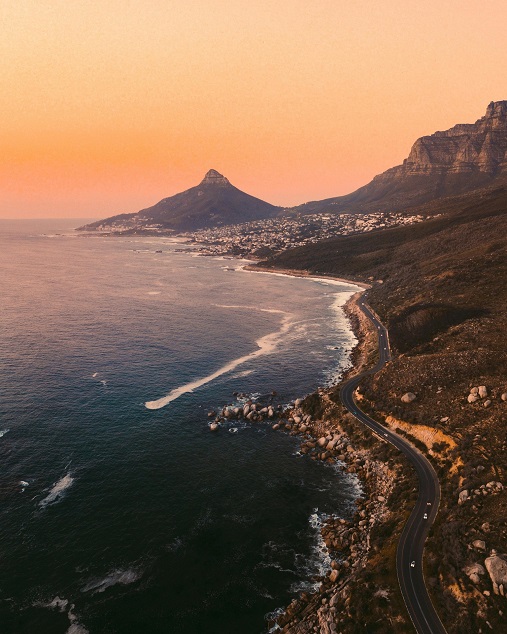
Cape Town’s Atlantic coast in evening light with Lion’s Head in the distance

The evening that settled it

I went to Camps Bay one evening to watch a friend in a play. Nothing grand: a small playhouse tucked up in the shadow of the Twelve Apostles, the long line of peaks that stand guard behind the bay.

I was early, so I stood outside and made the mistake of looking up.

The sun was going down, and it did what it does there. The west-facing cliffs took the light head-on and lit up copper, then amber, then a red that doesn’t seem fair. Oranges and yellows spilled down the rock face, and a warm, salty breeze came up off the Atlantic and wrapped itself around me.

I’m sure the play was good. I honestly couldn’t tell you. I’d already fallen in love with the evening outside.

That’s Cape Town. I’ve watched skylines slide into view from the bridge of a ship all over the world, and nothing else does that to me. So yes, my favourite place on earth is in my home country. Yes, I’m biased. Go, and you’ll forgive me.

The mountain with the tablecloth

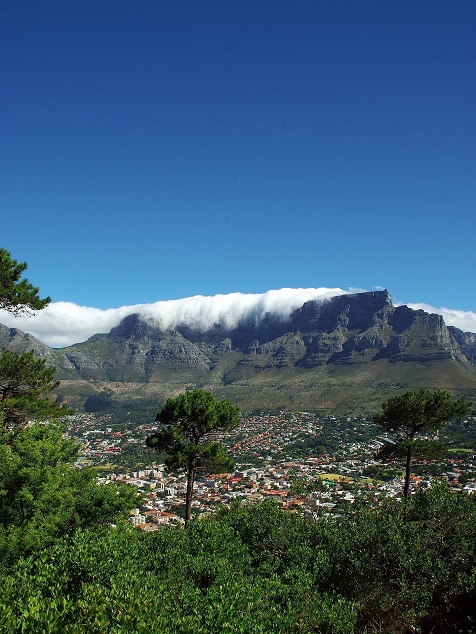
Cloud spilling over Table Mountain above Cape TownThose Twelve Apostles are only the beginning. They’re part of the Table Mountain range, and Table Mountain itself is the neighbour with an opinion about everything, especially the weather.

When the south-easter blows, cloud pours over the flat top and tumbles down the cliffs like someone shaking out a giant white tablecloth. It melts away before it reaches the city. Locals barely glance up. I still do, every single time.

Take the cable car up on a clear day, then give yourself time to sit and look. The city, harbour and Atlantic spread beneath you. It’s the sort of view that makes you stop checking your phone without noticing.

However, the mountain deserves more preparation than a pair of trainers and enthusiasm. If you hike, choose a route suited to your fitness, go with a knowledgeable guide or experienced group, and carry water, layers and a charged phone. Plan for a descent on foot: a running cable car in the morning does not guarantee a ride down later.

My advice: Check the official cableway weather and operating status before leaving. Keep your best weather day flexible rather than saving the mountain for your final afternoon.
Lunch in the Bo-Kaap

Come down the mountain hungry, because the Bo-Kaap is next. The houses are painted turquoise, magenta and lime, shoulder to shoulder along cobbled streets. Cumin, cinnamon, and something frying that smells like a family secret: this is a neighbourhood that makes lunch feel urgent.

Cape Malay cooking is part of the soul of the city. Look for a local restaurant or book a cooking experience to understand the flavours and the people behind them. And if you see snoek on a menu, that’s my suggestion for an order.

There’s more here than a colourful backdrop. This is a living community with a long Muslim heritage, shaped in part by the history of slavery at the Cape. A local guide or the museum adds meaning to the photographs. Meanwhile, respect doorways, worshippers and residents; ask before photographing people.

For more ways to explore through your appetite, see my guide to food tourism.

The drive that makes you pull over

Chapman’s Peak Drive hangs off the cliffs above an Atlantic so deep blue it looks bruised. Around every bend the sea throws white foam at the boulders while seabirds hang on the wind. Drive slowly and stop at designated viewpoints, because you’ll want to.

From Hout Bay, the road takes you towards Noordhoek. Build a Peninsula day around it, Cape Point and Simon’s Town, adjusting the direction to your starting point and conditions. At Boulders, the penguins waddle about like waiters who’ve lost their trays. Use the designated viewing areas and give the birds space.

Further south, Cape Point is wild and wind-scoured, and I never get tired of it. It feels like the continent runs out of land here. Geography, unfortunately, insists on a correction: Africa’s southernmost point and the recognised meeting of the Atlantic and Indian oceans are at Cape Agulhas, further east.

Before you set off: Chapman’s Peak is a toll road and can close in bad weather. Check the road’s official status, then consult SANParks for Cape Point and Boulders. Allow a full day rather than treating the Peninsula as a quick drive before dinner.

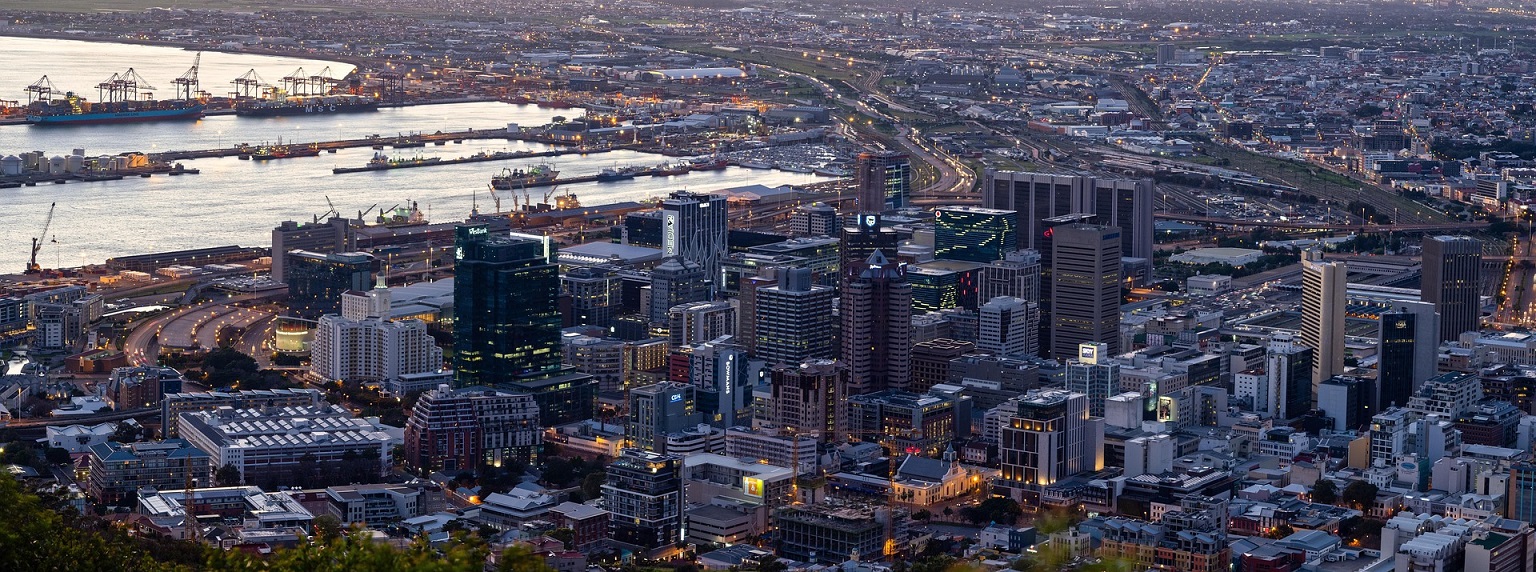
Panoramic view across Cape Town city centre and its working harbour

Cape Town beyond the beach: a city and working harbour beneath the mountain.

A veranda in the vines

Now turn inland, away from the roar, to Stellenbosch, Franschhoek and Paarl. Parts of the Winelands are roughly an hour from the city in favourable traffic, yet they feel like another country. Vines run across the hills beneath jagged peaks, and the landscape makes a persuasive case for slowing down.

My advice is simple. Find a veranda in the late afternoon, order a Chenin Blanc or a Pinotage, and do absolutely nothing. Watch the mountains turn amber and rose, which is exactly what they did in Camps Bay.

In practice, check the estate’s tasting and kitchen hours first; not every veranda is still serving at four. Choose one area and a couple of stops instead of racing between all three towns. If wine is the point of the day, book a driver or organised excursion, or agree on a designated driver who won’t drink.

The Waterfront, and a little room for the city

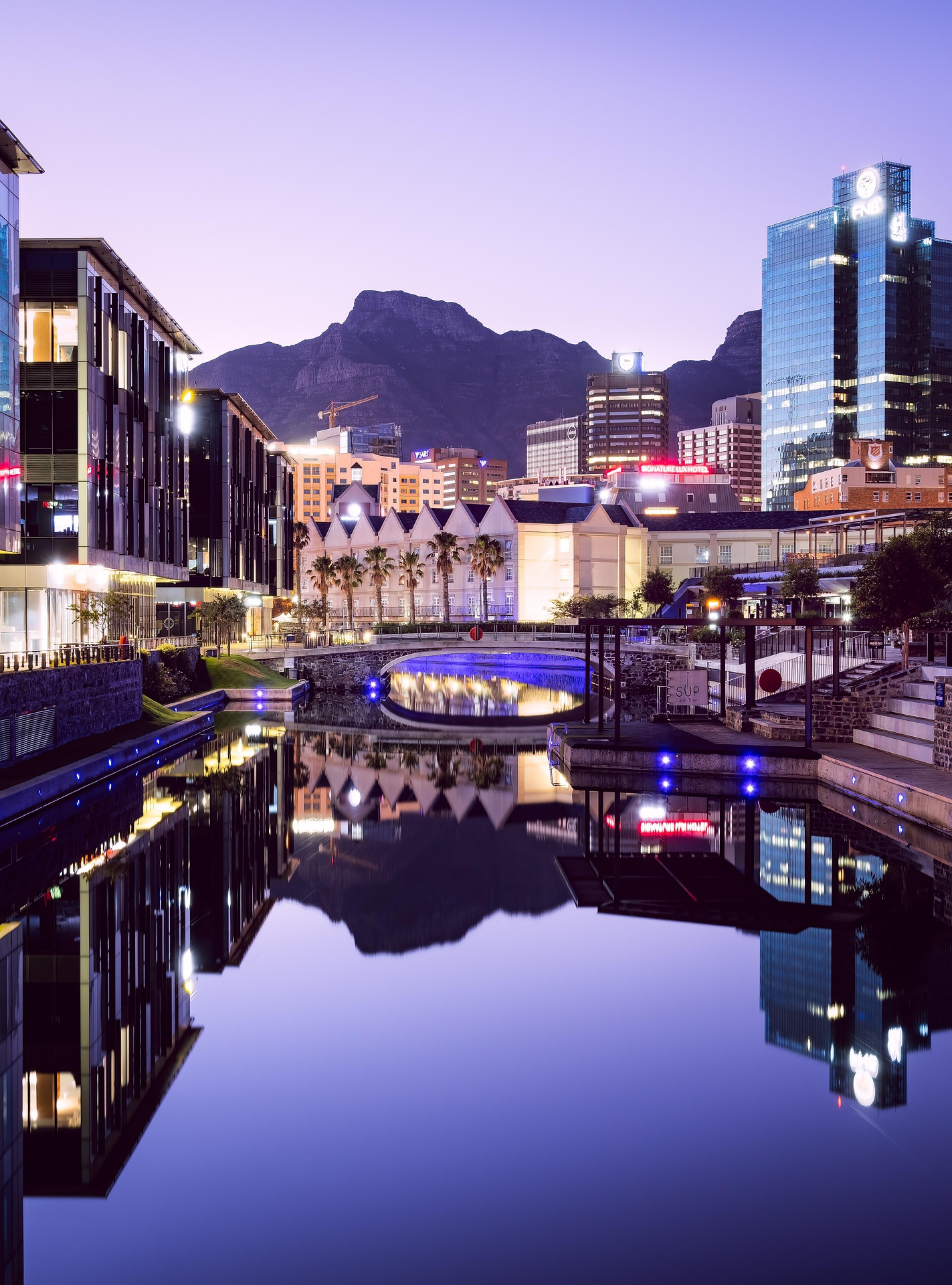
Cape Town canal-side buildings reflected in the water at dusk with Table Mountain behindThe V&A Waterfront is an easy place to put a meal, a harbour wander and a bit of browsing into the same afternoon. It is polished and heavily visited, so expect some tourist pricing. Compare menus rather than assuming a waterfront address guarantees a memorable lunch.

It also makes a useful starting point for a Robben Island visit. Book through the official museum and leave room for weather disruption. This is a place to listen to the history of imprisonment, apartheid and resistance; it deserves more attention than a spare slot between shops.

Alternatively, give an afternoon to Kirstenbosch National Botanical Garden. If the fynbos on the hills has caught your attention, this is somewhere to begin understanding it. Proteas and ericas are more than decoration in a holiday photograph.

Then there are the smaller pleasures: the crunch of sand under bare feet at Clifton, jazz on an evening out, or simply another view of the mountain. That Atlantic water, though, is freezing. A beautiful beach is not a promise of gentle swimming; heed local signs and lifeguards.

Not in the postcard: what first-timers need to know

I love Cape Town too much to sell you a version with the difficult parts cropped out. The city has a serious crime problem, including violent crime. Risk varies considerably by neighbourhood, route and time of day, and a busy visitor area is not a guarantee of safety.

Arrange a trusted airport transfer or confirm a driving route with your accommodation before arrival. Around the airport, don’t follow unfamiliar residential shortcuts simply because a navigation app offers them. For evenings, use transport arranged through a reputable provider rather than walking along quiet or poorly lit streets.

Keep phones, jewellery and cameras discreet, leave nothing visible in a parked car, and decline help from strangers at ATMs. Ask your host for current, street-level advice before exploring somewhere unfamiliar. On the mountain, go with others and seek local guidance about both route conditions and security.

These steps reduce exposure; they cannot eliminate risk. Read Cape Town Tourism’s safety guidance and your government’s current South Africa advice. My wider guide to travelling Africa, costs and safety explains how I approach the bigger picture.

The other trade-offs are less dramatic but still worth planning for: congested roads, expensive peak-season accommodation, summer wind and winter rain. Cape Town rewards a little flexibility more than an overloaded timetable.

Give Cape Town enough time to win you over

For a first visit, I’d aim for five or six full days if you can. That gives you room for the mountain and city, a Peninsula day, the Winelands, and some breathing space when weather rearranges your plans.

Choose your season: Summer brings long days and busy beaches, but also strong winds, crowds and higher demand. Winter is cooler and wetter. Spring and autumn can be rewarding compromises, although no season comes with a weather guarantee.

Choose your base: Compare the actual street, recent guest reviews and evening transport options. Camps Bay offers the Atlantic setting; the Waterfront and nearby areas suit different city plans. There is no single best address for everyone. My hotel review guide helps you separate a lovely photograph from a good night’s sleep.

Keep the budget together: Add attraction tickets, Peninsula transport, airport transfers and Winelands travel to the room rate. A bargain bed loses its charm if every outing needs an expensive journey.

For the wider journey, continue to my South Africa destination guide and Africa hub.

My last word, and it comes with a sunset

The Cape isn’t one sight. It’s a pile of small moments: a mountain catching the light, a meal you linger over, the salt in the breeze, and the pleasure of finding yourself somewhere that makes you want to stay.

I’ve been all over the world, and I’m still the guy who stood outside a theatre and remembered the sunset better than the show.

Go see it. Then tell me I was wrong.

What stayed with you in Cape Town: the mountain, the coast, or something you hadn’t planned at all?

Would you go back?

Your experience may be exactly what another traveller needs to hear.