TRAVEL FIELD NOTES · LONDON, ENGLAND
London: My First Travel Scam—and Why I Fell in Love Anyway
I arrived at 17, ready for adventure. London’s first contribution was a bill for a photograph I hadn’t asked for.
By Rob Wheatley – Program Director & traveler.
A memory from my first solo visit; practical information checked October 21, 2026.

My first solo London visit began with a scam, yet the city became my happy place. This London travel guide combines that story with neighbourhoods, Hyde Park, food and theatre—and an honest look at crime, costs, crowds and access. Enjoy the appeal, understand the drawbacks and decide what suits you.
Seventeen, solo—and spectacularly unprepared
My first solo visit to London began with a street photographer and ended with my parents wondering whether I had been kidnapped. It was not quite the gap-year introduction I had imagined.
I was 17, fresh out of school and as green as they come. London seemed a sensible place to begin: I spoke the language, enough felt familiar, and I could start flexing my minuscule travel muscles.
Then a Cockney-sounding chap stopped me on the pavement. “Hold it there.” Before I had worked out what was happening, he was taking photographs.
“All right, young fella, that’ll be twenty quid.”
I was too innocent—and too afraid of saying no—to recognise the con. I explained that I did not have £20 in cash, only traveller’s cheques. Somehow, I ended up handing over about £50 for photographs I had not asked for.
That would have been a bad enough ending. However, six weeks later my parents received one grainy black-and-white photograph at the address I had supplied. No explanation. Just me against a nondescript wall, looking like a hostage.
They rang in a panic to ask whether I was all right.
I was. My pride and my travel funds were less healthy. For a while, I blamed London. Fortunately, the city eventually got a chance to introduce itself without an invoice attached.
How London became my happy place
I hated London for a month or so, mainly because of the man who had relieved me of my £50. Yet over time I warmed to it, and it became my happy place.
The ceremony and history helped, of course. So did the parks, theatres, markets and sheer variety of people and food. London can give you a palace in the morning, a museum in the afternoon and a meal that takes your appetite somewhere else entirely.
For me, the attraction is that mixture. The familiar British symbols belong to the city, but they do not explain all of it. Neither does a single neighbourhood, a shopping street or a photograph of a red bus.
This London travel guide is about finding the parts you connect with. For detailed savings, fares and affordable choices, use my separate London on a budget guide. Here, the question is what you want your days to feel like—and whether London’s demands fit the trip you want.
London today: affection with your eyes open
I love London, but affection is not a safety assessment. My photographer story happened decades ago; it should not stand in for an honest account of the risks visitors face today.
Phone theft and robbery are substantial problems. In an October 2026 update, the Metropolitan Police recorded 39,793 phone theft and robbery offences between January and August 2026, compared with 49,136 in the same period of 2025. That is an improvement, but still a serious volume. These figures concern phone-related offences; they are not a measure of all crime or an individual visitor’s chances of becoming a victim.
Nor should theft be described as merely inconvenient. A stolen phone can expose personal information and banking accounts, as City of London Police explains. Violent robbery is a different experience from discovering something missing from a bag, and neither belongs under a cheerful “all part of the adventure.”
Crime varies by location, time and circumstances. Therefore, I would not label the entire city harmless, or pretend a citywide headline tells you everything about the street outside your hotel. Check the exact location and your late-night journey as part of choosing where to stay.
Practical precautions, without spending the holiday afraid
- Keep your phone off café and pub tables. Put it away when you have finished using it, and watch your surroundings when checking directions.
- Protect access as well as the handset. Shield your passcode, use appropriate biometric security and activate the device’s available theft protections before travelling.
- Keep bags closed and valuables secure. Crowds and distractions are good reasons to check where your belongings are.
- Plan the journey home. If an unfamiliar route feels uncomfortable late at night, choose a suitable transport alternative rather than pressing on for the sake of the itinerary.
- If something is stolen, prioritise your safety. Report it and secure the affected accounts. Police advice is to call 999 if you are hurt, feel unsafe or the crime has just happened; non-emergency reports can be made online or through 101.
These habits reduce avoidable exposure; they do not guarantee safety, and responsibility for theft remains with the offender. I would still visit London, but I would not advise anyone to wander around with their attention entirely inside an unlocked phone.
The other drawbacks: cost, crowds and the effort of getting around
Crime is not the only reason a London trip can disappoint. The city can be expensive, crowded and tiring, and my “happy place” may not be the right holiday for everyone.
- Accommodation can dominate the bill. A room that fits the budget may involve compromises on space, comfort or location. Price the actual stay before committing to the trip.
- Distances consume time. A packed itinerary can become a procession of trains, queues and aching feet. Group nearby visits and leave room to rest.
- Access needs require planning. Older stations, steps, busy pavements and individual buildings can complicate a day. Check the complete route and venue access rather than relying on a nearby Tube symbol.
- The atmosphere is not always picturesque. Traffic, noise, crowded streets and wet weather can be part of the experience. Have an indoor alternative and choose your hotel street carefully.
If you want quiet, low costs and effortless movement between sights, a smaller destination may suit you better. Alternatively, shorten the London stay, choose fewer activities and give yourself a comfortable base. The budget guide helps assess the costs before enthusiasm does the booking.
Start with the London you have come to see
If this is your first visit, enjoy the famous sights without feeling obliged to be terribly original. Westminster, the Thames, St Paul’s and the Tower of London can all earn a place, depending on your interests.
However, distinguish looking at a landmark from paying to go inside. You may want a substantial Tower of London visit, or you may be happiest walking beside the river and choosing one museum. Both are reasonable London days.
I would begin with the official first-time visitor guide, then select a few priorities. Check the venue’s own website for admission, opening days and bookings before arranging the rest of the day around it.
Also, do not let similar names muddle the plan: London Bridge and Tower Bridge are different bridges. A city that can charge you for the wrong photograph can certainly allow you to walk towards the wrong bridge.
Think in neighbourhoods, rather than a list of pins
London becomes easier to enjoy when a day has some geographical sense. Instead of hopping across town for every item on a list, choose an area and give it time.
| Area | Build around | Leave time for |
|---|---|---|
| Westminster and St James’s | Familiar landmarks and a park walk | Security, crowds and any booked interior visit |
| South Bank and Bankside | The river, cultural stops and views across the Thames | A meal and a manageable walking distance |
| Bloomsbury | A museum visit and surrounding streets | One collection you actually want to explore |
| South Kensington | Museums, with a possible park outing | Bookings and the time inside each venue |
| Covent Garden and the West End | Streets, restaurants and a show | An evening that does not begin with a sprint |
These are suggestions, not fixed routes. Therefore, match the walking, transport and number of stops to your energy. The most memorable day is rarely the one with the most map pins.
Planning beyond this visit? Then use my England travel guide to choose your next stops and build a journey that fits your time.
Hyde Park: my favourite kind of London pause
Summertime in Hyde Park has long been one of my favourite London pleasures. A walk, a stretch of water and some time doing very little can restore the part of you that the Tube and a crowded pavement have worn down.
The park also has a history that is rather more forceful than its peaceful appearance suggests. In 1536, Henry VIII acquired the land from the monks of Westminster Abbey for hunting. Charles I opened it to the general public in 1637. The Royal Parks’ history fills in the intervening royal arrangements.
For a visit today, consider a walk beside the Serpentine, the gardens or Speakers’ Corner. Boating and other activities depend on current operation and conditions, so check the official park guide rather than assuming everything runs whenever you arrive.
Then, if your route and energy allow, continue into neighbouring Kensington Gardens. It is a separate Royal Park, with places such as the Albert Memorial and Italian Gardens to investigate. However, you do not need to collect every monument to justify an afternoon outdoors.
I would happily count sitting down as an activity. London supplies quite enough movement without my assistance.
Staying near Hyde Park: compare the address, not the label
A room near the park can be appealing, particularly if green space and a walk before breakfast matter to you. However, “Hyde Park hotel” can describe quite different locations and journeys.
Compare the exact address around Paddington, Bayswater, Lancaster Gate or the southern side of the park with the places you intend to visit. Then check the real walk from the station, luggage access and the hotel’s facilities.
A lower headline price may hide a small room, shared bathroom, stairs or restrictive cancellation terms. Conversely, an expensive postcode does not guarantee the stay you want. Read recent property information and price your dates.
My preference is to choose a practical base rather than spend the holiday commuting to the holiday. For the detailed room-cost comparison, continue with how to visit London on a tight budget.
An entire world at the dinner table
London’s variety is one of the things that won me over. Food is an enjoyable way to explore it: a pub lunch, a market stop or a restaurant serving a cuisine you have not tried can each become part of the day.
For a food-market outing near London Bridge, Borough Market’s official visitor page provides trading information. Check the hours before going and allow time to browse. A market meal is not automatically a bargain, but it can be an experience worth choosing.
Elsewhere, start with what you want to eat and investigate the individual place. A tourist address does not prove a restaurant is bad, just as an obscure doorway does not prove it is wonderful.
Meanwhile, a pub can offer a welcome pause even if alcohol is not part of your plans. Check whether food is served, its kitchen hours and how to order. A pleasant room and a proper rest can improve your relationship with the next three miles considerably.
My food tourism guide has more ideas for making meals part of the discovery.
Give the West End an evening of its own
Theatre is one of London’s great pleasures. If a show matters to you, let the evening have enough room: a meal, the performance and a journey home that you have already thought through.
Start with the theatre’s own site or Official London Theatre. Compare the production, seat view, total price and access arrangements. Also, check the running time before assuming dinner afterwards will be straightforward.
You do not need to see a musical simply because you are in London. A play, comedy or another kind of performance may be more your thing. Choose the experience first, then the ticket.
After all, I have already demonstrated what happens when you let somebody else decide which London experience you are buying.
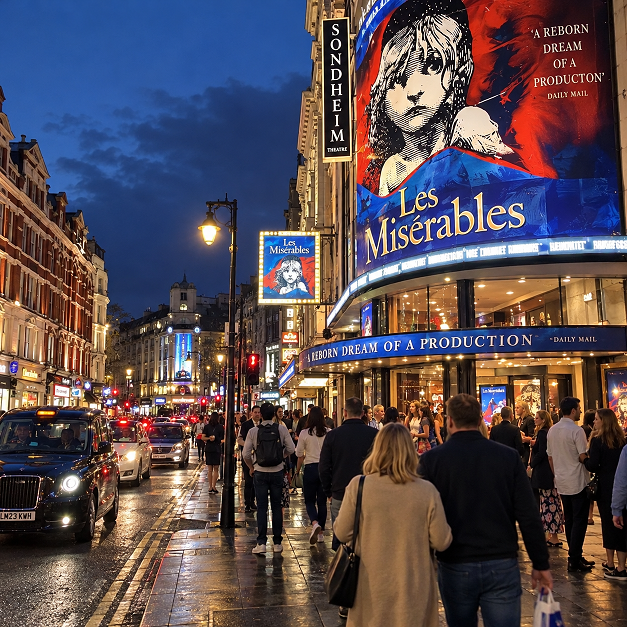
Leave an evening for London
A show, a meal or simply a walk through a different part of the city can change the pace of a visit. Choose something you want to enjoy, then give it enough time.
The sights will still be there tomorrow. Your feet may appreciate the arrangement.
Getting around without turning every day into a journey
The London that felt manageable to my 17-year-old self is still a large city. Therefore, use walking for the interesting stretches and public transport for the gaps.
Transport for London explains pay-as-you-go using contactless or Oyster. Check your actual route and payment setup rather than assuming one card or fare covers every possible journey.
Also, compare the complete airport transfer to your accommodation. Reaching a central station quickly is less helpful if the next stage is awkward with luggage.
For step-free travel, check the entire journey, including station entrances and interchanges. For any day, check service status before setting out. My travel logistics guide helps you build those connections into a realistic plan.
The separate budget article covers payment habits and costs in more detail, so you can keep this visit focused on enjoying the city.
The lesson cost £50. It did eventually become useful
Looking back, the photographer’s greatest advantage was not a camera. It was my discomfort with saying no.
So here is the advice I wish I could have given that young traveller: pause before agreeing to a paid service, establish the price first and remember that a confident stranger does not get to decide your afternoon.
That is a useful travel habit, not a reason to treat everyone with suspicion. Eventually, I stopped blaming an entire city for one man’s behaviour. However, that does not excuse overlooking the crime problems London has today.
For a first visit, book the things you would regret missing, leave some unscheduled time and give yourself a chance to enjoy the city between attractions. In warmer months, that might mean a longer park walk. In rain, it might mean a museum followed by somewhere inviting to sit.
Most of all, allow a first impression to improve. Mine arrived with a bill and a photograph that alarmed my parents. London still became my happy place. That is my experience, not a promise that every visitor will feel the same. You deserve the useful cautions as well as the good memories.
Questions about visiting London
Is London safe for visitors?
London has real crime risks, including phone theft and robbery. Conditions vary by location, time and circumstances, so broad labels are less useful than checking your base, planning evening journeys and protecting valuables and device access. Practical precautions reduce avoidable exposure without guaranteeing safety.
Is London a good choice for a first solo trip?
It can be, particularly if English makes the practical side feel more familiar. However, plan a suitable base, arrival route and manageable days. Confidence grows more easily when the basics are settled.
What should I prioritise on a first visit?
Choose a few landmarks or cultural visits that interest you, then group nearby places. Add a park, a meal and some free time instead of trying to cover every famous sight.
Is Hyde Park the same as Kensington Gardens?
No. They are neighbouring Royal Parks. Check the official maps and opening information when planning a walk across both.
Is a hotel near Hyde Park a good base?
It can be if its precise address and transport connections suit your plans. However, compare the room, luggage access, facilities and cancellation conditions rather than relying on the area name.
Do I need an Oyster card?
Not automatically. Supported contactless cards and devices are another pay-as-you-go option. Check TfL’s current guidance for your journeys and any fees charged by your bank.
Where is the detailed London budget advice?
My separate London on a budget guide covers accommodation choices, transport payment, free attractions and ways to control the overall bill.
Did a city ever win you back?
Tell me about a shaky first impression that turned into affection—or your own first travel lesson. I hope it came with a better photograph.
Find your London
Keep exploring
Plan your world travel
Build a trip around your interests, time and budget.