TRAVEL FIELD NOTES · LONDON
How to Visit London on a Tight Budget
Spend on the memories. Keep the rest of the invoice under control.
By Rob Wheatley – Program Director & traveler
Research checked 20 October 2026 · Originally published September 2017

“That’ll be £8.40.”
Picture the scene. The barman says it without a flicker, sliding a pint across a sticky pub counter in Soho. Elsewhere, a Tube ticket machine is quietly relieving a tourist of more money than a pay-as-you-go journey might have cost. Outside, a sandwich in a station shop is wearing a £9 price tag like it has just won an award. And somewhere in Covent Garden, a man in a gold-painted jacket is negotiating the price of a photograph.
Welcome to London.
I have discovered, as a world traveller, that London has not only changed, it can be an astonishingly expensive place to visit. I’ve been through Zurich, Singapore and Oslo, and London still has a way of making your wallet flinch before you’ve even left the airport.
Here’s the twist, though. The pigeons in Trafalgar Square haven’t noticed. They have the best seats in the city, a perfect view of Nelson’s Column, and they’ve never paid for a Tube ticket in their lives. Somewhere between the £9 sandwich and the pigeon sits the secret to this city.
The London the pigeons get for free
London’s best bits can be free. The British Museum’s permanent collection. The National Gallery. Watching the Changing of the Guard. The sunset from Primrose Hill, with the whole skyline laid out like a postcard nobody had to pay for.
Not knowing where to look, however, can cost a fortune.
So use a suitable contactless card or Oyster rather than automatically buying paper singles, look beyond restaurants facing famous landmarks, and keep walking when someone offers you a fridge magnet. London is expensive. But you don’t have to play it the way everyone else does.
Here’s how to play it differently.
London on a budget: the quick answer
Visiting London on a budget is possible if you control the room cost first, use pay-as-you-go transport, group nearby sights and build your days around free collections and public spaces. Then choose the paid experiences you actually want. Accommodation, airport transfers and an overfilled attraction schedule are where a modest trip can become expensive.
Start saving before you leave the airport
Your first London purchase can set an unfortunate tone: a transfer chosen while tired, hungry and surrounded by people who appear to know exactly where they are going.
At Heathrow, compare the Piccadilly line, Elizabeth line and Heathrow Express against your actual accommodation address. Heathrow describes the Piccadilly line as its lowest-cost rail option and Heathrow Express as the fastest to central London. However, arriving at Paddington quickly is only helpful if the onward journey makes sense.
Check the airport’s transport guidance and the current service status before travelling. For other airports, price the transfer before celebrating the flight deal.
Similarly, include baggage, arrival time and the last connection. A low airfare with an expensive late-night transfer is a saving with a very persuasive disguise.
Book a bed, not a false economy
The pigeons have solved accommodation rather elegantly. The rest of us need a door that locks and somewhere to put a suitcase.
My old article quoted hotel rates of £45–60. I would not use those figures as a general London promise today. Instead, compare live prices for your dates across basic hotels, hostels, guesthouses and the budget chains you are comfortable using.
Premier Inn, Travelodge and ibis can go on the comparison list; none is automatically the cheapest. Also check whether the quoted room has a window, a private bathroom, breakfast, suitable access and the cancellation terms you need.
Compare the stay, not just the nightly price. A cheaper room further out can mean additional fares, longer journeys and less time enjoying London. Nevertheless, paying for a famous postcode is unnecessary if a practical connection serves your plans.
For couples, compare the whole private-room price with two hostel beds. Solo travellers should count the full room cost, rather than borrowing somebody else’s imaginary room-mate.
Planning beyond this visit? Then use my England travel guide to choose your next stops and build a journey that fits your time.
Contactless or Oyster: get the payment right
The original article treated a Visitor Oyster card as an essential purchase before departure. That is no longer the right blanket advice.
For many adult visitors, a supported contactless bank card or device is convenient. Oyster remains useful where it suits your payment setup or concession. Compare card purchase costs and any overseas bank fees; contactless does not mean your bank has forgotten how to charge you.
Adult pay-as-you-go single fares are generally the same on contactless and Oyster. However, the right cap and ticket depend on where and when you travel. Use TfL’s fare tools for your journeys rather than applying one central-London price to the entire network.
- Keep to the same card or device. Your phone, watch and physical bank card are separate payment methods for these purposes.
- On rail services, touch in and out. Use the same method at both ends.
- On buses and trams, touch in only. Do not touch out when leaving.
- Give each traveller their own payment method. Do not plan to pass one bank card back through the barriers.
TfL explains the rules for paying the right fare. Following them is less glamorous than a travel hack, but considerably more reliable.
The bus fare—and the change coming next
A regular red bus can give you a view of London while doing an ordinary transport job. It is not a guided sightseeing tour, and traffic can make it slow. Even so, sitting upstairs can be a pleasant alternative when the route fits your day.
| Fare period | Single/Hopper fare | Bus/tram daily cap |
|---|---|---|
| Until 31 October 2026 | £1.75 | £5.25 |
| From 1 November 2026 | £1.85 | £5.55 |
The Hopper fare allows additional bus/tram journeys within one hour of the first touch-in when using the same card or device. These are bus/tram figures, not a Tube or airport cap. Check TfL’s bus and tram fares before travelling.
Walk the map, not the souvenir trail
London can trick you into travelling underground between places that would have made a perfectly enjoyable walk. Therefore, check the walking route before descending another escalator.
The useful habit is to group nearby sights: Westminster with St James’s Park; Trafalgar Square with the National Gallery; Bloomsbury with the British Museum. Otherwise, you can spend the day crossing London without ever feeling you have arrived.
Use the official visitor maps and journey tools. If you need step-free routes, shorter walking distances or regular rests, plan those first. Saving money should not become an endurance event.
And when a walk is advertised as “free,” check whether the guide works for tips. That can still be good value; it simply belongs in the budget.
Eat before hunger starts booking restaurants
The £9 sandwich is at its most persuasive when your blood sugar has surrendered and everyone in your group is pretending not to be annoyed.
Plan one easy food stop before that moment. Supermarkets, bakeries, takeaway counters and simple cafés give you options without committing every meal to a restaurant. However, check the actual price: a photogenic market stall is not automatically a bargain.
For a dry-weather lunch, buy something you enjoy and find a suitable public place to sit. In rain, have an indoor alternative. A soggy picnic is not a character-building requirement.
Read the whole menu. Compare what you will order, including drinks and any service charge. Also check whether a meal deal requires a loyalty card, and whether a lunch offer applies at the time you are there.
You do not need to turn the entire visit into a sandwich-based survival exercise. Instead, save on the forgettable meals so you can afford one you will remember.
Free things to do in London that deserve your time
This is where the pigeons begin to look like financial advisers. You can fill a rewarding day without buying an attraction bundle.
| Experience | What is free | What to check |
|---|---|---|
| British Museum | Permanent collection | Book a free timed ticket in advance where possible; exhibitions can cost extra. |
| National Gallery | General admission | Some exhibitions charge; check tickets and any room closures. |
| Changing the Guard | Watching the public ceremony | Check the official schedule; weather and operational needs can change it. |
| Primrose Hill | Public park and skyline view | Check opening and closure notices before planning a sunset visit. |
Choose one collection you genuinely want to see, rather than marching through several merely because admission is free. Similarly, a famous building viewed from outside is a different experience from a paid interior visit. Decide which matters to you.
A low-spend London day with an actual storyline
Here is a suggested route, rather than a timed race. Admission to the places described below can be free; getting there, eating and any optional extras still cost money.
- Start at Westminster. Enjoy the public views of Parliament and Big Ben, then walk towards Whitehall if the route suits your mobility and conditions.
- Continue to Trafalgar Square. You have reached pigeon headquarters. Book a free National Gallery visit if you want time with the paintings.
- Take a proper lunch break. Choose food before exhaustion makes the decision for you.
- Walk through St James’s Park towards Buckingham Palace. Enjoy the park and palace exterior. If the Guard ceremony is your priority, check its schedule first and reverse or rearrange the day.
- Finish with one deliberate choice. A drink, an affordable dinner or a theatre ticket you have already priced. You do not need to buy all three.
Save the British Museum or Primrose Hill for another outing near that part of London. Adding every free idea to one day defeats the point. My slow travel guide explains why leaving room can make a trip better.
Make room for the West End—if it matters to you
I remember seeing Jersey Boys in the West End and loving not just the Frankie Valli and Four Seasons songs, but the whole evening. Drinks and some light pub food afterwards completed the occasion.
That was a worthwhile spend for me. It does not follow that every visitor must see a show, or that every discounted seat is a good seat.
Compare the theatre’s own booking site with Official London Theatre’s Today’s Tickets. Flexible dates or show choices may help. However, check the seat view, total price and terms before paying, and do not assume a last-minute offer will be available for your favourite production.
The aim is to choose the experience, then find a sensible way to buy it. A random ticket bought because it says “discount” is still a purchase.
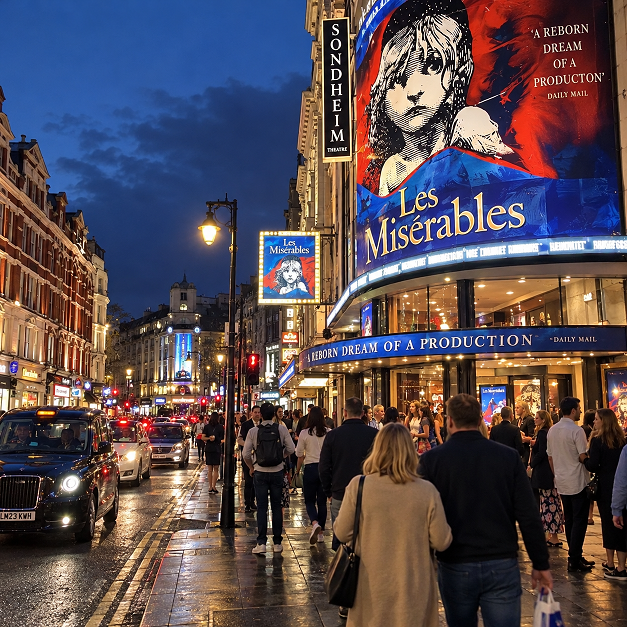
Does a London attraction pass actually save money?
Sometimes—but only against the visits you would otherwise pay for.
List your chosen paid attractions and their direct-booking prices for the same dates. Then compare the pass’s exact version, inclusions, validity period and reservation requirements. Do not add three extra attractions just to prove the pass was a bargain.
The old article suggested a pass could broadly solve queues. That is too sweeping: London Pass reservations are required for some attractions, and a pass does not automatically remove security checks or every queue.
For a trip built mainly around free collections, parks and walks, a paid pass may add a cost you did not need. Nevertheless, it can suit a visitor whose realistic itinerary genuinely uses its inclusions.
Markets: browse freely, buy deliberately
I once had a girlfriend who could steer me through London’s markets and retro shops with impressive purpose. She wanted shoes and handbags. Meanwhile, I kept drifting towards electronics, antiques, records and anything else capable of triggering shiny-object syndrome.
I was eventually the one being dragged out of shops. This is unusual, because I claim to hate shopping.
Markets can make an enjoyable part of a day without a large purchase. However, browse before buying, compare prices and ask politely whether negotiation is appropriate. Some stalls have fixed prices; haggling is not a universal London requirement.
Also, check the market’s trading days before making a special journey. A bargain expedition is less satisfying when the main attraction is a locked shutter.
Build a London budget you can actually use
Start with the live accommodation quote, then add the day. No single daily figure can honestly cover a solo private-room traveller, a couple sharing and someone happy in a dorm.
Use this simple structure:
- Your share of the room or your hostel bed.
- Meals and drinks you have realistically planned.
- Transport for your route and payment method.
- Your chosen paid visits, show or tour.
- Airport transfers, entry requirements and insurance, budgeted separately.
For example, a hypothetical £140 room costs two adults £70 each, while a solo guest pays the full £140. That is arithmetic, not a current hotel quote. It explains why two people can report very different “London budgets” and both be telling the truth.
For the wider calculation, use my world travel budget guide. If you are still choosing the destination, compare what your budget buys in more affordable countries before committing.
London on a budget: your questions
Is London on a budget realistic?
Yes, if you can find accommodation that fits your budget and make selective choices about food, transport and paid attractions. Free collections and public spaces help, but they do not cancel the room, flight or airport transfer.
Should I buy a Visitor Oyster card before travelling?
Not automatically. A supported contactless card or device suits many adult visitors, while Oyster may suit other payment needs or concessions. Compare card costs, bank fees and the fare rules for your actual journeys.
Are London museums free?
Some major institutions offer free general admission or permanent collections, including the British Museum and National Gallery. However, special exhibitions may charge, and not every museum in London is free. Check the venue’s own booking page.
Can I watch Changing the Guard for free?
Yes, the public ceremony is free to watch. However, consult the Household Division schedule before visiting, as weather and operational requirements can change the event.
What is the cheapest rail option from Heathrow?
Heathrow identifies the Piccadilly line as its lowest-cost rail option to central London. Nevertheless, compare the complete journey to your accommodation, service status and any access needs before choosing.
Do I need an attraction pass for London?
No. A pass is optional and may save money only if its inclusions match the paid attractions you realistically intend to visit. Compare it with direct-booking prices and check reservation rules.
Borrow the pigeon’s priorities
You do not have to prove that London is cheap. It isn’t. You only need to stop paying for things that add very little to your particular visit.
A great painting, an interesting street, an hour in a park and a view across the river can carry a day remarkably well. Then, if you want the show, the special dinner or even the £8.40 pint, choose it deliberately.
The pigeons might question your financial judgement. Fortunately, they are not paying.
What was your best London bargain—or your most ridiculous London bill? Share the place, date and what you paid in the comments. The detail helps the next traveller.
Sources and price notes
Transport and visitor information was checked against the official links above on 20 October 2026. The bus table distinguishes the current fare from TfL’s announced 1 November increase. Check the source again for your travel dates.
The opening pub-and-sandwich scene is illustrative, not a quoted current menu or transport fare. The accommodation calculation is an example, not a live room offer. Admission policies, closures, theatre availability and prices can change.
For the wider planning picture, continue with how to travel cheap and the Travel Logistics & Transit guide.
A smaller London bill
Keep planning
Build your trip
Start with the world travel planning guide and turn the wish list into a journey that fits.