Free Spirit Travel
Free Spirit Travel
Around The World With Rob
Free Spirit Travel

TRAVEL LISTS · A BED WITH A BACKSTORY

10 Unusual Places to Stay—and What to Check Before Booking

A hotel room is useful. A lighthouse keeper’s cottage gives you something to talk about over dinner.

These unusual places to stay can turn a night away into part of the adventure. However, the trick is choosing a room that works after the photograph has been taken. A treehouse loses some charm if you discover the ladder while holding two suitcases.

By Rob Wheatley · Traveller, Coastal Skipper & Viking Program Director
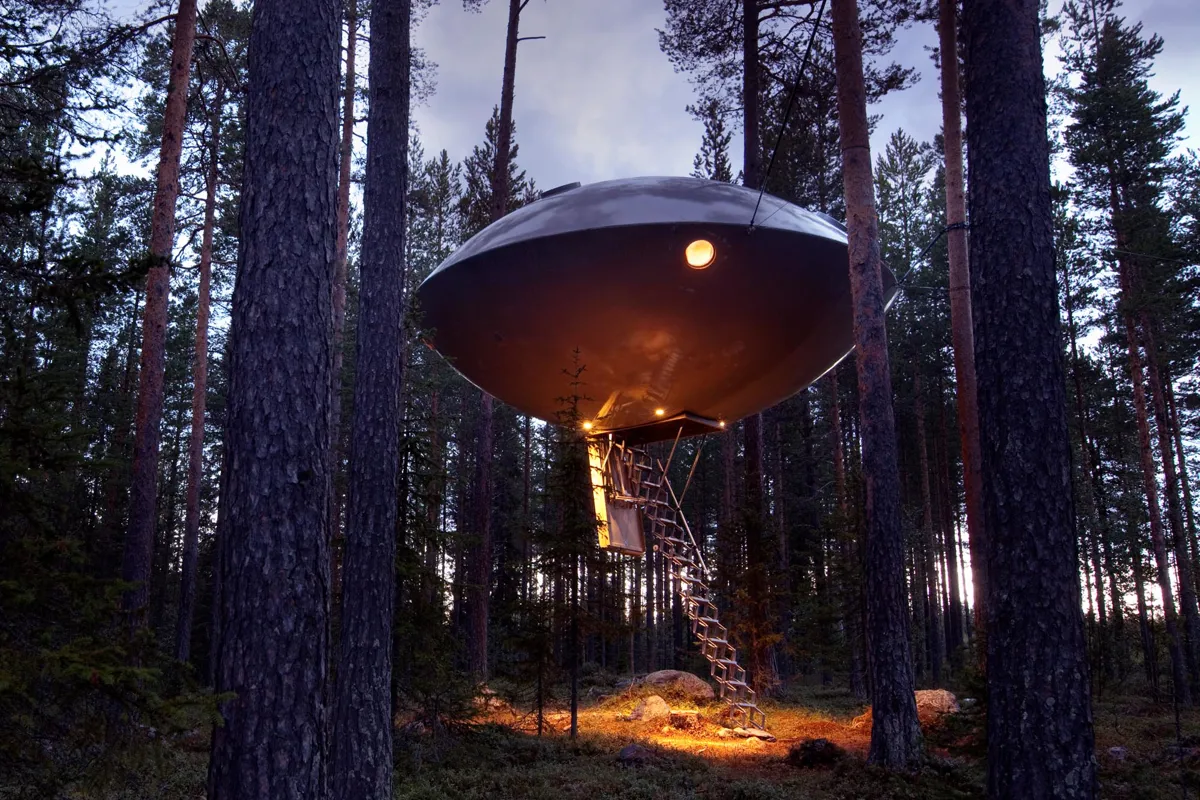
UFO-shaped treehouse suspended among pine trees at Treehotel in Sweden
Treehotel’s UFO room in Sweden: an arrival with a difference.

After working in hotels and spending years helping people enjoy their travels, I take the practical details seriously. An extraordinary setting is a bonus. A room that suits your needs is the foundation.

So here are ten possibilities, each with a real example, the catch and a question worth asking before you pay. The examples come from the operators’ published information; they are researched starting points, rather than a claim that I have personally slept in every one.

Property information checked 2 November 2026. Confirm the current room, facilities, opening dates and terms directly before booking.

PICK YOUR KIND OF DIFFERENT

Which unusual stay catches your eye?

My first question: would I still enjoy this room if the weather were dreadful and the camera stayed in my bag? If the answer is yes, keep reading.

1. A lighthouse keeper’s cottage: a room with a proper outlook

Fanad Lighthouse · County Donegal, Ireland

A lighthouse stay sounds wonderfully dramatic. There is the sea, the changing light and the satisfying possibility of spending an afternoon watching weather instead of answering messages. For once, “not much to do” could be the selling point.

At Fanad Lighthouse in County Donegal, the accommodation is in three former keepers’ homes. You are booking a home at a working lighthouse, rather than a bedroom halfway up the tower. That distinction matters if your imagination has already installed a spiral staircase beside the bed.

The catch: The setting may be the attraction, but check how far you are from dinner, shops and the nearest place to buy milk. Also ask about tower access rather than assuming a stay includes unrestricted entry.

Before booking: Confirm the exact house, parking-to-door route, minimum stay and what supplies you should bring.

Rob’s take: I’d choose this for a coastal pause, with time to sit still. Squeezing it between long driving days rather defeats the point.

Check the example: Fanad’s accommodation information ↗

2. A monastery guesthouse: turn the volume down

Quarr Abbey · Isle of Wight, England

Some unusual places to stay offer a spectacle. A monastery offers something that can be harder to find: a reason to be quiet. However, you are entering a living community, so the appeal depends on respecting its purpose.

Quarr Abbey’s Benedictine community welcomes guests to its guesthouse and encourages them to share in the prayer and silence of monastic life. Its rooms include both en-suite accommodation and rooms using shared facilities. This is a retreat setting, rather than a themed hotel with a convenient abbey attached.

The catch: A late dinner, lively phone conversation or flexible arrival may not fit the house routine. Policies differ between religious guesthouses, so ask about meals, quiet hours, curfews and participation expectations.

Before booking: Explain what you want from the stay, then confirm that the guesthouse and room suit you.

Rob’s take: Silence sounds rather lovely. Still, I’d read the house guidance before turning up with a weekend’s worth of noisy plans.

Check the example: Quarr Abbey’s guesthouse information ↗

3. A treehouse: childhood ambition, adult luggage

Treehotel’s UFO room · Harads, Sweden

A treehouse has an immediate advantage over an ordinary room: nobody needs a lengthy explanation of why it is interesting. You are sleeping among the trees. Your younger self would probably approve.

Sweden’s Treehotel takes that idea in several directions. Its UFO room resembles a spacecraft suspended in the forest, with entry by ladder. The room has an incinerating toilet and water dispenser; showers are in a nearby building. Those are useful details to discover before you arrive with an enormous suitcase.

The catch: “Treehouse” tells you very little about access or facilities. One may have a gentle walkway; another may involve a climb. Therefore, assess the individual room rather than the property’s prettiest photograph.

Before booking: Ask about steps or ladders, luggage handling, the shower route, bed dimensions and any movement in the structure.

Rob’s take: I like the imagination. However, the midnight bathroom arrangements would get as much attention from me as the view.

Check the example: Treehotel’s UFO room details ↗

4. A cave hotel: go underground without giving up the bed

Argos in Cappadocia · Uçhisar, Türkiye

A cave room can make the building itself part of the journey. The pleasure is in the shapes, the stone and the feeling that your bedroom has escaped the standard hotel floor plan.

At Argos in Cappadocia, room descriptions distinguish between cave and stone interiors. Several categories can have rooms with or without windows, depending on availability. Consequently, booking the hotel name alone does not guarantee the precise room you pictured.

The catch: A beautifully lit photograph cannot tell you how you will feel without daylight. Also, an atmospheric room may have steps or an unconventional layout. Ask about ventilation, access and the exact room category.

Before booking: If a genuine cave interior or a window is essential, get that requirement confirmed before paying.

Rob’s take: My rule is simple: choose the room you can happily wake up in, not merely the one that wins the photograph.

Check the example: Argos’s room descriptions ↗

5. A converted railway carriage: all aboard, going nowhere

The Old Railway Station · Petworth, England

There is something pleasing about a railway carriage that lets you settle in without listening for your stop. The journey has ended before the holiday begins. Meanwhile, the railway character does most of the entertaining.

The Old Railway Station in Petworth offers accommodation in converted Pullman carriages as well as the Station House. Its listed rooms are en suite and include breakfast. However, the carriage and station-building options are different experiences, so choose deliberately.

The catch: This is stationary accommodation, not a sleeper-train journey. Before booking, check the bed layout, floor space, access steps and whether the room is actually in a carriage.

Before booking: Confirm the room’s location and how you will reach the property. A former station address does not promise a current passenger service.

Rob’s take: This would suit a leisurely countryside break. If you want scenery rolling past the window, though, you need an actual train ticket.

Check the example: The Old Railway Station’s rooms ↗

6. A houseboat: let the water set the pace

Knysna Houseboats · Knysna, South Africa

A floating home changes the feel of an ordinary evening. Dinner, a quiet deck and a different view can become the activity. However, first establish whether you are booking a permanently moored boat or one you will drive.

Knysna Houseboats offers self-drive accommodation on South Africa’s tidal Knysna estuary. Its boat descriptions include a galley, compact bathroom and sleeping areas, with some dining spaces converting into beds. In other words, the layout deserves a closer look than the headline guest capacity.
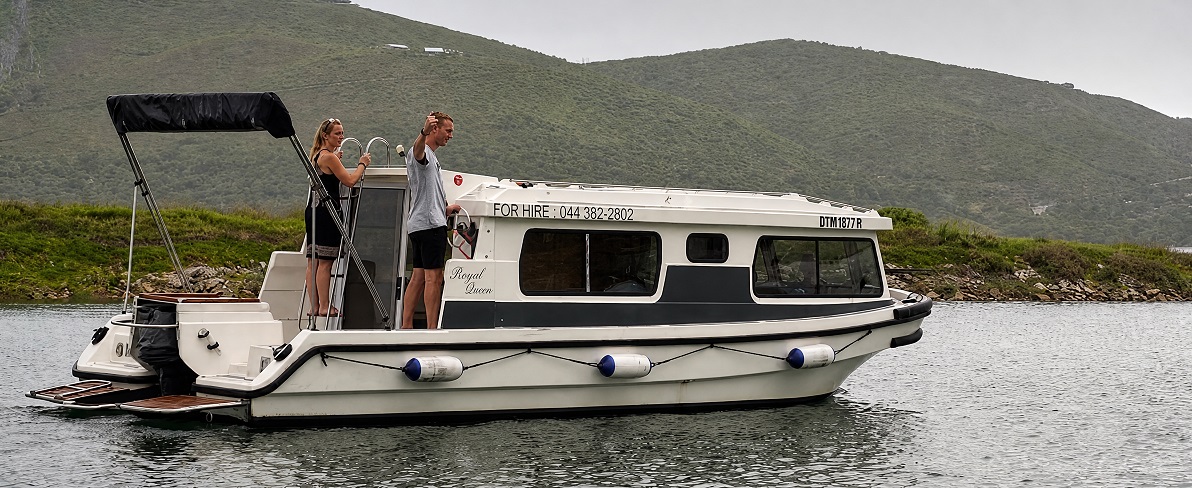
Houseboat on the Knysna lagoon with two people on deck and green hills behind
A houseboat stay brings the water into the holiday—check the layout and operating arrangements before booking.

The catch: Water brings responsibilities as well as scenery. Ask the operator about training, permitted cruising areas, tides, weather limits, moorings and suitable life jackets.

Before booking: Confirm operating requirements, insurance, fuel, deposits, bathroom arrangements and the actual beds available for your group.

Rob’s take: As a Coastal Skipper, I’d treat the briefing as part of the holiday. Confidence on land does not explain a channel marker.

Check the example: Knysna Houseboats’ boat information ↗
7. A castle: check which side of the drawbridge your room is on

Langley Castle Hotel · Northumberland, England

Sleeping in a castle is a wonderfully efficient way of adding a little theatre to bedtime. Thick walls and an unusual window seat can be more memorable than another perfectly respectable corridor.

Langley Castle’s accommodation includes bedrooms inside the castle and Castle View rooms in the grounds. Both may suit a visit, but they fulfil different wishes. If sleeping within the historic building is the entire reason for booking, the words “Castle View” need careful attention.

The catch: Heritage buildings do not automatically offer the access, lifts or bathroom layouts you expect from modern hotels. Equally, a room outside the main building may be the better practical choice.

Before booking: Ask exactly where you will sleep, how many stairs are involved and where breakfast and dinner are served.

Rob’s take: A view of a castle is lovely. Nevertheless, if I had paid to sleep in one, I would want that small detail settled in writing.

Check the example: Langley Castle’s accommodation categories ↗

8. A working farm: countryside with a daily routine

Liberty Hill Farm & Inn · Rochester, Vermont, USA

A farm stay offers a different kind of novelty: everyday life somewhere else. Instead of inventing activities, you can spend time around the rhythms of a working place. There may also be excellent reasons to arrive hungry.

Liberty Hill Farm & Inn in Vermont advertises lodging, breakfast, dinner and farm activities. It also clearly states that its guest bathrooms are shared. That combination will delight some travellers and immediately redirect others. Both reactions are useful.

The catch: Rural accommodation is not automatically private, quiet or inexpensive. Compare the full package, including meals, against what you would otherwise spend. Then check whether chores and activities are optional.

Before booking: Ask about bathrooms, meal times, dietary requirements, animal access and the minimum stay.

Rob’s take: I would start with the bathroom and the dinner arrangements. Fresh air is easier to enjoy when the domestic details suit you.

Check the example: Liberty Hill Farm’s inn information ↗

Farm-stay illustration accompanying advice on rural accommodation
Country life, proper bed: explore the possibilities in Farm Stays for People Who Hate Camping. Illustrative image, not Liberty Hill Farm.

9. A former prison: an unusual checkout story

Malmaison Oxford · Oxford, England

This is one occasion when arriving at a prison can count as a successful holiday decision. A thoughtful conversion lets you experience an unusual building while retaining the rather important freedom to leave.

Malmaison Oxford occupies a former prison, and its Standard Cell Room is in the original A Wing. The hotel also offers other room types, so check the category if the former-cell setting is what interests you. The property’s own description is more useful than assuming every bedroom offers the same experience.

The catch: A prison has a real history beyond the entertaining room name. Choose somewhere you feel comfortable with, then investigate daylight, layout and the room’s position.

Before booking: Confirm that you are booking a former-cell room if that matters. US visitors should also compare bed dimensions, since UK and US size labels differ.

Rob’s take: The architecture is the attraction for me. I’d leave room in the visit to understand the building as well as enjoy its new use.

Check the example: Malmaison Oxford’s Standard Cell Room ↗

10. A desert camp: stars above, bathroom details below

Under Canvas Moab · Utah, USA

A desert camp can make a single night feel like a different chapter of the trip. Canvas, an open landscape and an evening outdoors provide the atmosphere. However, “glamping” is a broad promise rather than a precise facilities list.

Under Canvas Moab illustrates why tent categories matter. Its Safari tents use shared bathhouse facilities, while Deluxe tents have private bathrooms. Both offer a proper bed, but they provide different answers to the question of a night-time trip to the toilet.

The catch: Canvas does not behave like a sealed hotel room. Ask about heating, cooling, power, seasonal opening and what happens when the weather changes. Also check the camp’s location rather than assuming you are inside a national park.

Before booking: Compare the specific tent, bathroom route, total price, meals and cancellation terms for your dates.

Rob’s take: I’d happily make the evening the event. First, though, I’d settle the bathroom question. The stars will still be there afterwards.

Check the example: Under Canvas Moab’s tent categories ↗

Compare unusual places to stay at a glance

Use this as a first filter. Facilities and access depend on the exact room, rather than the accommodation label.

StayChoose it forCheck first
Lighthouse cottageCoastal scenery and a slower breakHouse versus tower; supplies and access
MonasteryQuiet and a retreat atmosphereCommunity expectations and shared facilities
TreehouseForest immersion and imaginative designLadders, luggage and bathroom route
Cave hotelUnusual architecture and atmosphereWindows, ventilation and room category
Railway carriageStationary railway nostalgiaCarriage versus station-building room
HouseboatLife on the waterMoored versus self-drive; beds and briefing
CastleA night in a historic settingInside the castle versus in the grounds
Working farmRural routines and farm experiencesBathrooms, meals and activities
Former prisonA historic conversionOriginal cell versus another room type
Desert campOpen landscapes and an evening outdoorsBathroom, temperature control and season

5 questions to ask before booking an unusual stay

  1. What exactly am I booking? Match the room name to the photographs, location and facilities. A hotel’s most spectacular suite is not automatically the one in your price.
  2. Can everyone manage the access? Ask about the complete route from parking or drop-off to bed and bathroom. Also describe any mobility needs clearly.
  3. Where is the bathroom? Establish whether it is private, shared or in another building. Then consider how that will feel in the rain.
  4. What is the full cost? Include meals, transfers, fuel, taxes, minimum stays and deposits. Compare the complete experience using my travel budget checklist.
  5. What happens if plans change? Read cancellation and weather policies before paying. For remote stays, also confirm arrival times and after-hours assistance.

Make the unusual night part of a sensible trip

You do not need ten extraordinary bedrooms in one holiday. In fact, one carefully chosen stay can be enough. Build the rest of the route around comfortable travel days and places you actually want to explore.

For a first attempt, I would put an unusual night between easier stops. That way, the novelty has room to be enjoyable. It does not have to carry the entire holiday.

If your main aim is to save money, start with my guide to affordable accommodation. Unusual and affordable sometimes overlap, but one does not guarantee the other.

Ultimately, I want a stay to add something to the journey: a landscape, a connection or a story. A good night’s sleep would also be appreciated. I remain quite traditional about that.

Find more travel lists and ideas →

What makes travel sustainable for you?

Long-term travel works best when it fits the person doing it.