TRAVEL FIELD NOTES · SPEND WISELY
Budget Travel Checklist: Plan the Cost, Keep the Fun
Tired you is expensive you. Plan for that traveller, too.
Most budgets do not collapse in a blaze of luxury. They quietly unravel through a late taxi, a baggage fee and five small decisions made while hungry. This budget travel checklist helps you decide the important things before your patience boards a different flight.
By Rob Wheatley – Program Director & traveler
Updated 17 October 2026
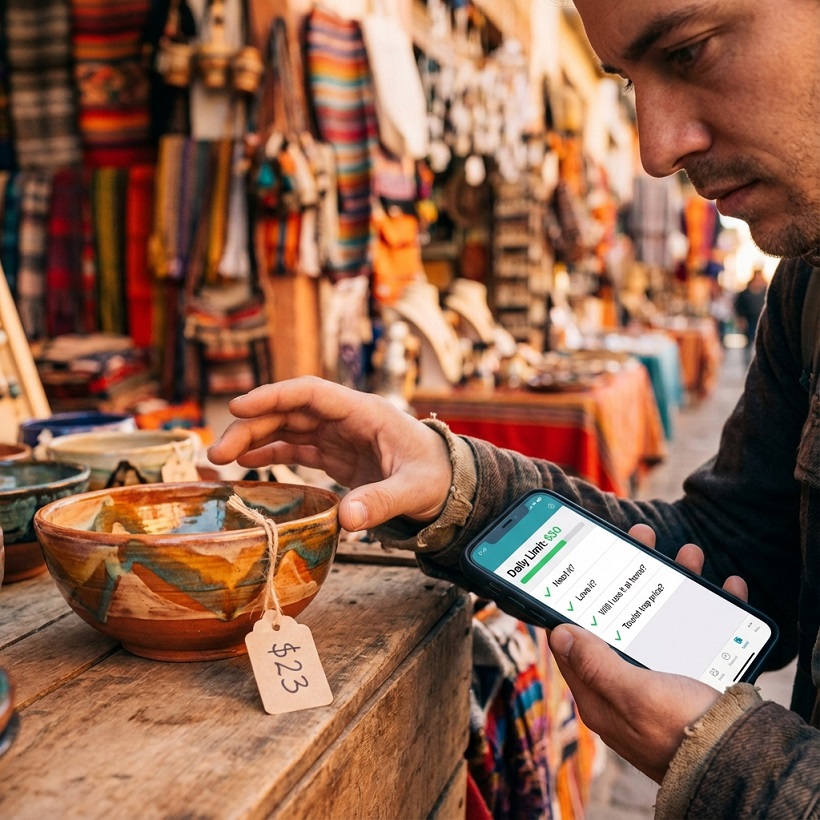
Your budget travel checklist in one minute
A budget travel checklist should cover the whole trip: transport, accommodation, food, activities, documents, insurance, connectivity and a separate reserve. Compare complete prices before booking, plan your arrival, check payment fees and review spending while away. Protect safety and sleep; save on extras that matter less to you.
- Set one total spending limit for everyone travelling.
- Price the journey from your front door and back again.
- Separate prepaid costs, money still due and daily spending.
- Keep a reserve outside your everyday allowance.
- Plan your first transfer, meal and night before leaving.
- Check your balance and remaining budget during the trip.
Copy these points into your phone notes and tick them off. Then use the sections below to check the details. No twenty-tab spreadsheet required, unless that is your idea of a holiday.
Before you book: compare the whole trip
The cheapest headline price is a starting point. Your useful number is the cost of the trip you will actually take.
- Choose your priorities. Decide what deserves your money: a comfortable room, a particular excursion, fewer connections or time to linger. Give the less important extras a smaller share.
- Set the scope. Write down the number of travellers, nights, destinations and the currency you will use for planning. Label shared costs and per-person costs clearly.
- Compare complete transport prices. Include baggage, any seats you need, airport transfers, parking and onward journeys. A distant airport can eat a cheap fare for breakfast.
- Check accommodation totals. Count every night, required charges, local taxes payable later, and the cost of reaching the places you want to visit. Check cancellation terms and access at your arrival time.
- Price entry requirements and protection. Check official requirements for your passport and itinerary. Add relevant document costs and suitable insurance to your plan.
- Leave room for enjoyment. Choose a treat you actually want. Otherwise, a succession of small upgrades may spend that money for you.
For the bigger strategy, use How to Travel Cheap. For airfare comparisons, go to How to Find Cheap Flights.
A travel budget planner you can copy
Use three columns in a notebook or spreadsheet: planned total, already paid, still to pay. “Already paid” is part of the trip cost; it is not an invitation to forget what the holiday costs.
| Category | Include |
|---|---|
| Getting there and back | Fares, baggage, selected seats, transfers and parking |
| Accommodation | All nights, required charges and taxes payable locally |
| Daily essentials | Food, drinking water, local transport and laundry |
| Experiences | Admission, tours, booking fees and planned treats |
| Trip preparation | Required documents, insurance and necessary equipment |
| Connectivity and payments | Data plan, applicable card fees and ATM charges |
| Home costs during the trip | Any continuing bills or care arrangements paid from the same savings |
| Reserve | Money set aside for disruption, outside normal spending |
Count each expense once. If breakfast or a transfer is included, do not add it again. Conversely, a refundable deposit or card hold can reduce your available balance without being a final expense, so allow for that separately.
Useful calculation: trip spending limit minus fixed costs, planned one-off purchases and reserve equals your daily spending pot. Divide that pot by the number of days it must cover, including arrival and departure days.
A worked example: what is left for each day?
Suppose one person sets a $1,500 trip limit for seven days and six nights. The figures below are invented to show the method; they are not destination prices or a recommended budget.
| Allocation | Amount |
|---|---|
| Transport to the destination and back, including transfers | $350 |
| Six nights of accommodation | $480 |
| Documents, insurance and connectivity | $100 |
| One planned experience | $80 |
| Separate disruption reserve | $140 |
| Left for daily spending | $350 |
That leaves $50 a day for seven days for food, local journeys and other everyday purchases. If your actual daily needs exceed that, change the plan before booking: shorten the trip, adjust fixed costs or increase the available funds.
The reserve stays separate. It is not a second restaurant budget wearing a sensible hat. Its size should reflect what a plausible disruption could cost on your route, rather than an automatic percentage that happens to look tidy.
Before leaving: make tired-you cheaper
You arrive late, you are hungry, and the ticket machine has decided to become a philosophy exam. This is when a little preparation earns its keep.
- Save an arrival plan offline. Keep your address, check-in instructions, transfer route and a backup option where you can reach them without data.
- Check the actual transport timetable. Confirm the last service, ticket rules and a safe alternative if your arrival slips.
- Weigh and measure your luggage. Check the allowance for every carrier and fare on the trip, including smaller connecting flights.
- Arrange connectivity. Confirm device compatibility, coverage, activation and roaming settings for your chosen plan.
- Prepare payment access. Check overseas use, withdrawal limits, relevant fees and how to contact your issuer. Keep a backup payment method separately.
- Organise documents. Store protected copies separately from originals and check the official entry requirements again before departure.
The U.S. Department of State travel checklist is a useful official starting point for American travellers. Other passport holders should use their own government and destination authorities. My Travel Logistics & Transit guide helps join the practical pieces together.
Avoid the fees you can see coming
Check your own card agreement before travelling. Foreign transaction charges, ATM operator fees and cash-withdrawal charges are separate questions; a card that is good for purchases may be less attractive for getting cash.
At a shop or ATM, an offer to charge you in your home currency can be dynamic currency conversion. Visa explains that this conversion includes an exchange rate and additional fees or markup. You should be shown the terms and given the choice.
- Read the conversion offer. Choosing local currency leaves conversion to your card payment arrangements. It does not remove any fees your issuer charges.
- Check the ATM charge before accepting. Declining an ATM’s conversion offer and declining the withdrawal itself are different decisions.
- Balance fees against cash exposure. Fewer withdrawals may reduce fixed fees, but carrying more cash creates its own risk. Withdraw an amount suited to your needs.
- Watch pending transactions and holds. Keep enough accessible funds for deposits and payments that have not yet settled.
If the screen is unclear or you feel pressured, pause. A machine’s cheerful green button is not a personal recommendation.
While away: a two-minute spending check
A budget works better as a small routine than as a stern conversation with yourself on the flight home.
- Record what you spent. Use one app or a phone note. Include cash and shared expenses.
- Check what is still due. Tomorrow’s train and the remaining accommodation bill must come out before you calculate spare money.
- Recalculate the daily allowance. Divide the remaining everyday pot by the days left. Adjust an expensive day with a simpler one where that is practical.
- Keep the reserve separate. If you use it, review the rest of the trip rather than pretending nothing changed.
Group sights by area, compare a transport pass with the journeys you will actually make, and build in a straightforward food option. Most importantly, protect sleep and safe transport. Saving a little money is less appealing when you are exhausted and stranded.
Rob’s rule: tired you is expensive you. Make your difficult days easier before they happen.
What to cut when the budget does not fit
Start with the choices that reduce costs without undermining the purpose of the trip: fewer paid extras, fewer changes of base, a shorter stay or different dates. Then compare the revised total.
However, do not assume slower always means cheaper. Extra accommodation nights can outweigh transport savings. Likewise, a transport pass is only good value if it covers journeys you want to make.
For a sailing, use Cruise on a Budget to compare fare inclusions and onboard spending. For the wider plan, return to How to Travel Cheap. This checklist is the final check that your chosen trip fits the money available.
Budget travel questions
Include return transport, accommodation, food, local journeys, activities, preparation, connectivity and payment fees. Keep a separate reserve and allow for ongoing home costs if they come from the same savings. Avoid counting included services twice.
Subtract fixed costs, planned one-off purchases and a separate reserve from your trip limit. Divide what remains by all the days the everyday spending pot must cover. Check that the result suits actual prices at your destination.
There is no single amount that suits every trip. Consider the cost of an extra night, replacement transport and access to funds on your route. Keep the reserve accessible and separate from normal spending; cash alone is not a complete backup plan.
Yes. Copy the checklist into your phone notes or print the page through your browser. Keep booking details and arrival instructions available offline too.
About Rob: Rob Wheatley is a former ocean Cruise Director and a Viking Program Director. His travel guidance combines professional experience with practical planning. Official sources reviewed on 17 October 2026.
Which small cost caught you out?
Was it the airport transfer, a bag that suddenly cost extra, or the daily coffees that staged a takeover? Share your lesson in the comments so another traveller can plan for it.