Serbia & Romania · Destination guide
Golubac & the Iron Gate: Fortresses, Roman Ambition and a Giant Stone King
Golubac is a convincing argument for looking up from whatever you were doing. Towers climb out of the rock, the river opens beside them and the gorge promises more just beyond. My instinct is to keep watching. The practical question is how to see this stretch properly when you aren’t already travelling through it on a ship.
Beyond it, the Danube squeezes between the cliffs and decides to show off. I’d give this stretch of river your full attention: there is a fortress at the entrance, a Roman inscription rescued from rising water and a Dacian king with a very large face.
By Rob Wheatley · Traveller and Viking Program Director
Explore the Serbia destination guide →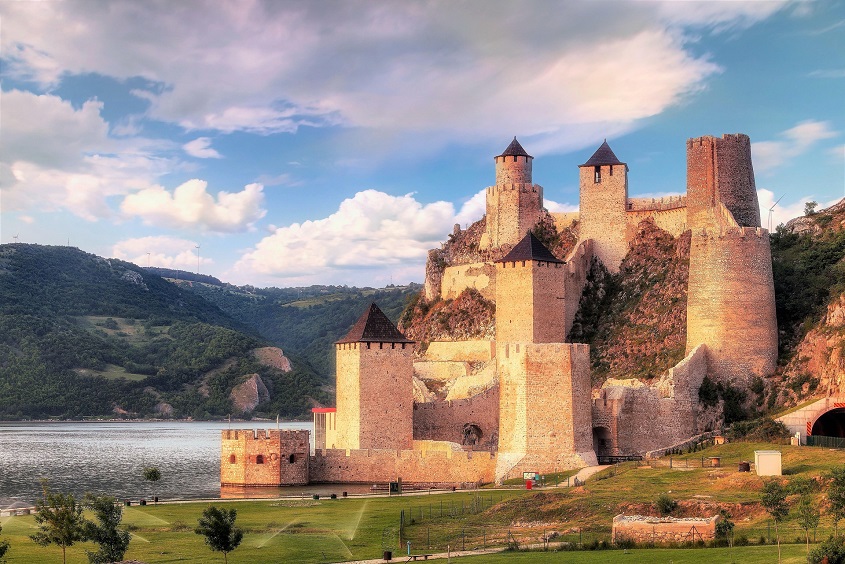
Golubac and the Iron Gate at a glance
- My priority
- The fortress setting and time to watch the gorge from the river.
- If time is short
- Enjoy the accessible part of the fortress rather than assume every tower belongs on your route.
- Walking and access
- Fortress tickets cover different zones with different restrictions. Check steps, gradients, footwear and guide requirements.
- For river guests
- Scenic sailing and a fortress shore visit are separate experiences. Confirm both in your programme.
The fortress everyone wanted
Golubac guards the entrance to the Đerdap Gorge, the Iron Gate stretch of the Danube. If you wanted control of this river corridor, you had a reason to want the fortress.
Its first documented mention is in 1335, although exactly who founded it remains uncertain. Serbs, Hungarians and Ottomans all figure in the struggles for possession. The cliff, the river and the towers explain the strategic appeal more clearly than a long list of rulers.
I’d begin by looking at the setting before going inside. Follow the walls up the slope with your eyes. The view is magnificent; the climb is not something to add to the day without checking what it involves.
The fortress and the flies
Armies were not the region’s only historical menace. The Golubac blackfly became notorious for mass attacks on livestock. Scientific accounts record serious animal losses along the Danube, so the nasty insect behind the story is real.
The explanation involving a dragon belongs to folklore. One version says St. George wounded a dragon that crawled into a cave in the gorge to die. From its remains came swarms of flies, carrying on the trouble after the monster itself had finished.
A fortress that survived centuries of fighting still needed a saint to explain the bugs. The history books give you the sieges; the legend supplies an enemy considerably harder to hit with a cannon.
The great historical outbreaks should not be read as a description of every modern spring. Once the dam changed the river habitat, the old rocky breeding grounds were underwater. It is a story about the region’s past, not a forecast for your picnic.
Visiting Golubac without conquering every tower
The fortress operates a zoned ticket system. Some routes are more demanding than others, with age, guide and other requirements for particular areas. Check the current rules before buying a ticket based on the highest viewpoint in a photograph.
I’d choose the route that lets you enjoy the place comfortably. Ask exactly which towers and spaces it covers, whether there are steep steps, and what footwear is required. A basic ticket does not establish step-free access, and the most difficult section is not automatically the best visit for you.
Independent visitors should confirm seasonal opening times and return transport. River guests should establish whether their programme includes a shore visit, a view from the ship or both.
The Iron Gate: let the river do the talking
The Iron Gate is where the Danube takes a deep breath, squeezes between the cliffs and decides to show off. Serbia and Romania face each other across the river, with the scenery changing as the ship moves through the gorge.
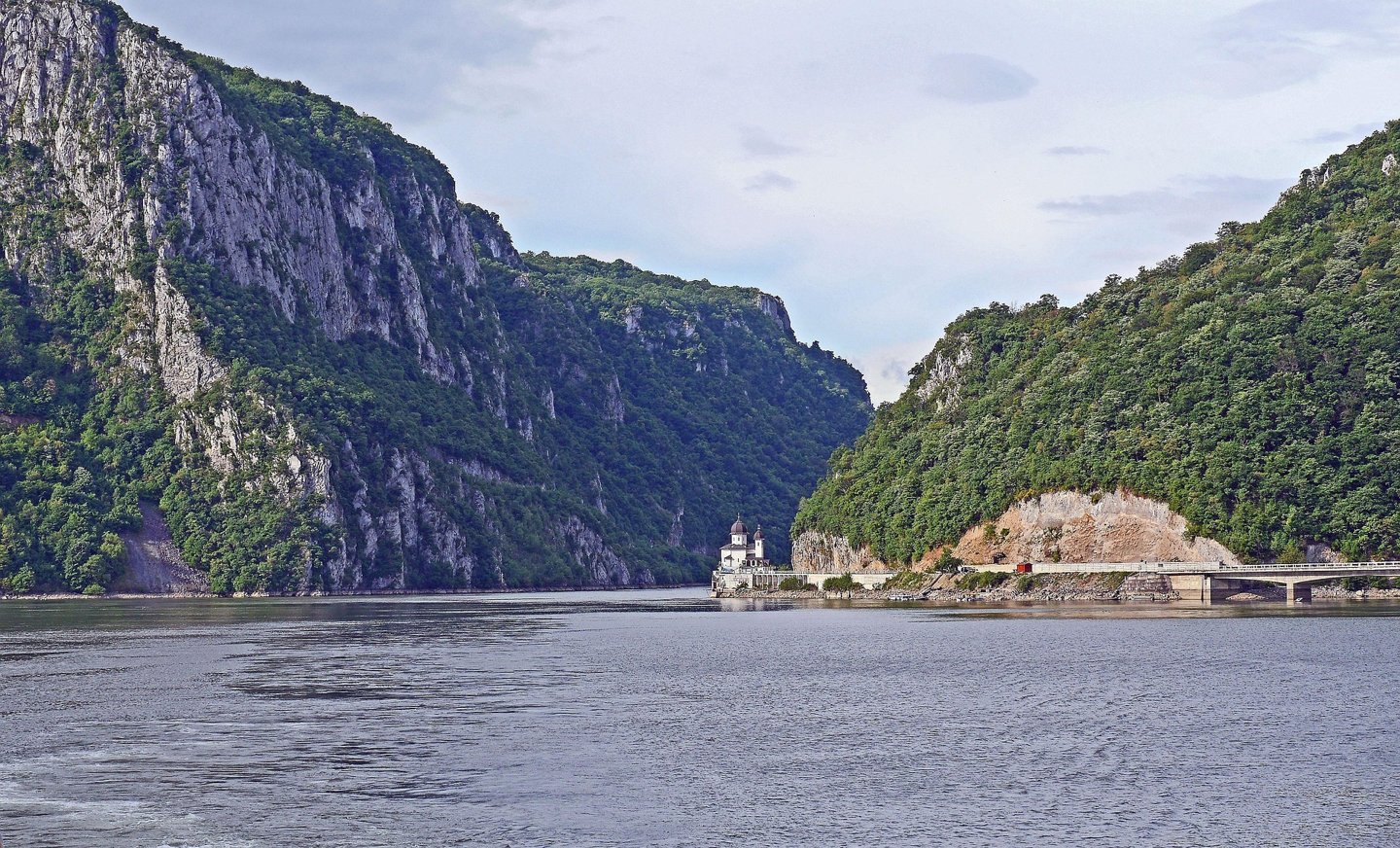
This is a good day to know roughly when the key sights come into view. Listen to the onboard commentary, ask about the expected passage and have the camera ready. Then remember to put it down occasionally. The gorge is allowed to be a memory as well as a file.
Do not build the whole experience around a promised minute or perfect light. Sailing conditions, traffic and the working programme determine the passage. Find a comfortable viewing position and keep some flexibility.
The emperor whose inscription escaped the water
Around two thousand years ago, Roman engineers pushed a road through this difficult river corridor. The Tabula Traiana marks the completion of a section under Emperor Trajan in AD 100, ahead of his campaigns against the Dacians.
It is a Roman boast about overcoming a landscape that did not particularly want a road. Much later, a different engineering project threatened the inscription itself: the Đerdap I dam and its reservoir.
In 1969, the tablet and a section of the road were moved higher to prevent them disappearing beneath the rising Danube. A record of Roman engineering survived because twentieth-century engineers made room for it.
The tablet is on the Serbian bank. Whether you can see its details from your particular ship depends on the passing distance, light and viewing angle. Listen for the announcement rather than expect an enormous roadside sign.
Decebalus: the Dacians got the biggest face
On the Romanian side, the enormous face of Decebalus looks out from the rock. He was the Dacian king who fought Rome; the carving, however, is modern. It was made between 1994 and 2004.
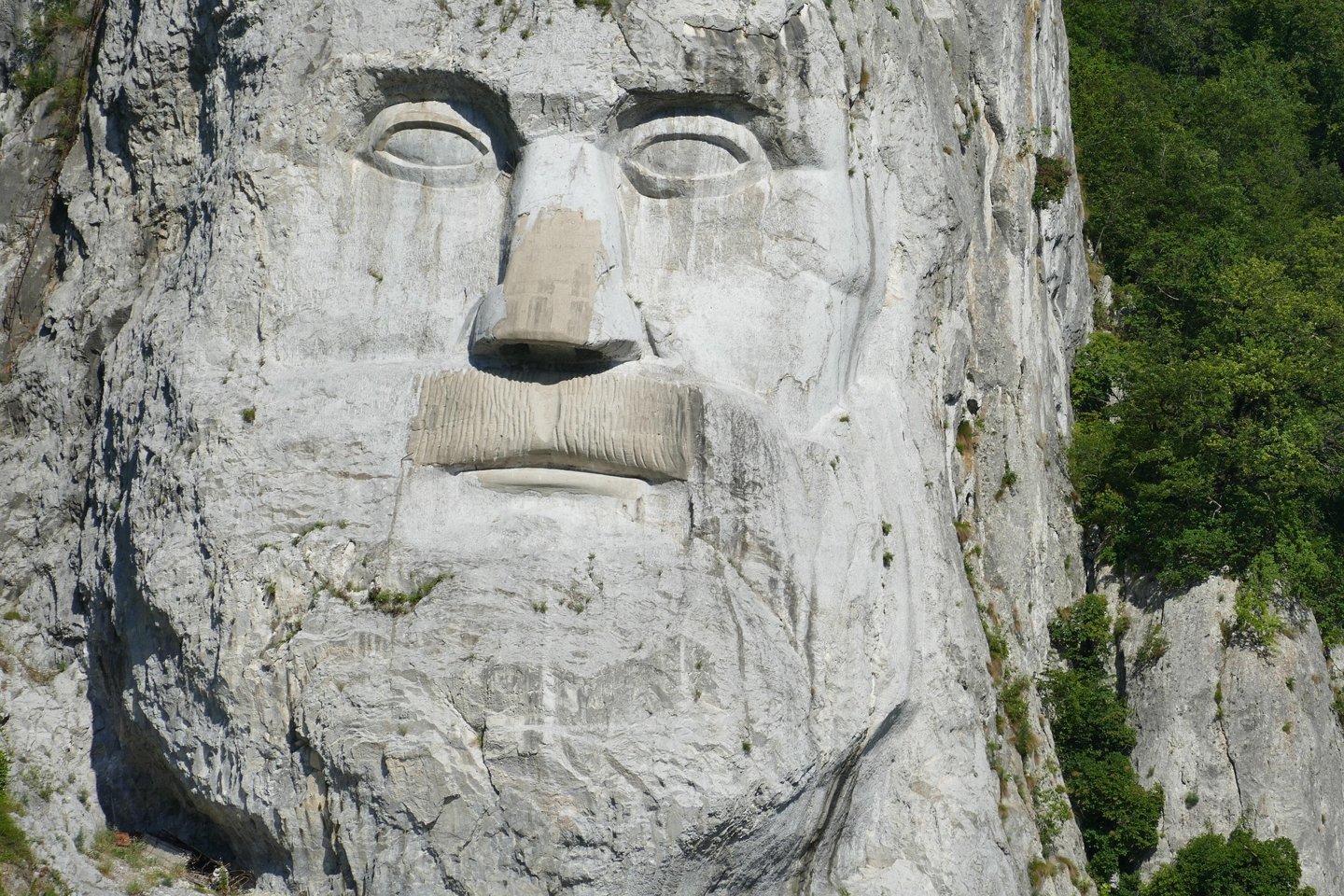
That distinction makes the riverside conversation more interesting. Trajan left an ancient inscription. Nearly nineteen centuries later, Decebalus acquired a much larger portrait. The Romans may have written the last word in the ancient conflict, but the Dacians got the biggest face.
I’d enjoy the comparison without turning it into a claim that both monuments are ancient, or that they form one tightly grouped attraction. They are landmarks along the gorge, best understood as part of the journey.
The gorge needs its own itinerary
Time and transport: A full day can cover the fortress and selected nearby river scenery; two days are better for a wider Iron Gate journey. Independent travellers will usually need a planned road route, organised tour or suitable local transport. Don’t assume a town-to-town bus also stops at every gorge viewpoint.
When: I’d favour a dry spring or early-autumn day for fortress paths and outdoor viewing. Check the fortress zones open to your ticket and the current boat schedule. Wind, weather and river conditions can alter the experience; a scenic boat is not an all-weather guarantee.
River and border: Tabula Traiana is best planned as a water-based viewing opportunity, while Romanian-bank sights belong to another country. Factor border travel and documents into any cross-bank road plan. Put a meal stop into the route too: an impressive gorge does not automatically supply convenient lunch at every stop.
For river cruise guests
Visiting with Viking?
Viking’s published 2027 Passage to Eastern Europe schedule names Golubac and Iron Gate scenic sailing on Day 7 travelling Budapest to Bucharest. In the reverse direction, Day 5 is labelled Iron Gate scenic sailing. Do not assume identical fortress access in both directions.
Check your booked excursion description for any admission, the permitted fortress zone and the walking demands. A named port on the route does not by itself promise an interior visit or access to the highest towers.
For the gorge, use the daily programme and onboard commentary to plan your viewing. Follow deck-access instructions, and ask about the expected passage of Trajan’s tablet and Decebalus. Timings and visibility depend on the actual sailing.
Checked against Viking’s published 2027 programmes on 7 November 2026. Your booked sailing confirms inclusions, availability and timing. I work for Viking; this is my own practical guidance.
Explore Passage to Eastern Europe →Explore more along the lower Danube
Planning sources
History and visitor information checked 7 November 2026. The dragon story is folklore; the blackfly’s historical impact is documented separately. Confirm access and sailing details for your visit.
- Golubac Fortress: tickets, zones and visitor rules
- Đerdap Geopark: fortress history
- PLOS ONE: Golubac blackflies, historical outbreaks and the dragon legend
- Serbia Tourism: Trajan’s tablet and its 1969 relocation
- Radio Romania International: Decebalus carving dates
- Viking: Budapest–Bucharest Day 7 · reverse-direction scenic sailing
What caught your eye in the gorge?
The fortress, Trajan’s tablet or Decebalus appearing in the rock? Share the detail you remember, or ask about planning the passage.
Join the conversation below ↓