Croatia · Destination guide
Osijek: The Bridge across the Swamp and the Fortress That Became a Neighbourhood
Osijek gives me a different Croatia from the coast: river walks, Baroque streets and lunches that have no interest in being hurried. Tvrđa brings the history, the Drava brings the breathing space, and the local cooking makes a persuasive case for putting the map away for a while.
I’d start with the Drava and Tvrđa, the old fortified quarter, before giving the cafés their turn. An extraordinary Ottoman crossing and a Baroque military town make a good introduction. Neither requires you to spend the whole day marching.
By Rob Wheatley · Traveller and Viking Program Director
Explore the Croatia destination guide →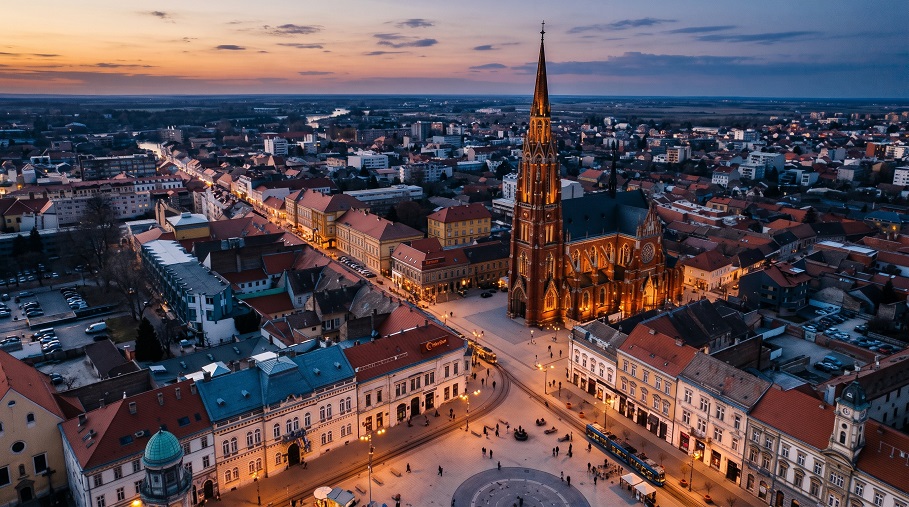
Osijek at a glance
- My priority
- Tvrđa’s streets and square, followed by time beside the Drava.
- If time is short
- Choose a coherent walk rather than rush between the fortified quarter, Upper Town and another destination.
- Walking and access
- Check historic paving, distances and the entrances to any museum or church you want to visit.
- Somewhere to pause
- A café in Tvrđa or along the river, with lunch treated as part of the visit.
The bridge that went across the swamp
In 1566, Suleiman the Magnificent’s army needed to get north. Around Osijek, the difficulty was not simply crossing the Drava. It was crossing the broad marshland around it.
The Ottoman answer was an extraordinary route linking Osijek and Darda: boats joined across the river, with timber decking supported on piles through the wetlands. Historical descriptions differ on the dimensions, but the crossing extended for several kilometres. It carried an army through a landscape that had made travel a serious obstacle.
That is rather more work than throwing a few planks across a stream. Supplies, people and military equipment needed a usable route, and the crossing became one of the celebrated engineering achievements of its time.
The original structure is gone. Archaeological investigations near Darda have examined timber remains associated with it. Walk beside the Drava today and imagine the wider wetland crossing, rather than look for one enormous surviving bridge spanning the present river.
The fortress that became a neighbourhood
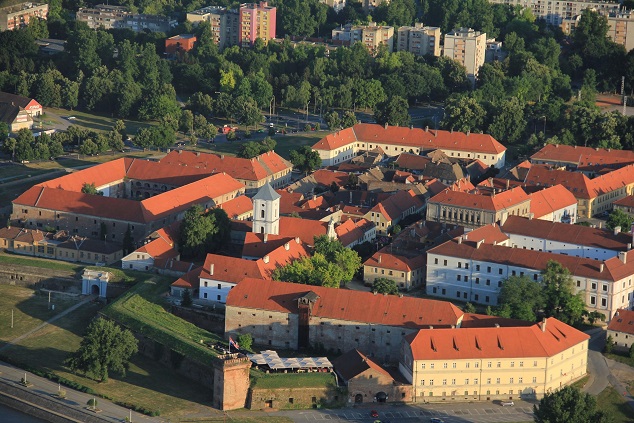
After Ottoman rule ended in Osijek in 1687, the Habsburgs developed a major fortified town. Its early eighteenth-century defences followed an irregular star plan, enclosing Baroque military, civic and religious buildings.
Much of the wall was demolished in the twentieth century. Tvrđa’s surviving streets and buildings, together with remnants by the river and the Water Gate, are what you explore today. It is a historic quarter rather than a complete ring of intact bastions.
And it is a quarter with a life of its own. University uses, cafés and places to meet have replaced much of the old military purpose. A fortress built to keep armies out has become somewhere people choose to linger. That is an improvement I can get behind.
I’d walk the streets as well as the main square. The pleasure is partly in the change of use: buildings created for authority and defence now sharing the day with conversation, coffee and ordinary errands.
The column in the square
The Holy Trinity monument in Tvrđa is also known as the Plague Column. Erected in 1729–1730, it was commissioned by Marija Ana Petraš, whose husband, the fortress commander, had died during the 1728 epidemic.
It belongs to a Central European tradition of monuments connected with plague, protection and remembrance. The saints around it are part of that story, rather than decorative figures added merely to fill a square.
Pause long enough to look at the details. A café table nearby can be an entirely respectable way of appreciating a monument. History does not become less serious because you are sitting down.
The Drava and Upper Town
Osijek sits on the Drava, not directly on the Danube. That distinction matters when planning a river-cruise day: the itinerary destination and the ship’s berth are not necessarily the same place.
The riverfront provides a different pace after the enclosed streets of Tvrđa. If you want to combine the historic quarter with Upper Town, check the distance and available transport rather than assume everything in the guide belongs to one compact square.
The tall spire in the hero image belongs to the co-cathedral of Saints Peter and Paul in Upper Town. It is a different landmark from Tvrđa’s churches. Check visiting arrangements if you want to go inside, and allow time for the journey between the two areas.
Slavonia deserves a place at the table
This is a good place to let inland Croatia introduce itself through lunch. If cured meats or paprika-rich dishes appeal, ask what is local and what the kitchen recommends. Do not assume every red sausage has the same heat.
I’d ask a little about the food rather than simply choose the item whose name looks easiest to pronounce. A useful question can introduce you to more of the region than another hurried stop outside a building.
Keep the day’s practical limits in mind. A leisurely meal is a fine idea when you have the time; it becomes a less convincing one if the coach leaves in fifteen minutes.
Osijek and Vukovar are different visits
These places are often paired on a cruise excursion, but they are separate destinations. Read the route before deciding how much independent time you expect in Osijek.
Vukovar’s recent history deserves attention in its own right. Listen to the guide, allow room for difficult subjects, and avoid treating every stop as another quick photograph. The value of a combined excursion is partly in understanding the differences between the places.
Independent visitors should confirm arrival and return transport before adding extra museums or a long meal. For access needs, ask about the actual walking route and specific interiors rather than rely on a general description of the tour as easy.
A full day in inland Croatia
Allow: One full day for Tvrđa, the Drava promenade and Upper Town. Stay overnight if you want a more relaxed meal or an outing beyond the city. These areas are separate parts of the visit; use local transport when the riverside walk stops being a pleasure.
When: I’d choose late spring or early autumn for combining the fortress quarter and riverfront. Summer calls for water, shade and time indoors around midday. Check seasonal arrangements if you add a countryside or wetland excursion.
Order locally: Fiš paprikaš is a paprika-seasoned freshwater-fish stew; kulen is a spicy cured sausage. The tourist office’s local-cuisine guide gives the context. Ask about spice and ingredients before ordering, particularly if fish bones or hot paprika would make lunch less relaxing.
For river cruise guests
Visiting with Viking?
Included programme: Viking’s published 2027 Passage to Eastern Europe itinerary lists Osijek & Vukovar, including a stop to meet a Croatian family. Confirm the exact route, transport, walking demands and arrangements for your sailing.
Optional, at additional cost: the published programme also lists Croatian Countryside & Wine Tasting and Croatia’s War of Independence. Compare their focus and timing with the included outing before choosing.
Do not assume that a call labelled Osijek means the ship is waiting beside Tvrđa. Confirm your berth, any ship movements, the return meeting point and all-aboard time. A museum visit or particular interior is included only if your booked excursion description says so.
Checked against Viking’s published 2027 programme on 7 November 2026. Your booked sailing confirms availability, inclusions and timing. I work for Viking; this is my own practical guidance.
Explore Passage to Eastern Europe →Explore more along the lower Danube
Planning sources
History and visitor information checked 7 November 2026. Confirm opening arrangements, access and transport for your dates.
What would you recommend in Osijek?
A Tvrđa café, a river walk or something memorable from lunch? Share a useful tip or ask about planning the visit.
Join the conversation below ↓