SUB-GUIDE · ROAD TRIP ON A BUDGET · FUEL + SLEEP + CADENCE
Road Trip Budget: Fuel + Sleep + Cadence Are the Whole Game
I’ve done the “cheap road trip” that somehow turned into a daily stream of snacks, detours, late arrivals, and last-minute lodging. It starts innocently. Then it’s 6pm, you’re tired, and suddenly you’re paying the stress tax on food and beds.
The fix isn’t heroic self-control — it’s protecting three things: fuel, sleep, and your day rhythm. Once those are stable, the budget follows without the trip feeling like punishment.
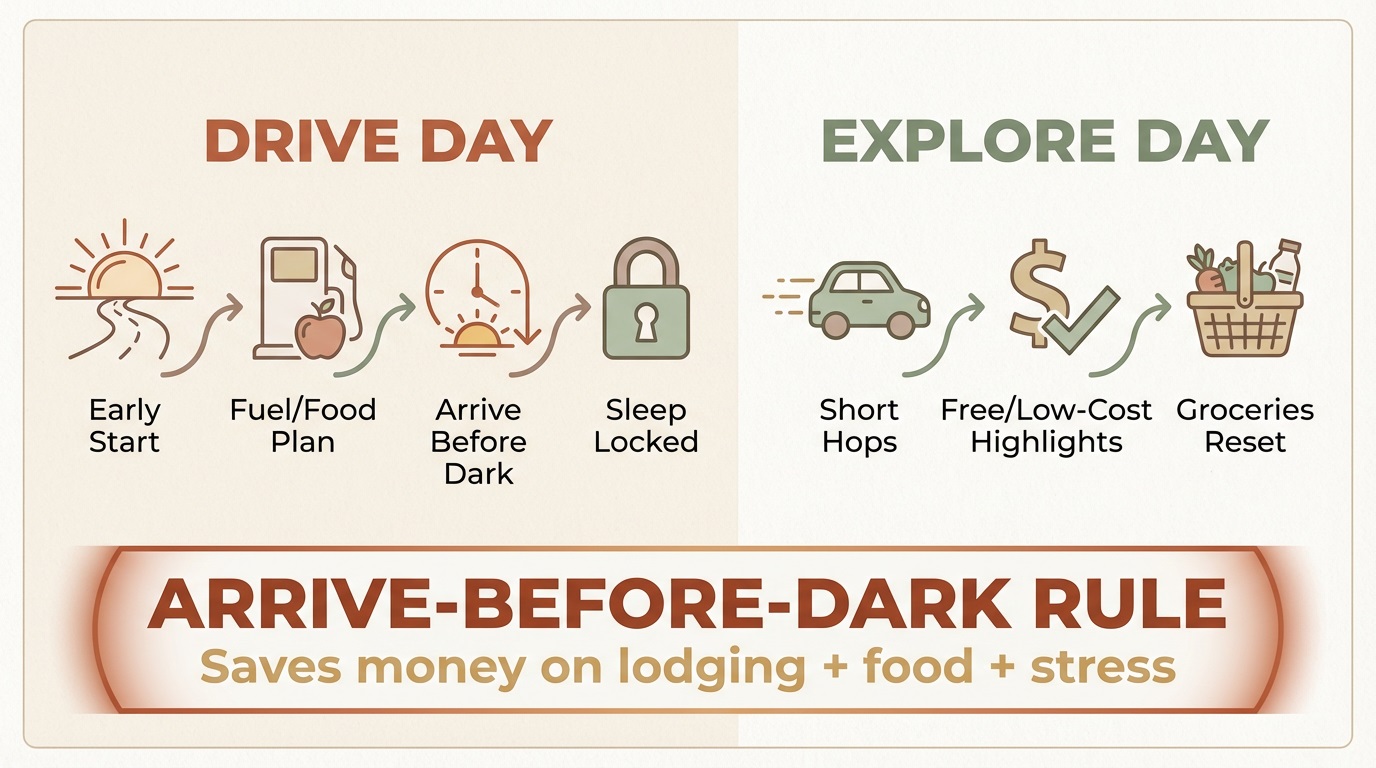
Build your trip around two day-types — Drive Days and Explore Days. Drive earlier, arrive before dark, and keep your sleep plan stable. The budget follows.
- Cadence: Drive Day vs Explore Day (repeat).
- Fuel: smooth driving + correct tyre pressure + lighter load.
- Sleep: a simple lodging strategy beats nightly “best deal” hunting.
Start Here: Budgets Don’t Break on “Big Costs” — They Break on Messy Days
The sneaky leaks on road trips usually aren’t the big-ticket items — they’re the “we’ll figure it out” moments: late arrivals, convenience meals, extra kilometres, and panic-booked beds. So we’re going to solve the upstream problem: your rhythm.
The rule I wish I’d used earlier
- Drive early so you’re not booking sleep when you’re exhausted.
- Arrive before dark (your wallet loves daylight decisions).
- Alternate day-types so fuel doesn’t become your entire holiday.
Rob’s Road Note
The most expensive road trip night I ever had wasn’t a luxury hotel — it was a “we’ll just see” night. We arrived late, the options were bad, and I paid more purely because I was tired. The lesson: plan your sleep while you still have patience.
The Cadence System: Separate “Driving” from “Enjoying”
Here’s the whole strategy in one sentence: your budget improves when you stop trying to do everything every day. Instead, you rotate two day-types. It keeps fuel predictable, sleep stable, and your brain calm.
Rob’s Road Note
When people tell me road trips are “randomly expensive,” it’s usually because every day is a hybrid: long driving + sightseeing + late arrival + “what’s for dinner?” That combo turns small decisions into expensive ones. The cadence fixes that.
Drive Day: The Day That Quietly Destroys Budgets (If You Let It)
Drive Days are where budgets drift — not because driving is evil, but because it creates fatigue. Fatigue creates convenience spending. This structure keeps you out of that trap.
A Drive Day that stays cheap
- Early start: you’re buying fuel, not buying time.
- Fuel + snack plan: one planned stop beats five “quick ones.”
- Lunch is simple: you’re not “earning” a pricey meal because you’re tired.
- Arrive before dark: choose sleep calmly, not in panic mode.
- Two small anchors: a walk + a basic dinner = tomorrow you is cheaper.
Rob’s Road Note
The best “budget habit” isn’t skipping coffee — it’s protecting your arrival time. If you arrive with daylight, you choose calmly. If you arrive exhausted, you choose fast. Fast usually means expensive.
Explore Day: The Day That Makes the Trip Feel Like a Trip
Explore Days protect the whole system. They reduce kilometres, reduce fuel, and help you reset food and admin. Most importantly, they stop you needing “reward spending” to cope.
Explore Day checklist
- Short hops only: treat the car like a shuttle, not your whole day.
- Free first: viewpoints, walks, markets, beaches, neighborhoods.
- Groceries reset: one shop beats daily convenience.
- Admin block: bookings, fuel check, laundry, “tomorrow plan.”
Rob’s Road Note
Explore Days are the “reset button.” If you skip them, the trip turns into a moving treadmill: drive, buy food out of fatigue, sleep wherever, repeat. Add one Explore Day and everything gets easier.
Fuel Rules: The Boring Wins That Actually Matter
I’m not going to pretend you can “hack” fuel prices. But you can absolutely control consumption. These are the small, unsexy habits that stack up on a long drive.
Check tyre pressure
Under-inflated tyres increase rolling resistance. It’s the simplest “before you leave” win.
Drive smooth, not fast
Hard acceleration and braking are expensive. Smooth is calm… and cheap.
Lighten your load
Old gear, extra “just in case” items, roof clutter — it all adds up in fuel burn.
Stop adding “bonus kilometres”
The cheapest kilometre is the one you don’t drive. Cadence beats detours.
Don’t skip the basics
A poorly running car burns fuel (and money) in the background.
Plan for price swings
Fuel isn’t stable. Your plan should be.
Sleep Strategy: Where the “Stress Tax” Hides
On road trips, sleep isn’t just “a bed.” It’s the thing that decides how you eat, how you drive, and whether you spend money to compensate for exhaustion. So instead of hunting “the best deal” every night, use a simple lane strategy.
The “pin nights” rule
If you’re traveling on weekends, holidays, or near events, pre-book the nights that are likely to spike (your “pin nights”). Then keep the rest flexible. This avoids panic-booking — which is basically paying a stress tax.
Rob’s Road Note
I’ve never met a traveler who regrets booking a “pin night” early. I’ve met plenty who regret rolling in at night hoping for a bargain. Bargains and exhaustion don’t usually meet.
Road Trip Budget Formula (Simple, Usable, Not Spreadsheety)
You don’t need a calculator to stay in control. You need a few buckets, a buffer, and the discipline to protect your cadence. Here’s the simplest way I’d estimate it.
Your 5 buckets
- Fuel (plus a small swing buffer)
- Sleep (the lane strategy)
- Food (defaults + one planned joy meal)
- Activities (mostly free + one paid “wow”)
- Buffer (tolls, parking, “oops,” weather changes)
Example Road Trip Budgets (Weekend, 7 Days, 14 Days)
These are not promises — they’re models to show how the system behaves. Your destination changes the numbers, but the rhythm stays the same. Focus on what each example protects: fuel, sleep, and cadence.
Big win: avoid late arrival lodging.
Big win: groceries + stable sleep baseline.
Big win: fewer kilometres and fewer “move taxes.”
How to “pull it cheaper” without ruining the trip
- Shorten Drive Days by 10–20% (fatigue drops fast).
- Add one Explore Day (fuel drops, and spending becomes calmer).
- Replace one restaurant meal with a planned picnic/market meal (still fun, cheaper).
- Use the sleep lanes: keep comfort nights planned, not reactive.
FAQ: Road Trip on a Budget
What’s the best way to budget fuel for a road trip?
How many hours should I drive in a day on a budget road trip?
Is it cheaper to book accommodation ahead or go last-minute?
What’s the biggest money leak on road trips?
Next Steps: Keep It Simple (and Actually Enjoy the Drive)
If you do one thing today: build your route around the cadence system. Then protect sleep. Once those two are stable, fuel and food fall into place with much less effort.
Want the full cheap-travel playbook?
Return to the main guide and pick the sub-guide that matches your trip type.
Join the conversation
What blows your road trip budget first — fuel, food, or “we’ll just figure it out” nights? Drop a comment so other readers can learn from your wins (and your hard lessons).