SUB-GUIDE · CITY BREAKS · 48–72 HOURS · SPEND LESS WITHOUT FEELING CHEAP
Cheap City Breaks: A Weekend Budget Plan That Still Feels Fun
Here’s how city breaks usually go: you land a little late, you’re hungry, your phone’s at 12%… and suddenly you’re paying “just this once” prices for taxis, snacks, and last-minute tickets. So on this page I’m giving you the calm version: a simple 48–72 hour plan, a few decision rules, and the exact spots where people overspend without noticing.
A cheap city break is less about “finding bargains” and more about preventing drift: lock two anchors early, pick one planned splurge, and build the rest around walkability.
- Book first: sleep location + airport/train transfer plan.
- Save best: food defaults + free “core city” wandering.
- Splurge wisely: one highlight you’ll actually remember.
Start Here: The Three Traps That Make “Cheap Weekends” Expensive
Most city breaks don’t blow the budget because you’re reckless. They blow it because cities create three little traps: convenience spending (taxis, overpriced snacks), location mistakes (far from everything), and last-minute booking (you pay for panic). We fix those first, and then the rest feels easy.
My “Weekend Spine” (keep this stable)
- Sleep: choose a walkable base (or transit-simple).
- Move: lock your airport/train transfer plan early.
- Food: set 2 cheap defaults + 1 planned joy meal.
- One splurge: choose one highlight you’d regret skipping.
Decision Rules: Keep It Cheap Without Turning It Into Homework
These rules are for tired-you. Because once you’re hungry, slightly lost, and your phone is on 12%, you will pay for convenience. So instead, we give tired-you a plan.
What to Book First (So You Don’t Pay for Panic)
If you only lock two things, your weekend gets cheaper automatically: sleep base + transfer plan.
Location first, price second
A “cheaper” stay far away is often more expensive once you count transport + time.
Know your airport/train plan
Transfers are where “cheap weekends” quietly die: late arrivals + taxis + surge pricing.
Book the one thing that sells out
Timed entries and popular experiences: book early, and let the rest stay flexible.
The 48–72 Hour Weekend Plan (Use This)
This is the click-and-go structure that stops budget drift while still letting the trip breathe.
Day 1: Arrive + anchor the basics
- Check-in + drop bags (don’t carry your stress around).
- Neighborhood loop: food, transit stop, one landmark.
- Cheap default meal (simple and fast).
- Early night if you’re tired—tomorrow gets cheaper.
Day 2: Big day + one planned splurge
- Free core city time first (parks, old town, markets, neighborhoods).
- Booked highlight (the one you chose on purpose).
- Joy meal (planned splurge, no guilt).
- Sunset stroll (free, memorable, underrated).
Day 3 (if you have it): Reset + leave clean
- Simple breakfast (avoid “where should we eat?” chaos).
- One last free loop (one neighborhood, one market, one viewpoint).
- Transfer time padded so you don’t pay for panic again.
Where to Save (Without Feeling Like You’re Missing Out)
Where to Splurge (Once) So the Weekend Still Feels Special
One signature experience
A museum, a show, a viewpoint, or a tour—something you’ll remember.
One joy meal
Not every meal. One. Then keep the rest simple.
Better sleep if your week has been brutal
Quiet sleep is sometimes the cheapest upgrade you can buy.
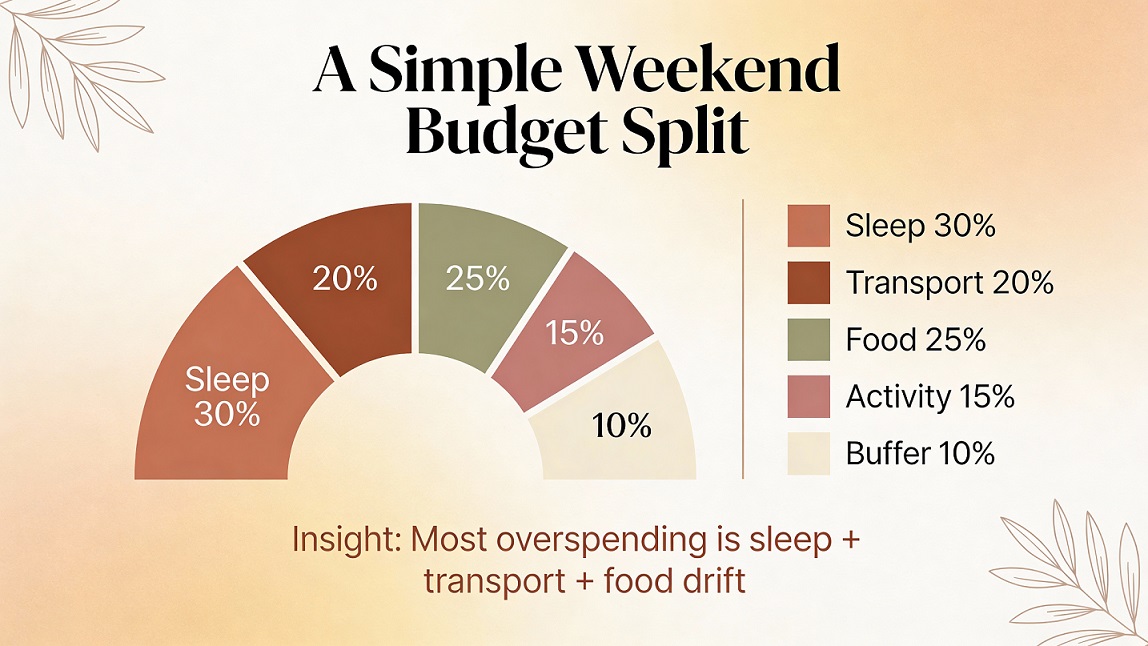
One Visual That Helps: A Simple Weekend Budget Split
This isn’t decoration. It’s a reality check: weekend overspending is usually sleep + transport + food drift.
Avoid Fees: The Little Leaks That Make a Weekend Expensive
Two Mini Examples (So You Can Apply This Today)
Example 1: Classic weekend (2 nights)
- Book first: walkable base + transfer plan.
- One splurge: Saturday highlight + one joy dinner.
- Defaults: bakery breakfast + market lunch.
- Free wins: neighborhoods + parks + viewpoint.
Example 2: 3–4 nights (mini reset)
- Night 1: settle + neighborhood loop.
- Day 2: free core city + booked highlight.
- Day 3: “cheap day” + second neighborhood.
- Day 4: light morning + leave clean.
FAQ: Cheap City Breaks
How do I make a city break cheaper without picking a “cheap city”?
What’s the biggest money leak on a weekend city break?
Is it worth buying a city pass?
How far should I stay from the city center to save money?
Next Steps (Keep It Simple)
If you want to make this real today: pick your base, pick your one splurge, and decide your two food defaults. That’s enough structure to keep the weekend cheap — without turning it into homework.
Want a calm, cheap weekend?
One plan, one splurge, two defaults. Then enjoy the city like a human.
Join the conversation
What’s your biggest city-break budget leak — food drift, taxis, or “one more ticket” syndrome? Drop a comment so readers can help each other (I’ll chime in when I’ve got something useful to add).