MAIN GUIDE · TRAVEL PLANNING · CALM DECISIONS
Plan for Travel: A Calm, Practical Guide to Planning Better Trips
Plan for travel properly and the whole trip begins to feel lighter. Not perfect. Not military-grade. Just clear enough that you stop panic-booking, stop second-guessing every choice, and start building a trip that actually fits your time, money, energy, and travel style.
I have seen people turn travel planning into a small unpaid job. I have also seen people do the opposite and “wing it” so hard they end up paying the FOMO Tax in missed trains, wrong hotels, and exhaustion. This guide sits in the useful middle.

Quick Overview
What this guide helps you do
This page helps you plan a trip in the right order. Instead of starting with a dreamy destination and then trying to force your life around it, you begin with what is real: your time, your budget, your energy, and the kind of trip you actually want.
Once those pieces are clear, choosing where to go becomes much easier. More importantly, your trip starts to feel like something you can enjoy, not something you have to survive.
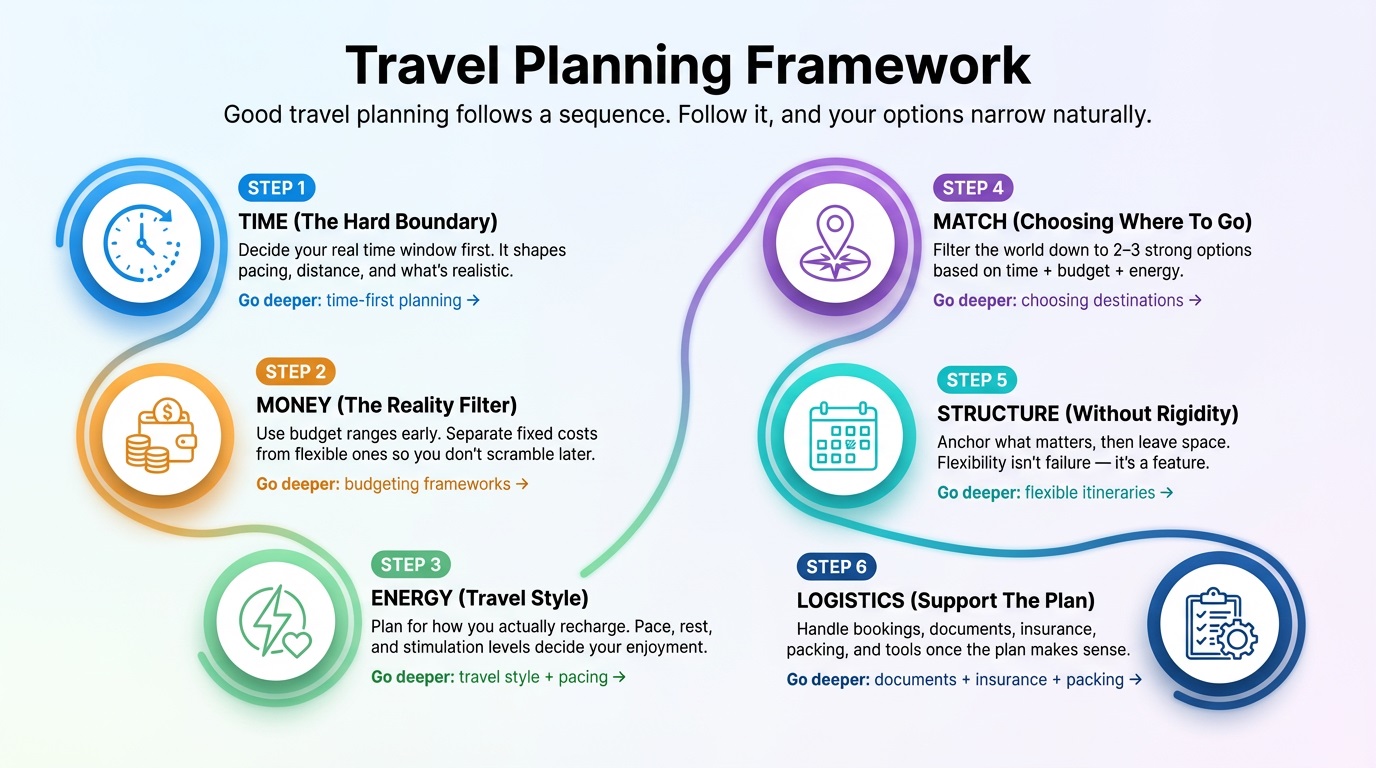
The simple idea
- Time decides what is realistic.
- Money decides what is sustainable.
- Energy decides what is enjoyable.
- Destination fit decides where to go.
- Structure decides what to anchor.
- Logistics make the plan work in real life.
The real problem
Why travel planning feels harder than it should
Travel planning gets messy because most people start in the wrong place. They begin with the fantasy: Paris, Japan, Egypt, a cruise, a train journey across Europe, three countries in nine days because “we are already there.”
I understand the temptation. Travel begins with sparks. However, a spark is not a plan. A plan has to survive airport queues, tired legs, hotel check-in times, budgets, weather, medication, luggage, family opinions, and the small matter of human energy.
Rob’s rule: if planning feels stressful, you are usually trying to solve logistics before you have solved the shape of the trip.
So before you open fourteen tabs and convince yourself every hotel is either too expensive or haunted, slow down. We are going to put the decisions back in the right order.
The planning order
The calm way to plan for travel
This is not a course module. It is the public version of the planning order I would give any sensible traveller before they start throwing money at bookings.
Start with time
Time is the hard boundary. A three-night city break, a two-week holiday, and a six-month journey are different animals. Do not make them wear the same jacket.
Read more about time-first planningSet a budget range
You do not need a perfect spreadsheet on day one. You do need a rough range, so the trip does not quietly become a financial ambush.
Explore travel costs and budgetsKnow your travel energy
Some people recharge in museums. Some need cafés, quiet mornings, or a beach day where nothing “important” happens. Plan for your real self.
Understand travel stylesChoose the right destination fit
The best destination is not always the famous one. It is the one that fits this trip, this budget, this season, and this version of you.
Browse destinationsBuild structure, not a prison
Anchor the things that matter: flights, first nights, key experiences, transfer days. Then leave enough space for life to behave like life.
Plan flexible itinerariesHandle logistics last
Documents, insurance, packing, transport, apps, and confirmations matter. But they work best after the trip shape is already clear.
Go to logistics and transitDifferent trips, different rhythm
How planning changes by trip type
The planning order stays the same, but the emphasis changes. A short trip needs restraint. A cruise needs transition planning. A long trip needs sustainability.
Short Trips
Be ruthless about distance. A short trip is not the place to prove your stamina.
Plan calmer short trips →Cruises
The itinerary is fixed, so your real planning is cabin choice, arrival timing, excursions, and recovery space.
Explore Viking Cruises →Sabbaticals
Longer travel needs rhythm, reset weeks, money discipline, and permission not to sprint.
Read about semi-nomad travel →Long Trips
Small mistakes compound. Plan loosely, but build strong foundations.
See long-term travel budgets →Timing
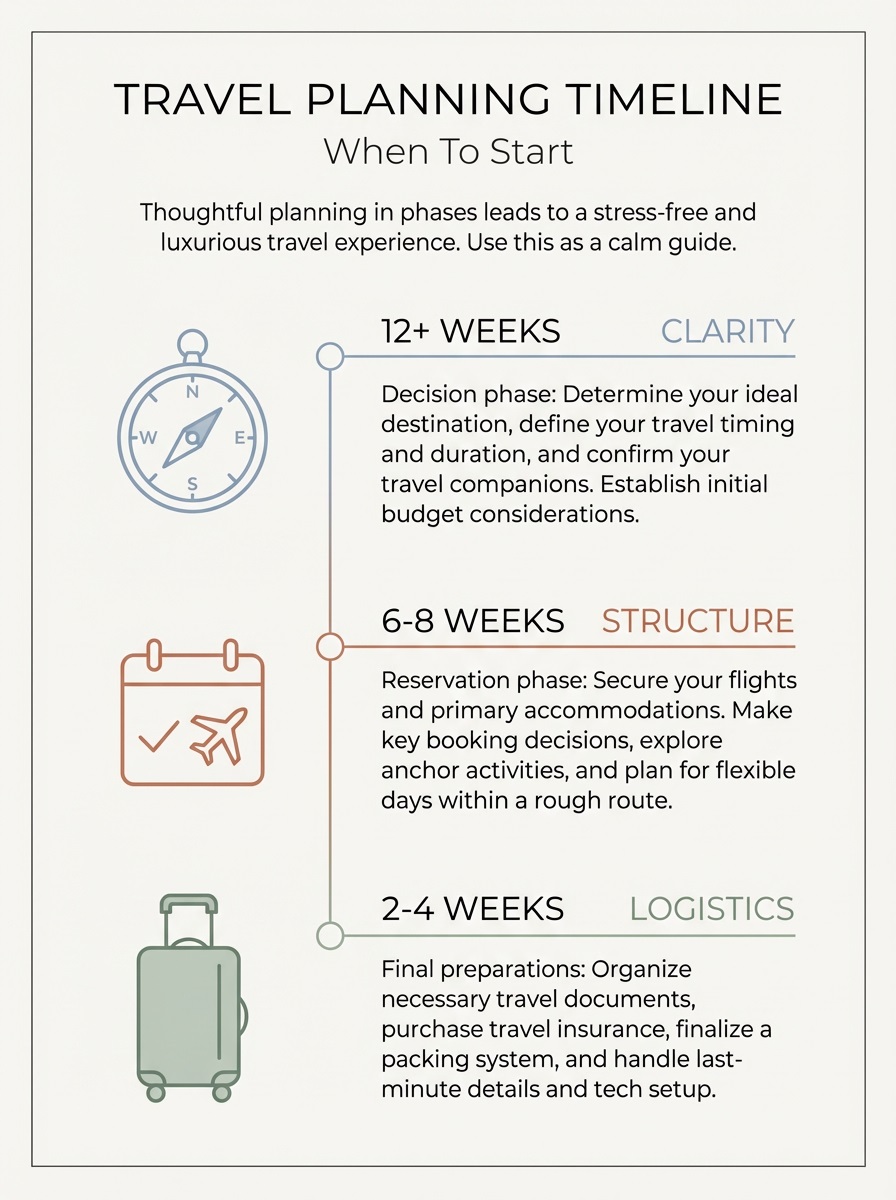
A simple travel planning timeline
Planning works best in phases. You do not need to do everything today. In fact, trying to do everything today is often how people end up with the wrong bookings and a headache.
Avoid the obvious traps
Common travel planning mistakes
Most travel planning mistakes are not dramatic. They are small decisions made too early, too fast, or for the wrong reason.
Choosing destination before time
It sounds exciting, but it can create a trip that is physically impossible or emotionally exhausting.
Overpacking the itinerary
A schedule can look magnificent on paper and feel like a hostage situation by day four.
Ignoring energy limits
You are not planning for an imaginary superhero version of yourself. You are planning for you.
The FOMO Tax
Trying to see everything costs money, energy, and enjoyment. Pay less tax: slow down.
Panic-booking
Booking can feel productive, but locking in the wrong thing early is expensive confidence.
No breathing room
Flexible time is not wasted time. It is what keeps a good trip from collapsing under its own ambition.
Tools and checks
Use tools, but do not let tools run the trip
Travel planning tools should reduce stress. They should not turn your trip into a second career in app management. Use them to support clear thinking, not replace it.
Want the deeper path?
Where the World Travel Course fits in
This page gives you the public planning framework. If you are building a bigger journey — months away, major life change, sabbatical, retirement travel, or a proper world-travel chapter — the course goes deeper.
That is where the planning becomes more structured: mindset, money, route design, preparation, travel style, culture, health, and coming home. In other words, the course is the workshop. This page is the doorway.
Where to go next
Choose your next planning step
Do not open twenty tabs. Pick the next useful decision and move from there.
Destinations
Find the right place once your trip shape is clearer.
Browse destinations →Travel Inspiration
Reconnect with the spark before turning everything into logistics.
Find the spark →Transit & Comfort
Make the movement part of travel smoother, calmer, and less punishing.
Plan the practical bits →Viking Cruises
Explore cruise planning with an insider’s view of what matters.
Visit the Viking hub →Q & A
Travel planning questions people actually ask
Start with time. Not destination, not hotels, not flights. Once your real time window is clear, your options narrow naturally and the planning becomes less noisy.
A calm order is: time, budget range, energy and travel style, destination match, structure, then logistics. Most stress comes from doing those steps backwards.
Short trips may only need a few weeks. Bigger trips benefit from months. The key is to plan in phases: clarify first, structure next, book when grounded, then handle final preparation.
Yes. Overplanning removes flexibility and can make the trip feel like a checklist. Good planning creates enough structure to feel safe and enough space to enjoy the unexpected.
Decide your time window, budget range, and travel energy first. Then compare two or three destinations against those limits. The right destination is the one that fits the trip you can actually take.
Join the conversation
What part of travel planning gives you the most trouble: choosing where to go, deciding what to book, building the itinerary, or trusting yourself to start? Drop a comment. I read them, and the patterns often become new guides.