Free Spirit Travel
Free Spirit Travel
Around The World With Rob
Free Spirit Travel

Tokyo: The Cat Looked Straight at Me

A city of quiet carriages, noisy streets and a very large feline with excellent timing.

This Tokyo travel guide begins with summer heat, a remarkably quiet train and a cat the size of a bus. Follow my first impressions through Shinjuku, Shibuya, Asakusa and the city’s food stops, with practical advice on transport, small hotel rooms, etiquette and the less photogenic realities of a first visit.

By Rob Wheatley – Program Director & traveler.
Updated 22 October 2026

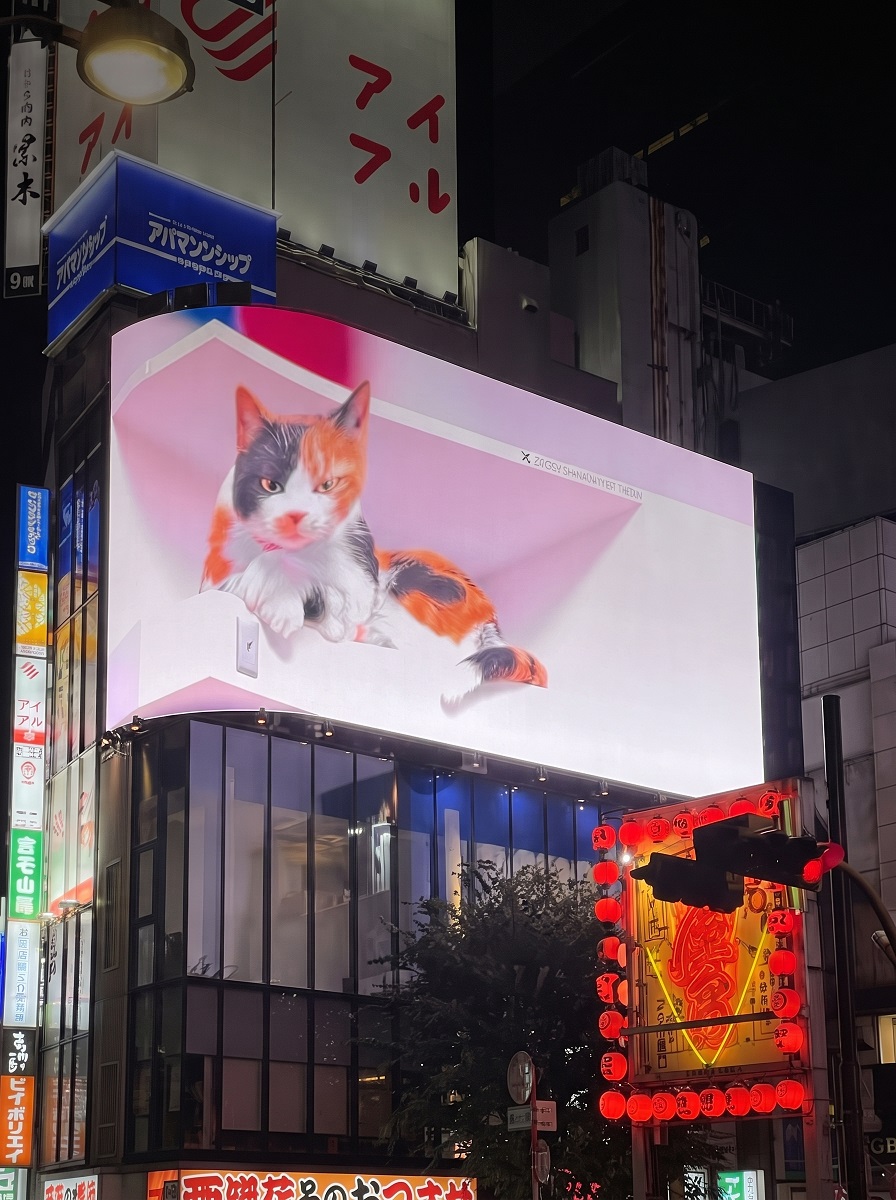
Giant calico cat on the curved screen above Shinjuku streets at night

First came the heat

I hadn’t expected the first thing to greet me in Tokyo to be a cat the size of a bus.

But that came later. First there was the heat.

The arrivals doors slid open and the summer hit me like a wet towel. Heavy, thick, and humid enough that my shirt gave up before I’d found my bearings. I’d flown a long way to get here, and for a moment I wondered if I’d made a mistake. Then I remembered that some of my best trips have begun with a complaint about the temperature.

I took the Narita Express into the city. For planning purposes, allow roughly an hour to Tokyo Station and longer for destinations such as Shinjuku. Check the service for your actual stop rather than assuming every major station is an hour away.

I also bought a PASMO card for getting around. Once you’ve topped it up, you tap in and out on compatible trains; the fare is normally deducted as you exit. It is wonderfully convenient, although looking like a local takes a little more than finding the gate.

One important distinction: the Narita Express requires the appropriate limited-express ticket as well as the base fare. A loaded PASMO is not, by itself, your complete airport express ticket. Check JR East’s ticket guidance and PASMO’s instructions before boarding.

The carriage that forgot to make a noise

Then I sat down in the carriage and noticed the silence.

I’ve spent my life around crowds. I’ve herded them, entertained them, and shouted over them. But I’d rarely been in a carriage this full and this quiet. Tokyo is enormous, yet here were all these people apparently pursuing private missions without giving the rest of us a running commentary.

Outside, the buildings grew taller and closer together. By the time I was out in the summer streets, the cicadas sounded like an orchestra tuning up for something enormous.

Of course, not every Tokyo train is a sanctuary. Rush hour has its own ideas about personal space. Still, quiet conversation, headphones and avoiding phone calls make sense when everyone around you is trying to travel in peace.

The hotel room that was a puzzle

My hotel was small. I’d been warned, since Tokyo rooms can be smaller than you’re used to, but being warned and standing in one are different things. Every inch had a job. The desk was also the shelf. I felt like a very large man in a very efficient drawer.

Then came the toilet. I’ll say only this: there were more buttons than on my car’s dashboard, and a fellow traveller had told me there was one I should never press. I pressed nothing. Dignity intact, curiosity postponed.

That was his warning, incidentally, not an official instruction about Japanese plumbing. Read the labels or ask the hotel; bewilderment is optional.

I put my shoes where the shoes went and carried a small towel in my bag. Some public restrooms lack hand-drying facilities, so that little towel earned its space rather quickly.

Before booking, check the room’s floor area, bed dimensions and luggage space. Location matters too, including the walk from the right station exit. My hotel review guide helps you look beyond the flattering photograph.

The first night: a very big cat

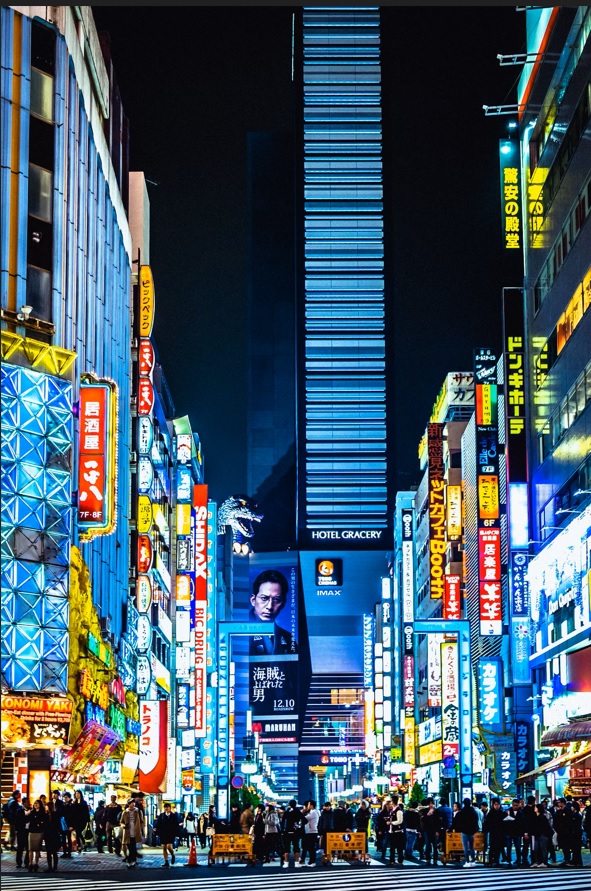
Illuminated signs and crowds along a Tokyo street at nightI went out at dusk. The heat softened, the lights came on, and I followed the crowd towards Shinjuku Station’s east exit.

I looked up, and there it was.

A calico cat, curled and enormous, on a screen the size of a small building. This was the evening version, settling down and tucking its head onto its paws. A crowd stood below with phones raised. A young woman next to me said it looked much bigger and more real than online. She was right.

I moved a few steps to the side, because the 3D effect changes with the viewing angle. Suddenly, the cat seemed to lean out of the screen as if it might step off.

Right then, I decided I loved this city.

The display is Cross Shinjuku Vision, near the east exit. The illusion is part of the fun, but the screen also carries other content. Give it a little time rather than expecting the cat to perform the moment you arrive. Cats, even electronic ones, have standards.

Memory Lane, noodles and a bottle with nowhere to go

I found a vending machine and drank a cold something from it. Then came the small matter of the empty bottle. Public bins can be surprisingly scarce, so I used the appropriate recycling slot beside the machine. Carrying a small rubbish bag is a useful habit; not every bin accepts every kind of waste.

For dinner I went to Omoide Yokocho, Memory Lane, where smoke from the grills drifted between the lanterns. Its narrow alleys near Shinjuku’s west side feel a world away from the giant screens.

The district’s official website describes roughly 80 premises, including around 60 bars and restaurants. Many are tiny, with limited seating. Yakitori, grilled dishes and a drink at a counter are part of its appeal; check menus, prices and any cover charge before settling in.

I slurped my noodles and left no tip. Slurping noodles is accepted, but it isn’t a compulsory performance or a universal way to compliment every meal. And tipping is generally not customary in ordinary restaurants, bars, taxis and hotels.

As for eating while walking, stop somewhere appropriate and enjoy what you bought, especially in markets and crowded streets. It’s considerate practice, not proof that the entire city will gasp if you mishandle an ice cream.

Day one: morning quiet, then Shibuya

At dawn, jet-lagged and wide awake, I went looking for calm before the heat built.

Meiji Jingu was the answer. Just beyond the bustle around Harajuku, the trees closed around me, the gravel crunched, and rows of sake barrels stood along the path. I wrote a wish on a small wooden tablet, as you can there, and I won’t tell you what I wrote.

The shrine opens around sunrise and closes around sunset, with hours changing through the year. Check before an early visit, and remember that this is a place of worship as well as somewhere beautiful to walk.

Later, Harajuku supplied the colour and Takeshita Street supplied the people. Then came the big one: Shibuya.

Crowds crossing the Shibuya scramble beneath advertising screens in TokyoI crossed the scramble with heat rising off the road and screens flashing above me. Later, from Shibuya Sky, the crossing looked like a living circuit board.

Book through the official Shibuya Sky website and read the entry rules for your ticket. Sunset slots are popular, but an entry reservation is not a guarantee of clear skies or an open rooftop. Weather and strong winds can close the outdoor area, so keep expectations flexible.

Day two: old Tokyo and a very good appetite

Next morning I went east to Asakusa. Sensō-ji is Tokyo’s oldest temple, and I went early because crowds and summer heat together are a poor deal. Incense smoke curled over the courtyard while the stalls along Nakamise were beginning to stir.

An early temple visit and a shopping visit are not quite the same thing. Individual shops open on their own schedules, so choose which experience matters more—or give yourself time for both.

Then I ate my way through Tsukiji Outer Market. Seafood is an obvious attraction, but there are plenty of other reasons to arrive hungry. I stopped at a stall to eat and used the little payment tray when one was offered.

The market’s own guidance asks visitors to eat inside the eatery or in the designated space in front of a shop. It’s still a working market; keep entrances and narrow routes clear, ask before photographing people and check business days before making a special journey.

Later, Akihabara turned the volume back up. Arcade games, gadget shops, chimes and jingles: everything the train carriage hadn’t been. Tokyo was clearly determined to offer both settings.

Small things that make Tokyo easier

Carry some yen as well as a payment card. Cards are widely useful, but a small eatery, stall or particular service may still need cash. Payment trays are common, not universal; follow the person serving you rather than treating every transaction as an etiquette examination.

For trains, save the exact station exit closest to your destination. A station name can cover a substantial piece of geography. Also check the last service for your route before extending the evening; “I’ll get the train later” needs a little more precision than that.

For food, look beyond the famous queue. A modest lunch, a bakery stop or a counter meal can give the day its rhythm. My food tourism guide is built around that idea: eating belongs in the journey, rather than being what happens after the sightseeing is finished.

Download useful maps and translation tools, but keep the hotel address separately too. The travel apps guide explains offline limitations before you discover them beside a station with six possible exits.

Not in the postcard: heat, crowds and nightlife risks

Tokyo’s appeal does not cancel its less comfortable side. Summer can be punishingly hot and humid. Plan outdoor visits earlier, take regular indoor breaks and allow water, shade and a slower pace to be part of the day. Your itinerary is not an endurance qualification.

The famous places draw crowds. Large stations can be tiring, rooms can be cramped, and accommodation costs deserve checking before flights are booked. Step-free routes also need planning: the nearest entrance is not always the one with a lift.

Japan has a reassuring reputation for safety, but nightlife deserves judgement. Tokyo police warn visitors about street touts and rip-offs. The US travel advice also discusses drink spiking and robbery risks in entertainment districts.

Choose venues independently, check charges, keep your drink attended and decline invitations from street touts. A bright street and a friendly sales pitch are not guarantees. Check current official advice before travelling, including local emergency and severe-weather guidance.

Three days: a beginning, not a completed Tokyo

Use the shape of my visit as a starting point, rather than a timetable you have to reproduce.

  • Arrival evening: settle in, eat nearby and see the Shinjuku cat if your energy allows.
  • First full day: Meiji Jingu and Harajuku, then Shibuya, with Shibuya Sky if booked and conditions cooperate.
  • Second full day: Asakusa and Sensō-ji, then choose between a food-focused visit and time in Akihabara. Tsukiji and Asakusa are separate stops; allow for travel.
  • Extra time: revisit a neighbourhood, linger over lunch or choose one more attraction that interests you. Resist the urge to add the whole country.

For the wider journey, start with my Japan destination guide and East Asia hub. Tokyo is a splendid introduction, but it isn’t a substitute for the rest of Japan.

Tokyo travel guide: quick questions

Can I use PASMO alone on the Narita Express?

No. You need the appropriate limited-express ticket as well as the base fare. Follow JR East’s instructions for your chosen ticket arrangement. PASMO is useful for many ordinary local journeys.

Where is the giant Shinjuku cat?

On the Cross Shinjuku Vision screen near Shinjuku Station’s east exit. The 3D effect depends on viewing angle, and other content also appears on the display.

Should I tip in Tokyo?

Tipping is generally not customary in ordinary restaurants, bars, hotels and taxis. Follow any clearly stated service arrangements rather than assuming a cash tip is expected.

Is three days enough?

Enough for a first taste, with a few neighbourhoods and room for meals and wandering. It is not enough to see everything. Count arrival fatigue and travel time when deciding what fits.

Is summer a good time to go?

It can be enjoyable, but heat and humidity shape the day. Plan early outdoor visits, indoor breaks and a gentler pace. Consider another season if heat is a serious concern for you.

The last evening

On my final night, I went back to the cat.

It was another summer evening. The air was warm, and the screens had taken over the light. I stood under that calico giant with strangers around me as it yawned and curled up to sleep.

I thought about how this city had spent three days contradicting itself. Silent and loud. Ancient and futuristic. So full of small customs that I’d hesitated over eating in the street, yet warm enough that strangers had stopped to point me the right way.

A cat the size of a bus had looked straight at me, and nobody around me had thought that was odd.

That’s Tokyo, I think. It does both at once, and it makes you love it for the contradiction.

What surprised you first in Tokyo—the quiet, the crowds, the food, or something you couldn’t possibly have planned?

Got something to add?

Thoughtful beats perfect.