Lefkada: Where a Stranger Sniffed Me and I Have Never Been Happier
I first came to Lefkada on a winter bus from Athens and came back in June. Somewhere between the two, a stranger sniffed me, a hire car nearly gave up, and I found my favourite spot by the windmills.
Have you ever sat next to someone on a bus and felt them edge away from you?
Not a dramatic leap. Just a slow, polite curl towards the window, a shoulder turned, a body saying, quietly and very clearly, “I would rather be anywhere else.” And then your own mind takes over. Do I smell? Is my breath bad? Am I somehow toxic?
You run through the checklist, you sit a little straighter, and you try to breathe in a way that doesn’t offend anyone.
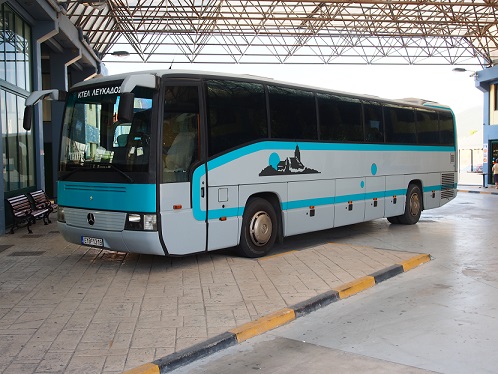
That was me, on a four-and-a-half-hour bus ride to Lefkada.
My first visit was off season, which meant there were no easy options. I flew into Athens, made my way across the city to the bus terminal, and climbed onto a very local ride, with very local passengers and a very long road.
Sitting next to me was an older woman who behaved as though I’d been dipped in something unfortunate. Thankfully, she moved seats after the stop. I felt better. But I wasn’t comfortable, and I stayed convinced I must be toxic in some way. It’s a horrible feeling.
By the time I reached Lefkada, I was exhausted, and I sat waiting for a buddy of mine, who lived there, to come and fetch me. Meanwhile, a young Scottish woman was sitting nearby, about to head back to Athens. We got talking about the island. It was my first visit. It was her eighth. Eventually, the conversation drifted to my curious bus ride, and she smiled.
A second opinion in Lefkada
Then, without an invitation, she stood up, walked over, and sniffed me.
“Ye dinna hum,” she announced, in an accent I had to work hard to follow. “Ye smell fine… That’s a bonnie aftershave, fit kind is’t?”
I worked out she was asking what I was wearing, so I told her. Gio by Armani. She nodded, went back to her seat, and added, “Ah’m fair keen on it.”
I smiled and thanked her. Honestly, it was more relief than politeness. I wasn’t stinking up the bus after all.
Ivor, and an island holding its breath
Just then, Ivor’s car pulled up, and I was still grinning like an idiot.
Ivor is a mate from South Africa, and we hadn’t seen each other in a while. He’d moved to Lefkada a few years earlier with his wife Laura and the kids, and this was my chance to see what had lured them away from home.
A ten-day discovery visit, I called it. After all that, seeing a familiar face after that bus ride was better than any hot meal.
Over the next ten days, Ivor showed me Lefkada in winter. And let me be honest, winter in Lefkada is quiet. Properly, wonderfully, startlingly quiet.
Very few places were open, the beach bars were boarded up, and the island felt like it was holding its breath until summer. No crowds, no queues, no hurry. Just the sea, the hills and locals with all the time in the world for a chat.
And I loved it. Completely. That’s the thing about seeing a place out of season. You meet its heart before you meet its good looks. By the time I left, I knew I’d be back.
Getting to Lefkada
And I was. The following June, I returned, and this time there was no four-and-a-half-hour bus ride. This time, I flew direct to Aktion, the little airport near Preveza on the mainland, just across the water from Lefkada.
Strictly speaking, Lefkada has no airport of its own, and that suits me fine, because Aktion is small, friendly and easy. I stepped off the plane, collected my bag, picked up my hire car and was on the road in minutes.
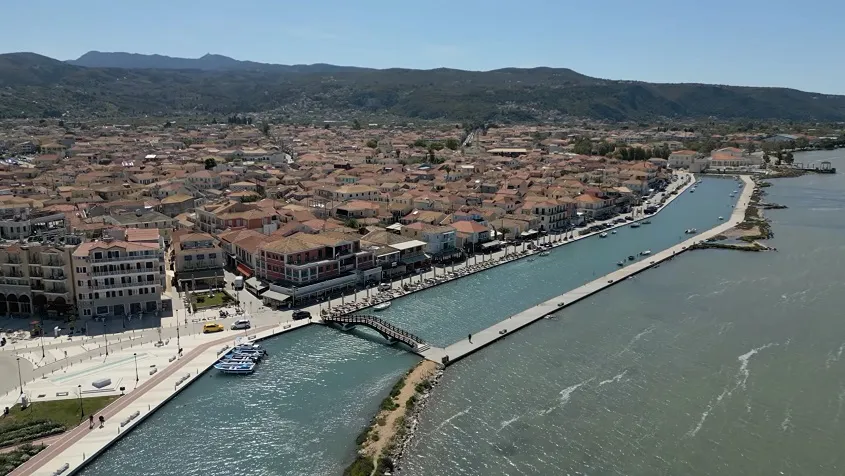
From the airport, allow roughly twenty to thirty minutes to Lefkada Town, plus any wait at the floating bridge. You wind along the coast with the sea flashing between the trees, and then you reach the bridge. It swings open to let boats through, which means you might sit in your car, engine ticking, waiting for a sailing boat to pass.
It’s the only place I know where a yacht can hold up the traffic, and nobody honks. Welcome to Greek time. The boat has the right of way, and your hurry is your own problem.
If you’re coming off season, you can do it the way I first did. Fly to Athens, take a coach from the city’s bus terminal and settle in for about four and a half hours.
Before you book, check the Lefkada regional transport page for coach information. It’s a very local experience. Sit by the window, and wear your best aftershave.
The villa and the hamster
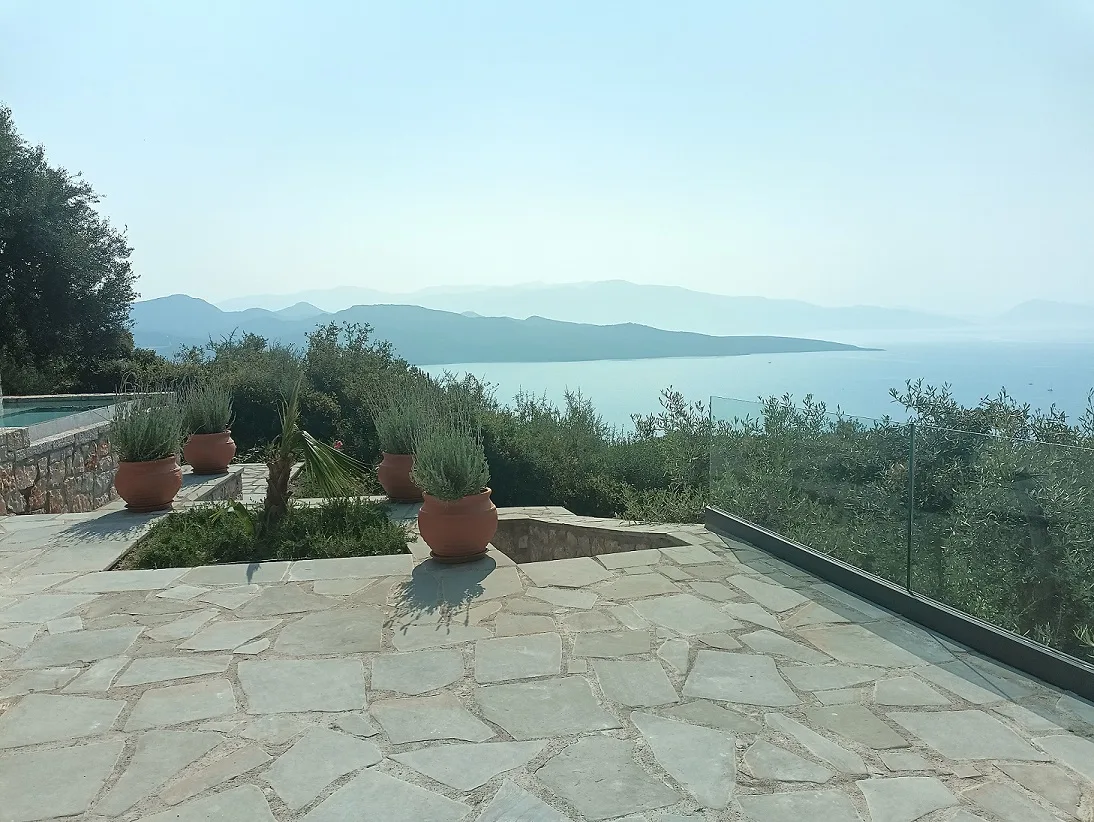
Back to my June return. Ivor had done something special. He’d set me up with a mate of his who owned a stunning, brand-new villa.
Stunning doesn’t cover it. I sat on the patio with a cold drink, looking down over the most beautiful bay I’d ever seen, with the water glowing blue below, and I felt like one of those billionaires you see in magazines. I might even have adopted a confident, knowing expression.
Sadly, the illusion was betrayed by my little hire car, which wheezed and whined its way up the mountain to the villa like a hamster on a wheel.
Even so, every day I rolled up in that tiny car, to the sound of its engine begging for mercy. Nobody was fooled. Not the neighbours, not the goats and certainly not the car.
That’s Lefkada. In winter, it showed me its soul. In summer, it showed me its looks. And in between, a woman from Scotland made me feel better about my aftershave.
Now let me show you the rest of it.
The soundtrack
Lefkada has its own gentle rhythm. Cicadas, relentless and loud, buzzing from the olive trees as if they’re being paid by the hour. Scooters whining up narrow roads.
Church bells ringing across a village, followed by a goat bell, somewhere on a hill. The clink of glasses and the clatter of plates from a taverna, with a bouzouki playing in the background. And the sea, always the sea, slapping against the rocks as if it’s trying to tell you a secret.
While you’re there, learn a few words. “Yia sou” is hello. “Efharisto” is thank you. “Yamas” is cheers. Say them with a smile, and you’ll be treated like a long-lost cousin. “Siga, siga” means “slowly, slowly,” and on Lefkada it isn’t a suggestion. It’s the law.
Lefkada Town
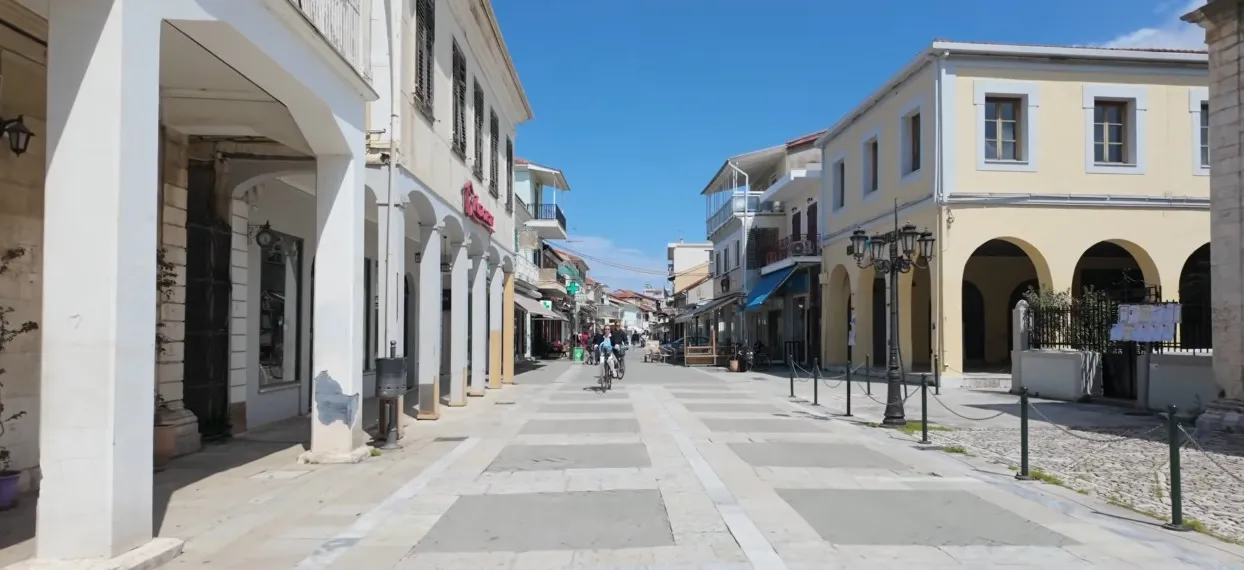
The capital sits at the northern tip, beside the canal and the bridge, with a marina full of yachts and a pedestrian main street lined with cafés, shops and tavernas. The old houses have a curious look, with upper floors clad in painted metal sheets. Those light upper storeys are part of a local building tradition shaped by earthquakes.
After that, wander the narrow lanes, sit in a square with a Greek coffee, and let the afternoon vanish. Nothing is urgent. That’s the point.
The beaches: the real reason you came
Porto Katsiki
The postcard beach, with towering white cliffs plunging into water so turquoise it looks like somebody’s turned up the saturation. You’ll walk down a long staircase to reach it, and you’ll curse it on the way back up. Worth every step. Go early to beat both the crowds and the heat.
Egremni
One of the most famous beaches in Greece. An earthquake in 2015 damaged the old stairway. Since access reports vary, check locally before attempting the stairs. Ask boat operators about current stops and landing conditions. The view from the water is spectacular.
Kathisma
A long, wide sweep of beach with sunbeds, beach bars and a lively crowd. Good for a swim when the sea is calm, and even better for a sunset cocktail.
Agios Nikitas
A charming little fishing village with a pebbly cove, a car-free centre and tavernas that spill down towards the water. Perfect for a slow, lazy lunch.
Milos Beach: my chill spot
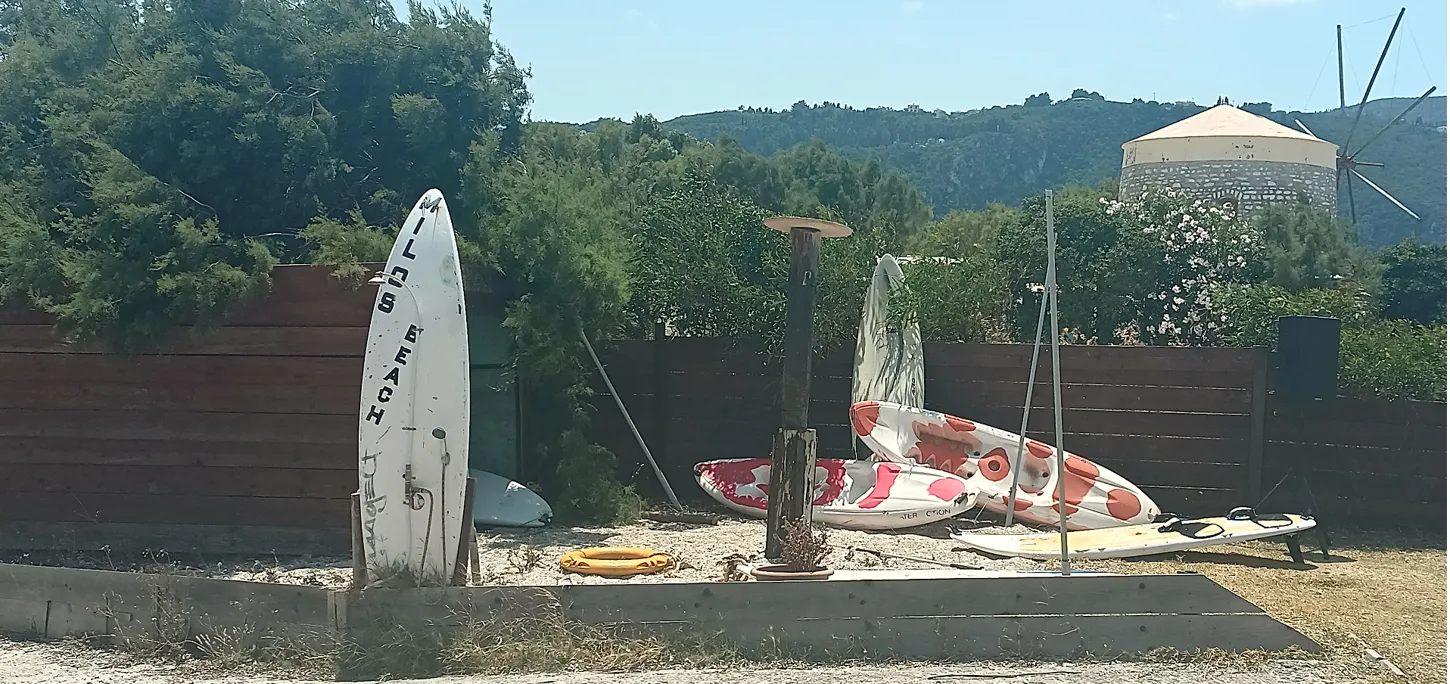
Every trip needs a place where the traveller stops performing and just exhales. In Lefkada, that was Milos Beach, by the windmills at Agios Ioannis, just outside Lefkada Town. If you’re looking it up, look up Milos Beach Surf Resort. There’s also a Mylos Beach near Agios Nikitas, reached by trail or water taxi.
I found it by accident, the way the best places usually reveal themselves, and by the end of the first afternoon it had become my chill spot. In June, it was quiet, with the kind of calm that makes you check whether you’ve accidentally booked a private beach.
There was great music drifting from the bar, beautiful water at my feet, and food that arrived at the table without any fuss and with plenty of flavour. I’d park myself with a cold drink, watch the sea change colour and forget every email I owed.
Meeting Katiana at Milos Beach
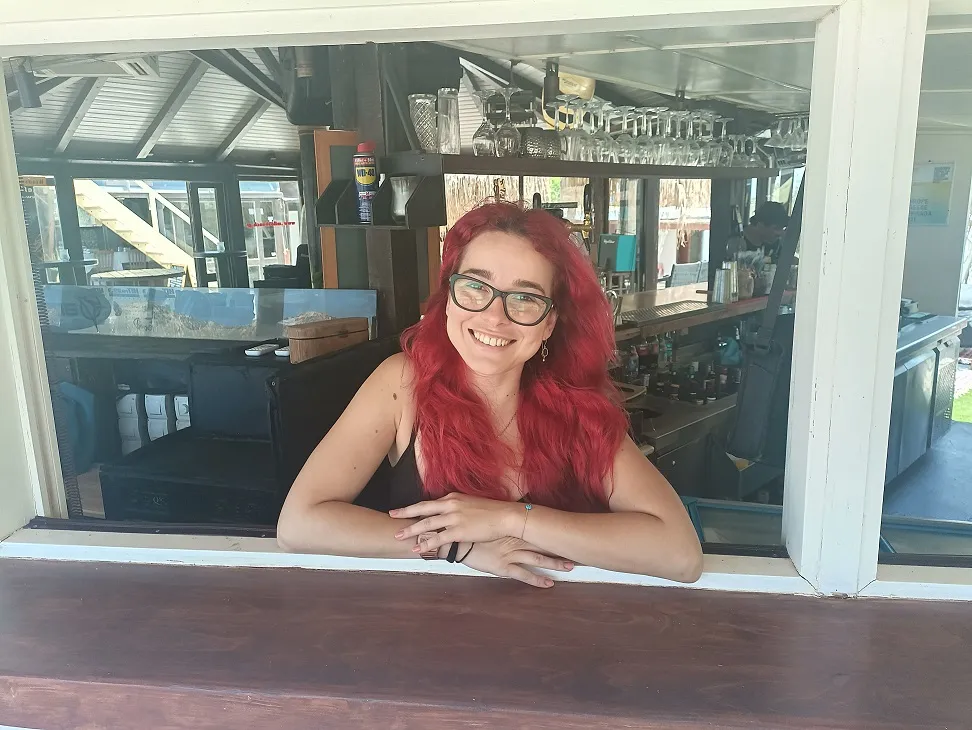
And then there was Katiana. She was effectively the hostess of the place, always smiling and always efficient, and she managed the whole beach with a calm, friendly grace. She was also gracious enough to stop and chat.
Over the next few days, she told me about her life and what it’s really like to live in Lefkada, the version you never get from a guidebook. I love meeting new people and learning about local life wherever I am, and a conversation like that is worth more to me than any attraction. Ask the people who live there, and they’ll show you the island you came for.
And if you’d like a bit of adrenaline with your relaxation, the resort offers kitesurfing lessons. I love kitesurfing, so you can imagine how that went down.
Watching the kites dance above the water, with the sun going down behind them, was half the fun. By the end of the trip, I could have spent every day there. It had such a cool vibe.
If you only get one beach day in Lefkada, head to Porto Katsiki for the postcard, and then come here for the soul.
Nidri and the boat trips
The east coast is where the boats gather. Nidri is the main holiday hub, with a lively waterfront, tavernas and trip boats lined up like taxis. This is where you go island-hopping.
Hop on a boat to Meganisi, a green, peaceful island with little villages and sea caves. Along the way, look out for Madouri, a tiny islet with a mansion that once belonged to a poet.
And sail past Skorpios, the private island once owned by the Onassis family, where Jackie Kennedy married Aristotle Onassis in 1968. You’ll admire it from the deck, like a very polite stalker.
Back on land near Nidri, you can walk to the Dimosari waterfalls. It’s a cool, shaded spot, and how much water you see depends on the season.
As a coastal skipper, I’ll add that the Ionian is a sailor’s paradise. There’s often an afternoon breeze, the anchorages are gorgeous, and the distances between islands are short. Give the forecast its due, especially if you’re new to sailing here.
Vasiliki: windsurfers’ paradise
At the southern end, the bay at Vasiliki is famous for its afternoon wind, which brings windsurfers from all over Europe. Even if you never go near a board, sit with a drink and watch them skim across the water like gulls. It’s very good for people-watching, and you can pretend you’d be better at it.
Sappho’s Leap
Right at the southern tip, the land ends dramatically at Cape Lefkatas, with a lighthouse and a high white cliff dropping into the sea. Legend says the ancient poet Sappho leapt from here, heartbroken over unrequited love. Whether it’s true or not, nobody knows. The view, however, is real, and the sunset from here is one of the finest on the island.
What to eat and drink
- Fresh grilled fish. Pick yours from the counter, ask the price by weight, and eat it with a squeeze of lemon and a glass of cold white wine.
- Grilled octopus. Hung out to dry in the sun, then grilled. Tender, smoky and perfect with ouzo.
- A proper Greek salad. No lettuce, just tomatoes, cucumber, olives, onion and a thick slab of feta on top. It tastes like summer.
- Moussaka and souvlaki. The classics, and always worth ordering.
- Local lentils and local wine. Lefkada is known for its lentils, and the local red grape, Vertzami, makes a full-bodied, interesting wine. Ask for a carafe of the local stuff.
- Loukoumades. Tiny, hot doughnuts drenched in honey. Dangerous.
- A frappé. The Greek iced coffee. It’s cold, foamy and keeps the whole country awake in the afternoon.
Lefkada after dark
Dinner tends to run late, and the bars come into their own later in the evening.
Lefkada Town
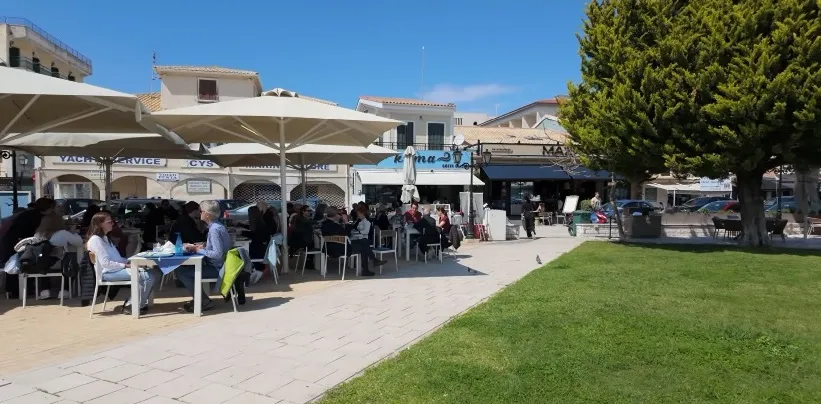
The squares fill with locals, music drifts from the cafés, and the evening stroll, the “volta,” is a ritual. After dinner, follow the crowd, grab a seat and order something cold.
Nidri
Seafront bars, music, and a lively buzz after the day-trip boats return. A good place for a sundowner and a late dinner.
Vasiliki
Beach bars, easy music and a relaxed, sun-baked crowd. Perfect after a day watching windsurfers.
Sunset spots
Kathisma beach, Agios Nikitas and Cape Lefkatas all give you a front-row seat. Bring a drink and watch the sky turn orange and pink.
A few things nobody warns you about
The roads
They twist, climb and drop with enthusiasm. Take blind bends slowly and give yourself time to pull over where it’s safe.
Your hire car
A car makes it easier to reach the beaches, and the hills are steeper than they look. Mine wheezed up a mountain. Pick something with a bit more lung than I did, and book early in summer.
August
Busy and hot. Try late May, June or September for thinner crowds. If you’re going in late spring, expect cooler water.
Winter
Lovely, but quiet. Many places close, so plan for a slow, peaceful visit rather than a party.
The sun
It’s fierce. Hat, sunscreen and water, every time.
Cash
Keep some notes handy for small purchases.
Siga, siga
Embrace it. If your lunch takes two hours, it’s because that’s how long lunch takes.
The verdict
Lefkada has all the things you hope a Greek island will have, and it’s easier to reach than most. Beaches that look unreal, villages that move at the pace of a donkey, and a sea so clear you can count the pebbles. You can swim in the morning, sail in the afternoon and be eating grilled fish by the water at sunset.
It’s also an island that looks after you. A mate who fetches you from the bus, a stranger who sniffs you and sets your mind at rest, a hostess on the beach who tells you how island life really works, and a villa with a view that makes a small hire car feel like a yacht.
Come for the beaches and stay for the sunsets. Finally, when the bridge swings open for a yacht, switch off the engine, wind down the window and enjoy the show. You’re on Greek time now.
Next step
Planning a longer trip? Start with my Greece travel guide to see how Lefkada fits your route.
For another island trip, read my Santorini travel guide. If you’d rather stay with the stories, try Willow and the Ghosts of Crete.