CENTRAL AMERICA • THREE DIFFERENT JOURNEYS
Belize, Panama or Costa Rica? Three Very Different Central American Adventures
Reefs, rainforest and a police ride I hadn’t booked.
By Rob Wheatley – Program Director & traveler
First published 25 December 2018 · Research checked 20 October 2026
Belize, Panama or Costa Rica? Choose Belize for a reef-focused escape, Panama for the canal and city life, or Costa Rica for wildlife and varied landscapes. This is a personal introduction to three Central American adventures, with practical notes on timing, costs and the local knowledge that makes curiosity travel better.
Four crew members and a shortage of local knowledge
Back when I worked as cruise staff, my approach to an afternoon ashore was straightforward: step off the ship, locate a good time and leave responsibility with somebody wearing more stripes.
In Puntarenas, Costa Rica, four of us decided to explore. Two guys and two women from the ship’s dance team. The women had dressed for an afternoon out: fitted skirts, shirts and heels. We had enthusiasm, company and the confidence that comes from not yet having asked enough questions.
What we didn’t have was much understanding of where we were going.
A promenade sounds reassuring. It suggests ice cream, sea views and somewhere pleasant to stroll. Yet as we walked farther, I became increasingly aware of people watching us. The women seemed to attract particular attention, and whatever carefree mood we’d brought off the ship began to drain away.
I couldn’t tell you what everyone looking at us was thinking. My own thoughts, however, were becoming quite clear.
Perhaps we should not be here.
Naturally, we kept walking while discussing this.
When help looks like trouble
About twenty minutes into our exploration, we were all talking about turning back. There is something peculiar about agreeing that something feels wrong while continuing to do it. Nobody wants to be the nervous one, so everybody becomes collectively stupid.
Then a police patrol car approached. Two heavily armed officers. Uniforms that, to my increasingly imaginative mind, looked more military than reassuring.
One of them asked, in broken English, whether we were from the ship. I nodded, suddenly rather less interested in being an independent world explorer.
He motioned towards the back of the vehicle. The door opened. What I understood from his warning was that we should go with them if we wanted to get back to the ship.
Were they really police? Criminals wearing uniforms? Were we being rescued or taken somewhere we would very much prefer not to go?
Fear is an astonishingly efficient screenwriter. Give it an unfamiliar street, a language barrier and two armed men, and it will have a full production ready in seconds.
We got in. They drove us straight back to the ship.
They were genuine police officers. At the pier, they told us not to leave the ship again. We nodded. For once, none of us felt the need to discuss an alternative plan.
One afternoon is not an entire country
I never established precisely what danger the officers believed we faced. I know how exposed we felt, how urgently they intervened and how relieved we were to get back. That is the story I can tell.
I’m South African. I know what it’s like to hear a whole country reduced to its worst headlines. One frightening afternoon doesn’t give me permission to do the same to Costa Rica—or Central America.
Equally, dismissing every warning as an exaggeration would be foolish. We had mistaken being comfortable with travel for knowing where we were.
So when choosing between Belize, Panama or Costa Rica, I start with two questions: what do I want to experience, and what do I need to understand before I go?
The answers lead to three very different adventures. None requires the return journey to be arranged by the police.
Belize: put the reef at the centre of the trip
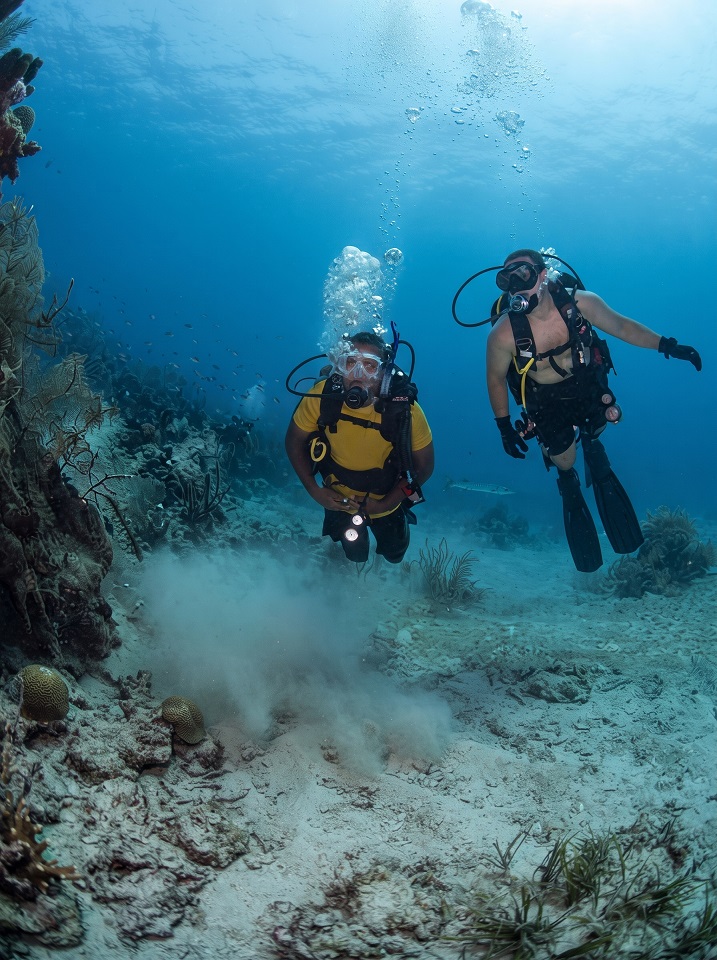
If the holiday in your head involves getting into clear water rather than getting through another museum, Belize deserves a serious look.
This is Central America with a Caribbean coastline, offshore cayes and the Belize Barrier Reef. Caye Caulker and Ambergris Caye are established bases for reef excursions; inland, the Cayo area adds Maya sites, forests and caves.
That combination makes Belize more interesting than a beach-only label suggests. You can build a trip around the sea, then give the inland landscapes a few days of their own.
However, my Puntarenas lesson still applies: a lovely destination name is not a plan. Check where your accommodation actually sits, how you’ll reach it and what the boat excursion includes. For snorkeling or diving, ask about group size, equipment and suitability for your ability.
Use the Belize Tourism Board’s reef information to start narrowing the options. And remember that a cruise call and an island holiday have different clocks: check tender arrangements, transfer times and all-aboard requirements before committing.
Belize’s small print: boats, weather and the bill
The room price is only part of a reef holiday. Add boat transfers, guided excursions, marine fees where applicable and meals at your chosen base. Before comparing two tours, check whether equipment, transport and reserve fees are included.
Also check the currency. The Belize dollar is fixed at two Belize dollars to one US dollar, but prices may be displayed in either. That tiny detail can make a menu look twice as alarming as it needs to.
For timing, the tourism board identifies February to May as the core dry season, with wetter conditions broadly from June to December. Actual boat conditions still depend on wind and weather. A sunny photograph cannot guarantee a calm crossing.
My verdict: choose Belize when the reef is a main reason for going, with enough room in the budget to enjoy it. Don’t choose an island base simply because the room looks cheap and discover afterwards that every activity involves another boat bill.
Panama: a very big canal and the pleasure of small things
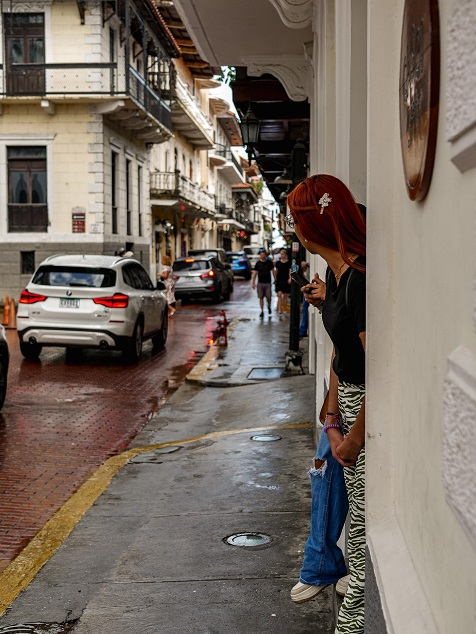
Panama gives you a different starting point: a city, an extraordinary engineering story and room to explore beyond both.
The canal is the obvious attraction, and I make no apology for being impressed by it. Watching a vast ship negotiate a passage built for moving vast ships is somehow much more absorbing than that sentence makes it sound.
You don’t have to transit the canal to appreciate it. The official Panama Canal visitor website lists the Miraflores and Agua Clara visitor centres. Check the current viewing arrangements and transit information before travelling out; ships do not perform on demand because you’ve arrived with a camera.
Then give Panama City time. The skyscrapers and the historic streets of Casco Antiguo show different sides of the capital. The official Casco Antiguo guide is a useful starting point for its squares and landmarks.
Yet one of my happiest memories is considerably less monumental: the fresh fruit. Mangoes, watermelon, pineapple, cantaloupe. Sometimes the great travel revelation is simply that lunch tastes wonderful.
Panama’s small print: choose the trip you’re pricing
A few nights in Panama City and a journey adding islands or remote lodges are different budgets. Price the accommodation, airport transfers, local transport and excursions together. Then add any domestic flight or boat connection needed for the extension you actually want.
Be wary of a promise that Panama costs “half the price.” Half of what, where, and in which season? An attractive comparison is no help if it collapses when you book.
Panama’s tourism authority describes December to April as its dry season, although conditions vary by region. Check the weather for your actual route rather than assuming that the capital speaks for every coast and island.
My verdict: Panama suits a trip where the canal, city life and history are the main draw, with an optional nature or beach extension. Start there, rather than trying to assemble an entire country from places that look close on a small map.
Costa Rica: look up, slow down and let the forest happen
And then there’s Costa Rica, the country that gave me that very unexpected lift back to work.
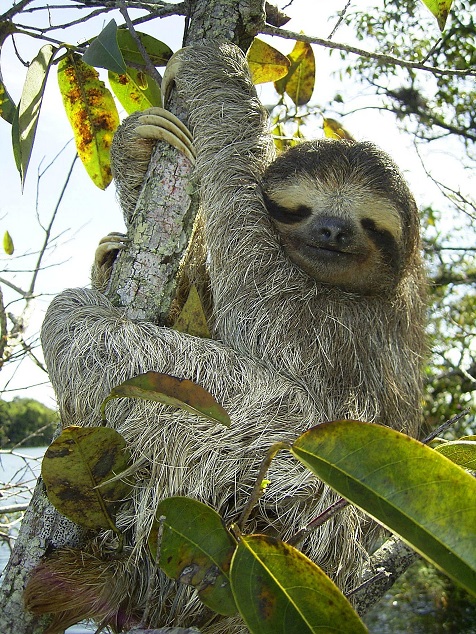
It would be absurd to let one anxious afternoon define a destination with rainforest, cloud forest, volcano landscapes, Pacific and Caribbean coasts, and wildlife that can make standing still feel like an activity.
Sloths are particularly good ambassadors for this approach. A creature that has made a career of taking its time is a useful corrective to the traveler trying to complete three regions before lunch.
La Fortuna and the Arenal area, Monteverde’s cloud forest and coastal parks offer different experiences. Choose the landscapes and wildlife you care about, then investigate the journey between them. A qualified local guide can help with identification and interpretation; sightings are never guaranteed.
Also respect park restrictions. Volcano access can change, and wildlife should be observed without feeding, touching or crowding it. The aim is to see the animal going about its life, rather than make it participate in yours.
My enthusiasm for Costa Rica survives the Puntarenas memory. What changed was my willingness to assume that enthusiasm alone was adequate preparation.
Costa Rica’s small print: the route matters as much as the room
Budget for park admission, guides, activities and transfers, rather than treating the room rate as the whole holiday. A packed adventure itinerary will cost differently from a quiet stay with a few carefully chosen outings.
Nor is there one perfect climate. According to Costa Rica’s official climate guide, the Pacific has more defined dry and rainy seasons, while the Caribbean follows a different rainfall pattern. Elevation changes the experience again. A cloud forest is not a beach with extra trees.
As a broad starting point, December to April is the drier period on much of the Pacific side. The Caribbean has relatively drier spells around February–March and September–October. Check the particular region and the activity you want, especially where wildlife has its own calendar.
My verdict: choose Costa Rica when wildlife and varied natural landscapes are the point of the journey. Give them time. A slower route can reduce both transfer costs and the sensation that your holiday has become a transport exercise.
Which adventure sounds like yours?
| Choose | If your main draw is… | Budget for… |
|---|---|---|
| Belize | Reef outings, island time and an inland Maya-site extension | Boats, reef excursions and transfer connections |
| Panama | The canal, Panama City and historic streets | City transport, visitor centres and any island or nature extension |
| Costa Rica | Wildlife, forests, volcano landscapes and outdoor activities | Parks, guides, activities and travel between regions |
These are starting points, not limits on what each country offers. For the spending plan, use my world travel budget guide.
The safety advice belongs to the route, not the postcard
My police ride belongs to my earlier cruise-staff days. It is a personal memory, not a current crime report or evidence that a specific street is gang-controlled today.
For present-day planning, check the actual places you intend to visit. As checked on 20 October 2026, US advisories place Belize, Panama and Costa Rica at Level 2: exercise increased caution because of crime. Important regional distinctions remain:
- Belize: the advisory says to reconsider travel to Southside Belize City.
- Panama: it says not to travel to the Mosquito Gulf and specified parts of the Darién region.
- Costa Rica: it warns that both petty and violent crime affect visitors.
Read the full current advice before booking and again before departure. A country-level label cannot replace local knowledge about a particular route, time or activity.
For a cruise call, ask the ship’s team or a reputable local operator about the proposed walk, transport and return arrangements. For a longer trip, check arrival logistics and accommodation location. Curiosity works much better when it knows how it’s getting home.
A few questions before you choose
Belize vs Costa Rica: which should I choose?
Start with your main activity. Belize is a strong candidate for a reef-focused holiday, while Costa Rica offers a varied wildlife-and-landscape itinerary. Both have beaches and nature; compare the actual route and total cost.
Panama vs Costa Rica: what is the main difference?
For this comparison, Panama leads with the canal and Panama City, while Costa Rica leads with wildlife and natural landscapes. Both can support a more varied trip, so use your interests rather than a country ranking.
Which is cheapest?
There is no reliable winner without specifying the route, season, accommodation and activities. Compare the whole trip: boats and reef outings in Belize, city transport and extensions in Panama, and parks, guides and transfers in Costa Rica.
Are all three in Central America?
Yes. Belize, Panama and Costa Rica are all Central American countries. This article compares those three rather than covering the entire region.
Can a cruise stop give me a proper introduction?
Yes, if you choose a realistic outing and leave time for transfers and returning aboard. It is an introduction to a place, rather than a complete experience of the country.
Choose the adventure. Ask the local question.
Belize gives you a reason to look beneath the water. Panama makes you watch ships with the concentration you thought you reserved for sport. Costa Rica asks you to look into the trees and wait.
I wouldn’t want fear to take those experiences off somebody’s map. But I’d rather my younger self had spent two minutes asking where to walk than twenty minutes wondering whether to turn back.
The police in Puntarenas gave us a ride, a warning and a rather efficient end to our afternoon ashore. The useful souvenir was the lesson.
I still believe in stepping off the ship and discovering somewhere for yourself. These days, I’m more interested in asking a few local questions first.
It improves the chances of choosing my own transport back.
Which would you choose: Belize’s reef, Panama’s canal or Costa Rica’s wildlife? Tell me what draws you there in the comments.
Before you step ashore
Curiosity: essential.
Local knowledge: also useful.
Ask before you go
- Is this route suitable today?
- How long is the return journey?
- What changes after dark?
- Who is arranging transport?