Athens: The City That Invented Civilization and Then Parked a Scooter on It
Leave Cape Town in June under a sky the colour of wet newspaper, and by the time you’re on a rooftop in Athens the sun’s on your face and the smell of grilled meat is coming up from somewhere below.
That’s the trade. Athens gave the world democracy and some of its best drama. Spend five minutes at a junction and you’ll see it still takes the drama seriously.
Before you go
June is a good month for early starts and long evenings, though Athens can already get properly hot. There’s a familiar feeling when the wind picks up. We have the Cape Doctor at home. The Greeks have the meltemi out on the Aegean. Both make a strong argument for holding on to your hat.
First day: Acropolis early, Plaka and Anafiotika on foot, then dinner after the heat drops.
Getting around: Use the metro for longer hops. In the old centre, leave time for hills, steps and polished stone.
The marble is real. So is the scaffolding.
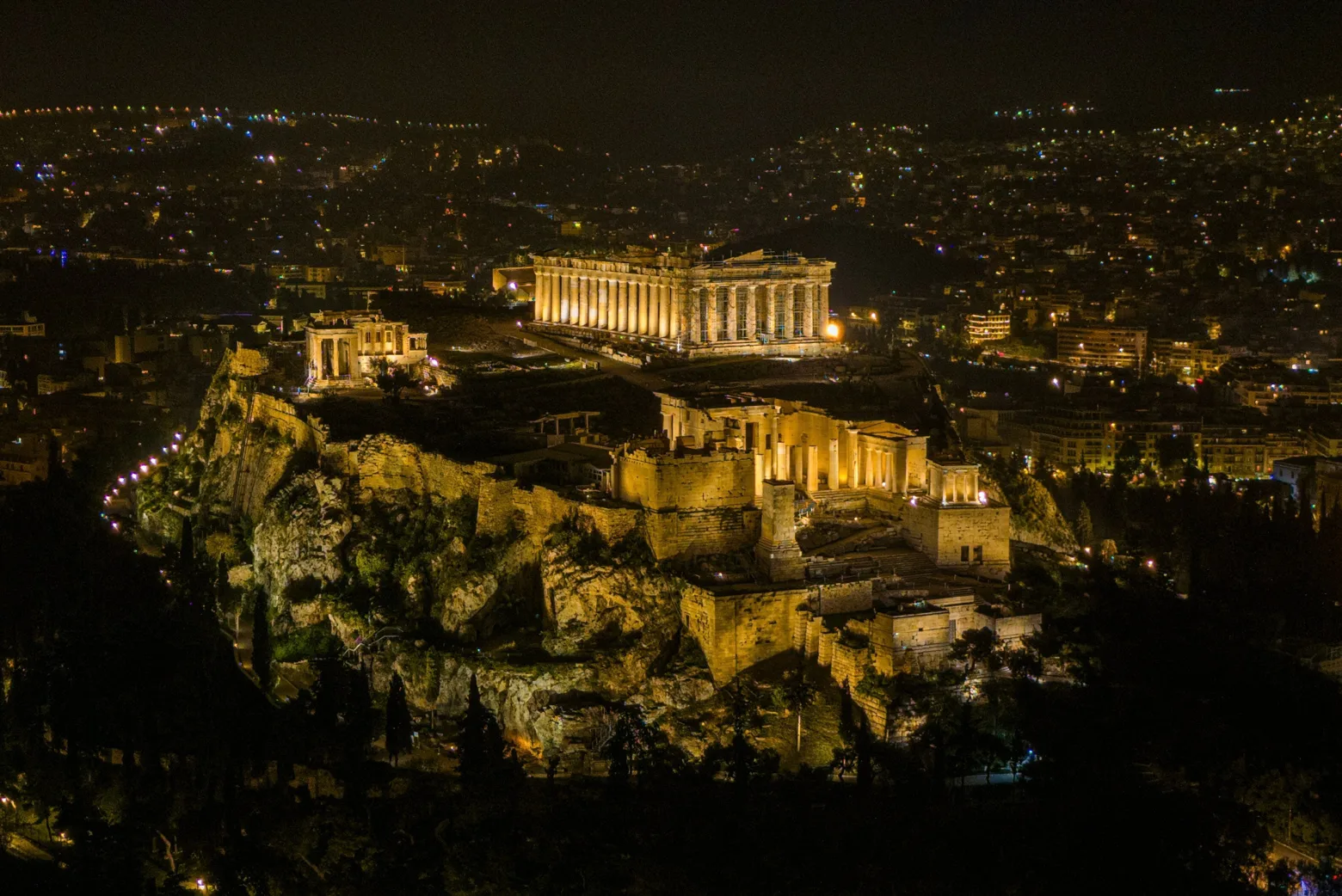
The Parthenon sits on the Acropolis like an old lion on a hill. Your first sight of it does something to your chest that no photograph can quite prepare you for.
Then you notice the scaffolding. The Athenians have been restoring the place for decades, and it still manages to look as if the city below is the temporary bit.
In 1687, during a Venetian siege, a shell struck the gunpowder the Ottoman garrison was storing inside. More than two thousand years of standing on a hill, and then the single worst storage decision in architectural history.
The way the story gets told reminds me of how we South Africans talk about load-shedding: a shrug first, then the full account.
Book an entry slot through Hellenic Heritage. Aim for early morning if you want cooler air and softer light.
Bring water and shoes that grip polished stone. If stairs or uneven surfaces are a concern, check access arrangements before you book.
The soldiers wearing 400 pleats
At Syntagma Square, the Evzones stand guard at the Tomb of the Unknown Soldier in front of Parliament.
The ceremonial fustanella has 400 pleats, traditionally associated with the centuries of Ottoman rule. If that sounds like a lot of ironing, wait until you see the shoes.
The guard changes on the hour. On Sundays at 11 a.m., the larger ceremony brings out the full traditional dress and military band.
Watch the slow, deliberate steps and listen for the shoes hitting the stone. The guard has the patience of a man who has seen every trick a tourist can try to make him blink.
Listen to the city
Church bells argue across the rooftops. Scooters grind up hills in low gear like they’re personally offended.
At dusk, swallows take over. Somewhere below it all, there’s a football argument that sounds as if it might end a friendship and will, in all likelihood, end with coffee.
If you’re here in summer, see what’s on at the Athens Epidaurus Festival. This is a city that’s been taking theatre seriously for a very long time and still likes a night out.
Anafiotika: An island that climbed a hill
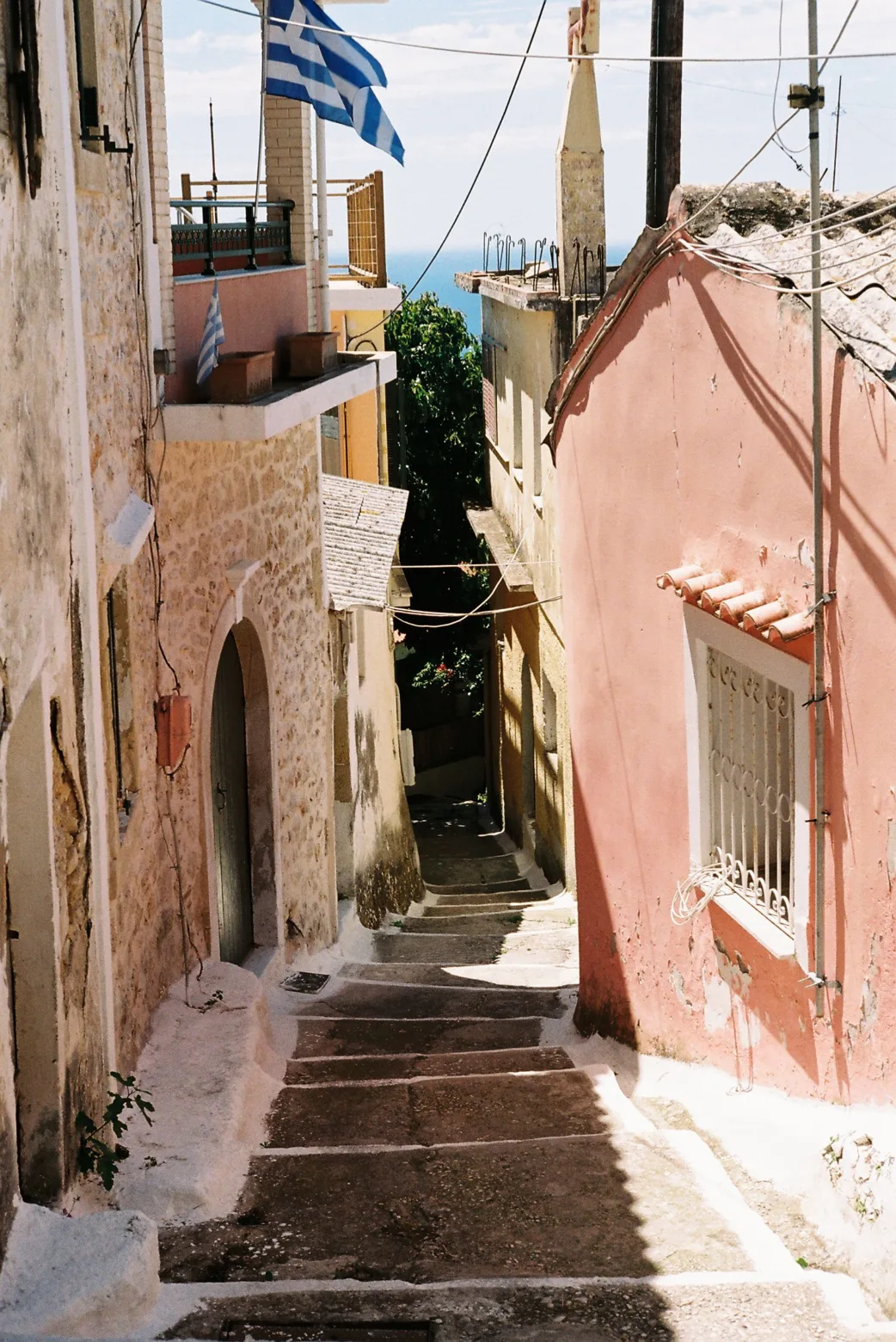
Just below the Acropolis, the streets of Plaka give way to whitewashed houses, blue shutters, bougainvillea and cats who own the steps.
Builders from the Cycladic island of Anafi settled here in the nineteenth century. Being practical islanders, they rebuilt a bit of home on the nearest hill.
Take a turn off the busy lanes and you can find yourself in a passage barely wide enough for two people. These are people’s front doors, so keep the conversation down and give residents room to pass.
The paths are steep in places. For an easier stroll, stay on the lower streets of Plaka.
Find a spot where the lane opens up and look out across the roofs.
From up here, Athens feels like a ruin with a city living inside it.
Democracy happened on that ordinary-looking hill
On the far side of the Acropolis is the Pnyx, where ancient Athenian citizens gathered to debate and vote. The carved speaker’s platform still looks out over the hillside. Picture the arguments, the interruptions and the man who had a point to make and intended to make all of it.
The path is uneven in places, and there’s little shade. Bring water if you’re walking across from the Acropolis. Ask your travel partner to rate your speech on the way back down. Be kind.
The market smells like achievement
Varvakios Central Market, between Omonia and Monastiraki, is where Athens does its shopping and shows off. Whole fish on ice with their eyes open. Octopus arms hanging like laundry. Men shouting prices, men arguing about the fish, men arguing about the shouting.
Go in the morning when the stalls are busy. See what fruit actually looks good that day. If there are ripe figs, buy one and eat it standing up. Consider it a sacrifice to the trip.
The dead are better company than you’d think
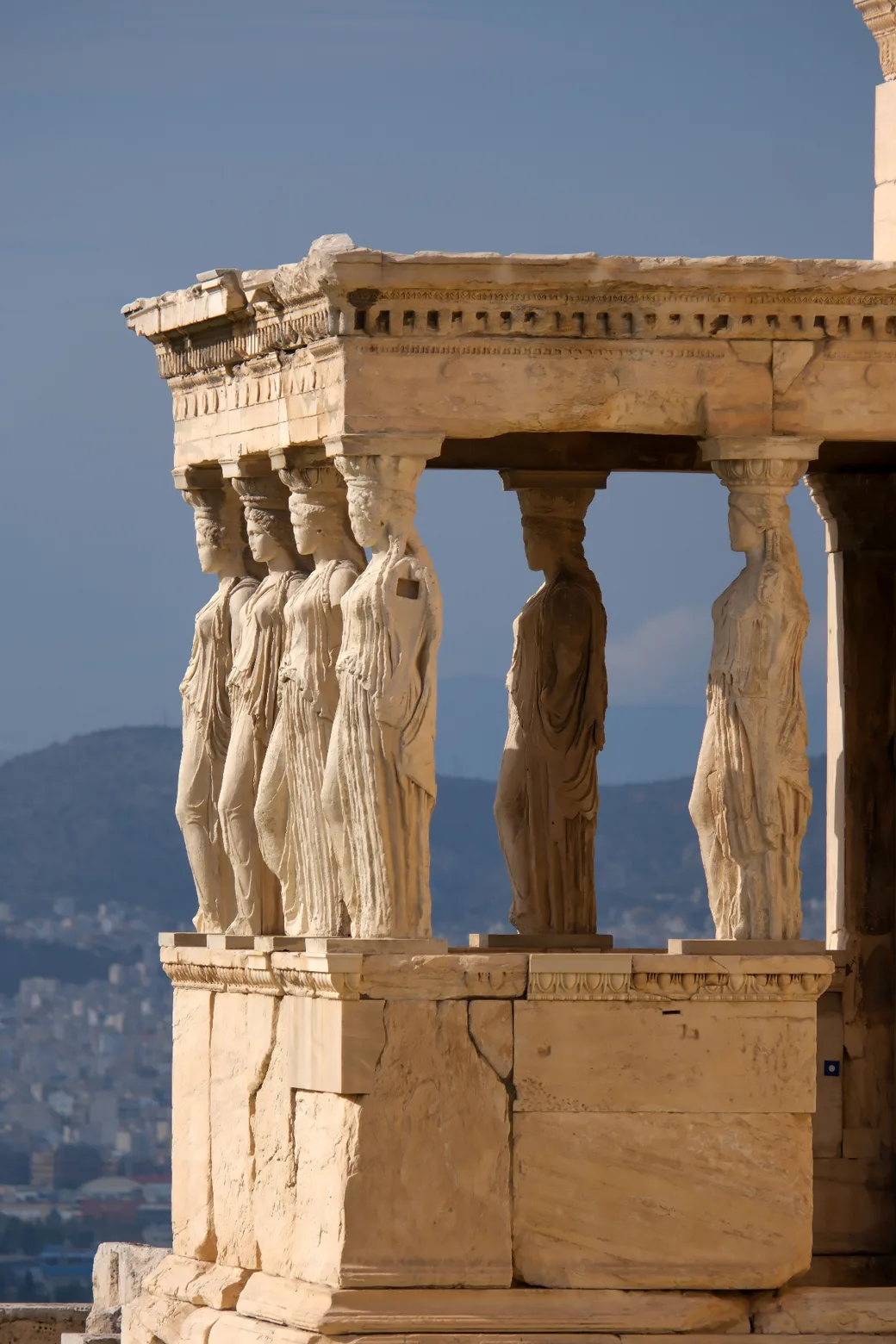
The First Cemetery of Athens, southeast of the Temple of Olympian Zeus, doubles as an outdoor sculpture gallery. Marble angels and family monuments line the paths, and Yannoulis Chalepas’s Sleeping Girl is worth seeking out. She’s carved so tenderly that people tend to go quiet in front of her.
Give yourself time to wander, and keep your distance from anyone visiting a grave. It’s still a working cemetery.
Coffee, invented twice
The Greek frappé owes its origin story to the 1957 Thessaloniki trade fair, where Dimitris Vakondios is said to have shaken instant coffee with cold water when he couldn’t get any hot. A country that gave the world Socrates got one of its favourite drinks by improvising with a shaker. Both contributions have their place.
Order it metrios if you like it medium sweet. Sit down, watch Athens go past and ask for the bill when you’re ready. The table is yours, the afternoon is yours, and that scooter will come rattling by again whether you’re there or not.
And at night
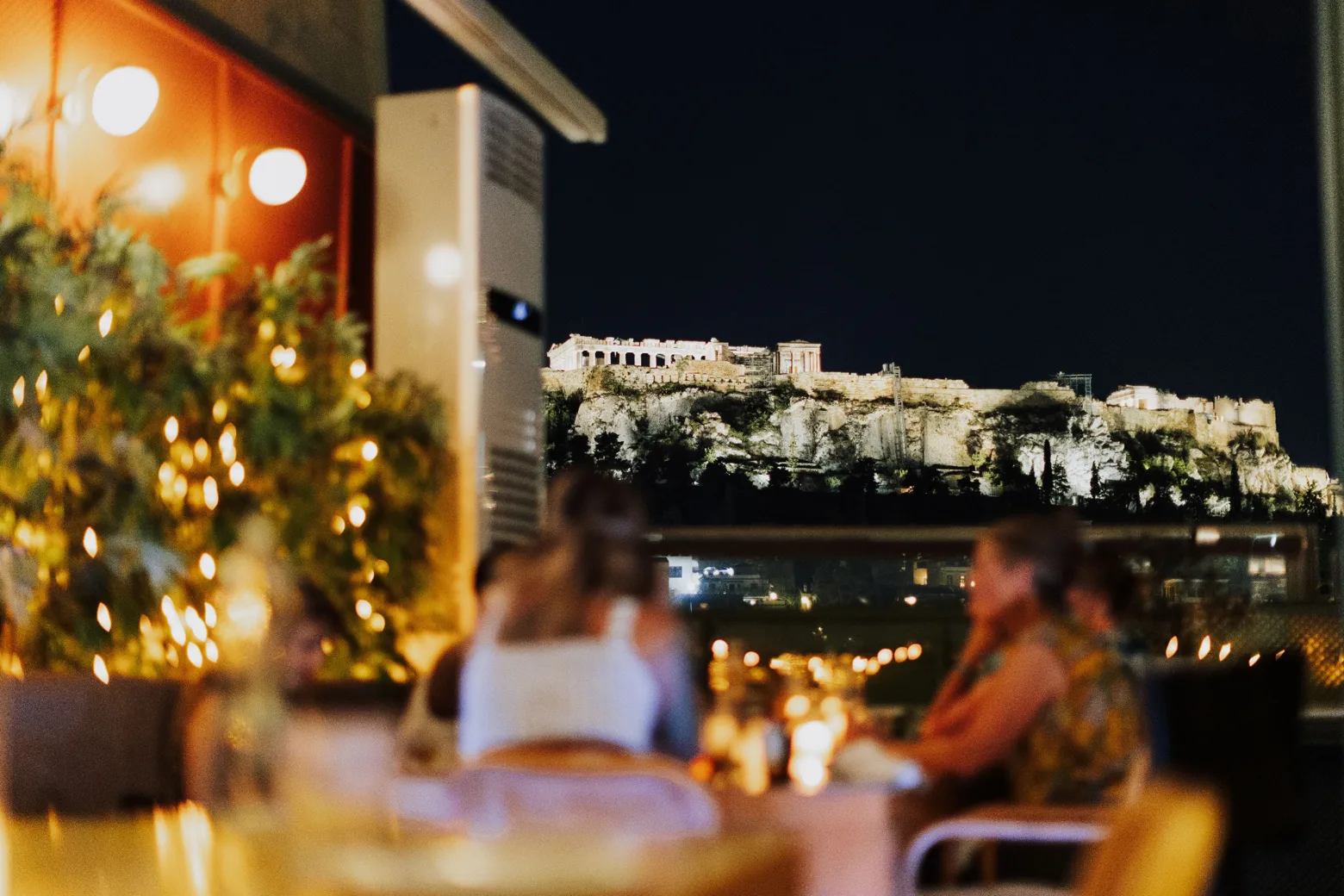
Eat when the heat drops. Get souvlaki in pita from a place with plastic chairs, or settle in at a taverna in Plaka or Pangrati and let dinner take its time. Say yamas, clink glasses and look up. There’s the Acropolis, glowing like it knows exactly what it did.
Athens is a city of steep marble, louder scooters and bigger hearts. The Romans wanted the art, Lord Elgin took the marbles, and the economists had a go at the rest. The Athenians are still here, arguing about football and watering geraniums on a hill their great-great-greats built.
Sound familiar, Cape Town? Welcome to the family.
Where to stay in Athens
Plaka and Koukaki
Plaka puts you close to the old lanes and headline sights. Koukaki is handy for the Acropolis Museum and an evening on quieter residential streets.
Syntagma and Monastiraki
Choose Syntagma for transport and an easy first arrival. Monastiraki suits you if markets, rooftop bars and a livelier evening are part of the plan.
Pangrati
Choose Pangrati for neighbourhood cafés and late dinners. Allow extra time to get to the Acropolis and the main archaeological sites.
Next step
Walking & access
Anafiotika climbs the slope below the Acropolis. If steps are a concern, plan a separate route around lower Plaka. For Metro travel, STASY lists lifts on lines 2 and 3. Before heading out, check the STASY lift status and map the walk from the station exit. Compare Athens neighbourhoods for walking and station access.
Planning beyond the capital? Use the Greece country guide to shape the rest of your route. For a change of pace, head west with the Lefkada guide, or see what a few days on Santorini could look like. For a story from Crete, read Willow and the Ghosts of Crete.