TRAVEL FIELD NOTES · INSPIRATION
Travel Quotes That Actually Mean Something
Words worth carrying with you. And a few worth questioning.
By Rob Wheatley – Program Director & traveler.
Updated 8 October 2026 · About 13 minutes to read
The Short Version
Meaningful travel quotes offer more than a caption: they help you think about curiosity, courage, people, pace and coming home. This illustrated collection pairs 17 sourced quotations and excerpts with my observations, practical reflections and a little healthy scepticism. Read slowly, disagree freely, and carry away a thought you can use.
The internet seems convinced that every sunset needs a quotation. Preferably one attributed to Mark Twain, whether he said it or was simply unavailable for comment.
I understand the appeal. A few well-chosen words can catch something you have felt about travel but never quite managed to explain. Then you encounter another inspirational masterpiece telling you to abandon everything and follow your dreams, apparently unaware that your dreams still need a deposit.
These are the travel quotes I think deserve a longer look. Some make you want to leave. Others ask you to pay attention, meet people with an open mind, or appreciate coming home.
A good quote should start a conversation in your head. Let’s give these a chance.
The ones that make you want to leave
Some travel quotes arrive like a gentle tap on the shoulder. Others appear to have booked you a window seat already. These are about the pull of a journey—not permission to abandon every responsibility by Thursday.
1. You do not need a grand excuse
“The great affair is to move.”
— Robert Louis Stevenson · Travels with a Donkey in the Cévennes
Seven words, and suddenly the sofa looks a little less persuasive.
Stevenson was travelling with a donkey, which should reassure anyone worried that their own departure arrangements are insufficiently glamorous. The appeal here is movement itself: a change of surroundings that gives your attention something fresh to work with.
You do not need to cross a continent. A train to a nearby town can interrupt the comfortable assumption that next weekend must look exactly like the last one.
2. Leave a little room for possibility
“Afoot and light-hearted I take to the open road,”
— Walt Whitman · Song of the Open Road, in Leaves of Grass
I like the light-hearted part. Travel planning can become so solemn that by departure day you feel you should be defending a thesis on your hotel selection.
Whitman gives us a different starting mood: curiosity, freedom and a world that has not yet been reduced to a checklist. It is poetry, of course, rather than a guarantee of smooth roads or excellent plumbing.
Keep your essential arrangements. But leave a little space for something you could not have researched in advance.
3. Notice what keeps calling you
“The mountains are calling and I must go.”
— John Muir · Source documented by the US National Park Service
This line comes from Muir’s letter to his sister Sarah, dated 3 September 1873. A real source, thankfully; the mountains are not the only things calling on the internet. Misattributions are quite vocal too.
For you, the call might be a coastline, a lively city or a village where lunch takes the afternoon seriously. The useful question is not which destination looks most impressive. It is which one keeps returning to your thoughts.
If that pull interests you, Why Do We Travel? explores what may be behind it.
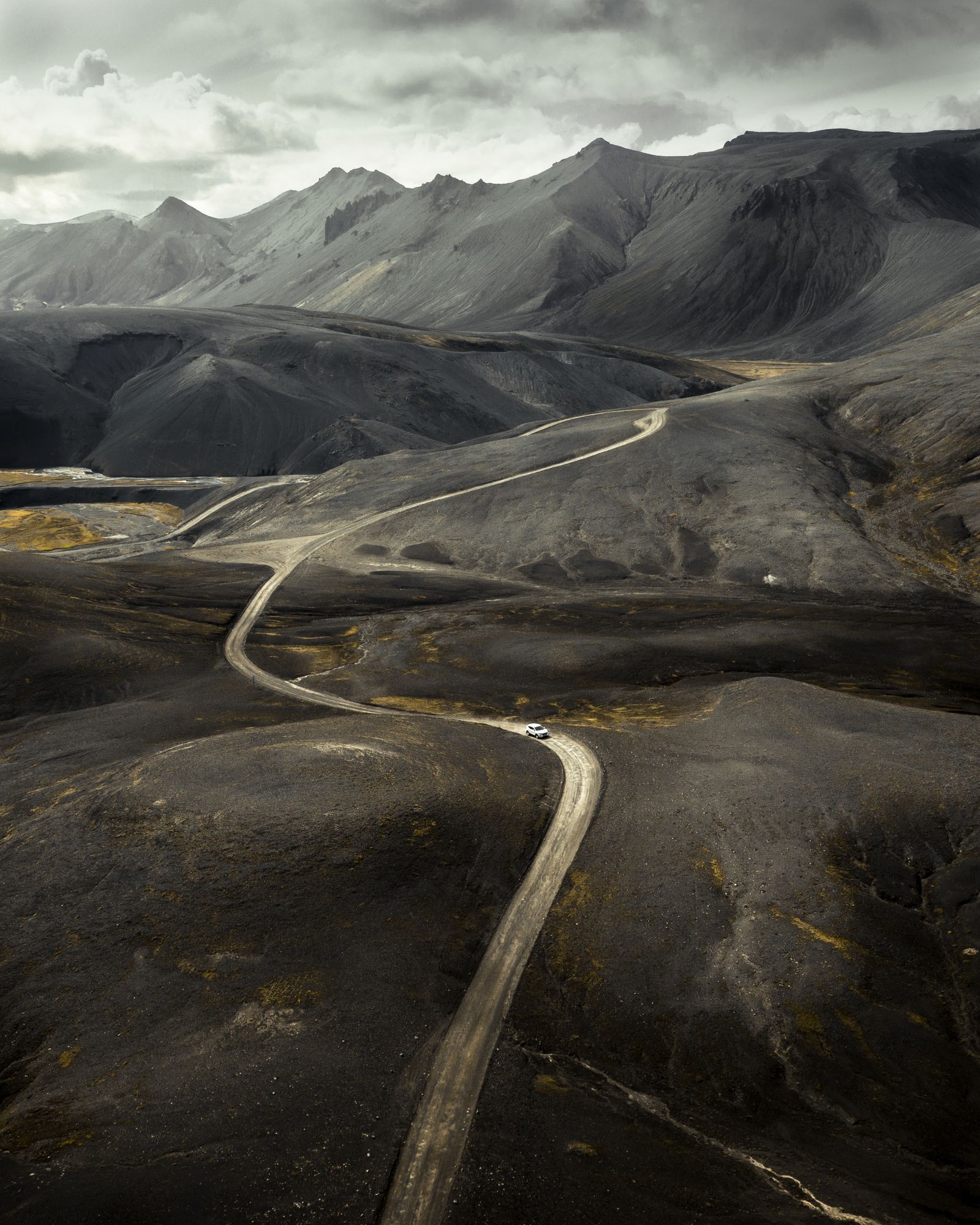
The road can be part of the experience, rather than merely the distance between two places.
The ones about seeing differently
A new view is easy to buy. A new perspective takes a little more cooperation from the person holding the boarding pass.
4. Being there is only the beginning
“Only that day dawns to which we are awake.”
— Henry David Thoreau · Walden
You can stand in front of something remarkable and spend the entire moment deciding whether your photograph is remarkable enough.
Thoreau was not writing an airport guide. Yet this line, from the end of Walden, makes a useful travel companion. The day can offer you things; you still have to notice them.
Try giving one place your undivided attention before documenting it. Hear the footsteps, watch the light, notice what people are actually doing. Your camera can have a turn afterwards.
5. Travel has verbs other than rushing
“Pausing, searching, receiving, contemplating,”
— Walt Whitman · Song of the Open Road, in Leaves of Grass
Four quiet verbs. None involves sprinting across a square with a sandwich in one hand and your dignity somewhere behind you.
I read these words as permission to take in a place before deciding what it means. A pause can be productive. So can a question. So can allowing an experience to unsettle an opinion you arrived with.
That is one reason slow travel appeals to me as an idea: fewer moves can leave more room for attention. It is an option, not a moral superiority contest.
6. Some souvenirs do not fit in a suitcase
“I am a part of all that I have met;”
— Alfred, Lord Tennyson · Ulysses
This is Ulysses speaking in Tennyson’s poem, not a line from a modern self-help manual. Its context matters: the restless speaker is a complicated character, not an instruction sheet.
Still, the thought travels beautifully. You carry away more than photographs. Perhaps it is a different attitude to lunch, a curiosity about history, or a conversation that loosens a certainty.
The most interesting souvenirs can be the changes you notice in your own thinking. Conveniently, they incur no excess baggage fee.
The ones about people
Landmarks may get you there. People often give the place its meaning. The trick is remembering that they are living their lives, not performing supporting roles in your holiday.
7. A passport is an opening, not a certificate
“Travel is fatal to prejudice, bigotry and narrow-mindedness,”
— Mark Twain · The Innocents Abroad, conclusion
This is a genuine Twain passage, from the conclusion of The Innocents Abroad. The opening is quoted here; the older artwork below carries more of the sentence.
I admire the ambition, but I would put a small asterisk beside “fatal”. You can travel widely and still insist that everywhere would improve considerably if it became more like home.
Travel gives prejudice competition. Listening, curiosity and ordinary human contact do the harder work. The stamp in your passport records entry into a country; it does not certify entry into wisdom.

8. You are the visitor
“There is no foreign land; it is the traveller only that is foreign,”
— Robert Louis Stevenson · The Silverado Squatters
A beautifully economical way of putting us in our place—and I mean that kindly.
The shopkeeper’s language, the dinner hour and the local queueing habits are not eccentric because they differ from yours. You are the one temporarily arriving from somewhere else.
Stevenson’s line, from The Silverado Squatters, invites a useful change in posture. Replace “Why do they do it like that?” with “What am I missing?” The second question tends to produce a much better afternoon.
9. Leave room for a person
“the best that we find in our travels is an honest friend.”
— Robert Louis Stevenson · Travels with a Donkey in the Cévennes
This excerpt comes from Stevenson’s dedication to his friend Sidney Colvin. It puts companionship near the centre of the journey.
You cannot schedule friendship between the museum and the cathedral. However, you can stop making every conversation compete with your next appointment.
Not every encounter needs to become a lifelong bond. Sometimes a helpful stranger or an unhurried exchange is enough to turn a place from scenery into somewhere you felt welcomed. Give people time to be people.

The ones about courage
There is useful courage in travel that has nothing to do with dangling from a cliff. Sometimes it means asking a question, travelling alone or admitting that you need a gentler plan.
10. You may surprise yourself
“I am larger, better than I thought,”
— Walt Whitman · Song of the Open Road, in Leaves of Grass
Travel can expose the gap between the person you imagine you are and the person who manages perfectly well when the familiar props disappear.
That does not require disaster. Ordering lunch in another language, finding your way through a station or enjoying your own company can be enough. Confidence often arrives wearing surprisingly ordinary shoes.
Whitman’s line offers a possibility, not a promise. Start with a challenge that stretches you sensibly. You do not have to frighten yourself to prove you are alive.
11. Keep curiosity; adjust the itinerary
“To strive, to seek, to find, and not to yield.”
— Alfred, Lord Tennyson · Ulysses
Another line spoken by Tennyson’s Ulysses, and a splendid rallying cry. It also deserves a little judgment when used outside the poem.
I would never translate it as “ignore your knees, the weather warning and everyone who knows the trail”. Persistence is useful. Stubbornness can be an expensive substitute.
Keep seeking the experiences that matter to you. Change the pace, the route or the support when necessary. Curiosity need not retire merely because your preferred method of climbing a hill has acquired an engine.
The ones you understand differently after travelling
Some words sound pleasant at home and become surprisingly practical halfway through a journey. Especially when the itinerary has started behaving like an overenthusiastic personal trainer.
12. Subtraction can improve a holiday
“Simplify, simplify.”
— Henry David Thoreau · Walden
A useful message for the suitcase, the schedule and the browser with thirty-seven hotel tabs open.
Thoreau’s larger argument concerns how to live. My travel application is smaller: remove one thing that makes the trip harder without making it better. Perhaps a hotel change, a distant day trip or three pairs of shoes auditioning for the same role.
Keep what gives the journey meaning. Simplifying should make room for enjoyment, not become another demanding project at which you must excel.
13. Give today a shape you would enjoy
“Each day is a little life.”
— John Lubbock · The Pleasures of Life
Lubbock puts this at the opening of his chapter on the value of time. It is a lovely antidote to treating a holiday as one enormous list that must eventually be completed.
A good day might have a satisfying beginning, one experience you care about and an evening with room to breathe. It need not contain every attraction within taxi range.
When the day feels human in size, the journey often does too. That is the question behind finding your travel rhythm.
14. A change of surroundings can clear some space
“for going out I found, was really going in.”
— John Muir · Source documented by the US National Park Service
This is an excerpt from Muir’s longer observation about a walk that lasted until sundown, documented by the National Park Service from John of the Mountains.
I like it because it offers something quieter than the grand promise that travel will reveal your entire purpose in life before checkout.
Sometimes a walk simply creates space to hear yourself think. That may happen far away or close to home. Distance is not the essential ingredient; attention, and a little room away from the usual noise, may matter more.
The ones about coming home
A travel collection that ends at departure misses half the story. Coming home is where you discover what the journey left behind—and what it quietly brought back.
15. Loving home does not make you less adventurous
“one of the greatest pleasures of travel is the return;”
— John Lubbock · The Pleasures of Life
This excerpt comes from Lubbock’s chapter on the pleasures of travel. It allows room for a feeling that inspirational captions sometimes overlook: being delighted to get back.
Your own bed can be wonderful. So can knowing how the shower works without conducting a small engineering investigation.
Missing home does not mean the journey failed. It may mean you value both movement and belonging. A good travel life can contain a strong appetite for the world and a very sincere appreciation of your own kettle.
16. Bring your attention home with you
“it is at last to set foot on one’s own country as a foreign land.”
— G. K. Chesterton · Excerpt from his Daily News column, documented by the Society of G. K. Chesterton
This is the closing thought from Chesterton’s longer observation about the object of travel, documented by the Society of G. K. Chesterton.
You return knowing the streets, but perhaps noticing different things: the buildings you usually pass, the food you take for granted, or an assumption that now feels rather local.
Try being a visitor at home for an afternoon. Walk somewhere familiar slowly. Ask a question you would ask abroad. You might find that the journey has improved your eyesight without touching your prescription.
Lovely quote. But is it actually true?
A sentence can be beautifully written and still be poor advice—or wearing somebody else’s name. Inspiration benefits from a little adult supervision.
17. Your problems can travel too
“Travelling is a fool’s paradise.”
— Ralph Waldo Emerson · Self-Reliance, Essays: First Series
A refreshingly awkward guest at the travel inspiration party.
In Self-Reliance, Emerson describes arriving abroad and finding the same unhappy self he had hoped to escape. I think this deserves a place beside the more enthusiastic travel quotes.
A journey can offer rest, perspective and new experiences. It cannot guarantee that an unresolved problem will stay politely behind the front door. Go because the experience matters to you. Be cautious about asking a destination to do work that needs attention elsewhere.
The “Twenty years from now…” problem
You will often see the famous passage about future regret and sailing away from safe harbour credited to Mark Twain. The Center for Mark Twain Studies identifies that attribution as false. It points to H. Jackson Brown Jr.’s 1990 collection P.S. I Love You, which credits his mother, Sarah Frances Brown.
The idea can still encourage someone. However, attaching a famous name does not improve its accuracy. Nor does an inspirational sentence cancel the need to consider money, responsibilities or safety. Keep the invitation to be curious. Check the byline—and the practicalities.
The “only thing you buy that makes you richer” problem
This familiar travel slogan appeared on my older page. As a metaphor for experience, I understand it. As a literal statement, it has some competition from education, a useful book and quite a few sensible investments.
More seriously, travel should not become a pressure to spend money you cannot comfortably spare. A memorable afternoon close to home can be richer in meaning than a costly trip you spend worrying about. Beautiful words should open a door, not push you through it.
From a thought to a trip
You do not need to memorise seventeen quotations. Choose the one that makes you stop, then ask what you could do differently because of it.
Turn a travel thought into one small action
Curiosity
Leave one afternoon open for exploring.
Attention
Look around before reaching for your camera.
Connection
Make time for a conversation without rushing it.
Simplicity
Remove one stop that adds effort but little joy.
Coming home
Bring one good habit or new interest back.
None of this requires a dramatic announcement or a photograph of you staring meaningfully into the distance. Although, if the light is good, I won’t stand in your way.
A few questions worth asking
What makes a travel quote meaningful?
A meaningful travel quote gives you something to think about beyond the destination: curiosity, how you see people, what you fear, or what you value. The useful test is whether the words help you notice or change something. A line can be beautiful without being a rule to live by.
Are the quotations on this page accurately attributed?
The 17 selected quotations and excerpts have linked sources: original texts or, for Muir and Chesterton, named institutions documenting the words. Short excerpts are identified through their source notes. The separately discussed future-regret passage is included to correct its false Twain attribution.
Which short travel quote should I choose?
Choose according to what you need. Stevenson’s thought about moving suits a fresh start. Thoreau’s call to simplify suits an overloaded itinerary. Lubbock’s observation about each day suits a question about pace. The best travel quotes for you are the ones that remain useful after the initial burst of inspiration.
Take one thought with you
The best inspirational travel quotes do not do the travelling for you. They cannot choose your route, make you curious or persuade you to listen. But they can nudge your attention in a useful direction.
Pick one thought worth carrying. Let it change something small.
If this collection has made you want more room to notice, explore or simply enjoy yourself, find your travel rhythm next. It turns that feeling into practical choices about pace, movement and breathing space.
Which words have stayed with you?
Is there a travel quote you understood differently after a journey—or one you would cheerfully retire? Tell me the words, who said them if you know, and what they mean to you. The story behind your choice interests me more than the perfect caption. Send me your thought here.
About Rob: Rob Wheatley is a former ocean Cruise Director and a Viking Program Director. These are personal reflections on travel, alongside quotations whose sources you can explore through the links above.
Photographs: Road by Mirco Violent blur; café by George Pak, used under the Pexels License. Compass image and Twain artwork retained from this page’s existing collection.
Source note: Selected words are linked to the text or institution supporting their attribution. Some quotations are excerpts; the observations and practical applications are my interpretations. Sources checked 7 October 2026.