Potsdam: Fog, Trench Coats and a Bike Path
If you, like me, grew up on the spy thrillers of Robert Ludlum, you arrive at the Glienicke Bridge expecting fog, trench coats and a man with a briefcase who knows too much. What you get is a bike path.
Potsdam doesn’t look like the setting for a spy novel. That’s exactly what a good spy would say.
By Rob Wheatley · Part of my Germany guides
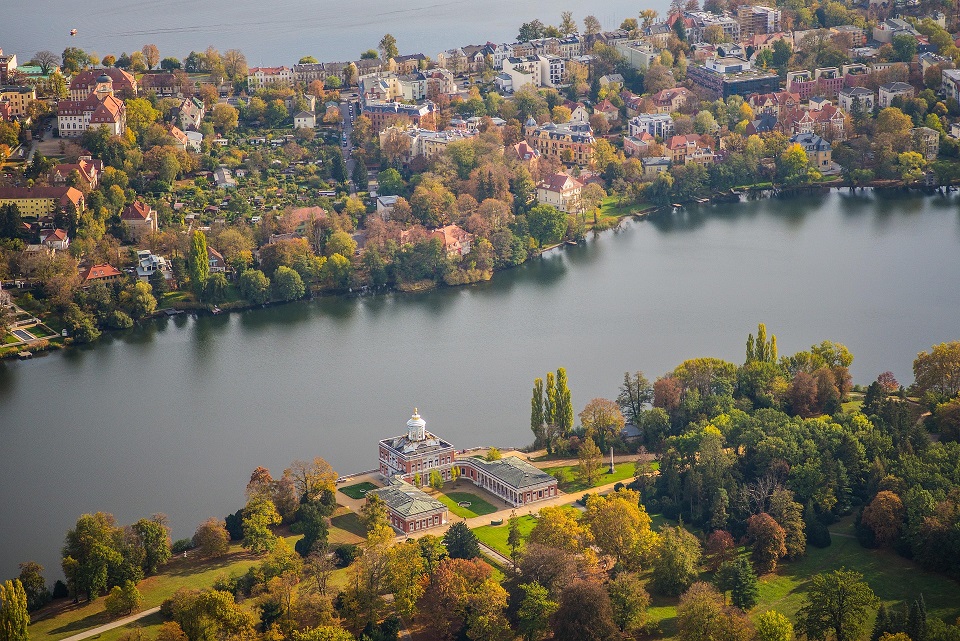
Berlin’s tidy cousin
Cyclists glide across with their shopping, a couple stops for a selfie, and beyond the railings the villas sit politely along the water as if nothing has ever happened here.
Honestly, no. Potsdam is the opposite of a Ludlum thriller. It feels genteel, leafy and a little well-to-do, like Berlin’s tidy cousin who went into property and took up gardening. Lakes, parkland, pastel palaces, cyclists, ice cream.
The Glienicke Bridge itself is quite ordinary now. You stand on it, look at the villas along the water and think “lovely”, not “someone is about to be swapped”. Which makes knowing its history all the more peculiar.
Potsdam at a glance
- Start with
- Sanssouci Palace and its vineyard terraces, then leave time for the park.
- For Cold War history
- Glienicke Bridge, a former border crossing used for prisoner and spy exchanges.
- For the Potsdam Conference
- Cecilienhof tells the story, but its interior is currently closed for restoration. Check access before travelling.
- On an Elegant Elbe cruise
- Potsdam is a sightseeing stop on the land transfer between Berlin and the ship, rather than an Elbe docking stop.
The bridge with an unexpectedly ordinary present
Glienicke Bridge crosses the Havel between Potsdam and Berlin. During the Cold War it stood on the border between East Germany and West Berlin. That carefully controlled crossing became a place where East and West exchanged spies and prisoners.
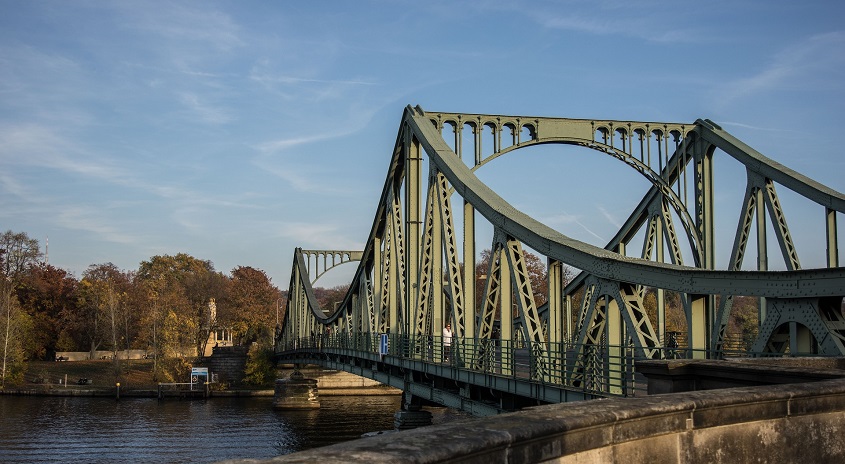
Today traffic crosses it again, and the surrounding waterside scenery makes the whole thing look almost implausibly peaceful. Give yourself a few minutes here. The interesting part is the gap between what you know happened and what you can actually see.
Keep the cycle route clear while you take your photographs. International intrigue may have moved on, but somebody still needs to get home with the shopping.
Cecilienhof: The Conference That Carved Up the World
In the summer of 1945, with Germany in ruins, Churchill, Truman and Stalin met at Cecilienhof to negotiate the postwar settlement. The conference ran from 17 July to 2 August. Midway through, Britain’s election result brought a change of prime minister: Churchill left and Clement Attlee took his place.
The venue was a palace built in the style of an English country house, which gives the whole thing a faintly surreal air: the future of Germany and Europe being haggled over in a house that looks as though it belongs in Surrey. A red star flowerbed was laid out in its courtyard for the conference. Even the gardening had a political message.
The Potsdam Agreement helped shape the postwar order, although the division of Europe was a longer process than one meeting around a table. Still, it is a striking setting for decisions with consequences far beyond those leafy grounds. World politics in what looks like a very grand country pub.
Before you go: Cecilienhof Palace is closed for restoration until further notice. Don’t plan on walking through the conference rooms or seeing the table in person. The palace foundation’s current visitor page links to virtual visits and gives access updates.
Sanssouci: The King Who Wanted to Be Left Alone
Sanssouci means “without worries”, which is an optimistic name for a palace belonging to Frederick the Great. Even a Prussian king apparently needed somewhere to stop being a Prussian king for five minutes.
Built between 1745 and 1747, his summer retreat is a single-storey palace above a hillside of vineyard terraces. The scale feels personal beside the grander business of royal display. This was his refuge, and his dogs were very much part of the arrangement.
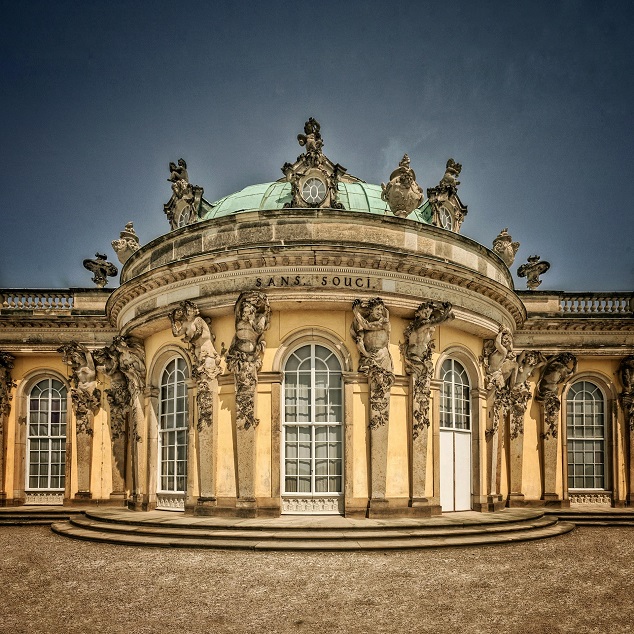
He wanted to be buried on the upper terrace at Sanssouci, close to his beloved dogs. The wish outlasted him by more than two centuries: he died in 1786, but his remains were finally laid to rest here in 1991.
Visitors still leave potatoes on the grave, a tribute to his popular reputation as the potato king. There is a catch, naturally. The palace foundation’s historians point out that the familiar claim that Frederick introduced potatoes to Prussia is a legend. Potatoes were already growing in Prussia. The tribute has proved considerably harder to dislodge than the story.
A king, a garden, a few dogs and a grave decorated with vegetables. Potsdam has a pleasing way of bringing grand history back down to earth.
A park worth leaving time for
Don’t confuse Sanssouci Palace with everything else in Sanssouci Park. The park contains several separate buildings, and the Orangery Palace in the photograph below belongs to a later king, Frederick William IV. It is a different palace, with a distinctly Italian ambition.
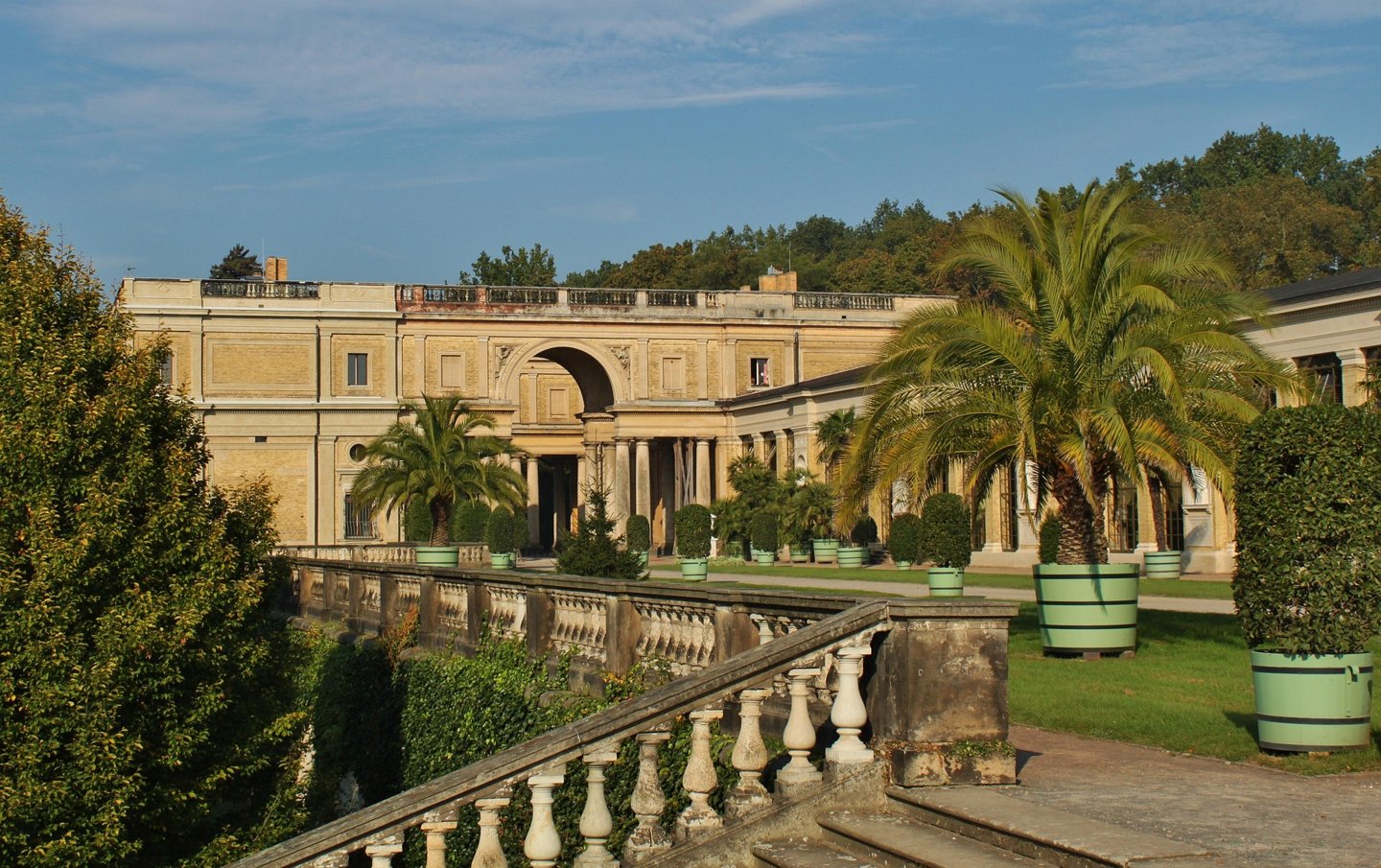
The Orangery Palace is also currently closed for restoration, with selected events sometimes offered. Check the official Orangery page before counting on an interior visit.
For an independent day, make Sanssouci and its immediate surroundings your priority rather than trying to collect every palace. Glienicke Bridge, the New Garden and the town centre are separate stops. Allow travel time between them; they are not all waiting beside the same gate.
Check palace entry arrangements before leaving Berlin, and use the VBB journey planner for trains and local connections. Wear shoes suited to park paths and steps. A royal garden can still put in a perfectly respectable day’s work on your feet.
A day from Berlin, or a quieter overnight
Time: A full day is a sensible minimum for Sanssouci and one other area. An overnight gives the park and town centre room to breathe. Don’t try to walk every palace, the bridge and the New Garden in one afternoon simply because the map fits on your phone.
Arrival: Potsdam Hauptbahnhof is the main gateway from Berlin, with local transport onward. Check VBB for the correct ticket coverage and route. The park, old centre and Glienicke Bridge are separate places, so a little planning saves a lot of unromantic pavement.
When and lunch: My pick is late spring or early autumn for the gardens; bare winter trees give a very different visit. Palace closures still apply however good the weather. Make lunch in the town centre part of the outing rather than expecting every park building to have a convenient café.
Visiting Potsdam with Viking
On Elegant Elbe, Potsdam connects the Berlin hotel stay with the river journey. It is part of the road transfer, so don’t treat it as a spare day to fill independently.
Viking lists Sanssouci Palace & Potsdam Walk on the published itinerary. Follow the arrangements for your booked sailing: your guide, entry time and onward transfer determine what fits. Cecilienhof, Glienicke Bridge and the Orangery are not automatically included simply because they appear in this guide.
Independent exploring works best during additional time in the area. Ask your Viking team what is practical before making separate reservations.
Visitor information checked 8 November 2026. Palace closures and cruise excursions can change. Sources: City of Potsdam: Glienicke Bridge; SPSG: Potsdam Conference; SPSG: Sanssouci; palace history; the potato tradition; Viking Elegant Elbe.
Back to top ↑
Was Potsdam what you expected?
The spy bridge, the palaces or all that unexpected greenery—which stayed with you?
Share your Potsdam thoughts ↓