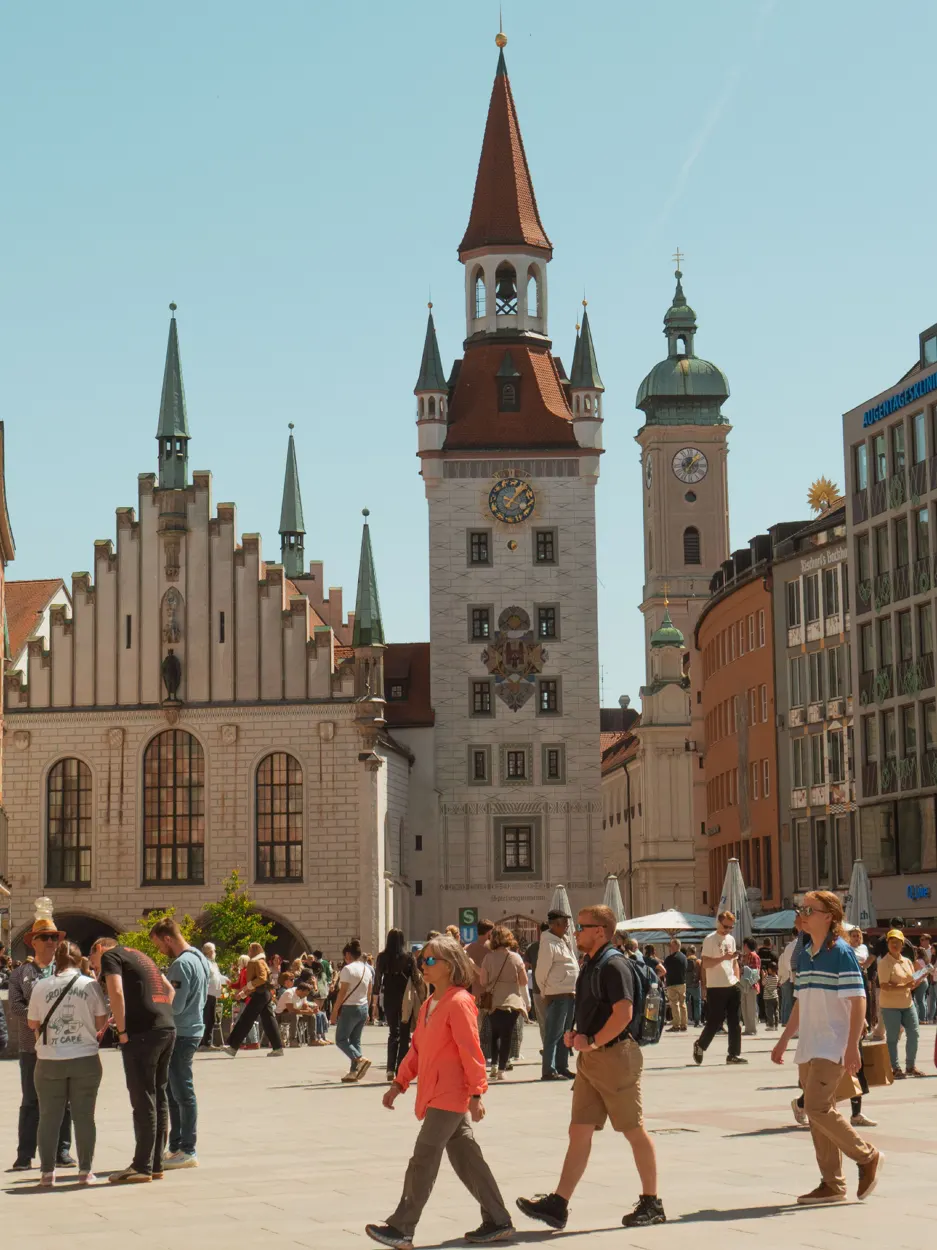
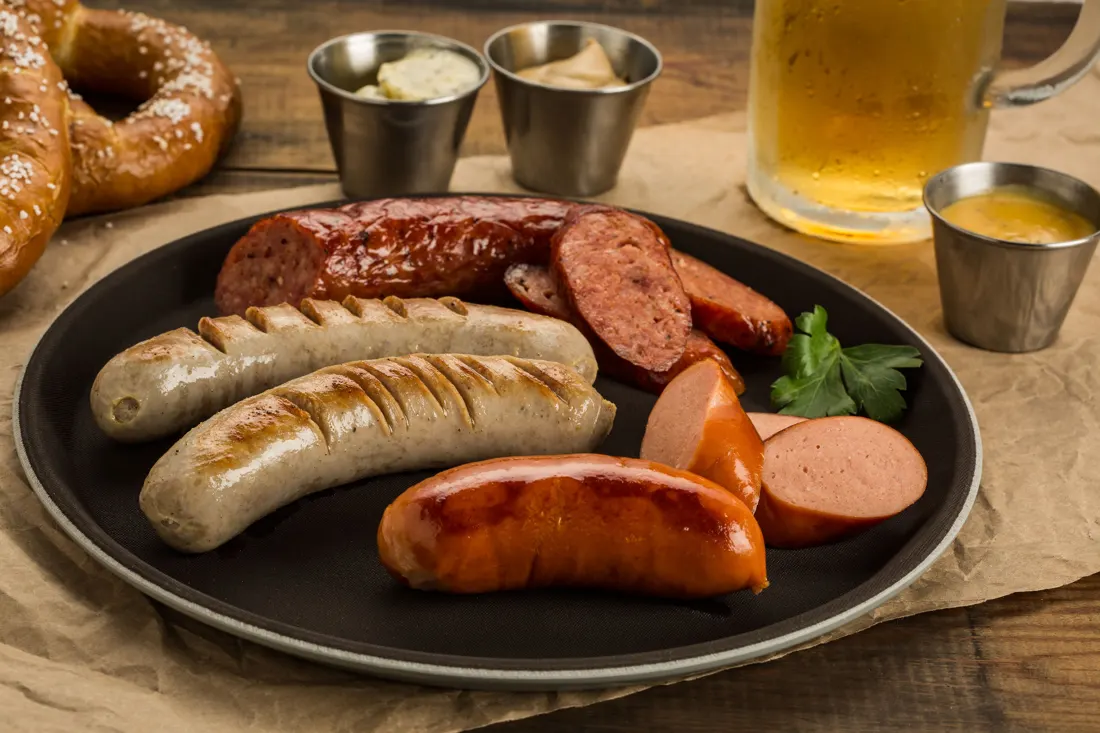
Start near Marienplatz, preferably early enough to do the sausage justice. Weisswurst comes in warm water with sweet mustard and a Bavarian pretzel, or Brezn. Leave the skin. Some people suck the sausage out of it. A knife and fork will get you there with fewer spectators.
Once breakfast is out of the way, stop in the square for the Glockenspiel on the New Town Hall. Tiny figures dance, knights joust and a rooster has the last word. Below them, hundreds of people stand with their phones in the air. You’ll think it’s slightly ridiculous. You’ll also stay for the rooster. Check the day’s performance times before arranging your morning around it.
Then walk over to the Frauenkirche. The twin onion domes are easy to spot. The thing to look for inside is at your feet. There’s a dark footprint near the entrance, supposedly left by the Devil after the builder got the better of him. There are several versions of the story. Any one that ends with the Devil making a fool of himself in a church is good enough for me.
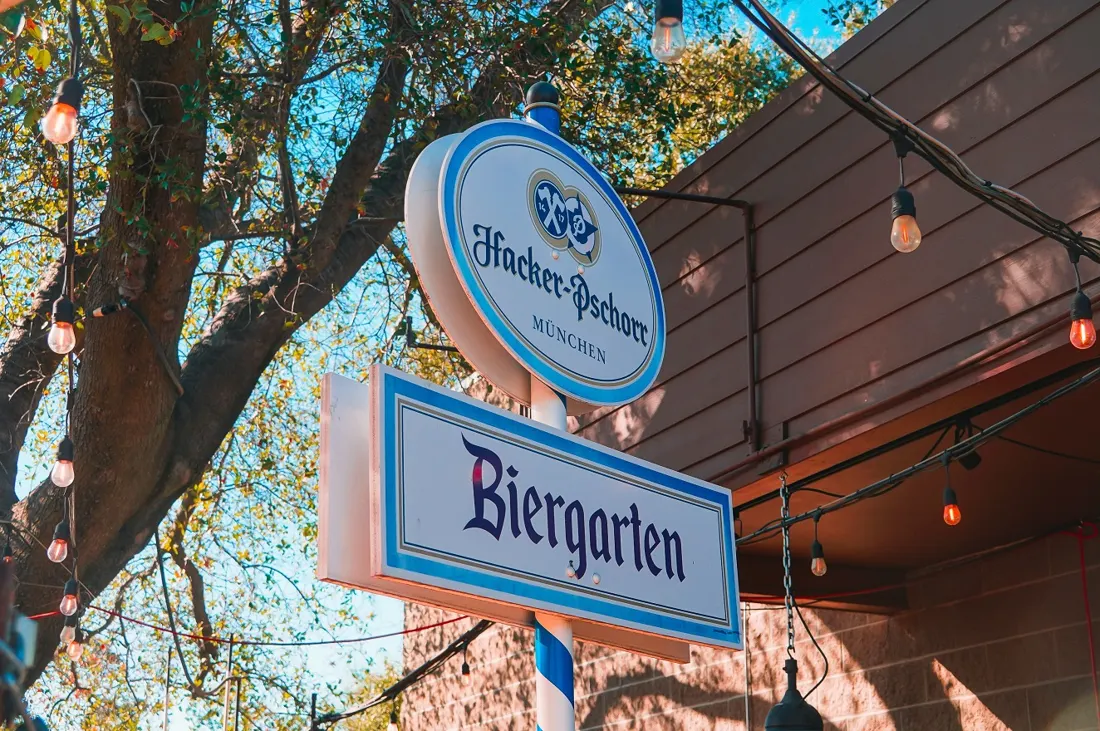
Make your way to Viktualienmarkt. Wander past the cheese, sausages and flowers, then find a seat in the beer garden. An hour at a long table with strangers can do more for a trip than another hour spent ticking things off a map.
For the full beer-hall experience, there’s the Hofbräuhaus. It’s loud, it’s touristy and I recommend it entirely. Watch someone carry a frightening number of full mugs through a crowded room while you’re still working out how to lift one. A Maß is a litre. By the last few mouthfuls, it starts to feel like strength training.
Say “Prost”, look the other person in the eye when you clink glasses, and sing along if the table starts singing. The words are their problem. Enthusiasm is yours.
The beer gardens are where Munich really wins me over. In traditional ones, you can bring your own food to the self-service area and buy your drinks there. Bread, cheese and cold meats under a chestnut tree make a perfectly good lunch. Where I come from, a braai can swallow an entire afternoon. I understand a city that sees no reason to hurry a meal outdoors.
Try Obatzda, the soft cheese spread with paprika. If you’re still hungry, order a Schweinshaxe for the table. The crackling should make enough noise to interrupt the conversation. And if somebody offers you Leberkäse in a roll, eat it before asking what the name means. You’ll enjoy it more that way.
After a litre of anything, a walk sounds sensible. The English Garden has lawns, paths and enough room to forget how close you are to the city centre. There are designated areas for nude sunbathing. If you happen across one, carry on with your walk. Everybody else is managing.
The park is more than two centuries old and bigger than Central Park, so you can wander for hours and still not find the end. Pack a snack and a sense of direction. I only managed one of those.
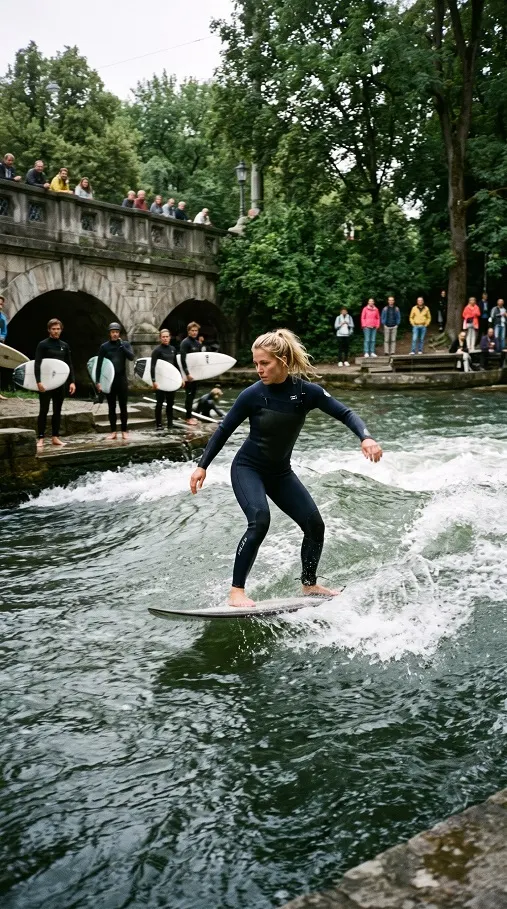
At the Eisbach, Munich has a standing river wave. When surfing is permitted and conditions allow, people take turns riding it in the middle of the city. I find that wonderfully stubborn. Munich wanted to surf, and the absence of a coast was evidently a detail.
The etiquette is wonderfully German. Surfers queue on the bank, ride one at a time, and nobody cuts the line. Forget the Hollywood surf bum. This is surfing with a rota.
For a different afternoon, head to Nymphenburg Palace. There’s plenty to see indoors, but give the gardens and canals some time. The swans have the air of creatures who’ve read the deeds and know exactly who owns the place.
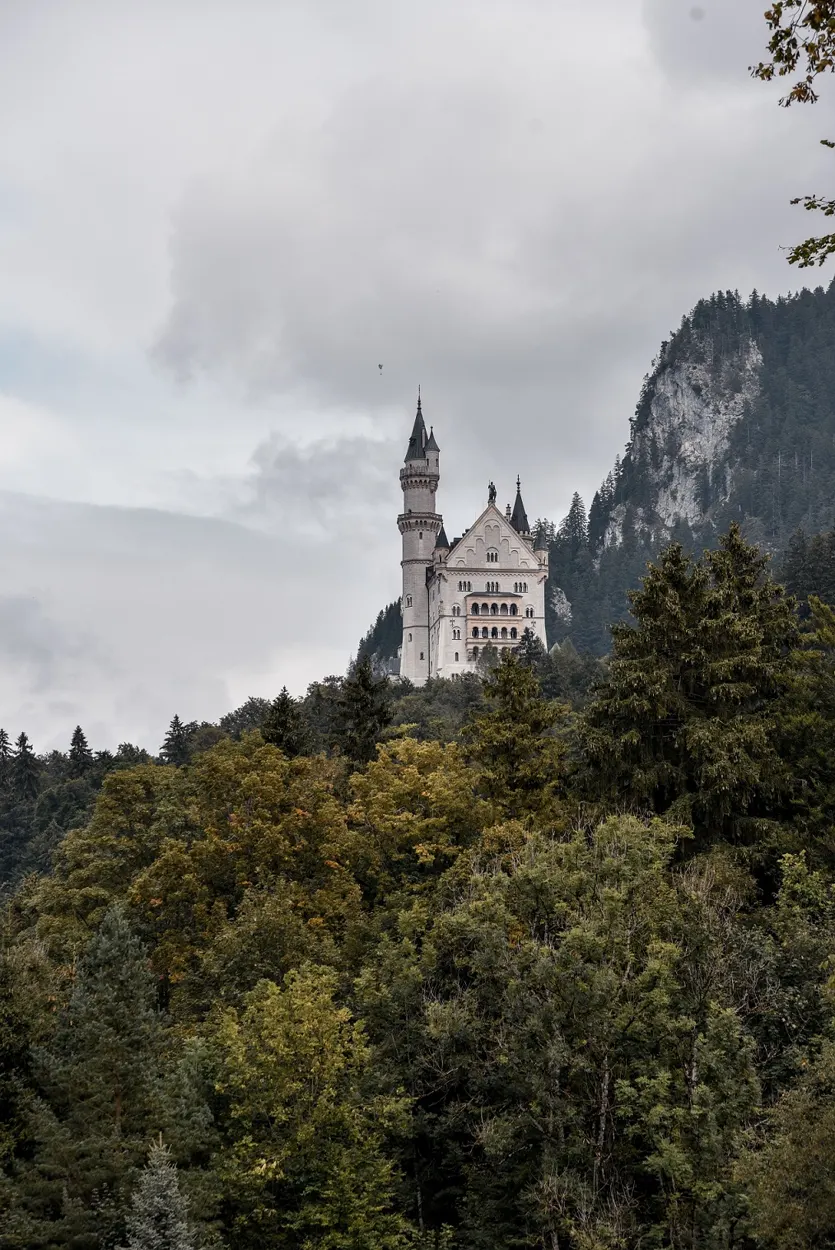
If you have a spare day, choose between Neuschwanstein and the Zugspitze. Neuschwanstein is the one for a castle perched above the trees.
It was built by King Ludwig II, known as the “Fairy-Tale King,” and some say the “Mad King.” He poured a fortune into it, never saw it finished, and died in mysterious circumstances in 1886, only weeks before the doors were opened to the public.
The Zugspitze is the one for the view from Germany’s highest peak, provided the clouds are in a cooperative mood.
It stands at just under 3,000 metres, and you reach the top by cable car or a cog railway from the town of Garmisch-Partenkirchen. On a clear day, you can see across four countries, and standing there with a hot chocolate in your hands feels like you’ve cheated at hiking.
Check the weather and the transport for the day you’re going. A mountain under a blanket of cloud is a perfectly good mountain, but there’s only so much you can do with the photograph.