How to Pack for Two Weeks in a Carry-On
A two-week packing list, six outfits from five pieces, and a laundry plan that keeps the whole thing going.
The best part of travelling light isn’t the money you save on baggage fees. It’s strolling past the carousel while everyone else is still praying to the luggage gods
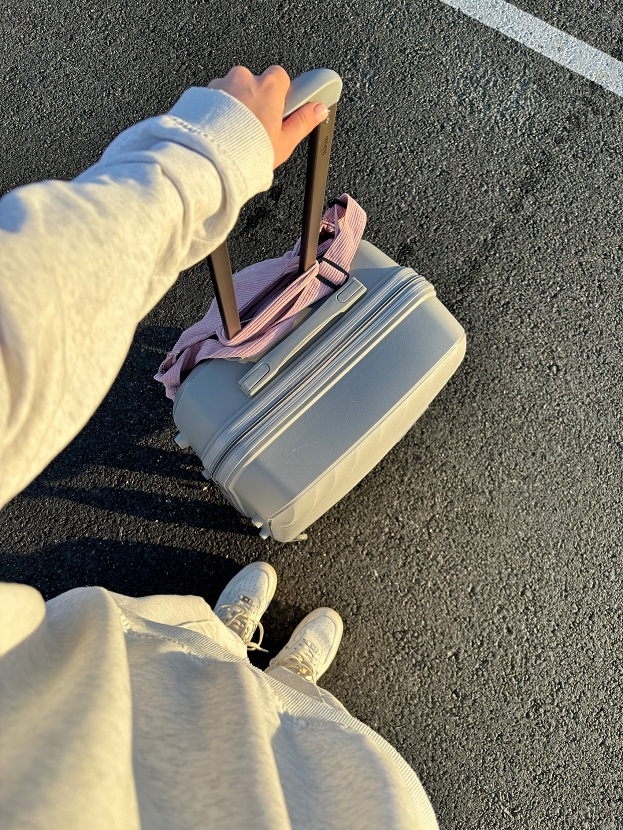
I’ve watched people get off a plane and head straight through the green exit while I’ve stood at the luggage belt, giving every black suitcase my full attention. I envy those people. I also assume they’re on an overnight business trip. How else do you explain a bag that small?
Then, on embarkation day, I met a woman and her husband who were joining us for a two-week cruise. They had one small carry-on each.
“You’re here for two weeks and that’s all you have?”
I actually said it out loud. I was used to seeing guests arrive with two or three pieces of luggage. Sometimes five. I had my doubts about two little bags lasting the fortnight.
I saw that lovely couple every day, and they never seemed to be wearing quite what they’d worn the day before. By then I was convinced they’d been quietly shopping in port. I waited for departure day to see what they’d accumulated.
Off they went. Same two little bags.
I needed to find out how it was done. So if you’re wondering how to pack for two weeks in a carry-on, let’s start with what actually goes in the bag, what you can wear on the way and how many outfits you can make from the clothes you’ve brought.
A two-week carry-on packing list
This is a starting list for a mild-weather trip where you can wash clothes. The weights are illustrative. Weigh your own gear, then add anything else you’ll take, including medication, travel documents and a plug adaptor if you need one. Check whether your booking counts items carried separately toward a combined cabin allowance.
| Item | What goes where | Packed |
|---|---|---|
| Empty carry-on | 1 lightweight bag | 680 g |
| Tops | 2 shirts packed, 1 worn | 300 g |
| Bottoms | 1 pair packed, 1 worn | 240 g |
| Layers | 1 fleece and 1 rain shell packed | 650 g |
| Underwear and socks | 3 pairs of each packed, 1 pair of each worn | 255 g |
| Shoes | 1 comfortable pair worn | 0 g |
| Toiletries | Small wash kit | 260 g |
| Towel | 1 compact towel | 120 g |
| Tech | Phone charger and cable packed, phone carried separately | 150 g |
| Example packed total | 2.66 kg | |
Weigh your own packing list
Open Gate-Scale and enter the weight of your empty bag first. Then try three shirts total with one worn. The calculator adds the two packed shirts to your bag weight.
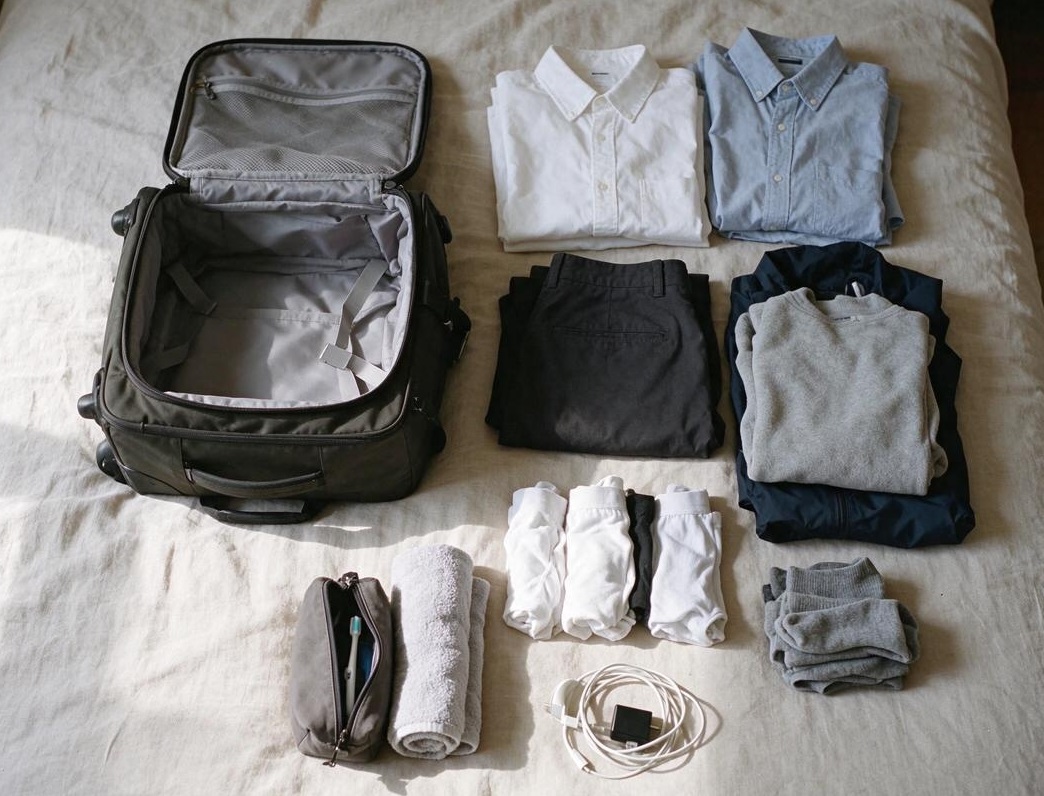
How three tops and two bottoms make six outfits
Lay everything out before you pack. I’d pick a dark tee, a lighter tee and a button-down, then try all three with my travel trousers and my second pair of bottoms. If the button-down only goes with trousers I’ve left at home, it can stay with them.
- Dark tee with travel trousers or the second bottom.
- Light tee with travel trousers or the second bottom.
- Button-down with travel trousers or the second bottom.
The fleece and shell are there for the weather. If your itinerary needs more variety and your bag has room, try the 4-3-2-1 version with four tops, three bottoms, two layers and one wildcard, such as a dress or swim shorts you’ll wear away from the pool. Check that each piece has a job before it goes in.
Which fabrics earn their place?
Start with what’s already in your wardrobe. A lightweight synthetic top is worth trying if you’ll be washing it frequently. Merino is another option if you like how it feels and can follow the care label on the road. I’d think twice about packing heavy jeans for a trip where my only laundry plan is a hotel sink.
Wash one of your tops at home and hang it where it’ll get about as much airflow as it would on the trip. Check it the next morning, especially around the seams. That tells you more about your shirt than a drying-time claim on a label.
Plan laundry before you pack
Plan your first wash by day three. This list gives you four pairs of underwear and socks, including what you wear on travel day. Check what’s available at your accommodation and leave time for things to dry. If you’re moving hotels each morning, pick a stop where you’ll stay long enough to wash and dry a load.
For a sink wash, follow the garment’s care label. After rinsing, roll the garment in a clean towel and press gently to take out excess water, then hang or lay it flat as directed. Thick seams and a humid room can keep clothes damp longer than you’d expect.
What changes for cold weather or a working trip?
Cold weather. Swap the second lightweight bottom for something warmer or add a thin base layer. If a packed insulated layer weighs 450 g and replaces the example’s 350 g fleece, the bag gains 100 g. Try on the full outfit at home, including the shell, to see whether the layers work together.
Working trip. Adding a 1.2 kg laptop and replacing the 150 g charger kit with a 250 g kit takes the example to about 3.96 kg. If you can leave the 120 g towel because your accommodation provides one, that brings it to about 3.84 kg. Use your own laptop and charger weights in the calculator.
Questions worth asking before you pack
Do I need a second pair of shoes?
For a trip built around walking and casual meals, one comfortable pair can be enough. Add a second pair if an activity or venue calls for different footwear, or if your main pair is likely to get soaked and you’ll need something dry the next morning.
What if my cruise has a dress code?
Check your cruise line’s guidance for the dining rooms and evenings you plan to attend. If you need a dressier outfit, try swapping one of the pieces already on the list for something you can wear more than once. Try the whole outfit at home, shoes included.
Can I pack this lightly if I can’t do laundry?
The example assumes you can wash and dry clothes during the trip. If that’s uncertain, check for a laundry service before you go or pack extra underwear and socks. Then do another trial pack with the extra pieces inside.
Do one trial pack before you leave
Pack everything you’ll actually take and weigh the bag. Then measure it at its widest points, including handles, wheels and any bulging pockets. Compare the measurements and weight with the allowance on your booking, especially if different airlines operate different legs.
More luggage and packing guides
Next step. Build your own list in Gate-Scale. If your booking includes only an underseat bag, skip straight to the underseat size check.