Rob’s Blog › Thoughts from the Road
The People Who Ruin the Itinerary
Notes on Brazil, from someone who went for the scenery
I arrived expecting a country and found a continent wearing a country’s name—the fifth largest on earth, and one that refuses to hold a single mood for more than a day. I had a list. I had timings. Within seventy-two hours I had understood that none of it mattered, because I had come for the landscapes and been ambushed by the people.
Here is what no guidebook told me, and what I now tell everyone: I remember the landscapes as a sequence of beautiful blurs. It’s the people who stayed in focus.
By Rob Wheatley · Brazilian culture, through the people I met · About 8 minutes

The warmth is not a performance
I had been warned about Brazilian warmth the way you’re warned about weather—as a phenomenon you’ll experience and then leave behind. Yet the welcome wasn’t like that. In fact, it didn’t feel put on for visitors; if it were, I’d have caught them at it. To me, it felt like a default setting.
People touch your arm mid-sentence. They laugh from somewhere deep and unguarded. They stand closer than a reserved northern European might expect, and within three days you stop noticing, and within a week you can’t imagine why anyone would stand any further away.
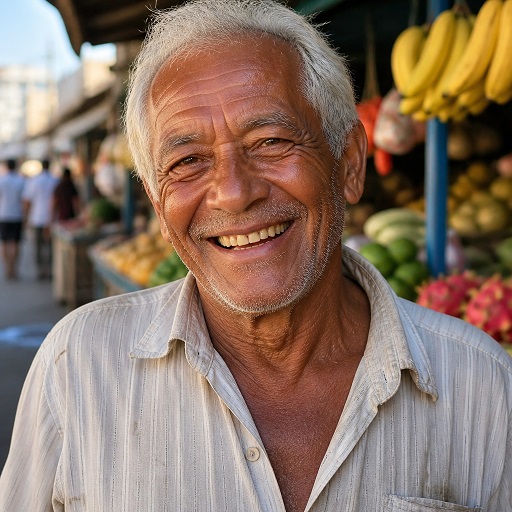
A question about a bus route became a coffee. Before long, the coffee became an invitation. In turn, that invitation became a family lunch I had not planned, could not have planned, and will remember longer than anything I had come to see.
Nobody asked whether I had time. Time, apparently, was something you made. Someone’s grandmother decided I was too thin and acted on it. I ate things whose names I never learned and liked all of them.
Salvador, where the country keeps its pulse
If you want to understand the Brazil that got under my skin, don’t start in Rio. Start in Salvador.
The old capital sits above the Bay of All Saints, and the historic centre—the Pelourinho—climbs and falls in cobbled streets past churches the colour of weak sunlight, painted in yellows and ochres and blues that no modern paint catalogue would dare. I rode up in the famous elevator from the lower city, stepped out, and was immediately absorbed into somebody’s afternoon.
The drums find you first
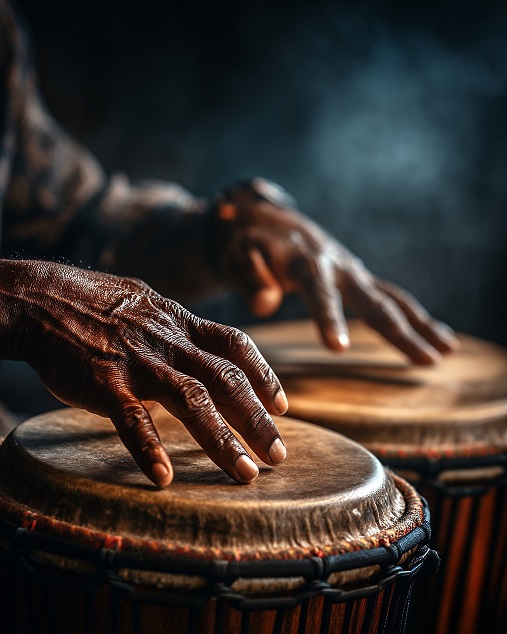
And then the drums started. Not a performance with a start time and a ticket booth—drums in the square, drums around a corner, drums you feel in your sternum before you can locate them.
Pelourinho’s Tuesday-night traditions can turn the quarter into one long rhythm section. People who have never met dance together with the unembarrassed competence of people who learned this before they learned to be self-conscious.
Bahia holds some of samba’s deepest roots, especially in the samba de roda of the Recôncavo. Rio later shaped the urban samba that travelled around the world. The story runs through Afro-Brazilian communities, African musical traditions, candomblé, and the resistance of people who were denied so much and kept creating anyway.
Capoeira, and the boy taking notes
I sat on a step with a plastic cup of something cold and watched two men in white trousers fold themselves into capoeira—an Afro-Brazilian art that brings combat, dance, music and play into the same circle, all feigned laziness and sudden, whip-crack precision.
A boy of maybe nine watched them with the flat concentration of someone memorising. Then he tried it, badly, and everyone laughed at him warmly, and he tried it again.
Acarajé, and a lesson in technique
Later a woman in the enormous white dress of a baiana, her skirts spreading around her like a tablecloth, set up a brazier on the corner and started frying.
Acarajé: black-eyed peas ground and whipped into a batter, dropped into hot dendê oil until it swells into a golden fist, split open and stuffed with vatapá and dried shrimp and a chilli sauce that arrives like a rumour and leaves like an invoice.
I burned my mouth. I did not stop eating. She watched me do it and told me, with total seriousness, that I was doing it wrong, and then demonstrated.
That is Salvador all at once: religion and rhythm and frying oil and a stranger correcting your technique. Nothing segregated. Nothing behind glass.
Astonishing mixture
This is a country built out of collision. Indigenous peoples, Portuguese settlers, Africans brought here in the brutal centuries of the slave trade, and later waves of Italians, Germans, Japanese and Lebanese—all shaping a country that has never stood still.
You see it in the faces. It turns up in the food. And you hear it in the music, from the drumbeats of Salvador to the samba of Rio—different pulses, one country.
Those histories turn up in ordinary daily life. In São Paulo’s Liberdade district, with its strong Japanese-Brazilian presence, the groceries and pastries and street signs carry a whole second language.
Lebanese and Syrian families have been feeding the city for generations—sfiha, kibbeh, tabbouleh—so long that those dishes feel thoroughly at home. Italian immigration helped shape whole neighbourhoods, and the pizza culture in São Paulo would start an argument in Naples.
Nothing here has stood still, and so much is richer for it. I came home convinced that “authentic” is usually just a way of asking a place to stop changing.
The food is how they talk about themselves
Brazilians will tell you the food is regional, and they say it the way you’d correct a foreigner who has confused your country with its neighbour—firmly, patiently, prepared to spend an hour on it.
In Bahia there is moqueca: fish, prawns or both simmered with coconut milk and dendê, arriving in a clay pot still muttering, with rice and pirão made thick from the cooking liquid and cassava flour. It comes with pepper you should approach with respect.
In Espírito Santo, the traditional moqueca capixaba comes without either the dendê or the coconut milk. As a result, it tastes like a different dish that has somehow been given the same name—which, I learned, is itself an argument people have.
Feijoada, and then a sofa
In Rio and São Paulo, feijoada is a ritual rather than a meal: black beans and every cut of pork you can reasonably name, cooked down for hours, served with rice, collards cut into ribbons, orange slices and farofa, at a table full of people who have nowhere else to be.
It is served at lunch. It is followed by nothing but a sofa.
Elsewhere: pão de queijo, warm and stretchy, eaten standing up in a doorway at eight in the morning. Tapioca, folded flat on a hot griddle and filled with whatever the seller feels like.
Açaí, traditionally served in much of the Amazon region as unsweetened pulp alongside fish or cassava flour; elsewhere, often sweetened, thick and cold in a bowl. Churrasco, meat brought on skewers until you learn to surrender. Pastel from a market stall, blistering and scalding and worth the roof of your mouth.
Every dish seems to carry somebody’s grandmother with it, adjusted over generations, and better for the adjustment.
And the music is not a soundtrack, it’s speech
Music here is not something you go to. It’s something already happening wherever you arrive.
Samba you’ll hear in a bar with a table of men and their instruments, and you’ll hear a hundred people singing it in a square, and you’ll hear it at a distance from a window and know exactly what country you are in.
Bossa nova is the quiet cousin—the cool, restrained one that went abroad, sat by a window, and made the whole world think Brazil was a beach at dusk. Meanwhile, choro is older, often fast and intricate, and beloved by people who play instruments.
From forró to funk
Forró belongs to the north-east, its classic trio driven by accordion, triangle and the zabumba bass drum. It is danced pressed together in a way that suggests the room is smaller than it is.
Frevo comes out of Recife during carnival, all brass and umbrellas and leaps. Axé is the euphoric sound of Salvador’s carnival, designed for crowds and sunshine and shoulders. And in the cities, funk carioca—bass you feel in your teeth, rooted in Rio’s peripheral communities, with producers making a great deal happen from very little.
What struck me is how unsurprised everybody seemed by all of it. Someone always has a guitar. Someone’s cousin always plays. A lunch ends and becomes a singalong without any discussion of whether a singalong is going to happen.
I have sat in rooms in other countries where a musical instrument appeared and the atmosphere curdled into self-consciousness. Here it landed like a plate of food.
The humour is a working method
There is resilience here too, and I mistook the humour at first for lightness.
Brazilians laugh at chaos—at the traffic, at the bureaucracy, at themselves, at the plan that has just fallen apart in front of everyone. From the outside, it looks like naivety. Yet that misses the point. Instead, humour becomes a working method. After all, when the plan falls apart routinely, you develop ways to cope—and pass them on to your children because they’ll be useful.
I watched a delayed bus turn into a forty-minute conversation and a shared bag of something fried, and I understood that I had spent my life treating a broken schedule as a small catastrophe, when it could just as easily be an afternoon.

The people are generous, the drums start whether or not you’re ready, and the moments worth keeping arrive, almost without exception, just after the schedule has collapsed.
I went looking for a country and came back with a way of standing in a room. That’s a fair trade.
Keep a little room in the plan
For another side of the journey, read my Brazil travel story: Where the Plan Goes to Die (and the Trip Begins). Meanwhile, for the routes, regions and practical decisions behind the trip, explore my Brazil travel guide.
Who changed the way you remember a place?
A stranger who became a friend, an invitation you almost declined, or someone who quietly rearranged your day? I’d love to hear about the people who stayed in focus.