Bad Schandau: The Town Where the Cliffs Take Over
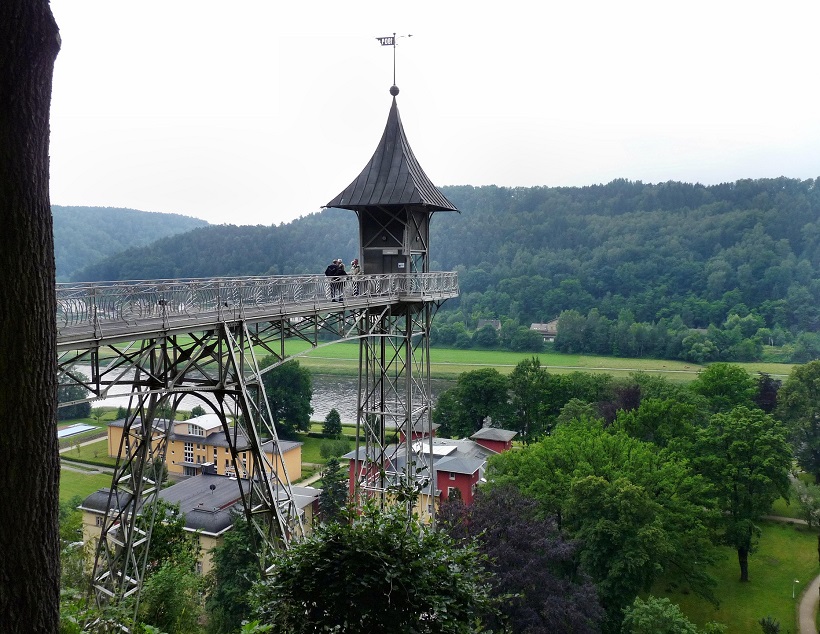
A small spa town, a river promenade and an iron lift carrying people up towards the forest. Bad Schandau has a rather pleasing approach to a difficult hill: admire it, then install a lift.
What draws me here is the way the town lets the landscape take charge. A market square, a few cafés, boots and rucksacks heading for the trails. Beyond them, Saxon Switzerland supplies the sandstone towers, wooded gorges and views that make you forget what you were saying.
By Rob Wheatley · Explore my Germany guides
Choose your kind of day
- For a gentle visit
- Bad Schandau’s riverside, town centre and historic lift, with a tram ride or time at the thermal baths if it suits.
- For the famous rock view
- The Bastei, near Rathen. It is a separate outing from Bad Schandau, with its own transport and walking arrangements.
- Time to allow
- A day for one main outing. Two or three nights in the area gives you room for different walks and a change in the weather.
- A useful arrival detail
- Bad Schandau railway station is on the opposite bank of the Elbe from the town centre. Plan the ferry or onward connection.
A town happy to play second fiddle
Bad Schandau is a small, restful spa town in a landscape that does most of the showing off. The Elbe slides past, ferries cross the water, and the pace has very little interest in your ambitious sightseeing list.
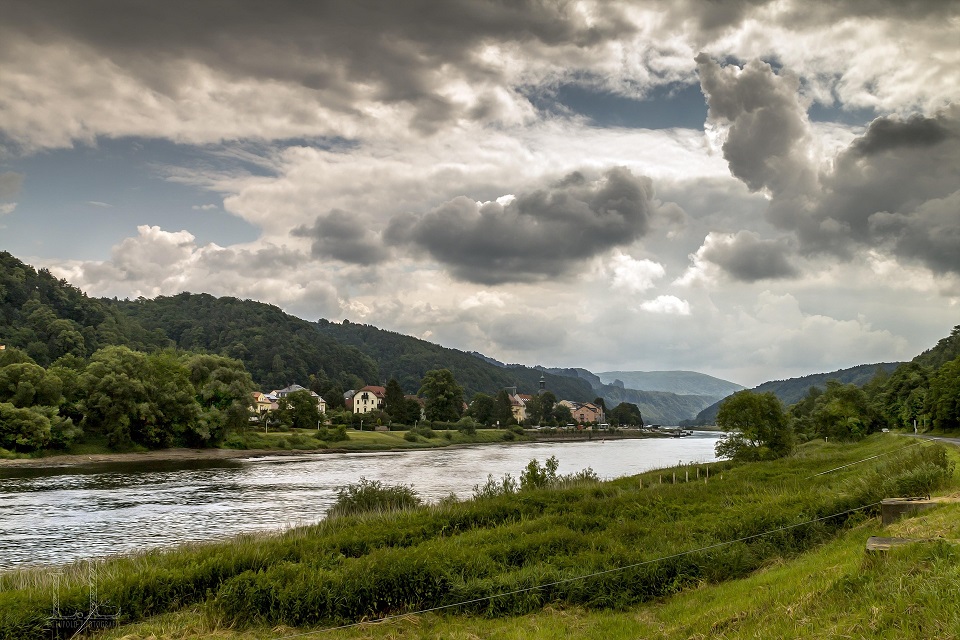
There’s an outdoorsy, unpretentious character to the place. People head out in boots and return looking as though a beer and something substantial would be entirely reasonable. The spa-town side is still here too: the Toskana Therme offers a different way to spend an afternoon if your legs have lodged a formal complaint.
Quiet evenings appeal to me here. Dinner, a little riverside air and no obligation to find the next thing. Bad Schandau’s strongest late-night attraction may well be the prospect of feeling human the following morning.
A lift to the trees, a tram into the valley
The freestanding passenger lift has carried visitors up from the valley since 1904. Its steel tower and upper footbridge lead towards Ostrau and the forest paths above town. I admire the combination: an elegant piece of engineering, a useful shortcut and a view.
Check the lift’s current opening and access information before planning around it. Reaching the upper platform and taking a longer forest walk are different commitments.
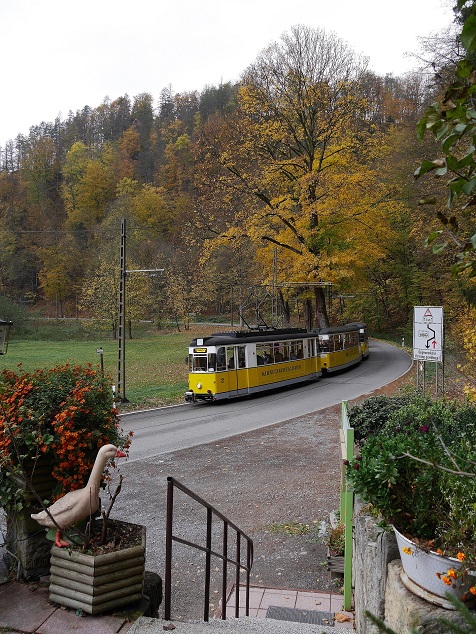
The yellow Kirnitzschtalbahn runs from the Kurpark through the Kirnitzsch valley towards Lichtenhainer Wasserfall. It has been bringing visitors into this landscape since 1898. A tram into the forest strikes me as a very civilised arrangement.
You can enjoy the ride for its own sake or use it to reach a suitable walk. Check the current timetable and ticket arrangements, including the return. A pleasant outward journey does not automatically organise the journey back.
Saxon Switzerland: The Seabed That Stood Up
Around a hundred million years ago, I’d have needed a snorkel to see any of this. Sand accumulated beneath a Cretaceous sea and eventually became sandstone. Later uplift, fractures and erosion helped shape the towers, walls and flat-topped mountains around the Elbe.
I love that thought: an ancient seabed, raised up and sculpted by water all over again. The scenery is remarkable before you know the geology. Afterwards, it becomes slightly ridiculous in the best possible way.
The name is younger. It is associated with the Swiss artists Adrian Zingg and Anton Graff, who worked in Dresden in the eighteenth century and found something of home in the landscape. Whatever their exact conversation, it was a successful bit of naming. Saxon Switzerland is in Germany; the neighbouring Czech part of the sandstone region is known as Bohemian Switzerland.
Mossy ravines and misty cliffs sit within reach of villages, cafés and well-marked routes. That makes the region approachable, but it doesn’t make every path easy. Some walks involve steep steps, ladders or exposed sections. Choose the route for the legs you have brought with you.
The Bastei deserves its reputation
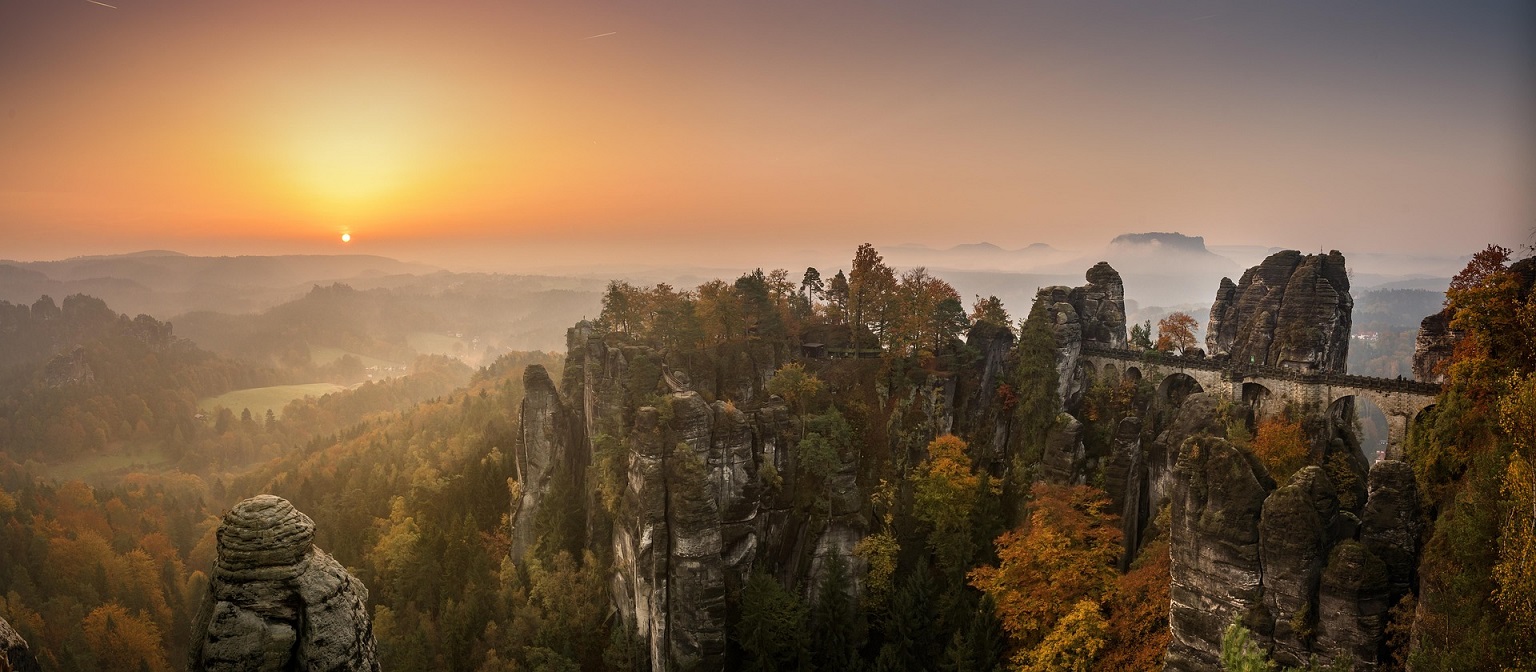
For my money, the Bastei is the classic introduction: rock pinnacles, a stone bridge and the Elbe far below. Painters came for the drama long before the rest of us came with phones. Caspar David Friedrich knew these hills; the modern addition is the selfie stick.
A wooden bridge was built in the 1820s and replaced by the present sandstone bridge in 1851. The view helped turn this landscape into a destination, and it still does a rather convincing job.
Plan the approach carefully. Walking up from Rathen and arriving from the upper road are different propositions. The main viewing area, bridge and neighbouring Neurathen rock castle also have different access arrangements. At the time of checking, Neurathen rock castle is closed; the Bastei Bridge route is not affected. Check the regional visitor updates before travelling.
Then there are the flat-topped mountains, including Lilienstein and Königstein. The fortress on Königstein makes its strategic appeal fairly obvious. Treat it as another outing, rather than an extra you can casually squeeze between the Bastei and lunch.
Plan one good outing, then leave some room
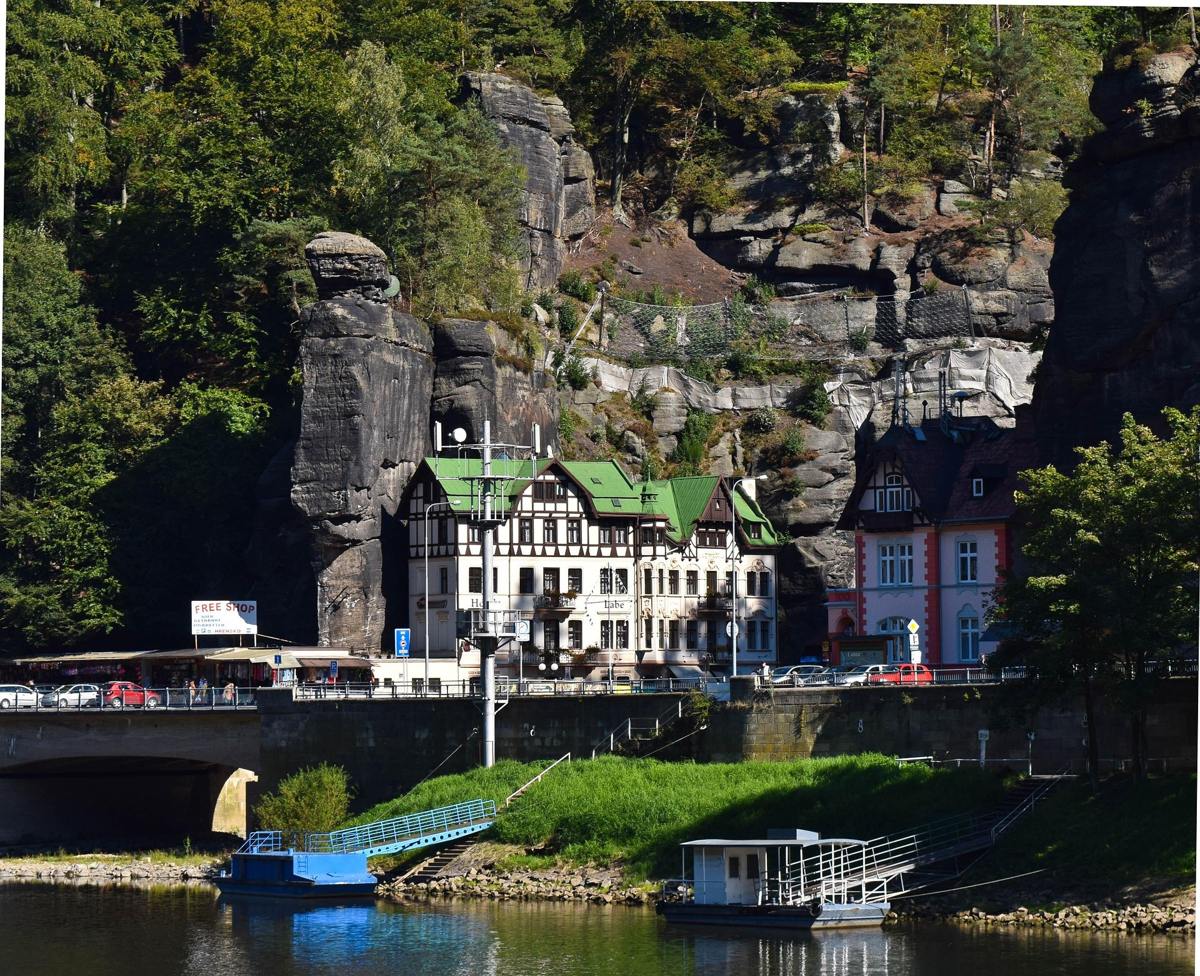
The sandstone landscape continues into Czechia. This photograph shows Hřensko, where buildings tuck themselves beneath the cliffs beside the Elbe. It is easy to see why the two sides belong to the same wider landscape, even though their transport, visitor sites and trail information need separate checking.
Getting here: Bad Schandau is connected to Dresden by the S1 railway. Check the VVO journey planner for your train and onward ferry or bus: the station is across the river from town. For the Bastei, plan specifically for Rathen or the upper approach. A train to Bad Schandau does not deposit you at the bridge.
When and how long: Late spring or early autumn gets my vote for walks and longer pauses outside. Summer weekends can be busy at the famous viewpoints. Winter brings short days and possible ice, so it deserves a different plan. A Dresden day trip works for one main target; stay a few nights in Bad Schandau if you want the tram, several walks and time to recover between them.
Before a walk: Use the national park’s current trail information, follow marked routes and check closures and the forecast. Wet sandstone, steep steps and dead trees can affect what is sensible on the day. A marked walking route is not the same as a climbing route.
Food and drink: This is a good place for a substantial Saxon lunch, soup or a bakery stop between outings. Look for local Eierschecke if cake appeals, or a regional beer afterwards. My advice is to eat before the last café has closed, rather than assume a small spa town will keep city hours for your benefit.
Bad Schandau and Saxon Switzerland with Viking
Viking’s published Elegant Elbe programme combines scenic sailing through Saxon Switzerland with a Bad Schandau call and an included The Bastei excursion. The sailing view and the visit above the river give you different perspectives.
The Bastei outing involves a transfer. Follow your sailing’s meeting arrangements, walking guidance and return time. The lift, forest tram, thermal baths and longer hikes described here are independent possibilities, not a list of automatic inclusions.
If walking or steps are a concern, ask the Viking team about the exact route in use. Confirm how much time you have before booking anything independently; the daily programme and actual berth matter more than a general map.
Visitor information checked 8 November 2026. Further sources: regional geology; Zingg, Graff and the region’s name; Bastei visitor information; Viking programme. Transport, access and excursions can change.
Back to top ↑
Which way would you spend the day?
The Bastei view, a forest tram and a walk, or the gentle approach involving the river and a warm pool?
Share your thoughts ↓