Airport Security: 10 Ways to Get Through Faster
Airport queues have no loyalty programme. I’ve certainly put in the hours.
Getting through airport security faster starts before the checkpoint: check local rules, pack accessibly, prepare your documents and follow your lane’s instructions. These ten airport security tips explain liquids, shoes, electronics, eligible fast-track options and assistance, without pretending any trick guarantees a short queue or exemption from checks.
By Rob Wheatley – Program Director & traveler.
Updated 22 October 2026
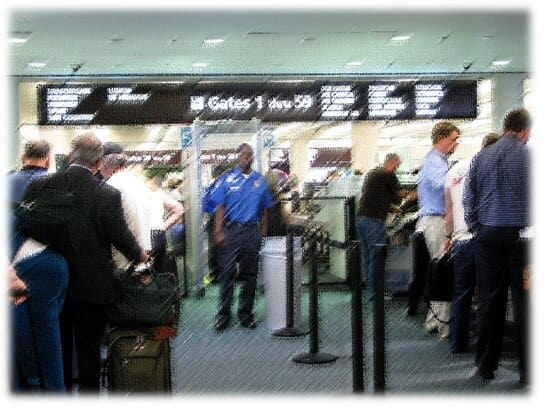
Get organised before the conveyor belt
Every journey begins with a single step, they say. At an airport, that step is usually followed by a long shuffle towards a conveyor belt while somebody ahead tries to unpack a laptop with one hand and locate a boarding pass with the other.
I’ve spent enough time in airport queues to qualify for a loyalty programme of my own. There are ways to make the experience less painful—for you and everyone behind you. Mostly, they involve preparation rather than secret tricks.
These airport security tips focus on avoiding preventable delays. Check-in, bag drop, passport control and customs are separate processes, so allow time for the whole departure rather than treating security as the only hurdle.
1. Check the rules for your actual airport
The biggest mistake is assuming that every airport follows the same procedure. Some modern scanners let you leave electronics and liquids inside your bag; others still require you to remove them. The UK government advises checking the departure, transfer and return airports separately.
One airport’s speedy new scanner is another airport’s instruction to unpack everything. Follow the signs and staff in the lane you’re using, not what happened on your last trip.
2. Check in online and sort out your documents
Where available, online check-in can remove a step—especially if you’re travelling with cabin baggage only. Save your boarding pass offline and keep your passport or required ID accessible. Check the airline’s document and baggage requirements before you leave home.
Nothing creates a more spectacular bottleneck than discovering your boarding pass is somewhere inside an email you can’t open.
For US checkpoints: adult travellers need an accepted ID, such as a REAL ID-compliant state licence or a valid passport. A non-compliant state licence is not an accepted alternative. Check TSA’s current identification list in advance; international travellers should keep the required passport and travel documents handy.
3. Pack the cabin bag so security can actually screen it
A bag crammed like an overfed Christmas turkey is difficult to inspect and even harder to repack. Keep cables, electronics and liquids organised. Avoid carrying prohibited items or dense clutter that can obscure the scan. Check official TSA item guidance if you’re travelling through the United States.
If your bag is selected for inspection, you’ll be grateful you didn’t need three people to zip it shut.
4. Understand the liquids rule—before you buy the shampoo
In the US, the familiar TSA 3-1-1 rule generally limits ordinary liquids, gels and pastes in carry-on baggage to containers of 3.4 ounces (100 ml) in one clear, quart-sized, resealable bag per passenger. The limit concerns container capacity, not how much is left inside.
Elsewhere, rules vary. The UK guidance notes that some airports allow containers up to two litres while many still impose 100 ml limits. Your connecting airport might be stricter than the one where you started. Don’t make your expensive face cream the day’s sacrificial offering.
Empty your ordinary water bottle before security and refill it afterwards where drinking-water facilities are available. Medically necessary liquids and infant or child feeding supplies can have exceptions; check the specific rules, declare relevant items and allow for separate screening.
5. Empty your pockets before the tray
Put coins, keys, wallet and other loose objects into a secure compartment of your bag while you’re waiting, where local rules allow. Don’t scatter valuables across multiple trays. Remove jackets, belts or shoes when instructed rather than guessing which procedure applies.
The trick is to be ready without creating a frantic undressing performance in the queue.
6. Wear clothing and shoes that travel well
Comfortable footwear, easy layers and manageable pockets simplify the journey. In the US, DHS ended routine shoes-off screening in July 2025. That does not prevent an officer requesting removal for additional checks, and other countries may follow different procedures.
So keep your shoes on unless the signs or staff tell you otherwise. The goal is to be ready, rather than begin an enthusiastic striptease based on a flight you took six years ago.
Belts, bulky outerwear and metal accessories may still need attention. Dress comfortably, listen to the officer and avoid turning the checkpoint into a wardrobe reconstruction project.
7. Keep electronics and batteries organised
Laptops and tablets may need to go in separate trays, but newer scanners can change the procedure. Keep devices accessible until you know what’s required. Spare lithium batteries and power banks generally belong in cabin baggage, with airline and capacity restrictions. If your cabin bag is gate-checked, remove those batteries first.
Consult the FAA’s battery guidance and your airline rather than assuming every gadget can travel anywhere.
8. Consider trusted-traveller screening if you're eligible
For eligible travellers at participating US airports, TSA PreCheck can provide a more convenient screening process. But availability depends on the airport, airline, eligibility and checkpoint operation, and additional screening remains possible.
Frequent-flyer status, business class and fast-track products may help with check-in or particular airport queues; they do not automatically grant TSA PreCheck or exemption from security screening. It’s worth knowing what you’re actually buying.
Check that your Known Traveler Number is attached to the reservation and that the TSA PreCheck indicator appears on your boarding pass. Membership alone does not mean every departure will offer the same lane or treatment. Likewise, a paid fast-track queue is not permission to carry prohibited items.
9. Tell staff about medical or accessibility needs
If you travel with medicines, mobility equipment, medical devices or sensory needs, check the airport’s assistance arrangements in advance. Some liquids and medical equipment qualify for exceptions or separate screening. In the US, TSA Cares offers information and assistance for travellers with disabilities and medical conditions.
There’s no need to struggle in silence or assume the standard queue procedure fits everyone. Asking ahead can make the journey more comfortable.
Keep essential medication accessible and explain relevant screening needs before the process begins. The TSA’s medical-liquids guidance explains the US exception. Assistance is there to support screening, not to exempt someone from it.
10. Be courteous, follow directions and allow enough time
There is no magic facial expression, clothing style or amount of small talk that reliably prevents additional screening. Old advice about looking too nervous, sweating, yawning or choosing an officer based on gender is not useful travel guidance.
Stay calm, answer questions truthfully, follow staff instructions and allow the arrival time recommended by your airline or airport. If something needs a closer look, cooperate. Security isn’t a race you win by outsmarting the person operating the scanner.
What changes from one checkpoint to another?
| Item or procedure | US TSA checkpoint | Elsewhere or on a connection |
|---|---|---|
| Ordinary cabin liquids | Generally 100 ml / 3.4 oz containers in one quart-sized bag | Check every airport; some UK airports permit larger containers |
| Shoes | Routine removal ended; additional checks remain possible | Follow local instructions |
| Laptops and tablets | Procedure depends on lane and equipment | New scanners do not mean identical rules everywhere |
| Expedited screening | PreCheck for eligible, participating journeys | Local fast-track products have their own terms |
| Medical liquids | Exceptions with declaration and screening | Check local rules and documentation requirements |
New equipment is a reason to read the signs, not a reason to stop checking restrictions. A permissive departure airport does not set the rules at your transfer or return airport.
The 60-second pre-security check
Before you join the queue: boarding pass accessible; documents secure; pockets emptied; liquids and electronics arranged for the airport’s procedure; prohibited items left behind; essential medicines easy to identify.
Then look up. Read the signs. The fastest traveller is often the one paying attention.
Airport security: common questions
How early should I arrive?
Follow your airline and airport’s advice for your flight, allowing for baggage, documents, assistance and busy periods. A shorter security queue does not change the gate-closing time.
Do I still have to remove my shoes in the US?
Routine shoes-off screening ended in July 2025. Additional checks may still require removal. Follow checkpoint staff rather than assuming the procedure applies worldwide.
Can I leave my laptop and liquids in the bag?
Only when the instructions for your lane allow it. Scanner equipment and screening programmes differ. Keep those items accessible until you know.
Does fast track guarantee a quick passage?
No. It can provide access to a particular queue or process, subject to its terms. Extra screening and operational delays remain possible.
Are security and passport control the same queue?
No. Security screens people and belongings. Border control, customs, check-in and baggage acceptance serve different purposes; a product helping with one does not automatically speed up the others.
The queue will end. Your holiday is just beginning.
I still don’t enjoy airport security. I doubt I ever will. But I’d rather spend a few minutes being properly screened than discover we were all waved through without anyone checking what mattered.
My goal is simple: arrive organised, avoid being the person who holds up the queue, and keep enough good humour intact to enjoy the flight.
What’s your biggest airport security frustration—or your best trick for making it painless? Tell me in the comments.
Related reading: Travel Packing Checklist · The Weird Things You Can Carry On · Travel Logistics & Transit.