Děčín: Where the Elbe Says Goodbye to Bohemia
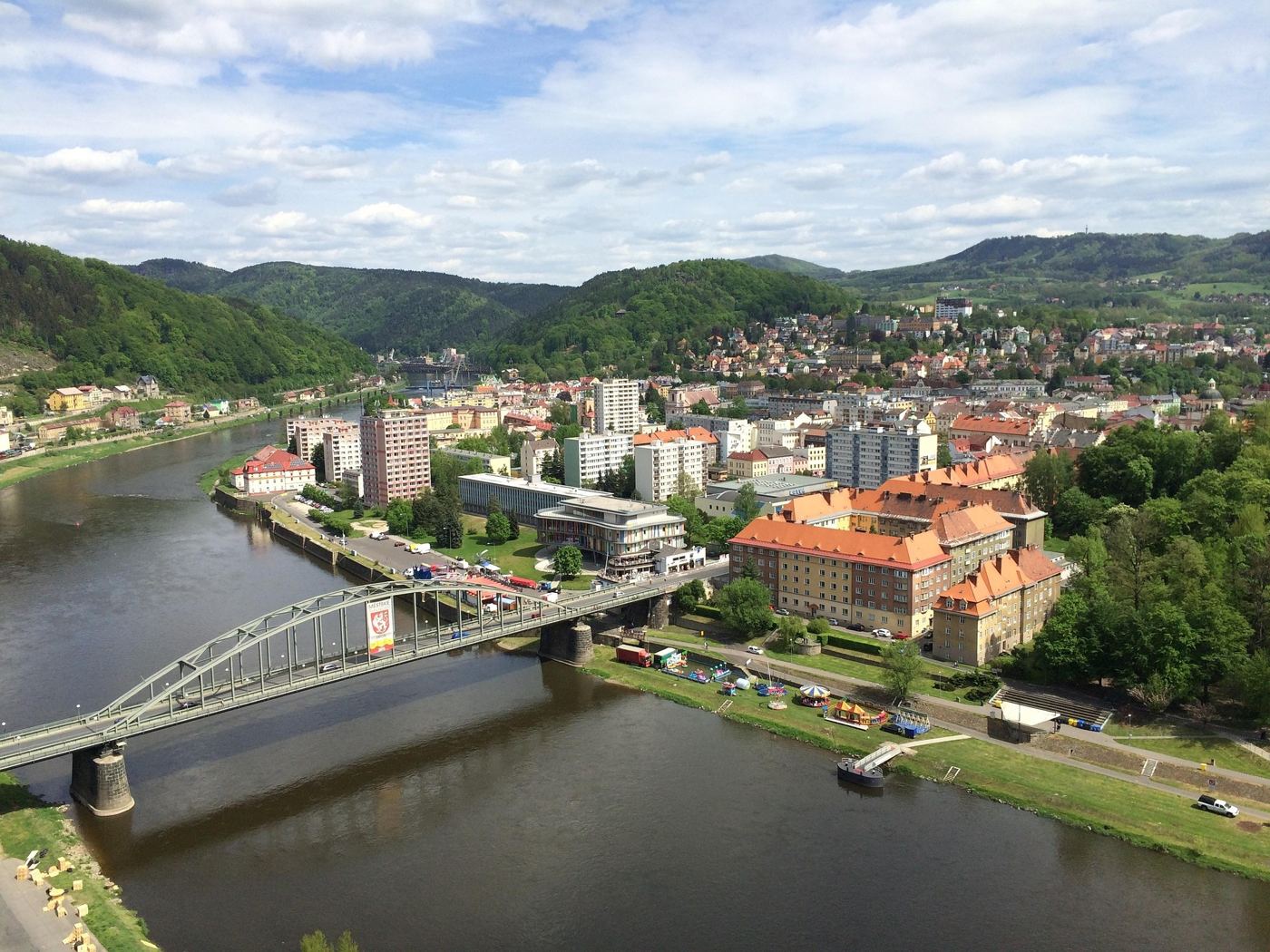
Děčín appeals to the part of me that gets a little weary of places looking permanently ready for a photograph. Here there’s a castle above the river, wooded hills behind the rooftops and a working town getting on with its day. Some beautiful bits, some concrete bits. Nobody appears to have arranged it all for my benefit.
The river is the Labe in Czech, the Elbe in German. Děčín sits upstream of the border, before the water heads past Hřensko into Germany. Same river, another language, and quite a landscape to travel through.
For a longer trip, start with my Czechia travel guide and see how Děčín fits alongside Prague and the rest of the country.
By Rob Wheatley · Explore my Czechia guide
Děčín at a glance
- Start with
- The riverside and castle. Add an interior visit according to the available tour times.
- For a view back across town
- Pastýřská stěna, or Shepherd’s Wall. Choose the walking approach or an easier arrival near the zoo.
- Time to allow
- A day for the town and castle; extra nights if you want to use Děčín as a base for the sandstone region.
- Keep separate
- A Děčín visit and an outing to Pravčická brána. The famous rock arch is outside town and involves onward travel and walking.
The counts left. The soldiers moved in.
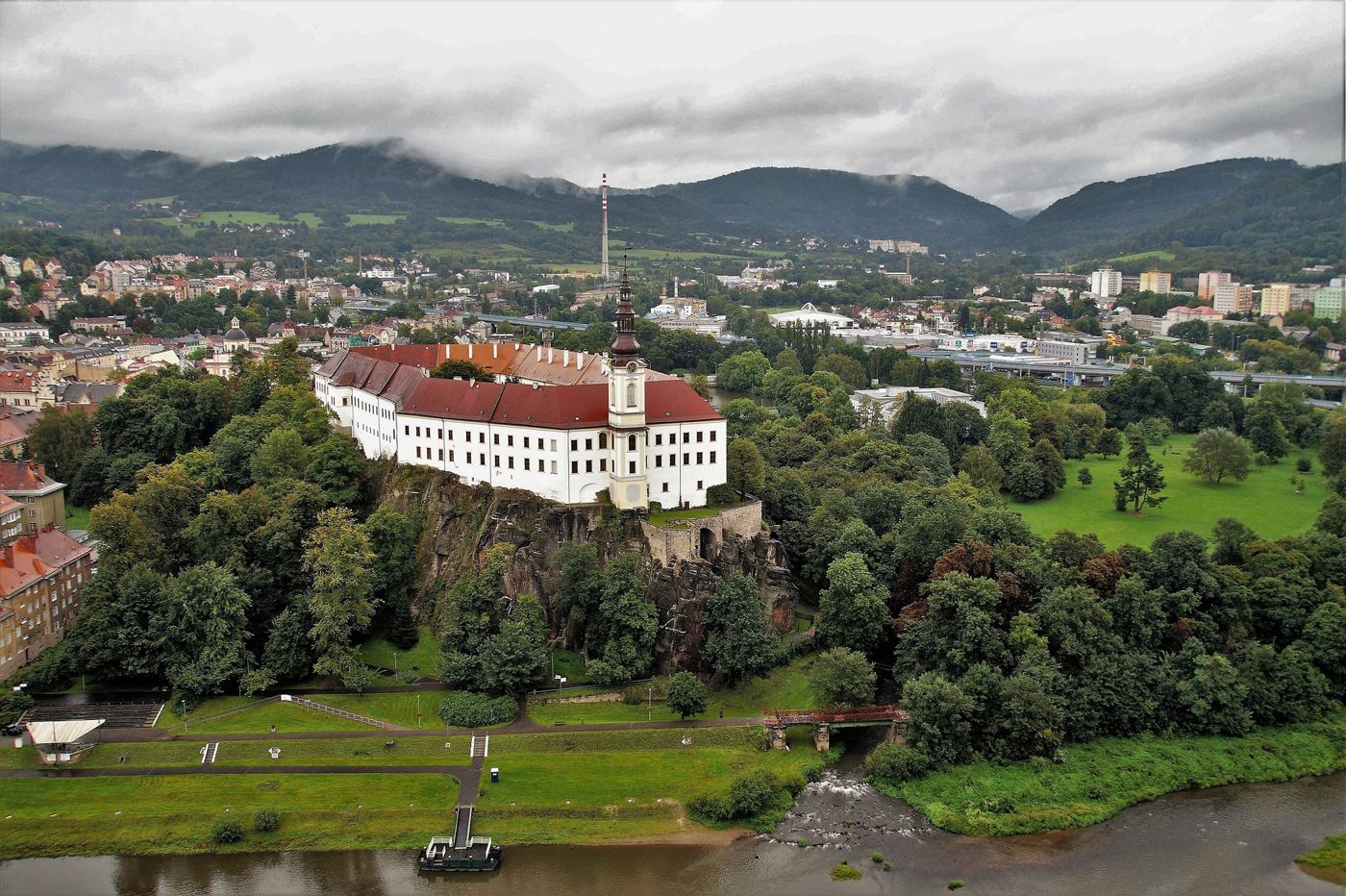
The castle does most of Děčín’s grand announcing. Perched on a sandstone cliff above the river, it has the sort of position that makes a defensive wall and a drawing-room view seem equally sensible.
The Thun-Hohenstein family held the estate from 1628 to 1932 and shaped much of the residence you see today. Financial difficulties forced a sale to the Czechoslovak state in 1932. The castle became barracks, and different armies occupied it through much of the twentieth century.
That is quite a change of household. I suspect the standards for muddy boots became rather different.
Restoration has brought the residence back into public life. Check the castle’s tours and opening arrangements before you go: interiors, gardens and individual routes need their own planning. A walk towards the castle and a guided visit inside are different ways to spend your time.
For me, the setting is part of the interest. Look at the rock beneath the building as well as the windows above it. The landscape was doing useful work here long before anybody began choosing the furniture.
A town with more than one past
The present city grew from two towns, Děčín and Podmokly, joined in 1942. Their German names, Tetschen and Bodenbach, belong to the region’s long German-speaking history. The expulsions of German residents after the Second World War and the arrival of new inhabitants profoundly changed the population.
Later rebuilding and urban planning changed the streets too. You can see handsome older buildings, the castle’s formal architecture and the plainer interventions of the communist decades alongside one another.
I wouldn’t arrive expecting a perfectly preserved medieval centre. The interest is in that mixture: a river port and railway town with some striking scenery and a history that doesn’t fit neatly into one architectural style.
Look back from Shepherd’s Wall
Pastýřská stěna, usually translated as Shepherd’s Wall, gives you a view across the Elbe towards the castle and town. It is a useful reminder that sometimes the best way to appreciate a place is to stand a little outside it.
The city’s visitor guide describes a marked walking route from the embankment, as well as an easier approach from the zoo parking area followed by a short walk. Choose according to your mobility and the conditions.
There is also a via ferrata on the rock face. That is a separate climbing activity requiring the right equipment and knowledge. You don’t need to climb the cliff to enjoy the viewpoint, which strikes me as an excellent arrangement.
The doorway to Bohemian Switzerland
Děčín makes a useful gateway to Bohemian Switzerland, the Czech part of the wider sandstone landscape shared with Saxon Switzerland. Same family of rocks and forests, different flag.
The best-known landmark is Pravčická brána, or Pravčice Gate, the great natural sandstone arch near Hřensko. It is a separate excursion from Děčín. Allow for transport, the approach walk, opening arrangements and getting back, rather than treating “nearby” as a promise of ten minutes on foot.
Check the national park’s current access information before choosing a route. Some familiar paths remain closed or diverted following fire damage and other hazards. The arch’s visitor area also has its own opening information. An old route description can sound wonderfully straightforward while sending you towards a closed trail.
A sensible day in Děčín
Time and arrival: My pick is a full day for the castle, riverside and a viewpoint, with room for lunch. Stay longer if the surrounding walks are the reason for coming. Děčín is on the rail corridor between Prague and Dresden; check the connection and any engineering changes for your date. The main railway station is on the opposite side of the Elbe from the castle, so include the crossing in your plan.
When to go: Late spring or early autumn appeals to me for combining the town with a walk. Summer brings longer evenings and more visitors around the famous sandstone sights. In winter, check castle tours and daylight before making a full day depend on them. For the national park, let the forecast and current route conditions have the final say.
Food and drink: Look for a Czech lunch such as svíčková, beef with a creamy sauce and bread dumplings, or a bowl of soup if you’re heading out again. These are Czech staples rather than dishes unique to Děčín. A local beer makes sense afterwards; so does leaving enough time to enjoy the meal instead of swallowing it between connections.
A small border reminder: Czechia uses the Czech koruna, CZK. Crossing from Germany doesn’t mean the euro has followed you. Check prices and payment arrangements rather than assuming a small stall, café or bus will accept the contents of your German change pocket.
Děčín on Viking’s Elegant Elbe
Děčín is the embarkation or disembarkation point in Viking’s published Elegant Elbe route. On the Berlin-to-Prague programme, guests disembark here and transfer to Prague. In the opposite direction, the journey comes from Prague to the ship.
That makes this primarily a transfer day. The castle, viewpoint and national park ideas in this guide are possibilities for a separate visit or confirmed spare time. Don’t assume there is a full sightseeing day available because the town has a place on the itinerary.
Keep your luggage and meeting arrangements handy, and ask the team before heading off independently. Prague is reached by land transfer on this itinerary; the ship does not sail into its centre.
Visitor information checked 8 November 2026. Sources: castle history; city history; Shepherd’s Wall; Czech food; currency; Viking transfer programme. Access, transport and cruise arrangements can change.
Back to top ↑
Would you stop or stay a little longer?
A castle visit and lunch, or a few days using Děčín as a base for the sandstone country?
Share your Děčín thoughts ↓