Dresden: The Church With Raisins in the Walls
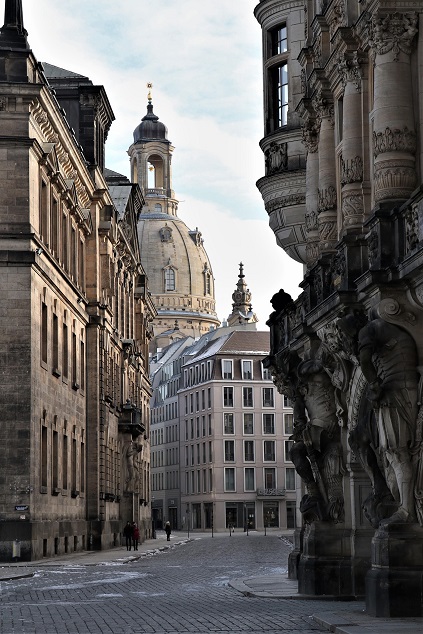
The detail that gets me about Dresden isn’t the size of a palace or the height of a dome. It’s the dark stones in the Frauenkirche. Look closely and the pale sandstone is dotted with old, weathered blocks, scattered through it like raisins in a cake.
Those are pieces of the original church, recovered from the rubble and worked into the rebuilding. Dresden went back and picked up its own pieces. I find that rather more moving than a flawless façade.
By Rob Wheatley · Explore my Germany guides
Dresden at a glance
- Time to allow
- A full day gives you the old-town landmarks. My vote goes to two or three days for museums, Neustadt and an evening by the river.
- Start with
- Neumarkt and the Frauenkirche, then the Procession of Princes, palace area, Theaterplatz and Zwinger.
- Across the river
- The Inner Neustadt leads towards the livelier Outer Neustadt, with independent shops, street art and bars.
- Arrange ahead
- A timed ticket for the Historic Green Vault, or a performance at the Semperoper. Seeing the buildings outside is a different visit.
The church that kept its scars
The Frauenkirche collapsed in February 1945 after the bombing of Dresden. Its ruins stood as a memorial for decades. Archaeological clearance began in 1993, reconstruction followed, and the church reopened in 2005.
The surviving stone was carefully recorded and reused, with original positions identified where possible. The result lets you see old and new together. No need for a plaque to explain that something happened here; the walls begin the conversation themselves.
For me, that is the place to pause before charging into the rest of Dresden. The rebuilt church is impressive, but knowing what those darker blocks represent changes how you look at it.
This is a working church. Check the Frauenkirche’s visitor information around services and events. The dome ascent has separate arrangements and involves climbing; it isn’t simply another room on the ground floor.
The Altstadt has dressed for the opera
The old town on the south bank of the Elbe is astonishing: baroque domes, gilded details and sandstone buildings crowded together, with the Zwinger, Semperoper and long Procession of Princes mural all demanding attention. Grand rather than cosy, and a little theatrical. Dresden knows how to make an entrance.
Much of this historic setting has been reconstructed or restored. That doesn’t make every building a replica, or mean that nothing survived. I think the useful question is what each place has been through, rather than whether the entire skyline qualifies as “old”.
Take the Procession of Princes, the long tiled procession of Saxon rulers on the outside wall of the palace’s stable courtyard. It gives you another connection to Meissen and its porcelain, without requiring a museum ticket.
My advice is to walk the central landmarks first, then choose one substantial interior. The Dresden State Art Collections offer enough to defeat the most optimistic afternoon. Allow for two separate stops if you want both the Old Masters Picture Gallery at the Zwinger and the Green Vault in the Royal Palace. The Historic Green Vault requires a timed ticket; check exactly which collection your booking covers.
Opera appeals? Look at the Semperoper programme before you travel. Admiring the front door and spending an evening inside are two very different ways to experience an opera house.
Cross the river and loosen the collar
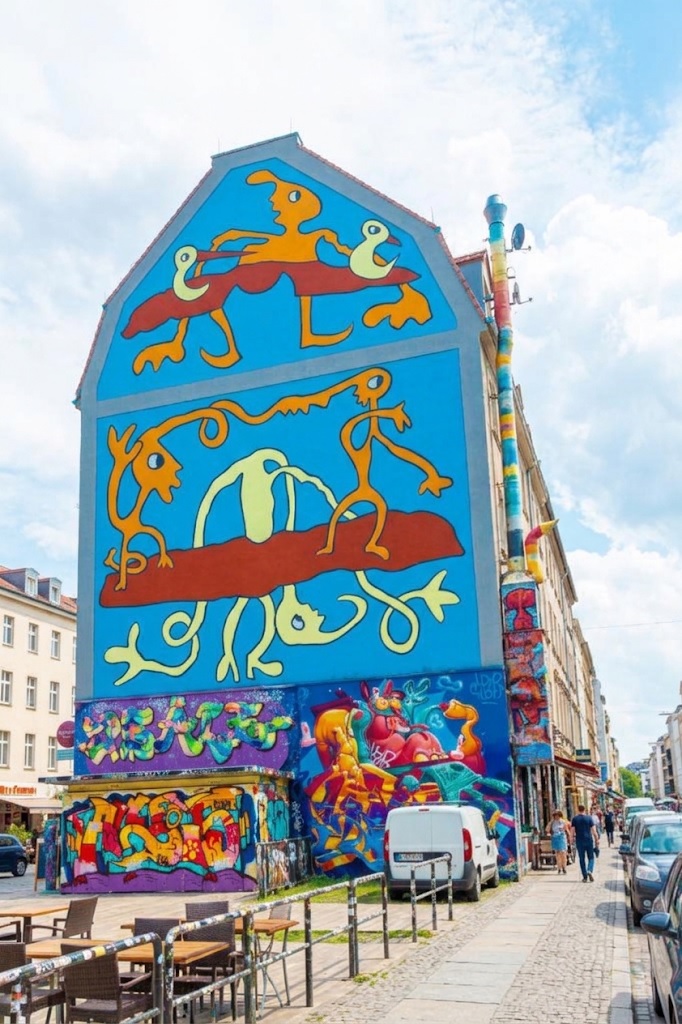
Then you cross the Elbe and the mood starts to change. The Inner Neustadt has its own handsome streets; keep going towards the Outer Neustadt for the courtyards, street art, indie shops, cafés and bars. “Across the bridge” is the beginning of the walk, not the instant arrival of every lively lane.
If the Altstadt is the opera, the Neustadt is the after-party. That contrast appeals to me. A city can be proud of its porcelain and still have room for a painted wall and somebody who clearly has no intention of going home early.
Leave time to wander around Alaunstraße and the courtyards of the Kunsthofpassage. You don’t need to manufacture a second sightseeing marathon. A different neighbourhood, a meal and a few streets you hadn’t planned to take can be quite enough.
Let the Elbe have a little of your time
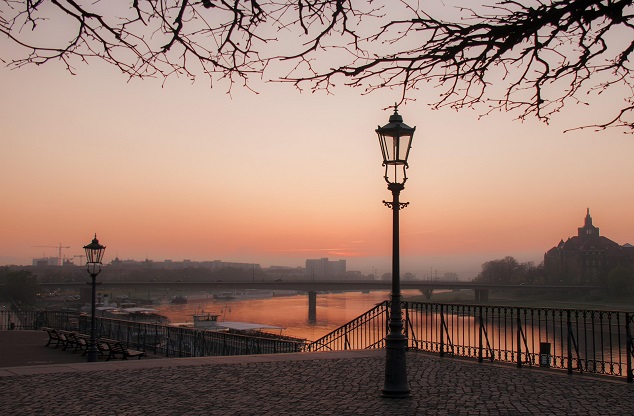
Between the two sides, the river gives Dresden breathing room. Meadows, cycle routes and waterside walks soften all that architectural ambition. People picnic, pedal past and get on with their day. The domes can wait while somebody sorts out lunch.
I wouldn’t want to spend the whole visit moving between grand interiors. Look back towards the old-town skyline from the opposite bank, or make time for the riverside as the light changes. The city feels different when you give it room beyond the next ticketed attraction.
Nor is Dresden’s later history invisible. Broader streets and buildings beyond the reconstructed historic core tell another part of the story. The city has more layers than its postcard view suggests.
A little planning, with room for Eierschecke
Getting here and around: Compare Dresden Hauptbahnhof and Dresden-Neustadt with your accommodation and train route. The central old-town sights are walkable as a group; trams help with longer hops and the Outer Neustadt. Use DVB or the VVO journey planner for your actual connections. The airport has an S-Bahn link, but check the service for your date. For a first stay, the Altstadt suits the major sights; Neustadt suits an evening spent around smaller bars and restaurants.
When to go: Late spring or early autumn gets my vote for combining city walks with time beside the Elbe. Summer gives you longer evenings; the Christmas-market season offers a different trip, with shorter days and busier central streets. Choose it because you want that atmosphere. Check museum opening days before assigning your whole art collection wish list to a single morning.
Something local: Try Dresdner Eierschecke, a layered cake with quark and a rich egg topping. It is a sound argument for leaving a gap between lunch and the next museum. A glass of Saxon wine makes a useful introduction to the vineyards around Dresden and Meissen, too. No obligation to turn either into an educational exercise.
Dresden on Viking’s Elegant Elbe
Viking’s published itinerary includes a Panoramic Dresden introduction with coach and walking elements. Use it to get your bearings and understand the city’s reconstruction, then choose how to spend any remaining independent time.
A panoramic view of the Zwinger or Royal Palace does not automatically include admission to their collections. Compare any optional excursion with the included programme before booking separate museum tickets. Confirm your berth, return route and all-aboard time with the team on your sailing.
If uneven surfaces, walking distances or the dome climb are concerns, ask about the actual route. An impressive skyline can be enjoyed without climbing every part of it.
The pieces are part of the point
Dresden can impress you with a skyline, then catch you with a single dark stone. That’s what stays with me about the place: the grand gesture and the small detail belong to the same story.
Give it the museums if that’s your interest, the Neustadt if that’s your mood, and a little unclaimed time beside the river. The city has put a great deal back together. You’re allowed to enjoy what it has made.
Visitor information checked 8 November 2026. Sources and current planning: Frauenkirche reconstruction; Historic Green Vault tickets; Saxony: Eierschecke; Viking: Dresden programme. Opening arrangements and excursions can change.
Back to top ↑
Which side of Dresden draws you?
The art and architecture of the Altstadt, the Neustadt’s street life, or a walk beside the Elbe?
Share your Dresden thoughts ↓