Bulgaria · Destination guide
Vidin & Belogradchik: Granny’s Fortress, a Rebel’s Library and Castles in the Rocks
Baba Vida is a wonderful name for a fortress. “Granny” sounds as though she might offer you something to eat; those walls suggest she would also be quite capable of refusing entry. Inland, Belogradchik lets the rocks do much of the defensive work. Two very different reasons to spend a day in this part of Bulgaria.
Inland, Belogradchik offers a different sort of defence: enormous rocks doing half the builders’ work. I’d decide how much of the day belongs to Vidin and how much to that journey before setting off. Two fortresses, two very different experiences.
By Rob Wheatley · Traveller and Viking Program Director
Explore the Bulgaria destination guide →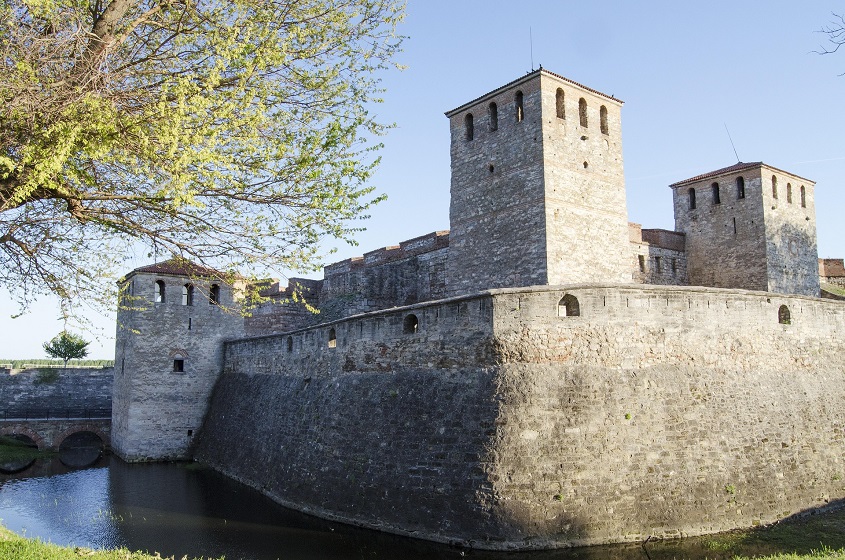
Vidin and Belogradchik at a glance
- My priority
- Belogradchik for the rock landscape; Baba Vida for a fortress visit close to the Danube.
- If time is short
- Choose the outing that interests you most rather than assume you can fit both around a cruise call.
- Walking and access
- Belogradchik’s upper areas involve a climb. Ask about specific steps, surfaces and lower-level alternatives at either fortress.
- The useful distinction
- Baba Vida is in Vidin. Belogradchik is an inland excursion requiring road travel.
The sisters who explain Granny’s fortress
The legend begins with three sisters: Vida, Kula and Gamza. Their stories explain local place names, although versions differ in the details. The part that matters to Vidin is Vida’s decision.
After seeing her sisters’ unhappy marriages, she rejected marriage herself, built a fortress and devoted her life to defending it. So the stronghold beside the Danube became Granny Vida’s Towers. A formidable woman acquired a formidable address.
That is folklore, rather than a construction record. The fortress stands over remains of Roman Bononia; its medieval building began in the tenth century, with major development during the Second Bulgarian Empire. Different periods have left their mark on what survives.
Walk through the gates and the legend becomes easy to picture. There are walls to defend, a courtyard to inhabit and a river to watch. Granny clearly understood the value of a good position.
Visiting Baba Vida
Baba Vida makes a useful focus for a day in Vidin. Check the current opening arrangements, ticket information and any temporary restrictions with the regional museum before planning around a particular room or tower.
I’d begin with the setting and the courtyard, then take the visit at a pace that suits you. A fortress can contain awkward thresholds, uneven surfaces and stairs even when the approach looks straightforward. Ask about the actual visitor route if access matters.
Allow some time beside the Danube afterwards. The riverside is part of the appeal, and a quiet walk can be a good counterweight to another sequence of gates and defensive walls.
The governor who said no to the Sultan
Around the turn of the nineteenth century, Osman Pazvantoğlu made Vidin a centre of power that did not obediently follow orders from the Ottoman capital. He is remembered as a rebellious governor, a reminder that an empire could have trouble with the people supposedly running it.
His surviving legacy includes a mosque and a library. The regional administration dates the mosque to 1800–1801 and the library to 1802–1803. For a man associated with defiance, he left a surprisingly bookish introduction.
The complex gives you another layer of Vidin beyond the medieval fortress. I’d look at the buildings without assuming the historic library collection is sitting inside waiting to be browsed. Ask about present access and interpretation, and respect the mosque as a religious place.
A rebel remembered through a library is an improvement on being remembered solely for the siege. Books are much easier on the neighbours.
Belogradchik: the fortress that grew from the rocks
Belogradchik’s rocks look like someone left a giant’s sculpture class unfinished. Then the locals named the pieces. The Horseman, the Madonna and the Monks belong to a landscape that seems determined to supply its own cast of characters.
For the builders, those rocks offered a military advantage. The site was fortified in Roman times, and later rulers adapted it. Under Ottoman rule, a major rebuilding and expansion ran from 1805 to 1837.
The great rock masses did much of the defensive work. Walls and gateways filled the spaces between them, producing a fortress that seems to grow from the hillside rather than sit neatly on top of it.
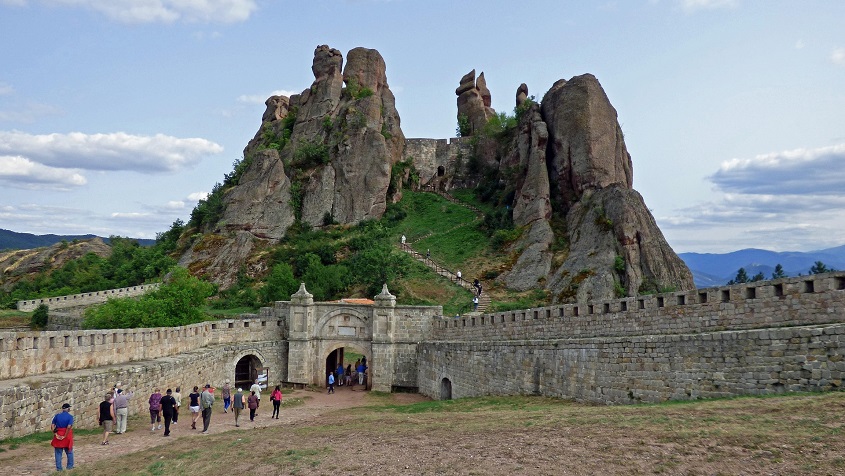
If the climb suits you and conditions allow, the higher areas reveal more of the surrounding formations. But take the route seriously: the photograph shows the attraction, not the effort required to reach every viewpoint. There is no obligation to conquer the highest terrace to appreciate the place.
Planning the climb and the journey
Wear shoes with grip, carry water and check the weather before leaving. Ask the operator or guide about steps, steep sections and what can be enjoyed without climbing to the top. Wet stone and a hurried return are poor companions.
Belogradchik is not an extension of a casual riverfront walk in Vidin. Allow for the road journey, admission and the visit itself. For independent travel, confirm how you will return before committing to a departure time.
I’d choose this outing for the landscape as much as the military history. Give yourself a moment to look beyond the masonry. The rocks were impressive before anyone arrived with a building plan.
Which visit would I choose?
For dramatic scenery and a day away from the river, Belogradchik has a strong claim on your time. For a gentler focus on Vidin itself, look at Baba Vida, the riverside and the town’s other historical buildings, checking the walking demands of the actual route.
Neither choice needs to become a contest. Decide what interests you and how much travelling and climbing you want. If your schedule genuinely allows both, fine; if it does not, give one a proper visit.
Allow properly for the inland journey
Time: Half a day suits central Vidin and Baba Vida. Belogradchik needs its own half-day with road travel, so a combined visit is a full day. Staying in Vidin gives you more flexibility than relying on a short stop between onward journeys.
When and access: My choice would be a dry spring or early-autumn day for the rock fortress. Heat, rain and icy conditions change how appealing those exposed steps feel. Arrange a driver or confirm workable public transport before setting off; the two fortresses are not neighbours on the same town walk.
Food: Banitsa, a filled pastry often made with cheese, makes a straightforward Bulgarian start; local wine is worth asking about with a longer meal. These are regional pleasures rather than dishes invented for one fortress. Keep the climb and the leisurely lunch in a sensible order.
For river cruise guests
Visiting with Viking?
Included programme: Viking’s published 2027 Passage to Eastern Europe itinerary lists Belogradchik Rocks and Fortress. This is the inland excursion, not a tour of Baba Vida in Vidin. Check your sailing’s duration, coach travel and walking grade.
Optional, at additional cost: the published programme lists Baba Vida Fortress & Bulgarian Wine and a Vidin Home-Hosted Cooking Demonstration. Compare the experiences and timings before choosing.
Confirm the ship’s berth, any movements and all-aboard time before arranging independent sightseeing. Do not assume that the included outing leaves enough time for another full fortress visit, or that every part of Belogradchik is appropriate for your mobility.
Checked against Viking’s published 2027 programme on 7 November 2026. Your booked sailing confirms availability, inclusions and timing. I work for Viking; this is my own practical guidance.
Explore Passage to Eastern Europe →Explore more along the lower Danube
Planning sources
History and visitor information checked 7 November 2026. Vida’s story is a local legend. Confirm opening arrangements, access and your sailing’s daily programme.
- Vidin Regional Historical Museum: Baba Vida history, legend and visiting information
- Vidin regional administration: mosque and library
- Vidin museum researcher: Osman Pazvantoglu’s library
- Belogradchik Historical Museum: fortress history and expansion
- Bulgarian Ministry of Tourism: rock formations
- Viking: Vidin programme
Which fortress would you return to?
Baba Vida beside the Danube or Belogradchik among the rocks? Share a useful tip, your favourite view or a question about choosing the day’s outing.
Join the conversation below ↓