TRAVEL FIELD NOTES · THOUGHTS FROM THE ROAD
By Rob Wheatley – Program Director & traveler.
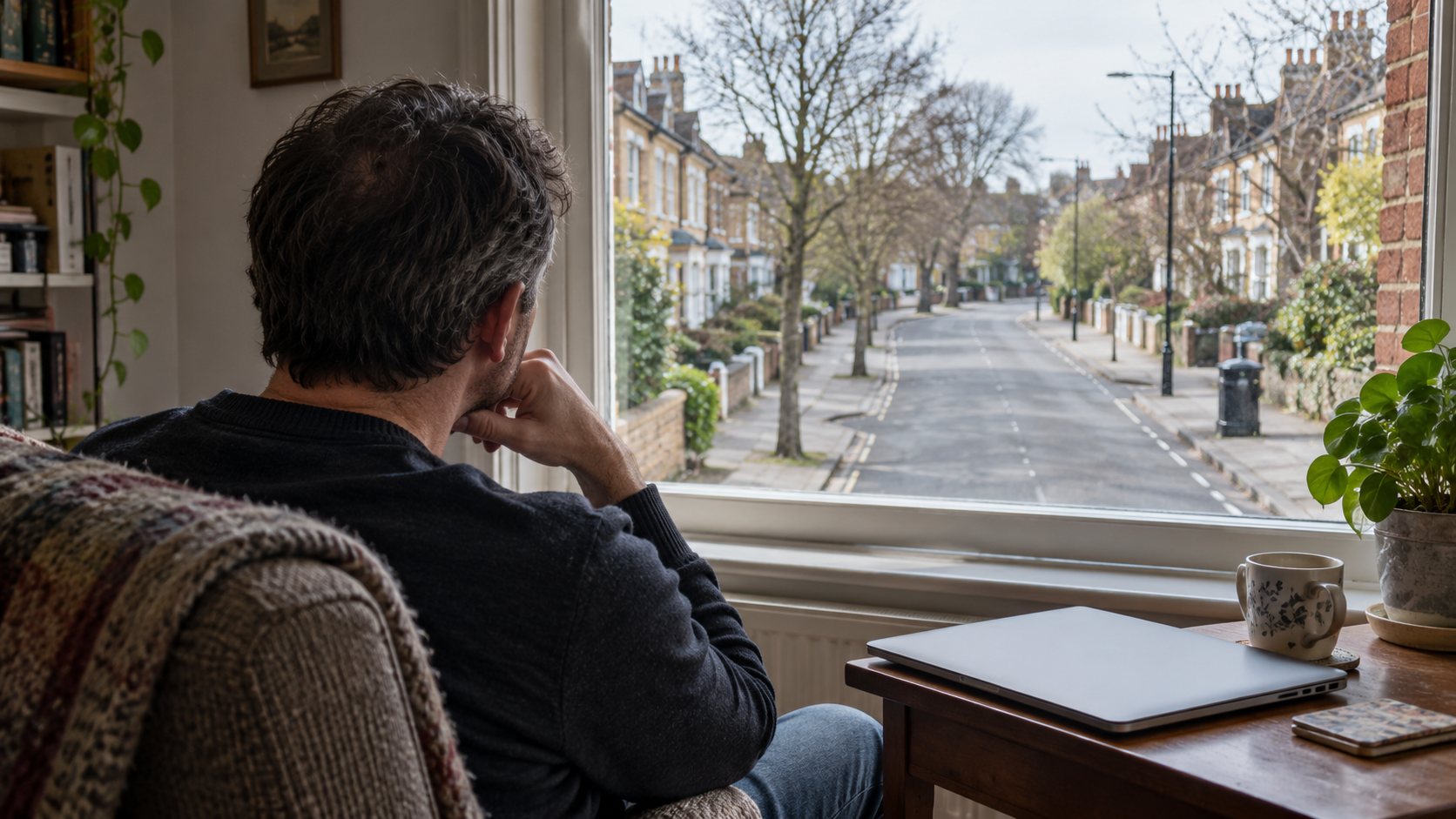
Hindsight is a wonderful thing. It never had to sit at home in 2020 wondering whether it would ever work again.
The lessons I learned from COVID begin there: with uncertainty. Vaccines helped us move forward, some predictions proved sound, and others—including mine—need correcting. The inquiries since then reveal failures of preparation, judgment and communication, alongside genuine achievements. My lasting lesson is to question confident conclusions without abandoning evidence.
When I wrote about a possible COVID vaccine in December 2020, I was at home, surrounded by chaos and what-ifs. My working life depended on people being able to travel. Nobody could tell me when that would happen again.
So I read. I listened. Then I tried to make sense of what we were all reading and hearing. Some of it was evidence. Some was informed speculation. Some was hope wearing a very convincing suit.
Looking back, I owe that younger, worried version of myself some understanding. However, I also owe readers an honest assessment of what I got wrong.
This retrospective revisits my article of 17 December 2020. Evidence checked on 23 October 2026. Personal judgments are identified as such; the linked reports have different national scopes and do not constitute a single worldwide verdict.
Before the arguments, remember the people
Before I pick apart a prediction, I want to acknowledge the people whose lives were changed beyond repair. Those who died from COVID were somebody’s family, friend, colleague or neighbor. Their absence belongs at the center of this reflection.
Then there are those living with lasting illness, families carrying bereavement, and healthcare workers who carried an extraordinary burden. For them, reopening the world did not mean returning to the life they had before.
There are other losses that also deserve recognition: a business built over decades, savings meant for retirement, a job that supported a household, or the confidence that tomorrow would be manageable. Financial loss can reach far beyond a bank balance. It can touch dignity, relationships and a person’s sense of who they are.

The costs must never become an afterthought
I do not want to turn these experiences into a competition over who suffered most. I want us to take all of them seriously.
Nor should we assume that every loss had the same cause. Illness, bereavement, fear, disrupted services and government restrictions interacted. Working out what a particular decision caused requires evidence.
My purpose in looking back is to learn how to prevent avoidable suffering. We owe that effort both to people harmed by the disease and to those harmed by the response. Remembering them should shape the questions we ask next.
My predictions, put back on the table
Before judging governments, experts or the television panel that seemed to live in our sitting rooms, I should start with my own contribution.
| My thinking in 2020 | What followed | My verdict now |
|---|---|---|
| Vaccination would help reopen travel. | Vaccination certificates became part of reopening arrangements, including in Europe. | Broadly right, although reopening involved more than vaccination. |
| Vaccination might not stop someone passing on the virus. | Vaccinated people can still become infected and transmit COVID. | A reasonable caution. |
| Digital health passports would become important. | The EU certificate operated from July 2021 to June 2023. | Right about that period; it was not a permanent passport to ordinary travel. |
| Travelers could pay for earlier vaccination to restart tourism. | This was my proposed policy, rather than an outcome I could demonstrate. | I was too ready to turn purchasing power into priority. |
| Better treatment might make COVID a minor irritation. | Treatments improved, but severe illness and long COVID remain. | Too optimistic. |
The EU certificate history and WHO’s explanation of COVID help separate the travel arrangements from the medical reality.
Where my own reasoning went wrong
My suggestion that travelers could buy earlier access to vaccination came from concern for livelihoods. I could see a whole industry waiting, along with the people and families behind it.
Nevertheless, paying privately would not automatically create extra doses, nurses or appointments. I acknowledged the queue-jumping problem, then tried to reason my way around it. Looking back, I gave the economic argument more weight than I should have.
I also grouped early vaccine efficacy figures together too casually. Those numbers needed their original trial context, endpoints and dosing details. They were never a universal percentage promising protection from every future infection.
Finally, I imagined effective treatment might reduce COVID to something like a passing nuisance. That was hope speaking. Antiviral treatments became valuable, especially for people at higher risk, but they did not guarantee recovery. Long COVID makes the limitations of that prediction painfully clear.
Even my description of viruses as “super intelligent” needs retiring. Mutation and natural selection explain their adaptation. They do not need a strategy meeting.
What we got right deserves to stay in the picture
A fair retrospective has to acknowledge achievements alongside failures. Otherwise, I would simply be replacing one selective account with another.
Vaccines provided meaningful protection against severe disease and death. However, protection could wane, and vaccination did not make infection or onward transmission impossible. Those distinctions matter when looking back at promises about reopening. WHO’s vaccine evidence overview explains the continuing protection against severe outcomes.
There were also people doing essential work while the rest of us waited: caring for patients, keeping services running and trying to protect others with the information available.
Travel eventually returned, too. The United States ended its COVID vaccination requirement for noncitizen, nonimmigrant air passengers on 12 May 2023. That is a useful reminder that a temporary entry rule can disappear without the disease disappearing. The US State Department records that change.
What the inquiries actually say
There is no single inquiry that has delivered the final judgment on the world’s response. Different countries faced different outbreaks, resources and choices. Even so, their findings help move the conversation beyond recollection and political allegiance.
The UK: acting too late also had a cost
The UK inquiry’s decision-making report, published in November 2025, found repeated failures to respond with sufficient urgency. That does not support a sweeping conclusion that precautions were simply an overreaction.
Its lesson complicates the argument. Delayed intervention can increase harm. Meanwhile, the timing, design and duration of restrictions still deserve scrutiny.
Australia: precautions needed to change as knowledge improved
Australia’s independent response inquiry credited early action with buying time and saving lives. It also found that parts of the response continued to rely on precaution without adequately weighing wider health, economic and social consequences.
The review addressed disrupted healthcare, isolation and harms affecting children. Its account also recognized early benefits from some vaccine mandates while discussing later effects on willingness to vaccinate.
My reading is that a measure needs more than a good reason to begin. It needs continuing evidence, a review date and a defensible reason to remain. These two national inquiries illustrate why “lockdowns worked” and “lockdowns failed” are both inadequate descriptions of every policy, everywhere.
The United States: findings that deserve a proper hearing
The American record is essential to this discussion. It includes congressional investigations, independent government audits and medical evidence reviews. These serve different purposes, and their conclusions should be identified accordingly.
What the House investigation concluded
In December 2024, the Republican-led House Select Subcommittee published its After Action Review of the COVID-19 Pandemic. It criticized prolonged lockdowns and school closures, the evidence behind the fixed six-foot distancing rule, vaccine mandates, and failures in relief-fund oversight.
The report also credited Operation Warp Speed as a major achievement. Its criticism of pandemic policy was therefore not a rejection of vaccine development itself.
These findings belong in an honest retrospective. However, claims that every mandate did more harm than good, or that all distancing lacked a scientific basis, require examination beyond a congressional conclusion. A particular distance rule, the principle of reducing close contact, and the effectiveness of a specific policy are separate questions.
Origins, Fauci and the limits of a political verdict
The Republican-led report favored a laboratory origin and accused Anthony Fauci of influencing the scientific narrative on origins. Subcommittee Democrats issued a competing report, disputing those accusations and saying the investigation had not established how the pandemic began.
The Democrats nevertheless raised concerns about EcoHealth Alliance’s conduct and a federal employee’s apparent attempts to evade public-records obligations. Disagreement was not absolute on every issue.
This is why I would describe Fauci as a prominent figure facing contested allegations and intense scrutiny, rather than imply that reputational damage proves a case against him. Nor does a congressional conclusion settle the scientific origins question. The later WHO assessment discussed below reached a different judgment about the weight of available evidence.
Independent audits: preparedness and financial protection
The nonpartisan Government Accountability Office’s 2024 lessons report identified problems in planning, coordination, communication, data and protection of emergency funds. Its high-risk areas included public-health leadership, unemployment insurance and small-business emergency lending.
For me, that makes the financial lesson concrete. Emergency help must reach people promptly, while systems are prepared to limit fraud and errors. Better preparation can make speed and accountability compatible.
Vaccine injuries also deserve recognition
The National Academies’ 2024 evidence review established a causal relationship between Pfizer and Moderna COVID vaccines and myocarditis. It also found evidence favoring rejection of links between those vaccines and several other alleged harms, including female infertility. For many conditions, evidence was insufficient to accept or reject causation.
That review examined specific harms rather than calculating the overall balance of benefits and risks. A report of illness after vaccination is not automatically proof that vaccination caused it. Equally, people with established vaccine injuries deserve recognition and care. Their experience should not disappear because acknowledging it makes an argument less comfortable.
My lesson from the US evidence is to demand transparency about both benefits and harms, scrutinize coercive policies, protect livelihoods, and judge each allegation by its evidence. Changing political fortunes should never become a substitute for that work.

Even the hindsight needs checking
One development since the original article is particularly relevant to my lesson about certainty.
In February 2026, the UK inquiry accepted criticism of how its executive summary presented a modelling estimate. The summary had used language suggesting that roughly 23,000 fewer deaths from an earlier lockdown was an established result. The inquiry acknowledged that the wording conveyed too much certainty.
The figure was an estimate of what could have happened under different circumstances. The inquiry maintained its broader finding that earlier action would have saved many thousands of lives.
That distinction matters. Challenging the presentation of a number does not automatically overturn the whole conclusion. Equally, a worthy conclusion does not excuse overstating how certain a number is.
Hindsight, it turns out, needs its glasses checked as well.
The argument about origins is still unfinished
The origins debate is another place where I now want to hear the strength of the evidence before the strength of the speaker’s conviction.
In June 2025, WHO’s scientific advisory group reported that the available evidence favored an animal-to-human spillover. However, missing information prevented a complete assessment of all hypotheses. WHO said a laboratory-related origin remained among the possibilities requiring consideration.
That supports neither declaring a laboratory accident proven nor claiming every question has been settled. Missing evidence is a reason to investigate, rather than permission to fill the gap with whichever story feels most satisfying.
What about the people whose reputations changed?
The conversation has also become a judgment on the people who delivered the message. Watching it now, I am struck by how quickly a public figure can become a symbol of everything someone believes went wrong.
However, I would be wary of putting everyone into a single “blackballed” category. Criticism, loss of public confidence, political exclusion and a substantiated finding of misconduct are different things.
If we are going to name someone, we should name the decision, evidence or allegation involved, establish what was actually found, and distinguish that from what remains contested. A reputation being damaged does not prove every accusation. Conversely, holding an impressive position should never place someone beyond examination.
My view is that we need accountability without turning the whole history into a hunt for heroes and villains. Otherwise, personality takes over from the evidence again.
Fear is a poor editor
I understand the temptation to say that the doom-mongers got it wrong and the excessively cautious got it wrong. Some warnings sounded absolute. Some reassuring promises sounded equally certain.
Yet a frightening forecast is not disproved simply because action helped prevent its outcome. Nor is every restriction justified because the threat was serious. We have to examine what was predicted, under which assumptions, and what changed.
That is harder work than choosing a side. It is also more useful.
When I say I do not want to buy into mass hysteria again, I am describing my determination to step back from the noise. I am not dismissing the grief, illness or fear people experienced. Those were real.
For me, the mistake was letting the volume of the conversation influence how convincing it felt. Repetition can make an uncertain claim sound settled. Alarm can also make a weak argument feel urgent.
The lessons I learned from COVID
I still want expert advice. However, I want to understand where the evidence ends and the judgment begins. These are the questions I intend to carry into the next crisis:
- What is the claim based on? A measured result, a model, an early study and an opinion deserve different levels of confidence.
- How certain is it? I want the assumptions and limitations alongside the headline.
- What would change the conclusion? A position that cannot respond to new evidence deserves questioning.
- Who bears the cost? Health, livelihoods, education, dignity and access to care all belong in the discussion.
- Am I applying the same scrutiny to the answer I like? Skepticism becomes rather convenient if it only challenges the other side.
Act quickly when necessary. Keep asking whether the response fits.
For me, the purpose of this retrospective is to help us avoid another knee-jerk response whose financial and emotional consequences are treated as an afterthought. A serious threat can require swift action. However, every restriction should have a clear purpose, evidence proportionate to its reach, support for those bearing its costs, and a date for review.
As knowledge changes, policy must be able to change with it. I want leaders to explain what would justify tightening a measure, easing it or ending it. Meanwhile, access to ordinary healthcare, human contact, education and livelihoods must remain part of the decision.
We cannot promise that a future emergency will cause no loss. We can insist on learning from preventable harm, preparing better, and refusing to let fear substitute for a reasoned decision. That is the responsibility I want us to carry forward.
Above all, I learned not to accept every conclusion being offered, however confidently it arrives. That includes my own.
Back in 2020, I wanted a road back to the world. I was trying to see beyond my front door, towards ships, guests, colleagues and a working life that had stopped.
I am glad I wrote down what I thought. Now I have to be willing to write down what I think differently.
The next time certainty comes knocking, I intend to ask a few more questions before letting it put its feet on the furniture.
Continue the conversation
What did you believe in 2020 that you now see differently? Which lesson has stayed with you? I would welcome thoughtful experiences in the comments, with sources for factual claims.
For more personal reflections, visit my Program Director’s blog. For practical preparation, see Travel Logistics & Transit.
Questions readers may have
Was the COVID vaccine a permanent requirement for travel?
No universal permanent requirement emerged. Rules varied by destination and period; the US ended its relevant international air-traveler requirement in May 2023, while the EU certificate regulation expired in June 2023.
Have the inquiries proved every restriction was wrong?
No. The UK and Australian findings discussed here identify both benefits of action and failures in how decisions were made or adapted. They do not provide one verdict for every country or measure.
What is my main personal lesson?
Ask for evidence, acknowledge uncertainty and keep examining conclusions—including those that confirm what you already believe.
In this retrospective
More from Rob
The people behind the pause
Viking crew at home: the human side of the shutdown
Meet the people whose working lives stopped when the ships did.